
Chinese vs. Siamese Mahjong: Key Differences Explained
Last updated: Nov 23, 2026
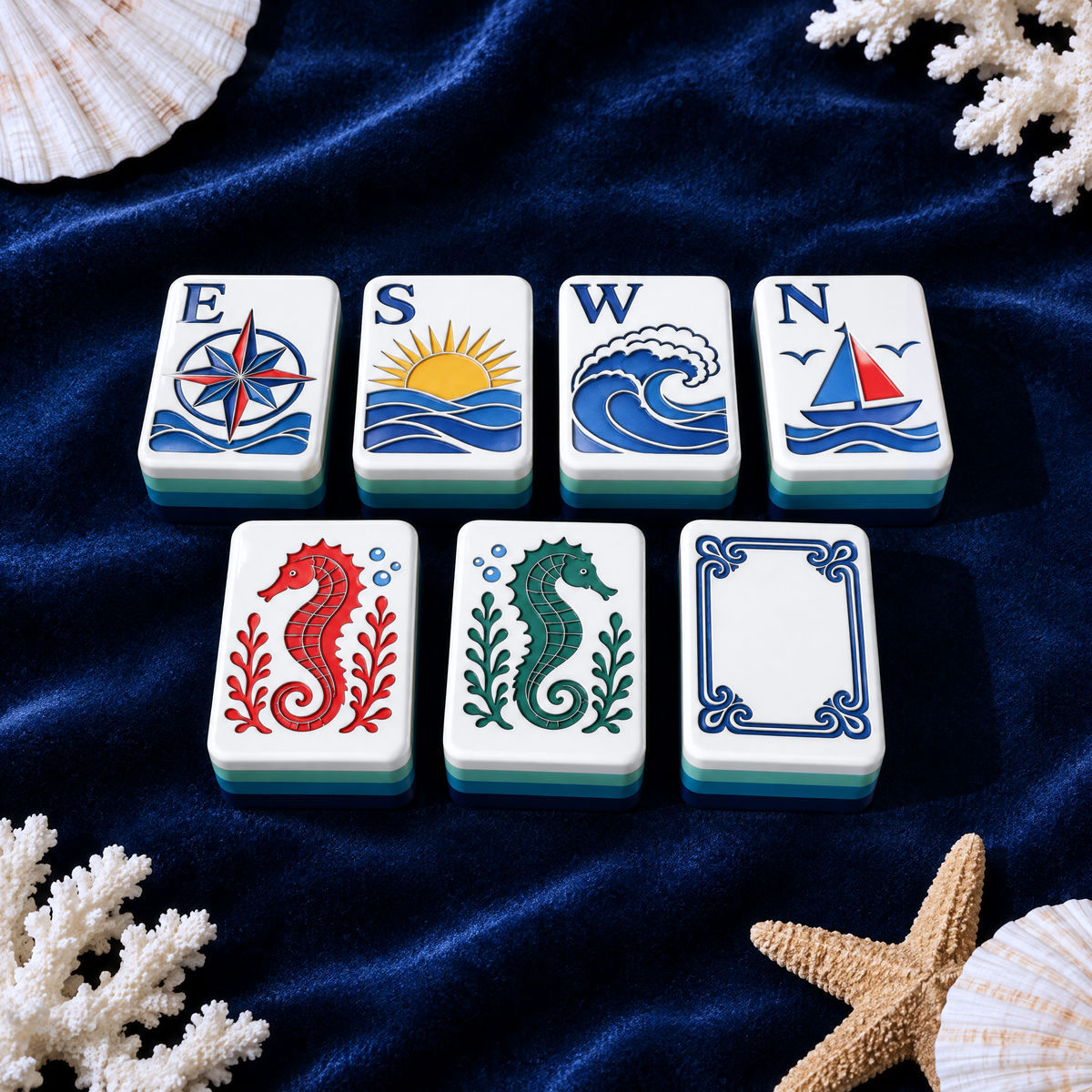
Chinese mahjong uses 144 tiles in three suits (1–9 numbered tiles plus bonus tiles), while Siamese mahjong adapts the Chinese ruleset to local play styles with fewer players and slightly modified hand-calling rules. Chinese mahjong emphasizes melds (pungs, kongs, chows) completed during play; Siamese play incorporates similar structure but traditionally uses a smaller active tile pool. Neither variant is standard in Western clubs—American mahjong, played with 152 tiles and hands drawn from the annual National Mah Jongg League card, dominates North American game nights. If you're learning Chinese or Siamese mahjong, you'll need a 144-tile set (not American equipment). Mahstead specializes in American mahjong sets, but understanding these variants deepens appreciation for how regional rules reshape the game.
Chinese and Siamese mahjong are distinct regional variants with different tile sets, hand structures, and scoring rules. Understanding these differences helps you choose the right game for your group.
What is Chinese mahjong, and how is it played?
Chinese mahjong is the parent variant, with 144 tiles: three number suits (Bams, Craks, Dots), 1–9 in each, four copies of every tile, plus 16 winds (four each: North, East, West, South) and 12 dragons (four each: Red, Green, White). Players draw and discard to build melds—pungs (three identical tiles), kongs (four identical), and crucially, chows (three consecutive tiles like 4-5-6 Dots). A winning hand contains four melds plus a pair. Chows can be called ("chi") and exposed on the table; pungs and kongs can be claimed by any player when discarded ("pung," "kong"). Chinese scoring uses a complex points system based on the type and difficulty of the winning hand. Play continues clockwise, and the game rotates wind positions among four players.

How does Siamese mahjong differ from Chinese?
Siamese mahjong adapts Chinese rules to regional play traditions, primarily in Thailand. It uses the same 144-tile base structure but modifies hand-calling conventions and meld exposure rules. In Siamese play, chow calling is restricted—typically, only the player sitting to the right of the discarder may claim a chow (compared to any player in standard Chinese mahjong). Kong and pung claiming remains open to all players. The game also traditionally accommodates different table sizes and player counts more flexibly than Chinese mahjong. Siamese hand-building prioritizes specific tile patterns (closed hands, mixed suits, dragon combos) with regional scoring variations. The pacing is often faster, and bonus tiles (flowers and seasons) are sometimes played differently.
Why can't you play American mahjong with Chinese tile sets?
American mahjong is fundamentally incompatible with Chinese sets because the tile inventory and hand structure are completely different. American mahjong uses 152 tiles (not 144), eliminating chows entirely—you can only build and expose pungs, kongs, quints (five identical tiles), and sextets (six identical). Hands come exclusively from the current year's National Mah Jongg League card, a published hand reference; you cannot invent hands as you can in Chinese play. American jokers (8 tiles) replace some bonus tiles and act as wild cards in specific positions, never as a single tile or pair. The American tile distribution is also unique: the 1 Bam displays a bird, and the White Dragon serves as zero. Trying to play American hands with a 144-tile Chinese set means you'll lack jokers, have an incomplete tile count, and violate hand legality—the game breaks down immediately. Each variant requires its own equipment.
🀄 Shop best-selling mahjong sets →
What tile differences matter most between these variants?
Aspect | Chinese Mahjong | Siamese Mahjong | American Mahjong |
Total tiles | 144 | 144 | 152 |
Suits | Bams, Craks, Dots (1–9) | Bams, Craks, Dots (1–9) | Bams, Craks, Dots (1–9) |
Winds | 16 (N, E, W, S × 4 each) | 16 (N, E, W, S × 4 each) | 16 (N, E, W, S × 4 each) |
Dragons | 12 (Red, Green, White × 4 each) | 12 (Red, Green, White × 4 each) | 12 (Red, Green, White × 4 each) |
Jokers | 0 | 0 | 8 (wild tiles) |
Bonus tiles | Flowers (4), Seasons (4) | Flowers (4), Seasons (4) | Flowers (8, includes blooms) |
Hand structure | Any four melds + pair | Any four melds + pair | League card–certified hands only |
Chows allowed | Yes; can be called | Yes; restricted calling | No; never played |
Scoring | Complex multipliers, double/triple wins | Regional variations | League card–based points |
The critical gap: Chinese and Siamese play allow on-the-fly hand invention; American play locks hands to the seasonal card. Tile counts differ by 8—not interchangeable.

How do hand-calling rules change the game flow?
In Chinese mahjong, when a player discards a tile, any player holding two matching tiles may call "pung" to claim three; any player holding four matching may call "kong." Any player to the right of the discarder may call "chow" for a three-tile run. The turn passes based on who claimed. Siamese play tightens chow calling—only the right-seat player can claim chows, reducing mid-table chaos and speeding play. American mahjong abolishes chow calling entirely; no one can call an exposed set unless it's already built as a meld before the discard. This changes strategy fundamentally: in Chinese/Siamese play, you're always scanning the discard pile; in American play, you're consulting the hand card and assembling tiles silently until you declare. Hand-calling speed in Chinese mahjong is fast and social; American play is quieter and more deliberate. Siamese play sits between the two—active but with guardrails.
🎁 See our most-loved mahjong sets & accessories →
Which variant is easiest to learn as a beginner?
Chinese mahjong is the most accessible entry point if you already understand tile-matching logic—the tile inventory is smaller (144), and basic hand patterns (four melds + pair) are intuitive. Scoring is complex but not required to start; many casual tables ignore multipliers and play "chicken" (draw, discard, repeat). Siamese mahjong is marginally harder because restricted chow calling adds a rule layer, but gameplay remains familiar. American mahjong has the steepest learning curve: you must memorize or reference the hand card, learn joker placement rules, and understand that chows don't exist. However, once you accept those rules, American play is paradoxically cleaner—no debate over who called what. For a first-time player, learn Chinese mahjong at a club table or with an experienced mentor, then branch to other variants. Our guide to American mahjong explains the shift if you're transitioning from Chinese rules.
What equipment do you need for Chinese or Siamese play?
You'll need a dedicated 144-tile set (Mahstead specializes in American 152-tile equipment, so consult regional suppliers for authentic Chinese or Siamese sets). A set includes tiles in bamboo, bone, or acrylic; two dice for seating and initial draws; a wall-building frame (optional but standard); and a discard area. A mat or table cover is not essential but speeds tile organization. A rack to hold tiles upright is helpful. If you're hosting games, consider a mahjong mat with clear markings to define the discard zone and player areas. Lighting matters—Chinese/Siamese tiles can be finely carved, and glare makes reading difficult. For mahjong bags and cases, ensure the interior fits 144 tiles plus dice and rack without crushing tiles. American players new to Chinese mahjong often try to repurpose their 152-tile sets—don't; the tile inventory mismatch breaks the game, and jokers have no role.
✨ Find your Mahstead set — free US shipping →
Key decision: which variant matches your group?
Choose Chinese mahjong if your table includes players with prior experience, you enjoy invention and social speed-calling, or you're learning from a local mentor in a Chinese community. The 144-tile structure is global standard.
Choose Siamese mahjong if you're in Thailand or connected to Thai cultural groups, or you want Chinese rules with slightly slower pacing and fewer calling conflicts. Tile sets are less common outside Southeast Asia.
Choose American mahjong if you're playing in North America, prefer card-driven hands and clearer legality rules, or want to join established weekly clubs. Our best-selling collection carries sets ready to play with the current year's League card.
What to check before you buy
Tile count: Count carefully. A 144-tile set means four of each numbered tile (1–9 in three suits), 16 winds, 12 dragons, and 8 bonus tiles. An American 152-tile set includes jokers; never substitute.
Material: Bamboo or bone tiles are traditional for Chinese/Siamese play; acrylic is durable and affordable.
Markings clarity: Ensure suit symbols and numbers are crisp and unambiguous, especially for 1 Bam (bird image in Chinese sets).
Case fit: If the set includes a case, confirm tiles fit snugly without pressure; loose tiles inside the case rattle and chip during transport.
Dice: Sets should include two six-sided dice; check for fair balance by floating in water (a fair die sinks).
Racks and walls: Confirm racks are tall enough to hide your tiles from opponents and accommodate your hand size.

FAQ
Can I play American mahjong with a Chinese tile set?
No. American mahjong requires 152 tiles, 8 jokers, and hands from the League card. Chinese sets have 144 tiles, no jokers, and allow any four-meld-plus-pair hand. Substituting sets breaks gameplay.
Which variant is played most widely today?
Chinese mahjong dominates globally—played in China, Taiwan, Vietnam, and Chinese diaspora communities worldwide. Siamese mahjong is regional to Thailand. American mahjong is strong in North America and among Western clubs but smaller globally.
Are scoring rules the same across all three variants?
No. Chinese and Siamese scoring use complex multiplier systems based on hand rarity and tile combinations. American scoring is deterministic—points are published on the League card for each legal hand. American is simpler to reference but less flexible.
What happens if I learn Chinese mahjong first and then try American?
You'll need to unlearn chow calling, reinterpret hand legality, and memorize the League card. The mental shift is real but manageable in a few sessions. Most players find American play feels "tighter" once the card becomes habit.
Is Siamese mahjong different enough from Chinese to play both at the same table?
Not recommended. The chow-calling restriction and scoring variations create confusion. Either commit to one ruleset per session or teach players the variant upfront.
Where can I find a game in my city if I want to learn Chinese mahjong?
Check community centers, libraries, and cultural centers in Chinese neighborhoods for advertised classes or open tables. Ask at local restaurants or temples. Meetup boards and social media groups for your city often list mahjong clubs. Word-of-mouth is fastest.


View More
View More
View More
