
Guangdong Mahjong Tile Set: American vs. Chinese Play Styles
Last updated: Nov 23, 2026
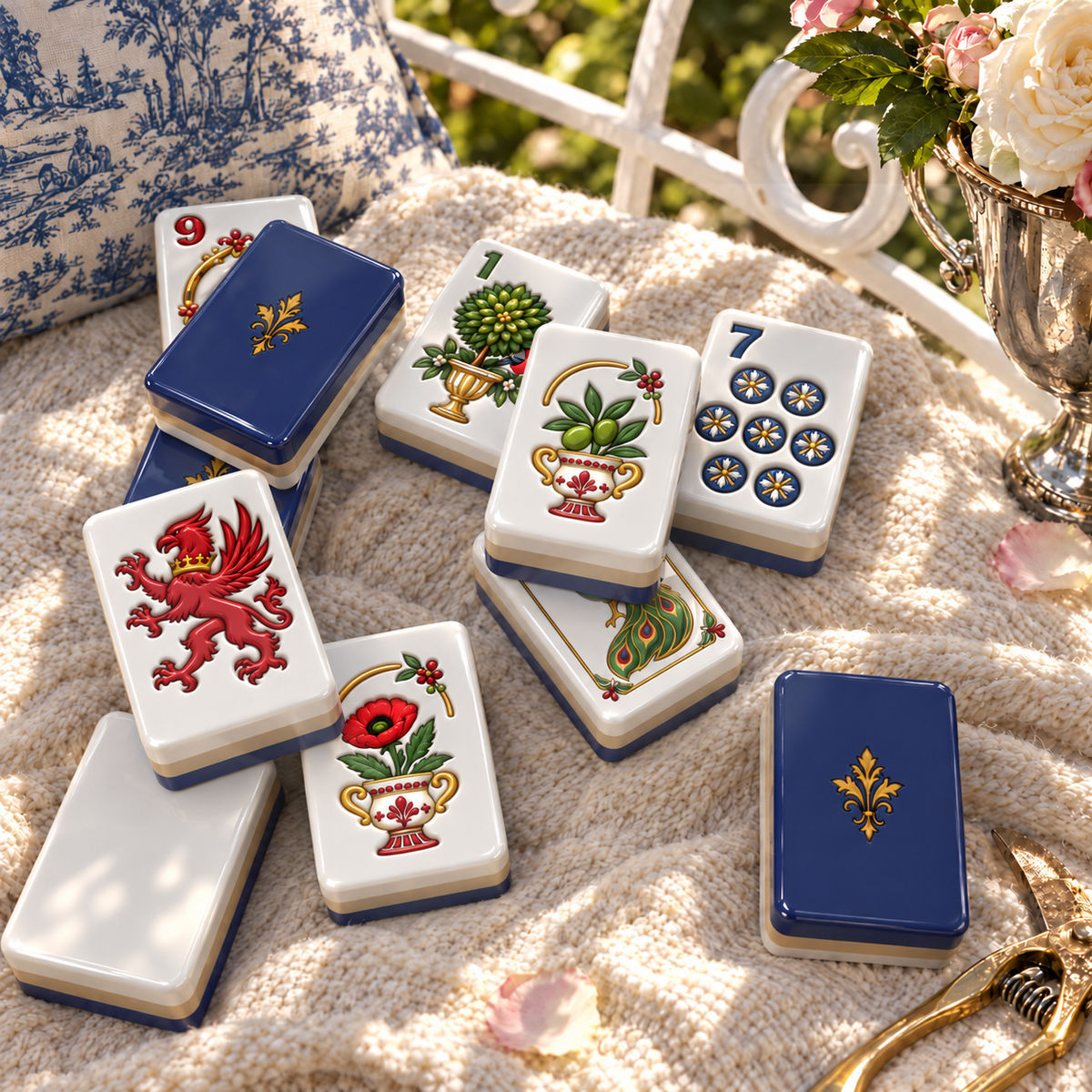
Guangdong mahjong sets are acrylic or bamboo tile collections designed for fast Chinese mahjong play, commonly played in Guangdong province with betting, rapid draw-and-discard cycles, and a four-player format that differs sharply from American mahjong rules. A typical Guangdong set contains 144 tiles—three suits (Bams, Craks, Dots) numbered 1–9 in four copies each, plus 16 winds, 12 dragons, and 8 flowers—but no jokers, which are unique to American play. Guangdong tiles are usually smaller and lighter than American sets, with engraved suit symbols and simplified traditional characters. If you play American mahjong (which requires exactly 152 tiles plus 8 jokers), a Guangdong set alone won't work; you'd need to source jokers separately, and the tile count will force house rules. American players seeking authentic Chinese tiles for learning Riichi or Hong Kong variants should verify tile count and character style before ordering; those hosting American-only games should stick with our best-selling acrylic sets designed for the National Mah Jongg League card.
What makes Guangdong tiles different from American mahjong sets?
Guangdong tiles follow Chinese mahjong standards: 144 tiles total, no jokers, smaller dimensions (typically 1–1.2 inches), and traditional numeral or simplified character faces. American sets contain 152 tiles plus 8 jokers, are slightly larger (1.2–1.3 inches), and use Arabic numerals or Western-style suit icons. Chinese games score by melds completed in a single hand; American mahjong scores by matching hands on the yearly National Mah Jongg League card, where jokers are essential wildcards. Guangdong play is typically fast-paced, with players calling and exposing pungs and kongs constantly; American play is slower and more strategic, with a formal Charleston tile-exchange before the first hand begins. If you're learning Chinese variants (Riichi, Hong Kong, Taiwanese), a Guangdong set is authentic; if you're joining an American weekly game, it won't suffice.
🀄 Shop best-selling mahjong sets →

Can you use a Guangdong set for American mahjong?
Technically, yes—but you'll hit two hard walls. First, a standard 144-tile Guangdong set is missing 8 jokers, which are mandatory in American play; without them, you cannot complete most hands from the card. Second, tile size and engraving may differ enough to slow your game or confuse newer players if mixed with an American-standard set. Some players have added joker blanks or separate acrylic jokers from craft suppliers, but this creates inconsistency in look and feel. The real issue: American mahjong games are hosted using the current year's National Mah Jongg League card, which designates exact tile sequences and joker placement; if your tile inventory doesn't match, you're playing a different game by accident. Our recommendation is honest—if your weekly game uses the League card, invest in a full American set. If you're curious about Chinese rules or playing with Guangdong natives, a dedicated Guangdong set keeps both games separate and authentic.
Where do players buy authentic Guangdong mahjong tiles?
Most Guangdong tiles are sold through import suppliers, specialty shops in cities with large Chinese communities (San Francisco, New York, Los Angeles, Toronto, Vancouver), and online retailers specializing in Chinese gaming equipment. Local options include Chinese grocery stores, dim sum house gift shops, and mahjong parlors that also sell retail stock; libraries or community centers in areas with high Chinese populations often have bulletin boards listing suppliers. Online, you'll find Guangdong sets on global marketplaces; shipping times vary from 2–4 weeks for sea freight to 1–2 weeks for air. Prices range widely based on material (plastic, acrylic, bamboo veneer, bone/bamboo luxury), engraving detail, and whether the set includes a mat or case. If you're in North America and want to avoid import wait times, local shops are fastest; if you're ordering for a specific trip or learning event, factor in 3–4 weeks and confirm tile count before checkout. Our Dallas-based shop focuses on American mahjong sets, but our collection of best-selling designs can guide you on material quality and finish—principles that apply to any mahjong tile purchase.
🎁 See our most-loved mahjong sets & accessories →
What should you check before ordering Guangdong mahjong tiles?
Use this pre-order checklist to avoid disappointment:
Tile count: Confirm it's 144 (standard Chinese), not 136 or 156. If listed as "160" or higher, ask what the extras are—some sellers bundle jokers, which means it's hybrid.
Joker presence: If you need jokers (American play), verify the seller includes them separately or confirm you can source them locally.
Suit symbols: Check product photos for simplified Chinese characters vs. traditional vs. Western numerals; ensure they match your game's standard.
Tile size: Measure in inches (typically 0.9–1.2); compare to your racks and table. Guangdong tiles are often smaller than American tiles, so mixed sets look odd.
Material: Acrylic is durable and easy to clean; bamboo veneer looks authentic but scratches; plastic is lightest but feels cheap. Your choice depends on play frequency and budget.
Engraving depth and ink: Examine close-up photos or ask the seller whether characters are engraved or printed; printed tiles fade with use.
Mat and case: Guangdong sets often don't include a mat; check if you need one and whether it's sold separately. American sets sometimes bundle mats, so compare value.
Shipping and returns: Confirm the seller's policy on damaged tiles in transit and whether returns to China are practical (usually not worth it).
Feature | Guangdong Set (Typical) | American Set (Mahstead) | Why It Matters |
Tile count | 144 | 152 + 8 jokers | American rules require jokers; Guangdong sets alone won't complete League card hands |
Tile size | 0.9–1.1 inches | 1.2–1.3 inches | Smaller Guangdong tiles don't fit American racks; mixing sets confuses players |
Jokers included | No (sometimes sold separately) | Yes, 8 per set | Jokers are wildcards in American mahjong; Guangdong uses different melds |
Game speed | Fast, continuous calling | Slower, strategic Charleston | Each game has its own rhythm; learn before you play |
Character style | Simplified Chinese / traditional / Western numerals | Arabic numerals + Western suit icons | Match your group's preference; ask before you buy |
Price basis | Material + import labor | Material + US design + free shipping | Chinese imports are cheaper; American sets cost more but are immediately playable |

How do you know if Guangdong tiles match your play style?
Guangdong mahjong demands quick hand-eye coordination, rapid calculation of melds, and comfort with betting under time pressure; it's social, loud, and competitive in minutes. If you love speed, numerical memory, and frequent player interaction during a hand, Guangdong play will appeal to you. American mahjong is quieter, more puzzle-like, and rewards pattern recognition on the card; hands develop over 12–15 minutes with longer pauses between calls. If you prefer strategic depth and lower stakes, American play suits you better. The honest truth: most of us who host American mahjong games play American mahjong because we like the card, the Charleston ritual, and the balance between luck and skill within a single annual game system. If you're tempted by Guangdong tiles, ask yourself: Do I want to learn an entirely new rule set? Will my group commit to Chinese mahjong nights? Or am I buying them for display or as a gift for someone learning Chinese heritage? Your answer shapes which set to buy. Guangdong players who occasionally play American mahjong often keep both sets, maintaining our best-selling American collection alongside their Chinese stock.
What tile material works best for Guangdong mahjong?
Acrylic: Durable, easy to wipe clean, uniform thickness, and plays smoothly on any mat. Acrylic Guangdong sets weigh more than plastic but less than bone; they don't crack easily and last years of weekly play. Heat and humidity don't warp them.
Bamboo veneer or solid bamboo: Looks authentic and beautiful, feels warmer in hand, and has natural sound. Bamboo scratches with use, fades under direct sun, and absorbs moisture in humid climates (common in Guangdong itself). Not ideal for casual storage.
Plastic: Lightest and cheapest; great for travel. Plastic tiles are thin, feel hollow, and wear quickly; engraving fades within a year of regular play.
Bone/bamboo luxury blend: Highest price, most authentic feel, prized by serious players. These sets are collectible and rarely see heavy play; better for display or heirloom gifting.
Most serious Guangdong players choose acrylic or solid bamboo; casual players or travelers favor acrylic or plastic. Since Guangdong play is fast and frequent, durability matters—acrylic outlasts plastic by years and requires no special climate control like bamboo does.
✨ Find your Mahstead set — free US shipping →
What to check before you buy
Before placing an order, verify these non-negotiables:
Confirm tile count matches your game (144 for Chinese, 152 + 8 jokers for American). Screenshot the seller's specification.
Measure tile size in inches and compare to your existing racks or a photo of standard tiles. Order a sample or view close-ups if possible.
Check character style (simplified Chinese, traditional, or numerals) against your group's standard.
Inspect engraving quality in photos—depth, ink saturation, and legibility. Request high-resolution close-ups if the listing photos are blurry.
Ask about the mat and case separately; Guangdong sets rarely bundle them.
Confirm shipping time and return policy. Chinese imports take 2–4 weeks; returns to overseas sellers are costly.
Read buyer feedback if available, focusing on tile color consistency, missing tiles, and whether engraving faded quickly.
Budget for extras: jokers (if American play), replacement tiles, and a mat (if not included).
For American mahjong, our engraved American mahjong sets arrive complete and ready to play—no guesswork, no wait, and designed specifically for the League card.

FAQ
Is a 144-tile Guangdong set the same as a 152-tile American set?
No. Guangdong sets have 144 tiles and no jokers; American sets have 152 tiles plus 8 jokers. The 8 extra tiles are mandatory wildcards in American mahjong. You cannot substitute one for the other.
Can I add jokers to a Guangdong set to play American mahjong?
Technically yes, but you'll also need to track American rules, use the National Mah Jongg League card, and perform the Charleston. The tile count mismatch and potential size difference will confuse gameplay. Better to buy a full American set designed for the card.
Where can I find Guangdong mahjong tiles in the US?
Check Chinese grocery stores, dim sum shops, or local mahjong parlors in cities with large Chinese communities. Online imports from Asian retailers take 2–4 weeks. Local shops are fastest; online is cheaper but slower.
What's the most durable material for Guangdong tiles?
Acrylic lasts longest with minimal care—it won't warp in humidity, resists scratches, and cleans easily. Bamboo looks beautiful but requires climate control and scratches with frequent play. Plastic is cheapest but fades and cracks within 1–2 years of regular use.
How do I know if Guangdong tiles are authentic or a cheap knockoff?
Authentic Guangdong sets have consistent tile size and weight, clear engraving (not printed ink that smudges), and accurate character reproduction. Check product photos for uniform color across all tiles. Cheap knockoffs have uneven engravings, faded characters, and varying tile thickness. Order from established retailers with buyer reviews if you're unsure.
Do Guangdong tiles work with American mahjong racks and pushers?
Usually not. Guangdong tiles are typically 0.9–1.1 inches; American racks are designed for 1.2–1.3 inch tiles. Smaller Guangdong tiles will slide or sit loose in American racks. Test fit before buying, or look for racks with pushers designed for smaller tiles.
Should I buy Guangdong tiles as a gift for someone learning Chinese mahjong?
Yes, if they're committed to learning the Chinese rules and have a group to play with. Include a beginner's guide (many sellers provide PDFs) and confirm the tile count matches their game variant. If they also play American mahjong, gift them both a Guangdong set and an American set to avoid confusion.


View More
View More
View More
