
Chinese Official Mahjong: How to Count Points
Last updated: Nov 23, 2026
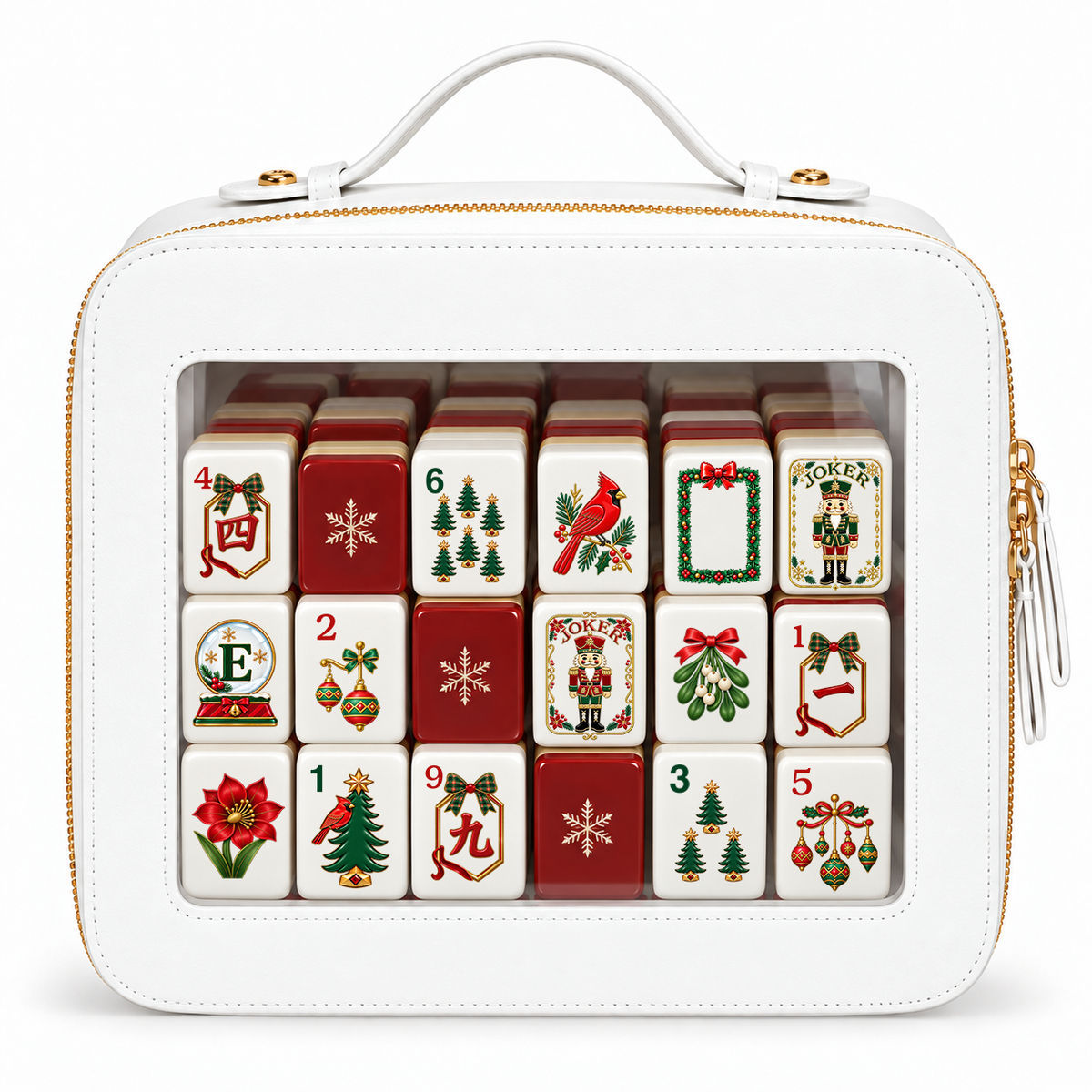
Chinese official mahjong awards points using a fan-and-base system: each winning hand earns a base score (usually 20, 30, or 40 points) multiplied by the number of fan (pattern repetitions) the hand contains. A single fan might be worth 1,000 points; higher fan counts multiply exponentially. The dealer (East Wind) pays or receives double. Non-dealers split payments with the winner. Unlike American mahjong—which uses the current-year National League card to assign fixed point values to specific hand patterns—Chinese mahjong calculates dynamically based on tile combinations (pairs, pungs, sequences), honors, terminal tiles, and bonus conditions. We recommend playing with clear scorecards and a calculator at first, then memorizing common fan combinations as you gain speed.
Chinese mahjong scoring is based on fan (repetitions of winning patterns) and base points, multiplied by player position and wind. It differs fundamentally from American mahjong's flat card-based hand values. The dealer (East Wind) pays or receives double. Non-dealers split payments with the winner. Unlike American mahjong's fixed scoring from the National League card, Chinese mahjong calculates dynamically based on tile combinations (pairs, pungs, sequences), honors, terminal tiles, and bonus conditions. We recommend playing with clear scorecards and a calculator at first, then memorizing common fan combinations as you gain speed.
What is a "fan" and how does it work?
A fan is a single instance of a winning pattern or bonus rule. Common fans include: one pair of identical tiles (1 fan), a pung of wind tiles (1 fan), a pung of honor tiles like dragons (1 fan), all pungs with no sequences (1 fan), or bonus tiles like flowers (1 fan each). Most hands contain 2–3 fan stacked together; rare hands reach 6+ fan and award massive bonuses. Once you count all fan in your hand, you multiply the base score (20, 30, or 40 points, depending on the lowest pung in your hand) by 2 raised to the fan count. The dealer doubles all incoming and outgoing payments.
🀄 Shop best-selling mahjong sets →

How do you calculate the base score?
Base score depends on the composition of your winning hand: if your hand contains only sequences (no pungs) or a pung of 1–5 point tiles (1–5 Bams, 1–5 Craks, 1–5 Dots), the base is 20 points; if it contains a pung of 6–9 point tiles, the base is 30 points; if it contains a pung of honors (winds or dragons) or terminals (1s or 9s), the base is 40 points. Once you identify the lowest base value in your hand, you multiply it by 2 to the power of your fan count. For example, a hand with a 30-point base and 2 fan scores 30 × 4 = 120 base points, which then becomes 240 points per non-dealer player (or 360 paid by the dealer). Beginners often miscalculate base by forgetting that only the lowest pung determines it.
What's the dealer's role in scoring?
The dealer (the player in the East Wind seat) pays double for every loss and receives double for every win. If a non-dealer wins with 2 fan (120 base points = 240 per player), each non-dealer pays 240; the dealer pays 480. If the dealer wins with the same hand, each of the three non-dealers pays 240 to the dealer. Rotating the dealership every hand or every win keeps payments balanced over many rounds. Some rule sets award the dealer an extra point or bonus if they win while holding the deal; others rotate after every hand regardless of outcome. Clarify dealer rules with your group before play begins.
How do bonuses like flowers and seasons increase your fan count?
Flowers and seasons (bonus tiles drawn separately during the opening of play) each add 1 fan to your final score if you draw them and keep them. If your hand naturally contains 2 fan and you drew 2 flowers during play, your total is 4 fan. Some rule sets award 2 fan per flower tile (especially Taiwanese variants), so always agree on flower scoring before the first hand. A hand with 4 fan and a 40-point base (because it includes a pung of dragons) scores 40 × 2^4 = 40 × 16 = 640 base points, multiplied again for dealer status or non-dealer share. Bonus tiles are the fastest way to push a modest hand into a high-paying category.

How does Chinese mahjong scoring compare to American mahjong?
Aspect | Chinese Official | American |
Scoring basis | Fan (pattern count) × base points × 2^fan | Fixed hand value from current-year NMJL card |
Dynamic or fixed | Dynamic; calculated from tile combination | Fixed; printed on the card |
Dealer advantage | Dealer pays/receives double | Dealer pays/receives same as others |
Bonus tiles | Flowers & seasons add fan (1–2 each) | Bonus tiles are separate scoring tracks |
Sequences allowed | Yes; chows and pungs both count | No chows exposed; only pungs, kongs, quints |
Joker usage | Usually none or very limited | 8 jokers per 152-tile set; used freely in melds |
Hand selection | Any winning combination that forms fan | Only hands listed on current year's card |
Calculator needed | Yes; fan and 2^fan arithmetic is complex | Usually not; card lists all values |
American mahjong enforces a single card-based hand library, limiting variation but simplifying scoring for weekly players; Chinese mahjong rewards creative tile combinations and pattern recognition but demands mental math or a scorecard. If your group switches between variants, use our best-selling acrylic sets—they work for both, and the clear tiles make counting melds effortless.
🎁 See our most-loved mahjong sets & accessories →
What are the most common mistakes when counting Chinese mahjong points?
Forgetting the dealer multiplier: Many new players score as if all players pay equally; the dealer's score is always doubled.
Miscounting fan: Miscounting fan (e.g., counting a sequence as a fan when it isn't, or forgetting that a hand-end win adds 1 fan) is the most frequent error. Write down each fan as you spot it.
Confusing base score: A hand with both a pung of 3 Dots and a pung of Red Dragons doesn't have a 40-point base; the lowest pung (3 Dots, a 20-point tile) sets the base at 20, not 40.
Not agreeing on flower scoring: Always confirm whether flowers add 1 or 2 fan before cards are dealt.
Arithmetic errors under time pressure: Use a calculator or phone app until 2^fan arithmetic becomes automatic. Errors compound over a night and sour friendships.
Not accounting for "self-drawn" vs. "discarded" win: Some rule sets award an extra fan if you draw your winning tile from the wall (self-drawn) rather than taking a discard. Confirm this rule at the table.
What to check before you buy a Chinese mahjong set:
Tile markings clarity: Chinese character tiles must be crisp and large enough to read in lamplight without squinting. Acrylic tiles last longer than bamboo and stay legible through hundreds of games.
Joker count: Chinese mahjong often uses no jokers or very few. Make sure your set's joker count matches your group's preferred rules.
Scorecard and calculator: Keep a dedicated scorecard (pen and paper works) and a calculator visible at the table. Mental math errors multiply fast.
Case or bag for storage: If you host weekly, a sturdy bag or case protects tiles from dust and keeps them organized. Durable travel bags and cases prevent tile loss and cracking.
✨ Find your Mahstead set — free US shipping →
Step-by-step: Scoring a complete Chinese mahjong hand
Verify the win: Confirm the hand is legal (contains one pair + melds, or is a special winning pattern like all pungs or all sequences).
List all fan sources: Note each fan: pairs (1), pungs of simples (1), sequences (0), pungs of honors (1), self-drawn win (1), hand-end win (1), flowers/seasons drawn (1–2 each).
Count total fan: Add all fan. A typical hand has 2–3 fan.
Identify the base score: Find the lowest pung or combination in your hand and assign its base (20 for simples 1–5, 30 for simples 6–9, 40 for honors or terminals).
Calculate base points: Multiply base by 2 raised to the fan count (e.g., 30 × 2^2 = 120).
Apply dealer multiplier: If the winner is the dealer, all non-dealers pay double. If a non-dealer wins, the dealer pays double and non-dealers pay single.
Collect payments: Record the transaction and move to the next hand.
With our clearest acrylic tiles and a scorecard, you'll count faster and spot errors before they cost the game.

FAQ
What is the highest fan count in Chinese mahjong?
Fan counts typically max out at 6–8 depending on the rule set. Hands with all honors, all terminals, or all pungs with seven pairs reach the ceiling. Beyond that, many groups cap payments at a fixed maximum (e.g., 1,000 or 2,000 points per hand) to prevent bankruptcies in casual play.
Do all Chinese mahjong rule sets score the same way?
No. Cantonese, Taiwanese, and mainland Chinese rules differ on flower value, bonus points, and dealer rules. Agree on your specific rule set (usually written down) before the first hand. Many groups play a hybrid of two or three traditions.
Can I use the same set for Chinese and American mahjong?
Yes. Both use 152 playing tiles plus jokers and bonus tiles, though Chinese play rarely uses all jokers. The tile designs are universal—honors, terminals, and simples are identical. Only the scoring and hand selection rules change.
How do I know which tiles count as "honors"?
Honors are winds (North, East, South, West) and dragons (Red, Green, White). In Chinese mahjong, White dragons are often called "Soap" and are treated as honors even though they also serve as the 0 in the Dots suit. Pungs of honors are always worth at least 1 fan.
Should I use a calculator during casual play?
Yes. Even experienced players use calculators for 2^fan arithmetic; it speeds up play and eliminates disputes. Once you've scored hundreds of hands, you'll recognize common fan totals (4, 8, 16, 32) instantly and won't need the math.
Is the dealer always East Wind, or does it rotate?
Both systems exist. Some groups assign a fixed dealer per session; others rotate after every hand, or only after the dealer loses. Confirm rotation rules with your group before play starts. Rotating keeps the game fair over many rounds.


View More
View More
View More
