
Chinese Official Mahjong for Beginners: Rules, Tiles & How to Start
Last updated: Nov 23, 2026
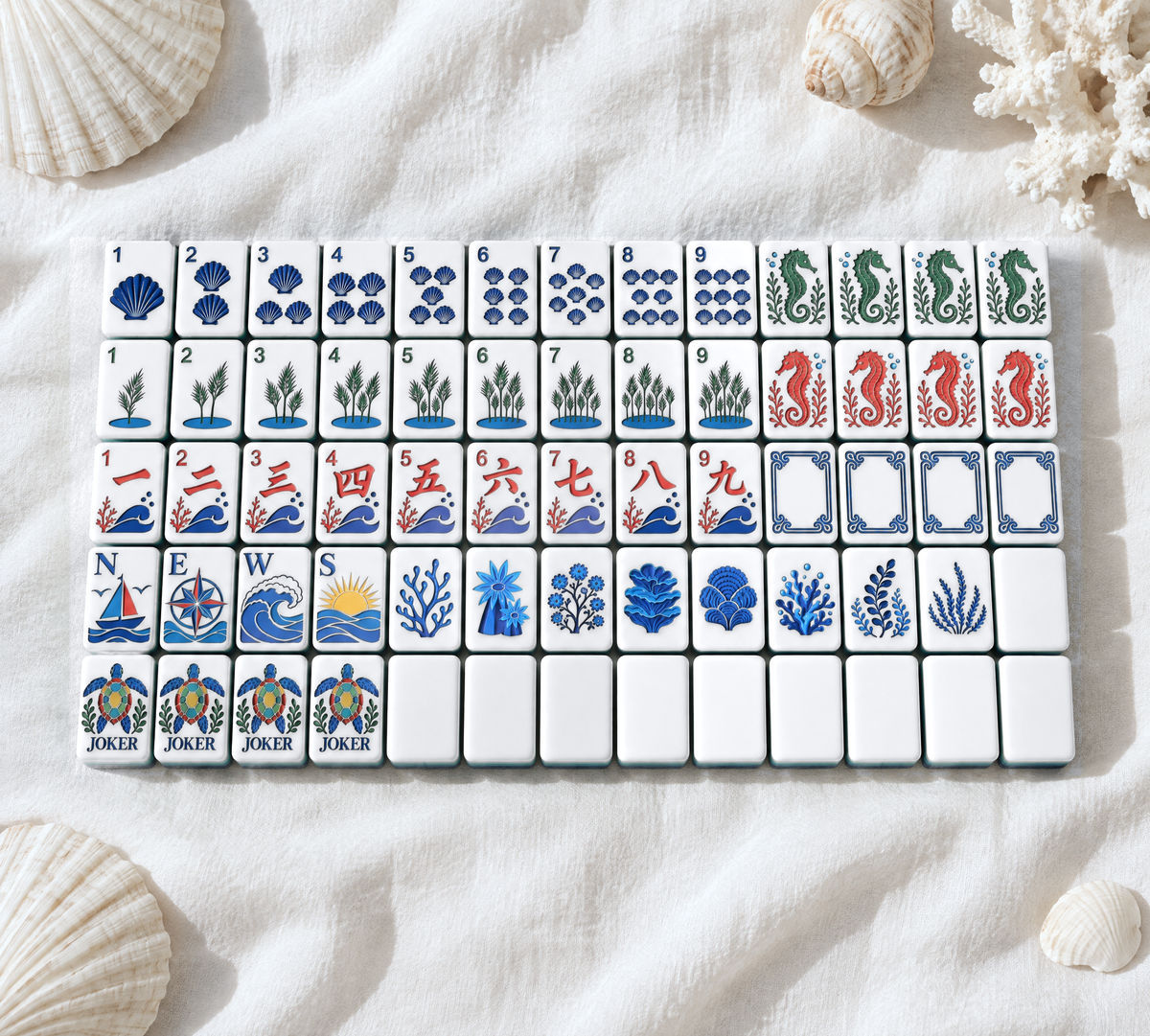
Chinese official mahjong uses 144 tiles: four copies each of Bams, Craks, and Dots numbered 1–9, four winds, three dragons, and eight flowers. Players draw and discard to form melds—pungs (three identical), kongs (four identical), or chows (three consecutive numbers in the same suit, e.g., 1–2–3 Bams). Unlike American mahjong, Chinese official allows chows both in hand and exposed on the table, and no jokers are used. A hand wins when all tiles form valid melds plus a pair. Games typically last 30–90 minutes per round. Chinese official is popular in mainland China, Taiwan, and Hong Kong, with regional scoring systems that vary widely. Beginners should start with a 144-tile set, then learn your chosen regional rules before playing for stakes.
How is Chinese official mahjong different from American mahjong?
The core difference lies in tile count and hand structure. Chinese official uses 144 tiles and allows chows (sequences like 3–4–5 Craks) anywhere—in your hand or exposed. American mahjong uses 152 tiles with eight jokers, bans chows entirely, and requires hands to match a specific pattern card updated yearly. American games last longer; Chinese rounds finish faster. American is more rigid, Chinese more flexible. Choose American if you want standardized, pattern-based play; choose Chinese if you prefer classic, sequence-friendly flexibility.

What tiles do I need, and how are they organized?
A Chinese official set contains 144 tiles divided into suit tiles and honor tiles. Suit tiles: three suits (Bams, Craks, Dots), each numbered 1–9, four copies per number = 108 tiles. Honor tiles: four winds (North, East, South, West, four copies each = 16), three dragons (Red, Green, White, four copies each = 12), and eight flowers (usually numbered 1–8, one copy each = 8). Total = 108 + 16 + 12 + 8 = 144 tiles. The 1 Bam traditionally shows a bird. Tiles are usually plastic, bamboo, or bone with mahogany racks. Our engraved American mahjong sets showcase durable acrylic designs; Chinese official sets follow the same durability standards, though regional preferences vary on material weight and finish.
What hands can I play, and how do I win?
A winning hand has 14 tiles: four melds (each three or four tiles) plus one pair (two identical tiles). Each meld must be a pung (three identical—e.g., three 5 Dots), a kong (four identical), or a chow (three consecutive in the same suit—e.g., 1–2–3 Bams). You form your hand by drawing one tile per turn and discarding one tile, while other players can claim your discard to complete a meld if it helps them. The first player to assemble a valid hand and declare "mahjong" wins the round. Some variants require the winning tile to come from a draw, not a discard (a strict rule that speeds play). Scoring depends on the regional system—Hong Kong, Sichuan, Guangdong, and Taiwanese rules each calculate points differently.
How does play flow, and what are the basic rules?
At the start, each of four players receives 13 tiles; the dealer draws a 14th tile to begin. On each turn, a player draws a tile, then discards one. When you discard, other players can claim it if it completes a pung, kong, or chow—the highest-ranking claim wins (chow claims are weakest, pungs and kongs stronger). Claimed tiles are shown on the table; tiles in your hand stay hidden. Once you've called a meld, it's fixed (you cannot undo it). The game continues until someone wins or the wall runs out (a draw). Key rules: never show your hand to other players during play; always discard tiles clearly face-up so everyone sees; do not deliberately delay claiming a tile (a courtesy rule enforced socially). Play rotates clockwise or counterclockwise depending on region. Rounds typically last 15–30 minutes per game.

Regional rules: which version should a beginner learn first?
Region | Tile Count | Chows Allowed | Bonus Tiles | Win Conditions | Scoring | Best For |
Mainland (Standard) | 144 | Yes, in/out of hand | None (flowers = bonus pts) | Draw or claim discard | Varied per city | Foundation learners |
Hong Kong | 144 | Yes, in/out of hand | Flowers count as sets | Claim discard preferred | Point-heavy, complex | Intermediate players |
Taiwan | 144 | Yes, in/out of hand | Bonus scoring high | Draw/discard allowed | Ranking-based | Speed-focused play |
Sichuan | 144 | Yes, restricted | None or flowers | Specific hand types | Hand-dependent | Competitive groups |
Mainland standard is easiest for beginners: fewer bonus rules, simpler scoring, and widely documented online. Hong Kong is more complex but extremely popular in diaspora communities. Taiwan emphasizes speed. Start with mainland rules, then branch out as your group asks. Online tutorials and rule books vary wildly by region—always confirm with your play group before your first session.
What mistakes do new players make, and how do I avoid them?
Mistake 1: Confusing chows with American sequences. American mahjong has no chows; Chinese official requires them. A chow is always three consecutive numbers in one suit (1–2–3 Craks is valid; 1 Bam, 2 Crak, 3 Dot is not). Practice calling chows aloud during your first few games.
Mistake 2: Showing your hand or discarding face-down. This loses information. Always discard clearly face-up in the center so all players see it. Never signal which tiles you want or hint at your hand strength.
Mistake 3: Claiming tiles too slowly. If a discard helps you, claim it immediately. Delays annoy players and can be read as hesitation, breaking trust.
Mistake 4: Forgetting flowers are worth bonus points. In most regions, flowers (or bonus tiles) award extra points when won or melded. Check your regional rule card before play.
Mistake 5: Not memorizing the hand hierarchy. In Chinese official, some hands rank higher than others (e.g., "all terminals and honors" beats "mixed suit"). Learn your region's hand rankings to spot winning opportunities fast.
What to check before you buy a set: Confirm the set is 144 tiles (not 166 or another count) and suits your regional variant. Check that tiles are clearly marked (some regional sets use subtle designs that slow new players). Verify the weight and finish—heavier tiles feel better during long sessions, but lighter plastic sets travel easier. Confirm the racks fit your hand size and have pushers (essential for smooth play). Read the rule card or purchase a separate guide for your chosen region.
🀄 Shop best-selling mahjong sets →
How do I practice and find a local game?
Online platforms (Tenhou for Riichi/Japanese, Mahjong Soul for multiple variants) let you play Chinese official against AI or live players without stakes. Many host live-play meetups: check community centers, libraries, cultural associations, and country clubs in your area for open games or beginner lessons. Ask players at local restaurants (especially dim sum venues) if they know of casual games. Social platforms and local bulletin boards often list meetups. Start with low stakes or play-money games to build confidence. Watch YouTube tutorials in your regional variant—they're far more specific than generic guides. Our mahjong for beginners guide covers starting from zero; the how to play American mahjong post shows how variants compare.
Playing Chinese official is a lifelong skill. Focus on learning your region's rules deeply, respect table etiquette, and enjoy the social rhythm. A 144-tile set from our best-selling mahjong sets collection paired with mahjong mats and mahjong racks with pushers will give you everything needed to host a strong game. Free US shipping on all orders makes outfitting your table straightforward.
🎁 See our most-loved mahjong sets & accessories →
Should I learn Chinese or American mahjong as a beginner?
Chinese official is better if you want to play in Chinese communities or travel to Asia. American is better if you live in the US and want a standardized, single-rule-set experience. Chinese feels more social and flexible; American feels more formal and puzzle-like. Both take 20–40 hours to play fluently. Choose the variant your local friends already play—peer learning beats self-study.
✨ Find your Mahstead set — free US shipping →

FAQ
How many jokers are in a Chinese official mahjong set?
Zero. Chinese official uses exactly 144 tiles with no jokers. American mahjong, by contrast, includes eight jokers. This is the defining difference: Chinese is pure tile sequences; American relies on jokers as wild cards to fill patterns from the yearly card.
Can I play Chinese mahjong with an American set?
No. An American set has 152 tiles, eight jokers, no flowers in the traditional sense, and is designed for pattern matching from a card. A Chinese official set has exactly 144 tiles and is built for sequence play. Buy a 144-tile Chinese set to start.
What happens if no one wins before the wall runs out?
The round is a draw (sometimes called "a gong" or "a bust"). Nobody scores, and the deal passes to the next player. Play resumes. In some regions, a draw hands bonus points to the player who came closest to winning.
How long does one game of Chinese mahjong take?
One round (from deal to win or draw) typically lasts 15–30 minutes. A full game is usually four rounds (one per player as dealer), so 1–2 hours total. Faster players finish in 45 minutes; cautious groups take 2.5–3 hours.
Are flowers worth points in all Chinese variants?
No. Mainland standard treats flowers as mild bonuses. Hong Kong and Taiwan weight them more heavily in scoring. Always check your regional rules or ask experienced players before your first game—flower scoring varies significantly by area.
What's the easiest regional variant for a beginner?
Mainland standard Chinese is simplest: fewer exotic bonus rules, clearer hand hierarchies, and abundant online tutorials. Start there, then learn regional variants as your group plays them.


View More
View More
View More
