
Common Mistakes in Fujian Mahjong: Rules, Setup & Play
Last updated: Nov 23, 2026
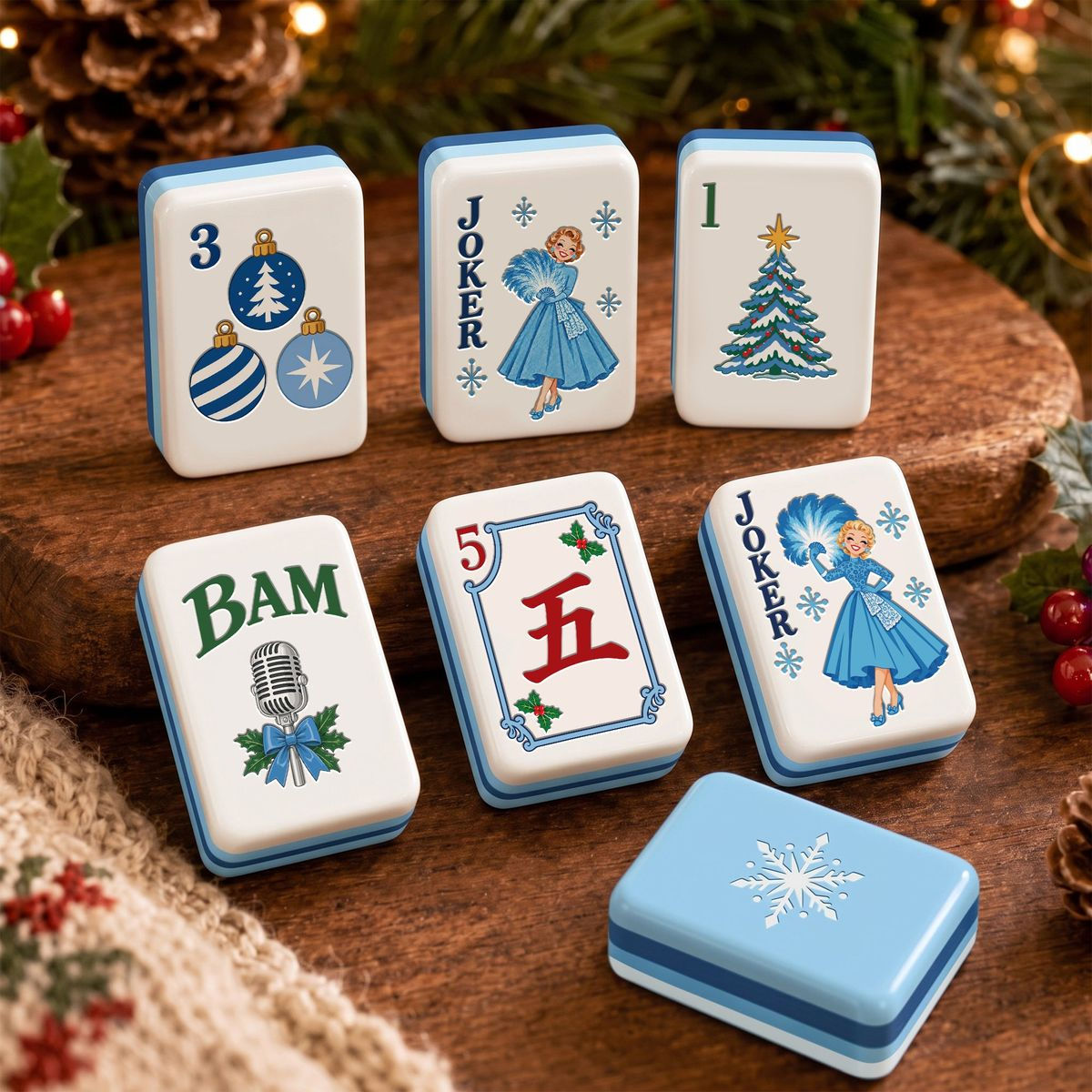
Fujian mahjong differs sharply from American play: tiles are often held concealed in hand (not racked and exposed), melds form through rapid discards and calls, and scoring bases on local rulesets rather than a printed card. The most common mistakes are (1) miscounting tile values or not recognizing which tiles win, (2) calling discards incorrectly or too slowly, (3) failing to track the dead wall or replacement draws, (4) mixing up which player is dealer after a win, and (5) not agreeing on payout multipliers before play starts. Fujian mahjong plays faster than American—tiles move in seconds—so errors compound quickly. Most slip-ups vanish once you memorize the tile point system, nail the call order, and keep a tally sheet. Our players use best-selling mahjong sets with clear tile faces precisely to avoid reading mistakes under pressure.
Why do players miscount tile values in Fujian?
Tile ranks in Fujian mahjong don't follow American point-pay logic; instead, point values (台/台子) hinge on the hand pattern and tile combinations, not suit. Many beginners flip through tiles during hand-building and lose track of their totals—or confuse which tiles count as "high" (honors, dragons, seat winds). In fast play, you're holding 13–14 tiles in one hand while watching four players, so visual clarity matters. Ensure your set has bright, legible engravings on every tile and that the typeface distinguishes Bams, Craks, and Dots at a glance. Hand-holding games especially need dark tiles with white or high-contrast numerals; dim or fussy tile faces cost you 2–3 seconds per read, and in Fujian you don't have it.

How do beginner callers miss winning melds?
In Fujian, a winning discard can look like a pung, kong, or pair from certain angles, but you have maybe one second to call it—or someone else will. New players either (a) hesitate too long debating whether the tile completes their hand, letting the next player snatch it, or (b) call melds they don't actually have, forcing a penalty restart. Always know your hand before the discard hits the table. Write out your ready pattern or say it aloud to a fellow player during dead time; never wing a call. Also confirm your local rule: some Fujian regions let multiple players call one discard (first caller wins), others rule the discard one-call-only. Agree on this before the Charleston equivalent or tile-passing ritual begins.
What goes wrong when tracking the dead wall?
The dead wall (庄家牌 or equivalent) is the stack of tiles set aside before play; it shrinks as players draw replacements for kongs, and when it empties, the hand ends. Mistake 1: forgetting how many tiles remain in the dead wall, leading players to call kongs when they can't legally draw. Mistake 2: the dealer failing to replenish the dead wall after a kong in the correct order—tile order matters, and if you draw out of sequence, your winning hand can be ruled void. Mistake 3: confusing the dead wall with the living wall (active draw pile). Keep a small tally—pencil and paper on the mat—with dead wall count updated after every kong draw. If your set comes with a mahjong mat, choose one with marked zones for the dead wall so all four players can see it.
🀄 Shop best-selling mahjong sets →
Why does the dealer position rotate incorrectly?
In Fujian, dealer (庄) status passes based on win/loss, not a fixed round-robin. If the dealer wins, they stay; if they lose, the dealer button moves East (or another direction per your house rule). New players often forget to rotate it, or they rotate it the wrong direction, throwing off seat winds and payout ratios for the next hand. A single mistake here means the wrong player pays double on the next hand, or someone scores into a hand they shouldn't. Solution: designate one player as scorekeeper and have them move a physical marker (a chip, coin, or engraved dealer token) visibly around the table after every hand, even during practice games. Speak it aloud: "Dealer stays" or "Dealer East," so all four hear it.

How do payouts go sideways when you don't pre-agree multipliers?
Fujian scoring almost always includes multipliers (赔 or 倍子): a 2x hand beats a 1x hand by point value, but some regions allow 3x or 4x for rare patterns. If you don't lock in multipliers before the Charleston or tile pass, someone will inevitably argue mid-hand—"That should be 4x!"—and you'll either restart or sour the game. Write the multiplier table on a notecard and place it face-up on the mat for all to see: for example, 1x = basic, 2x = triple-wind pair, 3x = all simples, 4x = all honors. Many regions also play "limit hands" (天胡, 地胡) with a flat payout ceiling (e.g., all wins cap at 32 points regardless of hand). Agree on the limit before cards or tiles are distributed. A tally sheet and clear mat with zone markings help everyone stay on the same page.
🎁 See our most-loved mahjong sets & accessories →
Comparison: How Fujian Differs from American Mahjong
Factor | Fujian (闽南) | American |
Tile hold | Concealed in hand (no rack) | Racked and exposed to all |
Melds | Formed by hand discard; open or closed per local rule | Only exposed sets count; closed melds hidden |
Card/sheet | No standardized annual card; rulesets vary by region | NMJL card (annual) governs all hands |
Speed | Very fast; calls in 1–2 seconds | Deliberate; players verify card before declaring |
Winning rule | Self-drawn or discarded; local variants | Must match the year's card; no free interpretation |
Scoring | Multipliers (1x–4x+) & local limits | Point values per card; fixed scale |
Error recovery | Often restart hand; disputes common | Strict rulebook; appeals to NMJL card |
The key: Fujian is local and fluid; American is standardized and rigid. For Fujian play, lean on clear tile faces and a written ruleset. For American, use the card and a best-selling mahjong set that's been played in league games.
What to Check Before You Buy a Set for Fujian Play
Tile visibility: Can you read every numeral and suit symbol in low light or from across a table? Engraved tiles with high contrast beat painted ones.
Tile balance: Do tiles feel evenly weighted? Unbalanced tiles tumble unpredictably and slow the game.
Set count: You need a full 144 (or 160 with spares). Confirm the seller includes all four winds, two dragons of each color, and eight flowers.
Discard pile space: Is your mat or table large enough for a 13–14 tile hand in one player's zone plus a discard row? If not, tiles bunch up and mistakes spike.
Tally sheet: Bring pencil and paper, or print a scorecard so you log every hand and payout—this alone eliminates 80% of disputes.
✨ Find your Mahstead set — free US shipping →
How Fujian Players Avoid the Most Costly Mistakes
Memorize the basic tile point values for your region before the first hand; don't learn on the fly.
Agree on multipliers and calling order in writing, face-up on the table; have the scorekeeper read them aloud.
Tally after every hand, even practice games, so payout logic is audible and visible.
Use mahjong racks with pushers during learning sessions—rack one copy of each player's 13 tiles so everyone sees who holds what. This trains your eye and cuts misread errors in half.
Track the dead wall on a notecard; update it visibly after every kong.
Rotate the dealer button out loud after every hand.
Keep a scorecard and photograph it at the end of each night so disputes can be resolved later.
Many casual Fujian groups skip these steps and wonder why arguments flare. A single evening of preparation—a written ruleset, a tally sheet, clear tiles—turns chaos into flow.

FAQ
Is Fujian mahjong the same as Hong Kong mahjong?
No. Hong Kong mahjong (香港麻將) has different tile values, melds, and scoring. Fujian is tied to the Fujian province and coastal Taiwan region; Hong Kong follows its own standard. Confirm your group's ruleset before assuming rules transfer between variants.
Can I use an American mahjong set to play Fujian?
Yes, if the tile count matches (144 or 160) and you have clear numerals. American sets are legal; the card inside is not used. You'll need to translate Fujian hand patterns to tile combinations, which slows new players—so stick with a standard set until you're fluent.
Why do Fujian games move so fast compared to American?
Fujian tiles are held in hand rather than racked and exposed, so discard choices and calls happen in rapid succession. American play allows time for card consultation and verification, slowing the pace deliberately. Fujian is built for speed and reflexes; American is built for precision and fairness.
What's the most common reason a Fujian hand restarts mid-play?
A player calls a discard they don't actually have, or the dealer draws from the wrong position in the dead wall. The hand is declared void and typically a penalty is paid (e.g., the caller pays a small fee). Writing down the exact draw order before play prevents dead-wall errors.
Should I use a mat or a table cover for Fujian?
A mahjong mat with clear zone markings (dead wall, discard row, hand area) helps four players stay organized in fast play. A bare table makes tile tracking hard and disputes likelier. Even a printed cardboard mat with zones is better than nothing.
Where can I find written Fujian rules before my first game?
Local community centers, libraries, or cultural associations in areas with Fujian or Taiwanese populations often host games or lend rulebooks. Online forums (Reddit, regional Facebook groups) document regional variants. Always ask your host for the house rules in writing before you arrive.


View More
View More
View More
