
Chinese Official Mahjong Cheat Sheet: Rules & Hand Patterns
Last updated: Nov 23, 2026
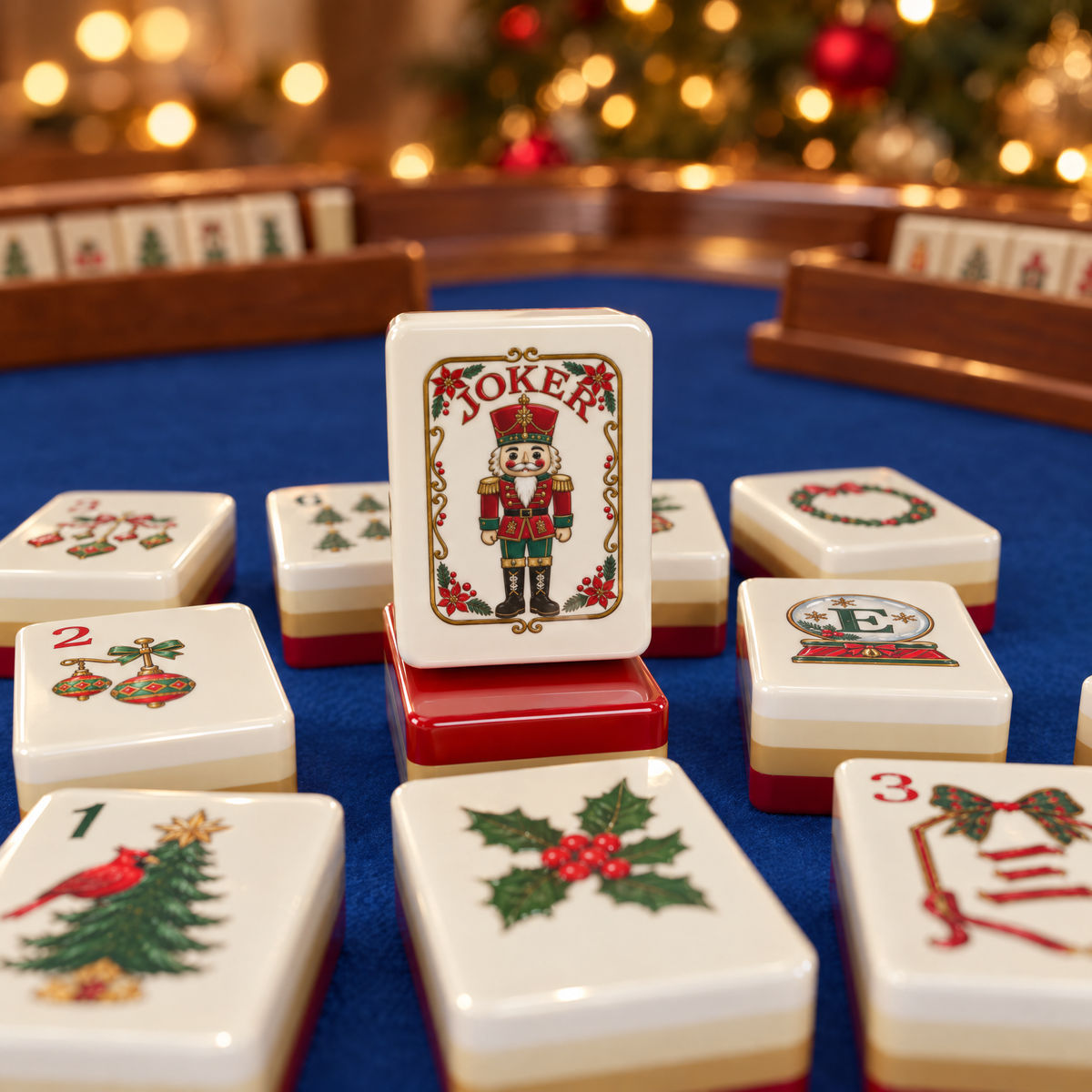
Chinese Official mahjong uses 144 tiles—three suits (Bams, Craks, Dots) 1–9 in fours, plus 16 winds and 12 dragons—but wins by declaring melds (three-tile groups called pungs/pongs, kongs/kongs, or chows/chi—which are sequences unlike American rules). A chow is three consecutive numbers in one suit (e.g., 3–4–5 Dots); American mahjong forbids these entirely. Players win by showing 14 tiles: four melds plus a pair. Scoring is based on the type and difficulty of melds, not a fixed yearly card. The game moves faster than American mahjong and relies on memory and probability rather than card reference. Many regional variants exist (Cantonese, Sichuan, Shanghai); this covers the modern standardized ruleset taught internationally.
Chinese Official mahjong (also called Classical or "Zhong Guo Majiang") uses 144 tiles—three suits (Bams, Craks, Dots) 1–9 in fours, plus 16 winds and 12 dragons—but wins by declaring melds (three-tile groups called pungs/pongs, kongs/kongs, or chows/chi—which are sequences unlike American rules). A chow is three consecutive numbers in one suit (e.g., 3–4–5 Dots); American mahjong forbids these entirely. Players win by showing 14 tiles: four melds plus a pair. Scoring is based on the type and difficulty of melds, not a fixed yearly card. The game moves faster than American mahjong and relies on memory and probability rather than card reference. Many regional variants exist (Cantonese, Sichuan, Shanghai); this covers the modern standardized ruleset taught internationally.
What tiles do I use and how many of each?
Chinese Official mahjong plays with exactly 144 tiles: no jokers, no flowers, no blanks. You get three Bamboo suits (Bams), three Character suits (Craks), and three Dot suits numbered 1–9, with four copies of each tile. That's 108 tiles total across the three number suits. Add 16 winds (four North, East, South, West) and 12 dragons (four each: Red, Green, White). No spares, no add-ons—144 is the game. The 1 Bam shows a bird; the 1 Crak often displays a character. White dragons serve as the "zero" or blank equivalent in some contexts but are always a separate tile, never a wild. Because there are no jokers or flowers, the game plays tighter and strategy becomes harder to hide.

How do melds work—especially chows?
In Chinese Official mahjong, a meld is any group of three identical tiles (pung/pong) or four identical tiles (kong/kong). Crucially, you can also form a chow (chi): three consecutive numbers of the same suit only (e.g., 3–4–5 Bams or 7–8–9 Dots). American mahjong has never allowed chows; this is the single biggest rule difference. All melds can be exposed (shown face-up on the table when you claim a discard or draw). You declare your hand by laying down all four melds face-up, then showing your pair. Chows are open to strategy: the 1–2–3 sequence is called "chicken hand" (easy, low-scoring); 7–8–9 is stronger. Each chow opens the door to specific tiles only—for instance, if you need 4–5–6 Dots and you already hold 4–5, only a 6 will complete it, unlike American sequences, which do not exist at all.
What hands win, and how do you score them?
You win by declaring 14 tiles: four melds (pungs, kongs, or chows) plus a pair. Unlike American mahjong's yearly card, Chinese Official scoring is always based on the meld types and composition. A "simple hand" uses only number tiles 2–8 (no terminals: 1 or 9). An "honor hand" uses winds and dragons. A "mixed" hand blends numbers and honors. A "pung hand" uses all pungs and kongs, no chows—this scores higher because it is harder. A "chow hand" (all chows except one pung for the pair) scores lower. The highest hands are all the same suit (no other suits or honors) and all pungs: these are "all pungs, all numbers, one suit" hands worth maximum points. Scoring is not fixed; it varies by ruleset region (Cantonese rules differ from Shanghai rules). Most international play uses a system where each meld type and hand pattern yields points, and the winner collects from all three other players based on the final total.
🀄 Shop best-selling mahjong sets →
How does calling and winning differ from American mahjong?
In American mahjong, you call a hand only when you have all 14 tiles private (hidden in your rack) and it matches the current year's National Mah Jongg League card. No melds are exposed mid-game until you win. Chinese Official mahjong is the opposite: you expose melds throughout play as soon as you form them (or as soon as another player discards a tile you can claim for a meld). When you draw a tile that completes your 14-tile hand (four melds + pair), you announce "win" or "hu" immediately. Winning often happens when someone else discards a tile you need for your pair or final meld, so the discarding player is penalized. American mahjong also has no discard-driven winning: you must complete your hand privately. Chinese Official is faster-paced and more reactive; American is slower and requires memory of the card.
What are the key differences from American and other variants?
Feature | Chinese Official | American | Hong Kong | Riichi |
Tiles played | 144 (no jokers) | 152 + 8 jokers | 144 | 136 |
Chows allowed? | Yes, central mechanic | No, never | Yes | Yes |
Melds exposed mid-game? | Yes, as formed | No, only at win | Yes | Yes |
Pair in winning hand | Always required | Always required | Always required | Always required |
Scoring system | Meld type + pattern | Fixed yearly card | Meld type + pattern | Hand value + fu |
Jokers as wild? | N/A—none | Yes, central | No | No |
Winning speed | Fast (discard-driven) | Moderate (card-based) | Fast | Variable |
Learning curve | Steep (many rules per region) | Moderate (one card per year) | Steep (many variants) | Moderate (fu, han) |
Chinese Official requires knowing many hand patterns and regional rules; there is no single "card" to reference as in American play. The pace is quicker because melds are exposed continuously, and someone calling a discard can end the hand instantly. Hong Kong mahjong is similarly fast and uses chows, but has its own distinct hand patterns and scoring. Riichi (Japanese) also uses chows and meld exposure but adds betting rounds and a "ready" declaration. American mahjong is the slowest, most controlled: you study the card, plan privately, and only reveal when finished.

How do I know if a hand is ready to win?
A "waiting hand" or "ting" hand is one where you need only one more tile to win. Once you have three complete melds and one incomplete group (missing one tile), you are waiting. For example: if you have three Bams (a pung), five Dots (need one more for a chow), a Kong of White dragons, and you're holding a 2 Craks, you are waiting for a 4 Dot (to finish 3–4–5) or a 2 Crak match (to make your pair). In Chinese Official play, you can wait on up to four different tiles (the game rules some waiting patterns illegal to speed play, but this varies by region). When you draw a winning tile, you declare immediately. Declaring a win too early—announcing before you have all 14 tiles correctly formed—is a foul and forfeits your hand. This is why studying hand patterns before playing is critical; novices often miscalculate their melds and lose automatically.
What common mistakes do new players make?
Forgetting that chows are sequences, not identical tiles. New players from American mahjong backgrounds often confuse chows with pungs. A pung is always three identical tiles (3–3–3 Bams); a chow is three consecutive (3–4–5 Bams). American players have never used chows, so retraining your brain takes time.
Miscounting their pair. You must have exactly one pair (two identical tiles) and exactly four melds. If you count wrong, your hand is invalid even if you announce it. Always lay out all 14 tiles face-up before declaring.
Exposing melds too early. Some variants require melds to be exposed only when you claim another player's discard; exposing from your own draw is sometimes a foul. Check your ruleset before the first hand.
Calling on a tile another player just discarded without checking hand legality. If the discard completes an illegal hand (too many pairs, wrong meld count), you lose immediately. Verify all four melds and the pair align with your ruleset's hand-type rules before calling.
Confusing terminal tiles. The 1 and 9 of each suit are called "terminals" and are often restricted or required depending on the hand type. A "simple hand" uses only 2–8; a "terminal hand" must use 1s and 9s. Mixing them wrongly is a common foul.
What to check before you buy a Chinese Official mahjong set
If you're serious about learning Chinese Official mahjong, invest in a best-selling mahjong set with clear, large characters so you can distinguish Bams, Craks, and Dots at a glance, and winds and dragons instantly. Look for:
Large, printed numerals and suit symbols. Hand-painted bamboo or bone sets are beautiful but harder to read under poor light; acrylic engraved sets are sharper.
Four identical copies of each tile. Verify the set is truly 144 tiles (no jokers or flowers) before purchase; some sets sold internationally add extra tiles by mistake.
A mahjong mat with a center zone clearly marked. Chinese Official play often uses a designated center discard area; a mat keeps tiles organized and prevents accidents.
Racks with pushers. Because melds are exposed throughout, organizing your hidden tiles is crucial; pushers help you manage the tiles cleanly without showing your hand to opponents.
Do not buy a set that advertises "160 tiles" or "jokers included" for Chinese Official play—those are American mahjong sets. Confirm with the seller that the set is 144 tiles, no jokers, no flowers, with four copies of each tile. Mahstead sells acrylic sets suitable for international play, though all Mahstead sets are designed for 152-tile American mahjong; verify tile count and suit names before ordering if you play a different variant.
🎁 See our most-loved mahjong sets & accessories →
How does the Charleston work in Chinese Official play?
The Charleston—the pre-game tile-pass ritual—does not exist in Chinese Official mahjong. American mahjong uses the Charleston to distribute tiles strategically before play begins; Chinese Official starts with a dealer who deals 13 tiles to each player, then draws one more to start. The draw and discard phase then begins immediately. There is no passing phase. This is another fundamental pace difference: American games take 10–15 minutes to set up and play one hand; Chinese Official games play one hand in 5–10 minutes because there is no Charleston. If you have learned how the Charleston works in American mahjong, forget it for Chinese Official—it will confuse your learning.
✨ Find your Mahstead set — free US shipping →

FAQ
Can I use an American mahjong set to play Chinese Official?
Technically yes—you have the same tiles (numbers, winds, dragons)—but you'll need to remove the jokers, flowers, and any blank tiles, leaving exactly 144. Most players recommend a dedicated 144-tile set because the ritual and rhythm of the game feel different, and using a partial American set causes confusion.
Is Chinese Official mahjong legal in casinos or competitive settings?
Yes, in China, Taiwan, Hong Kong, and Southeast Asia, Chinese Official mahjong (particularly Cantonese and Shanghai variants) is played competitively in clubs, tournaments, and legally in many regions. International tournaments use standardized rules. American mahjong is legal in most U.S. venues but is primarily a social game; Chinese Official is more widespread globally in organized play.
How long does a game of Chinese Official mahjong take?
A single hand typically takes 5–15 minutes depending on player speed and skill. A full game (usually 4 hands, one as dealer per player) takes 30–60 minutes. American mahjong games typically take 45 minutes to 2 hours because of the Charleston and hand complexity.
Do I have to memorize all the hand patterns to play Chinese Official?
Beginners can start with simple hands (chows, pungs, simple numbers, one suit) and gradually learn complex patterns as they gain experience. However, advanced players do memorize dozens of high-scoring hand types. Regional variants (Cantonese, Shanghai, Sichuan) have different pattern lists, so your study depends on which version you play.
What's the best way to transition from American mahjong to Chinese Official?
Start by understanding that chows (sequences) are now legal and central to play. Practice forming all four melds + pair combos on a table before playing competitively. Watch tutorial videos for your specific regional variant (Cantonese is most common internationally). Play your first few hands with experienced players who can coach you through the meld exposure and winning rules.
Can Chinese Official and American mahjong be played on the same evening?
Yes, many groups host "mixed nights" with American and Chinese Official tables. Just ensure you have separate tile sets, mats, and racks for each game—do not mix tiles or try to apply one ruleset to the other mid-game, or players will lose track of legal melds and hands. Keep the American set (152 tiles + jokers) and Chinese set (144 tiles, no jokers) clearly labeled.


View More
View More
View More
