
How Many Tiles in Mahjong Solitaire? Rules & Setup
Last updated: Nov 23, 2026
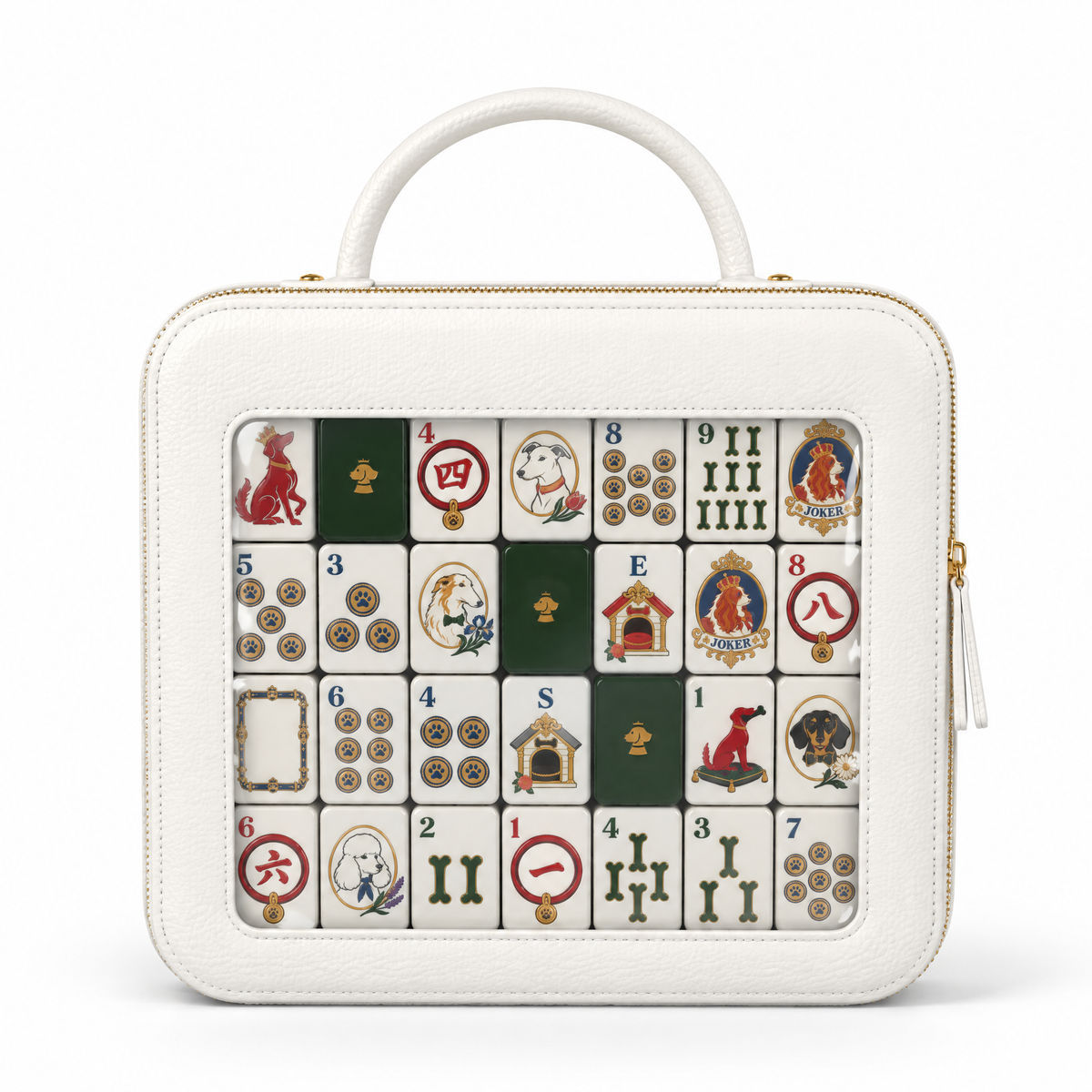
American mahjong solitaire—a one-player version played against time or score—uses the standard 152 tiles from a complete American set: 108 suited tiles (Bams, Craks, Dots numbered 1–9, four of each), 16 winds, 12 dragons, 8 flowers, and 8 jokers. Some solitaire players add extra jokers from spare tiles included in 160-tile sets for flexibility, but the core game plays with exactly 152. Chinese and Hong Kong solitaire variants may use 144 tiles or add special cards; those games follow different layouts and matching rules. Solitaire differs fundamentally from four-player mahjong: there's no Charleston, no exposed melds, no scoring card—you're clearing a pyramid, tower, or grid by matching pairs or sets until none remain. You don't need partners, a dealer rotation, or wind calls. What matters is the tile count, layout rules (how pieces stack), and whether you're playing for relaxation or speed. A standard acrylic American mahjong set gives you everything needed.
What Exactly Is Mahjong Solitaire?
Mahjong solitaire is a one-player, puzzle-like card game where you match and remove tiles from a preset arrangement. Unlike four-player American mahjong, there's no dealer, no hands, no partnerships. You're working against time or your own score, clearing tiles by pairing identical pieces. It's closer to Solitaire card games than to table mahjong. Most Western players learn solitaire online before joining a weekly game group.

How Many Tiles Do You Use in American Mahjong Solitaire?
American mahjong solitaire uses all 152 tiles from a standard set: 108 suited tiles (Bams, Craks, Dots in numbers 1–9, four copies each), 16 winds (four each North, East, West, South), 12 dragons (Red, Green, White), 8 flowers, and 8 jokers. All 152 tiles are dealt into the layout; jokers can substitute for missing matches. If playing casually at home, you might ignore one or two tiles as "no-win" pieces, but tournament-style solitaire clears the full board or declares a loss. The setup is deterministic: same layout, same starting position every time you play.
What's the Difference Between American, Chinese, and Hong Kong Solitaire Tile Counts?
American solitaire: 152 tiles, Western acrylic sets, jokers permitted as wild cards. Chinese solitaire: Often 144 tiles (no flowers or fewer jokers), played with traditional Chinese sets, tiles arranged in pyramids or towers. Hong Kong solitaire: 152 tiles with regional dragons and wind-ordering variations; layout emphasis on stacking and accessibility. Riichi/Japanese: Rarely played solo; if adapted, uses the full 136-tile set plus any regional additions.
The American variant is easiest for beginners because jokers solve accessibility problems. Chinese and Hong Kong versions reward spatial planning over luck. None use the National Mah Jongg League card; solitaire is pure tile-matching, no hand requirements.
Do You Really Need an Entire 160-Tile Set for Solitaire?
Yes and no. You only play with 152 tiles at a time, so a standard set covers you. However, buying a 160-tile set is smart: it includes spare jokers and tiles. Extra jokers let you replay faster (no hunting for damaged tiles), and spares replace any scratched or lost pieces after years of play. If you're a casual player, 152 is fine. If you host solitaire sessions or keep a set in rotation, spare tiles justify the small upfront difference. Mahstead ships complete acrylic sets with durable, visible numbering—ideal for catching matches quickly on a mat or table.
🀄 Shop best-selling mahjong sets →

How Do You Set Up Mahjong Solitaire—Step by Step?
Shuffle all 152 tiles face-down on a clean surface.
Choose your layout (pyramid, tower, spider, or wall—most online games default to pyramid).
Arrange tiles in your layout pattern, all face-up except buried tiles in stacked arrangements.
Start the clock (optional; solitaire is often untimed for relaxation).
Match pairs: identical tiles, or pairs that make a complete set if jokers are live.
Remove matched pairs and move any newly exposed tiles into play.
Use jokers wisely—they substitute when no exact pair exists, but once used, they're gone.
Win condition: clear all tiles before running out of legal moves.
Many players fail because they match greedily early on, trapping high-value or rare tiles. Study the full layout before your first move. If you get stuck, undo (online) or restart (live) and try a different sequence.
What Equipment Makes Solitaire Easier at Home?
Item | Why It Helps | Best For |
Acrylic tile set | Durable, clear numbers, no fading | Weekly players, 5+ years |
Mat (cushioned) | Protects tiles, reduces noise | Shared tables, family game rooms |
Dice & timer | Tracks score, adds urgency | Speed tournaments, groups |
Bag or case | Stores 152 + spares; portable | Travel, multiple locations |
A cushioned mahjong mat protects acrylic tiles from chips and keeps the surface quiet. An engraved set adds personality if you're gifting solitaire to a friend. Dedicated storage bags keep spare jokers organized and prevent tile loss. None of these are mandatory, but all extend tile life and improve play experience.
🎁 See our most-loved mahjong sets & accessories →
Common Mistakes That Tank Your Solitaire Game
Ignoring tile distribution. If you match all your Dots early, you lock out Dragon or Wind pairs later. Scan the full layout before moving.
Overusing jokers too fast. Jokers are insurance, not strategy. Save them for true dead-ends.
Treating solitaire like four-player mahjong. There's no Charleston, no hand-building—it's pure spatial logic.
Playing on a wobbly surface. Tiles slide, pairs hide. A mat or flat table prevents costly mistakes.
Not tracking removed tiles. Write down matched pairs if playing multiple rounds; helps you avoid the same blocked layout.
Can You Play Mahjong Solitaire Variants With Fewer Tiles?
Online solitaire sometimes uses 72 or 96 tiles for speed rounds or mobile play. These are streamlined, not "official," but they're fun. A 72-tile setup (two of each tile, no flowers or jokers) clears faster and suits quick breaks. However, you lose the satisfying complexity of the full 152-tile board. If you prefer speed, ask whether your group plays timed rounds or the complete game. Most weekly mahjong players who dabble in solitaire stick to 152 for strategic depth.
What to Check Before You Buy a Set for Solitaire
Tile clarity: Can you read numbers at arm's length? Acrylic beats bamboo for solitaire (faster spotting).
Joker count: Confirm your set includes at least 8 jokers (sometimes listed in product details). Spare jokers = more replay rounds.
Storage: Does it come with a bag? Loose tiles vanish.
Tile thickness: Thicker acrylic (0.28" or similar) resists chipping during repeated shuffles.
Replacement policy: Mahstead ships complete sets; ask about spare tile availability if you lose pieces over time.
✨ Find your Mahstead set — free US shipping →

FAQ
Do online mahjong solitaire games use the same 152 tiles as a physical set?
Most online solitaire programs use 152 tiles to match standard American sets. However, some mobile apps reduce the count to 72 or 96 for speed. Check the app description; if it mirrors "classic mahjong solitaire," you're likely working with a 152-tile equivalent layout.
Can I play American mahjong solitaire with a set that has jokers missing?
Technically yes, but you'll hit unwinnable boards more often. Jokers solve accessibility when two matching pairs are buried or blocked. A complete set (8 jokers minimum) is strongly recommended; buying a 160-tile set ensures you have spares if one joker wears out.
Is mahjong solitaire a good way to learn four-player American mahjong?
It teaches tile recognition and matching logic, but not hand-building, scoring, or the National Mah Jongg League card. Solitaire is a stepping stone to the social game—it builds confidence with tile names and gameplay rhythm. Start with solitaire, then join a beginner group to learn partnership strategy and the Charleston.
How long does a typical solitaire game take?
Casual play is 10–30 minutes depending on layout and your speed. Timed tournaments run 5–10 minutes. Online versions often time out at 15 minutes. Physical play is self-paced unless you set a personal timer.
What happens if I get stuck mid-game?
You lose that round. Some players undo and replay; others restart. Online solitaire often flags "no legal moves" and auto-scores. There's no "win partial credit"—it's binary: clear the board or don't. This teaches planning and foresight.
Can I use a Chinese or Hong Kong solitaire set for American solitaire?
Yes, but layouts may differ slightly in tile counts (144 vs. 152) and joker rules. If the set has 152 tiles and clear numbering, you can play American solitaire without issue. If it's 144 tiles, you'll have two fewer pieces per game—a valid variant, just not standard American play.


View More
View More
View More
