
Chinese Mahjong vs. Sichuan Mahjong: Key Differences Explained
Last updated: Nov 23, 2026
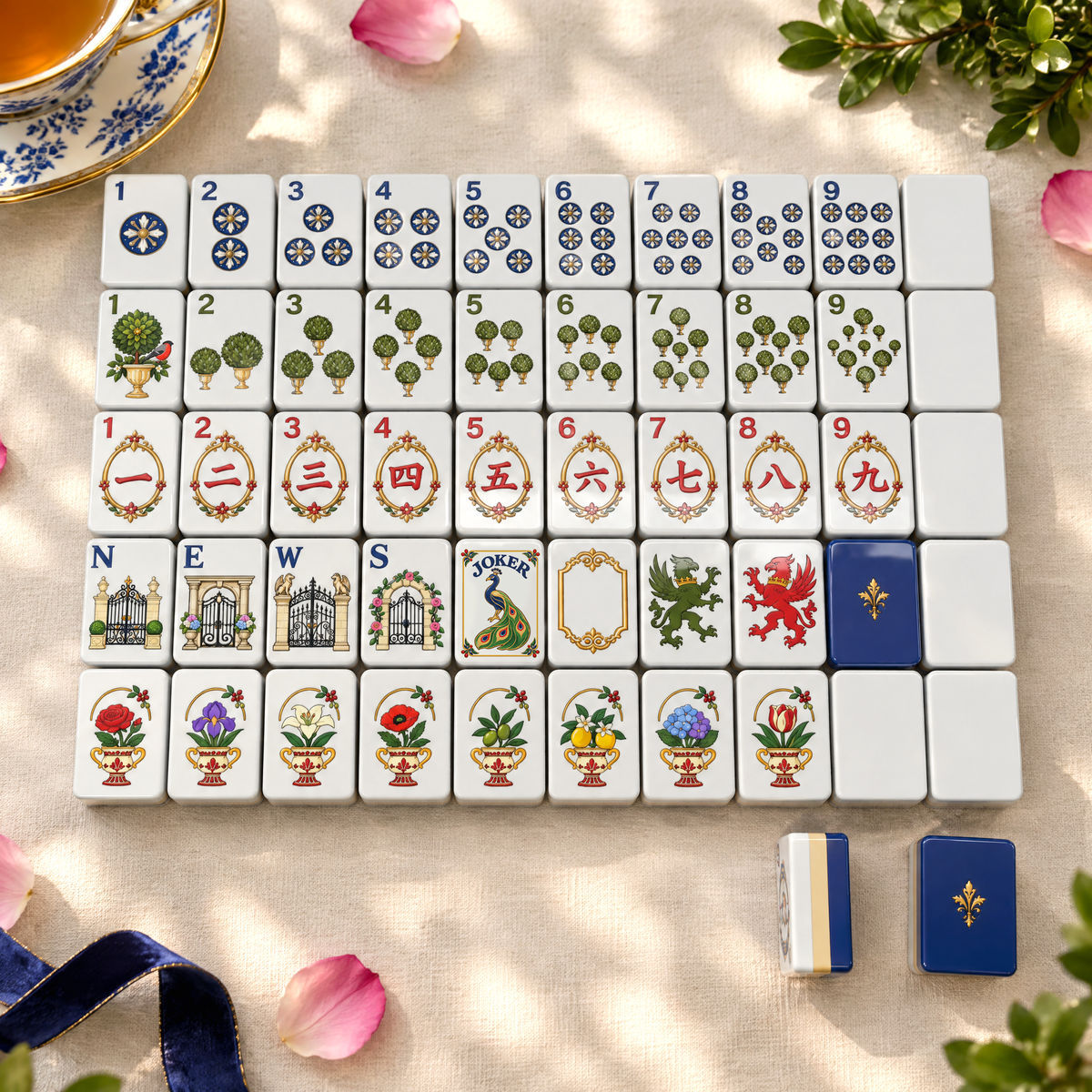
Chinese mahjong (often called Cantonese or Hong Kong mahjong) uses 144 tiles: three number suits (1–9, four copies each), winds, dragons, and flowers. Sichuan mahjong uses 108 tiles—only the number suits and no flowers or winds—and permits chows (sequences like 1-2-3) alongside pungs (three identical) and kongs (four identical). In Hong Kong mahjong, you form melds only by pungs, kongs, and pairs; Sichuan's smaller tile set and inclusion of sequences create faster-paced, shorter rounds that emphasize skill in rapid tile reading. Neither uses jokers (unlike American mahjong's 8-joker deck). Sichuan is regional to southwestern China and played casually; Hong Kong mahjong dominates competitive play across East and Southeast Asia. Understanding these core differences—tile count, legal melds, and hand speed—helps you navigate whether to learn Chinese mahjong's complex scoring or Sichuan's streamlined tempo.
How Many Tiles Does Each Game Use?
Chinese (Hong Kong) mahjong plays with 144 tiles total. The set includes 108 tiles from three number suits (1–9 Bams, Craks, Dots—four copies each), 16 wind tiles (four each direction: North, East, South, West), 12 dragons (four each: Red, Green, White), and 8 flowers. Sichuan mahjong strips down to 108 tiles—only the number suits, no winds, dragons, or flowers. This reduction shapes play speed and hand complexity. Fewer tiles mean fewer draw options per round, shorter wait times between hands, and a tighter decision window. When you're learning Chinese mahjong, the 144-tile setup feels rich and gives more flexibility; Sichuan's compression forces tighter strategy in roughly half the tile pool.

What Melds Are Legal, and How Do They Differ?
Chinese (Hong Kong) mahjong melds are pungs (three identical tiles), kongs (four identical), and a pair (two identical). No chows (sequences like 1-2-3) are allowed—a core rule that emphasizes matching and calling identical sets. Sichuan mahjong allows pungs, kongs, and chows (three tiles in consecutive order), plus pairs. This single rule change transforms strategy: in Sichuan, you're hunting sequences and sets simultaneously, creating more hand paths and faster completion. In Hong Kong mahjong, the absence of chows locks your focus onto numbers or honor tiles as separate pools; you can't "flow" from a 3-4-5 sequence into a 6-7-8. Sichuan players develop pattern-spotting speed that Hong Kong players don't need. If you've played American mahjong—which also forbids sequences—Sichuan's chow mechanic will feel like a new layer of freedom.
How Do Scoring and Hand Patterns Differ?
Hong Kong mahjong assigns point values to hands based on complexity: a pung of honor tiles scores more than a pung of number tiles; specific patterns (like all pungs, mixed suits, all one suit) earn bonus multipliers. A hand can score anywhere from 1 point to dozens depending on pattern and seat position. Scoring tables are memorized; beginners often play "no-scoring" practice rounds just to learn tile recognition. Sichuan mahjong uses a simpler point system: melds are worth base points, and bonuses apply for specific patterns (all one suit, all terminal tiles, all honors). Because the tile pool is smaller, hands complete faster, and scoring feels more direct—fewer edge-case patterns to calculate. In American mahjong, scoring follows the current year's published hand card, which lists exact combinations and point values; it's standardized nationally, unlike the regional variations in Chinese and Sichuan rules.
Aspect | Chinese (Hong Kong) | Sichuan | American |
Tile count | 144 | 108 | 152 (+ 8 jokers) |
Legal melds | Pung, kong, pair only | Pung, kong, chow, pair | Pung, kong, quint, sextet, pair (no chows) |
Flowers included | Yes (8) | No | No |
Winds included | Yes (16) | No | Yes (16) |
Hand speed | Medium (longer rounds) | Fast (quick rounds) | Medium (14–18 tiles per player) |
Scoring basis | Memorized tables, seat-dependent | Simplified point system | Published hand card (national standard) |

Why Do Regional Rules Matter When You're Learning?
Sichuan rules evolved to suit casual home play in one region; Hong Kong rules formalized through decades of tournaments and club play across multiple cities. When you sit down for a game, the ruleset changes your strategy entirely. In Hong Kong mahjong, you memorize scoring patterns and call (expose) melds strategically—revealing fewer tiles keeps opponents guessing longer. In Sichuan, chows mean you're evaluating tile sequences in real time; the game demands faster mental pattern-matching. If you're invited to play in a community center or a home game, asking "Which rules?" before you start is essential—a misdeal under one rule is correct play under another. American mahjong sidesteps this by publishing one national card every spring; all players use the same hand list, so a winning hand in Dallas matches a winning hand in San Francisco.
When Would You Choose to Learn One Over the Other?
Learn Hong Kong mahjong if you're in or near a city with an active East Asian mahjong community—Hong Kong clubs, Chinese cultural centers, or tournaments in major cities often use this ruleset. The learning curve is steep (scoring alone takes weeks), but the social payoff is enormous: you join decades-old game traditions and play competitively if you want. Learn Sichuan if you want faster, more casual games with less memorization—it's popular in family settings in southwestern China and among players who value quick rounds over deep strategy. If you're in the U.S. and starting mahjong from scratch, American mahjong offers the easiest entry: the hand card removes guessing, rules are published nationally, and how to play American mahjong guides are widely available. Many Western players start with American mahjong, then branch into Chinese variants to deepen their practice.
🀄 Shop best-selling mahjong sets →
How Do American Mahjong Sets Fit Into the Broader Mahjong World?
American mahjong is structurally different from both Chinese and Sichuan variants. It uses 152 tiles (108 from three number suits, 16 winds, 12 dragons, 8 flowers, plus 8 jokers) and enforces a published hand card that changes annually. You cannot form chows; you can only expose pungs, kongs, quints, sextets, and pairs. The Charleston—a three-stage tile-passing ritual before play begins—is unique to American mahjong and unknown in Chinese or Sichuan play. Many Western players find American mahjong more approachable because the hand card removes debate: if your hand matches the card, you win; no memorized scoring tables to argue over. If you're curious about mahjong for beginners and don't have a local Chinese or Sichuan community nearby, American mahjong is the most socially available version in North America.
Our best-selling mahjong sets are designed for American mahjong play—each contains exactly 152 tiles plus spares, printed with the suit symbols and numbers that meet American game standards. If you're serious about exploring Chinese variants, you'll need a 144-tile Chinese mahjong set (which we don't carry) or a 108-tile Sichuan set (also outside our inventory). But if you're building a weekly game night in your home or among friends and want a ready-to-play set with clear rules, an American mahjong set with a protective mat and racks will give you the best setup—and one that your entire group can learn from the same published standard.
🎁 See our most-loved mahjong sets & accessories →
What to Check Before You Buy
If you're shopping for a mahjong set and you're drawn to Chinese or Sichuan play: confirm the tile count first (144 for Hong Kong, 108 for Sichuan, 152 for American). Check whether the set includes a rulebook or hand card—Chinese mahjong rulebooks vary by region, and Sichuan rules are often taught verbally, not printed. If you're new to the game, buy or borrow a set locally so you can learn alongside experienced players before investing in your own; rules disputes with a set you've already paid for are frustrating. For American mahjong, every set sold in the U.S. should work with the current year's National Mah Jongg League card (available for purchase online). If you're hosting regular games, a durable mahjong mat and racks with pushers transform the play experience and protect your tiles—these accessories matter more than a fancy set.
✨ Find your Mahstead set — free US shipping →

FAQ
Can I play Sichuan mahjong with a Hong Kong mahjong set?
No. Hong Kong sets include 144 tiles (with winds, dragons, flowers); Sichuan uses only 108 number tiles. The extra tiles aren't removed—they'd confuse the game. You need the correct tile pool to follow the ruleset.
Why doesn't American mahjong use chows like Sichuan does?
American mahjong was codified in the 1920s–30s by Western players who preferred a simpler, more luck-balanced game. Removing chows shifted strategy toward calling melds strategically and reading opponents' hand progress rather than forming sequences. It's a deliberate design choice, not a regional accident.
Which variant is easiest to learn: Chinese, Sichuan, or American?
American mahjong is easiest for beginners because the hand card answers the central question—"Is this a winning hand?"—with no memorization. Sichuan is next (simpler rules, faster rounds). Chinese (Hong Kong) has the steepest curve due to scoring table memorization and seat-dependent bonuses.
If I learn Hong Kong mahjong, can I play Sichuan games without relearning?
Partially. Your tile-reading and strategic instincts transfer, but chows are legal in Sichuan (not in Hong Kong), and the smaller tile pool changes hand math. You'd adapt within 2–3 games, but the rule shift isn't seamless.
Do I need a different mat or rack setup for Chinese vs. American mahjong?
A standard mat and racks work for all variants as long as the tile size is identical. The only difference is the tile count—a mat sized for 152 tiles (American) fits 144-tile (Hong Kong) sets fine. Buy based on your home setup (table size) and tile diameter, not the game variant.


View More
View More
View More
