
What Is Gang in Mahjong? American Rules Explained
Last updated: Nov 23, 2026
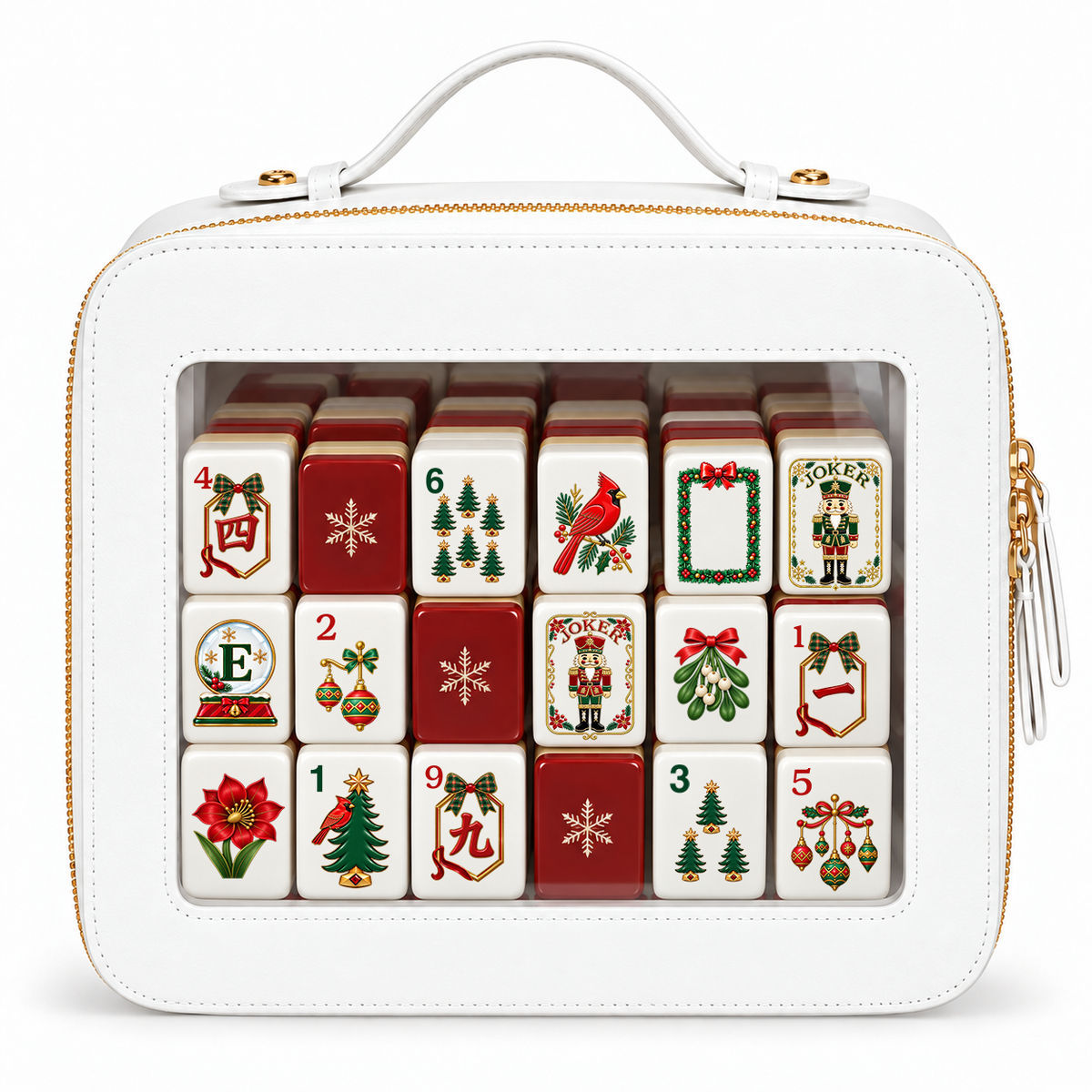
A gang in American mahjong is four identical tiles exposed on the table as a completed unit in your hand. It is not a sequence, not a choice of mixed numbers, and not made from jokers alone—it is always the exact same tile, four times. The moment you have four of one kind, you can lay the gang down and announce it. This signals to other players that you are one step closer to winning and helps them understand what tiles remain in play.
Gangs look clean and official on the mahjong mat because they sit in a row, separated from your concealed hand. Some players enjoy the satisfaction of laying a gang because it proves they have drawn into a solid set. For beginners, gangs are often the easiest exposed set to recognize and count, since there is no math or pattern-matching—just four matching tiles.
How is a gang different from a pung?
A pung is three identical tiles; a gang is four identical tiles of the same kind. Both are "like sets"—no sequences allowed. Once you have a pung and draw the fourth copy, you expose all four as a gang. The key difference: a pung counts as an incomplete three-tile set until you draw the fourth; a gang is already complete and stops you from drawing more of that tile. Per American rules, you cannot make a gang and then remove one tile to keep a pung—once four are laid, they stay as four.

When do you call and expose a gang?
You expose a gang after the draw phase begins, not during the Charleston. When it is your turn and you draw or pick a tile that gives you four of a kind, you announce "gang" (or sometimes "kong" in other variants), lay all four tiles face-up on the mat in front of you, and then draw a replacement tile from the end of the wall or deck. This draw-and-replace step is how you stay on track toward your winning hand. If you cannot use the replacement tile to improve your hand, you discard as normal on your next turn. Timing matters: you cannot retroactively call a gang after someone else has discarded; the call must happen immediately when you draw or pick.
Can you use a joker in a gang?
No. American mahjong rule: jokers cannot be used in a single tile, a pair, or a gang by themselves. A joker can substitute for a missing tile within a pung, kong, quint, or sextet (for example, two Red Dragons and one joker make a valid pung), but it is not the fourth tile. If you hold three Red Dragons and draw a joker, that joker does not become the fourth Red Dragon—you still need the actual fourth Red Dragon to complete the gang. This rule keeps the game honest and forces you to draw or pick the real tile.
How do gangs appear on the National Mah Jongg League card?
The League card (issued every spring) lists winning hands for the year. Hands are grouped by pattern type and show the number of sets needed and the types allowed. Some patterns explicitly show four-of-a-kind sets (gangs) in their structure; others show three-of-a-kind sets (pungs) or sequences. When you read the mahjong card, you are looking for a line that matches your seven or eight exposed sets plus your concealed pair (or concealed sets, depending on the hand type). A hand listing four identical tiles in one position is telling you that a gang is part of your winning combination for that row. Hands that require a gang are often in the "consecutive" or "like sets" sections, though they can appear in any category. Learning to spot a gang notation quickly saves time and keeps you from discarding a tile you need.

What mistakes do beginners make with gangs?
Mistake 1: Confusing a gang with a long pung. A gang is four identical tiles, period. Do not try to "break" a gang into a pung and hold the fourth tile separately—once exposed, all four stay together.
Mistake 2: Calling a gang too early. If you have only three Red Dragons and one joker, you do not yet have a gang (the joker does not count as the fourth Red). Wait until you draw the actual fourth Red, then call.
Mistake 3: Forgetting to draw after exposing. Once you lay a gang, you must immediately draw a replacement tile from the wall or deck. Forgetting this step slows the game and causes confusion about whose turn it is.
Mistake 4: Trying to call a gang out of turn. You cannot declare a gang on another player's turn or after the discard phase has moved on. The call happens only when it is your turn and you have just drawn or picked.
Mistake 5: Exposing a gang that does not match the card. Always verify your final hand against the current year's card before announcing a win. A gang that looks right in your hand may not be valid if the card does not list it as part of your winning pattern.
How do gangs affect the game's flow and strategy?
When a player exposes a gang, the game pauses briefly while they draw a replacement tile. This means other players see one fewer tile in the wall or deck. Fewer tiles available changes the odds of what will be discarded next and shifts the strategy. If you need a specific tile to complete your hand and you watch someone else gang that tile, you know it is gone from play—your backup plan must activate immediately.
Smart players use gangs as signals. When you lay a gang early, you are advertising which tile you have already secured—other players then avoid discarding tiles that would help you complete a second set of that kind. Experienced players sometimes hold back on calling a gang if exposing it makes their hand too obvious and lets opponents block easier tiles. However, most players expose gangs as soon as they have them because the advantage of the immediate draw often outweighs the strategic hide.
What you'll need: A clear mahjong mat makes it easy to see exposed gangs and avoid mixing them with your concealed tiles. If you play at home, a mat with a grid or color zones helps new players organize their sets visually. Our Mahstead mats are designed with spaces for exposed sets, so gangs are always front-and-center where they belong.
Scenario | Your Hand | Next Step | Why It Matters |
You hold three 6 Bams and draw the fourth | Lay the gang on the mat | Draw replacement tile | Gang is now locked; other players know you have it |
You hold three 6 Bams and draw a joker | Do not lay anything | Discard on your next turn | Joker doesn't count as the fourth; wait for the real tile |
You hold three 6 Bams and another player discards a 6 Bam | You cannot call it | Continue your turn | American rules: you cannot pick or call a tile from another player's discard |
You lay a gang and draw a wild or blank | Use it for your next exposed set | Plan your next move | One gang down, one or two more sets to go—keep eyes on the card |
🀄 Shop best-selling mahjong sets →
Gangs in other mahjong variants: how do they differ?
In Chinese, Hong Kong, and Riichi mahjong, the rules for kongs (the equivalent of gangs) are similar—four identical tiles exposed. However, the drawing rule differs. In some variants, after you call a kong, you draw from a special section of the wall (the "dead wall" or "kong tail"), not the regular end. This rule does not apply in American mahjong; you draw your replacement tile from the standard wall or deck. American mahjong also has stricter timing: you must have drawn that fourth tile on your turn, not picked it from a discard. Riichi and Hong Kong mahjong allow concealed kongs (you keep four tiles hidden in your hand and reveal them only on your final win), while American mahjong does not—gangs must be exposed immediately.
If you are learning American mahjong or switching from another variant, remember: a gang is four identical tiles exposed on your turn right after you draw. There is no dead wall, no concealed option, and no joker substitution for the fourth tile. This simplicity is one reason American mahjong is easier for newcomers—gangs happen, they are obvious, and the game moves on.
🎁 See our most-loved mahjong sets & accessories →
What to check before you buy a mahjong set for gang-heavy hands
If you plan to play hands with many gangs (often consecutive or like-set hands), make sure your set has all four copies of every tile. A full American mahjong set contains 152 playing tiles plus spares—enough for a complete game. Check that your set includes four copies each of Bams, Craks, and Dots (1–9), four of each wind (North, East, West, South), four of each dragon, and all flowers. Acrylic tile sets from Mahstead are durable and easy to read from across the mat—important when you are tracking multiple exposed gangs. If you play weekly or in tournaments, invest in a set with clear engraving or tile markings so no one misreads a gang and claims a false win.
Verify your set is a full 160-tile American set (not a variant). Some sets sold online are shorter or missing tiles, which means you might not have all four of a kind—critical for gang-heavy patterns. If you ever cannot form a required gang because a tile is missing, the whole hand fails. Our best-selling acrylic sets are complete 160-tile sets designed for serious play and come with free US shipping.
✨ Find your Mahstead set — free US shipping →

FAQ
Is a gang the same as a kong?
No. "Kong" is the term used in Chinese, Hong Kong, and Riichi mahjong; "gang" is American mahjong. Both mean four identical tiles exposed, but the drawing rules and timing differ by variant.
Can you call a gang on someone else's discard?
No. In American mahjong, you cannot pick a discard to complete a gang. You must draw a gang from the wall or deck on your own turn. This is a key difference from Chinese and Hong Kong mahjong.
What happens if someone exposes a fake gang?
A fake gang (e.g., four tiles that are not identical) is an error. The player must fix it immediately or, if discovered after play has moved on, the hand is void and the player does not win that round.
Do you have to expose a gang the moment you draw the fourth tile?
Yes. You cannot hold four identical tiles concealed and then expose them later as a gang. Once you have four of a kind on your turn, you must call and expose the gang, then draw your replacement tile.
How many gangs can one player have in a single winning hand?
It depends on the pattern listed on the current year's National Mah Jongg League card. Most hands include zero to two gangs; some "like set" or "consecutive" patterns may include more. Always check the card to confirm your hand is legal.
If I draw a replacement tile after calling a gang, can it also be the fourth of another set?
Yes. If your replacement tile completes a second set (e.g., becomes the fourth of a different tile), you can expose that as another gang on your next turn. The game continues normally.


View More
View More
View More
