
Chinese Mahjong vs. Mahjong Solitaire: Game Rules & Key Differences
Last updated: Nov 23, 2026
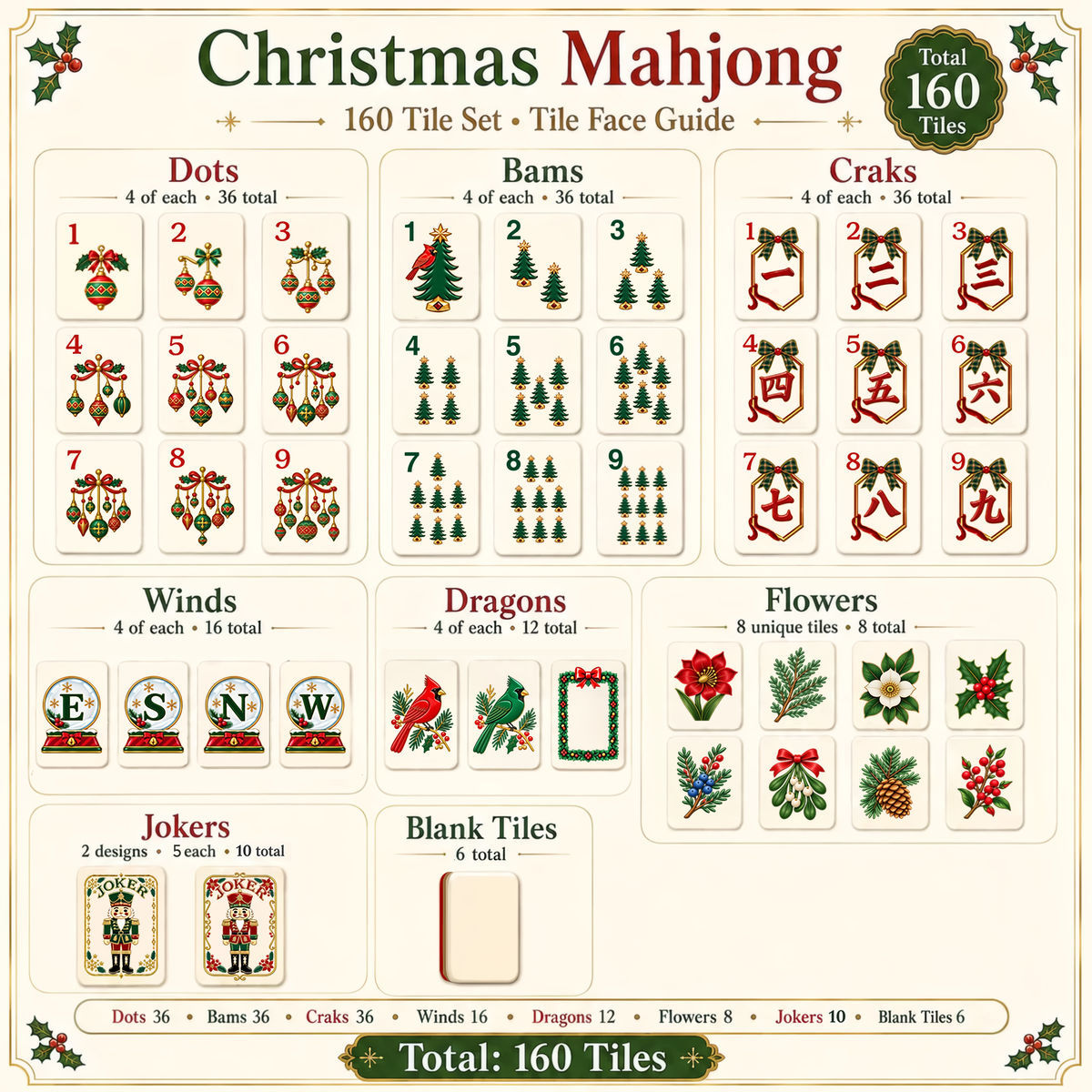
Chinese mahjong is a four-player trick-taking game played with 144 tiles (suits, honors, terminals, and dragons), where players draw and discard to form melds and win hands—roughly 20–40 minutes per round. Mahjong solitaire is a one-player computer puzzle or physical board where you match and remove pairs of identical tiles from a layout until none remain; no deck drawing, no rounds, no social play. Chinese mahjong uses identical Chinese characters and symbols; American mahjong (a variant played in the US) uses the same tile basis but introduces the annual NMJL card and jokers. Solitaire uses pre-arranged tile stacks or digital boards. Most solitaire games take 5–15 minutes. If you want to host a weekly game night, you need Chinese mahjong or American mahjong tiles and four players. If you want a solo meditative puzzle, solitaire is your answer. Confusion happens because both use the word "mahjong," but they're different animals—and the tiles, strategy, and social experience are worlds apart. Choose your best-selling mahjong sets based on which game you actually want to play.
Is Chinese mahjong a team game or individual?
Chinese mahjong is strictly four-player and competitive. Each player draws and discards tiles, watching opponents closely to block their wins. You succeed or fail as an individual—though many house rules allow partnerships at advanced tables. Winning is about luck (the tile draw) and strategy (reading discards, counting hidden tiles, remembering what's played). The social dynamic is central: conversation, banter, and tension around the table are part of the game. Solitaire, by contrast, has zero social element and zero randomness in the layout (if you play a physical board)—only in the initial shuffle.

What tiles does Chinese mahjong use?
Chinese mahjong uses 144 tiles: three suits (Bamboos, Characters, Dots) numbered 1–9 with four copies each; four winds (North, East, South, West); three main dragons (Red, Green, White); and eight flower tiles. That's 108 suit tiles, 16 winds, 12 dragons, and 8 flowers. There are no jokers in traditional Chinese mahjong—unlike American mahjong, which adds eight jokers and uses a card to determine valid winning hands each year. Chinese mahjong hand types are standard across most regions (Pung, Kong, Eyes, etc.), though scoring and winning patterns vary by regional ruleset (Hong Kong, Shanghai, Sichuan each play slightly different versions). Solitaire boards typically use a subset of these tiles arranged in stacks or chains, often without flowers or all winds, because the puzzle focuses on matching pairs rather than building melds.
How does the play sequence differ?
Chinese mahjong follows a strict draw-and-discard cycle: on your turn, you draw one tile (from the live wall, not from discards) and then discard one tile. You announce melds (three or four identical tiles) when they're complete, and opponents may claim your discard to complete their own melds—this interrupts the sequence and adds strategic tension. Play continues until someone wins (completes a legal hand) or the wall runs out (a draw). A typical round lasts 20–40 minutes. Mahjong solitaire has no turns: you choose any matching pair on the board, remove it, and repeat until you win (clear the board) or hit a dead end where no more pairs match. The puzzle reveals new pairs underneath as you remove tiles. Most solitaire rounds finish in under 15 minutes, and there's no way to "lose" except by running out of valid moves—which signals a puzzle you can't solve, not a loss to an opponent.
Can you use an American mahjong set to play Chinese mahjong?
Technically, yes—but it's awkward. American sets have 160 tiles (152 playing tiles plus spares) and include eight jokers that don't exist in Chinese mahjong. You'd ignore the jokers entirely and play with the standard suits, winds, dragons, and flowers. The real issue is the Annual card: American mahjong requires the current year's National Mah Jongg League card to determine winning hands, but Chinese mahjong uses fixed hand types that don't change. If you own an American set and want to play Chinese mahjong occasionally, you can do it—just set the jokers aside and memorize or reference a Chinese mahjong hand-type guide for your regional variant. But if you're serious about Chinese mahjong, a dedicated 144-tile set is clearer and cheaper. If you host mixed games or want versatility, a best-selling mahjong set from Mahstead works for American play; for pure Chinese, seek a traditional 144-tile set from a specialty retailer. We focus on American mahjong, so our sets are optimized for the US game.
🀄 Shop best-selling mahjong sets →

What about Hong Kong and other regional variants?
Hong Kong mahjong is the most common Chinese variant in North America outside of mainstream American mahjong circles. It uses the same 144 tiles but plays slightly different hand-winning patterns and scoring multipliers than Shanghai or Sichuan rules. The core mechanics—draw, discard, melds, and four-player competition—are identical; only scoring and hand validity shift. Learning one Chinese variant makes switching others manageable, though memorizing the ruleset is essential. Taiwanese mahjong and Riichi (Japanese) mahjong introduce additional tile types (like red Fives) and different melds, but the social, four-player, competitive core remains. If you're joining a weekly game in your area, ask which ruleset the table uses before you buy or learn—community centers, libraries, synagogues, and country clubs often host games and can steer you to the local standard. Solitaire variants (digital or physical) have no regional differences; a solitaire board plays the same way globally.
Variant | Players | Tiles | Time/Round | Learning Curve | Best For |
Chinese (Hong Kong) | 4 | 144 | 25–40 min | Moderate | Social game nights |
Shanghai Chinese | 4 | 144 | 25–40 min | Moderate | Regional preference |
American | 4 | 152 + 8 jokers | 20–35 min | Steep (card-based) | US game clubs |
Riichi (Japanese) | 4 | 136 + variants | 30–50 min | Steep (complex melds) | Tournament play |
Mahjong Solitaire | 1 | Varies (72–144) | 5–15 min | Minimal | Solo relaxation |
How do you win at Chinese mahjong vs. solitaire?
Chinese mahjong victory requires completing a legal hand pattern (Pung-based melds plus a pair, Quint patterns, or special hands per regional rules) and declaring "win" before the next player draws. Speed and declaration matter: if you don't call it immediately, you've missed the moment and play continues. Winning nets you points from all three opponents based on the hand's complexity and base value. In solitaire, you win by removing all tiles from the board—no scoring, no opponents, no stakes. If the board locks (no legal pairs remain), you lose and can restart or try a new puzzle. The psychological experience is opposite: Chinese mahjong is high-pressure, social, and uncertain; solitaire is calm, meditative, and deterministic (the puzzle either has a solution or doesn't).
🎁 See our most-loved mahjong sets & accessories →
Which ruleset should a beginner choose?
If you're new to mahjong and live in North America, start with the variant your local game community plays. Ask around at community centers, libraries, and social clubs—they'll tell you whether the table plays American, Hong Kong Chinese, or another style. American mahjong is more common in organized clubs and has standardized rules (the NMJL card); Chinese mahjong is more common in family/casual settings and varies by region. Neither is "easier"—American requires learning the annual card, Chinese requires memorizing hand patterns. For solo play, any mahjong solitaire app or physical board offers zero learning curve; you match pairs until you win or lose. If you're committing to a weekly game, ask the hosts which tiles you'll need—152 American tiles plus jokers, or a 144-tile Chinese set—and whether they have spares to teach you. Once you've chosen a variant, invest in a quality set: proper tile size (roughly 0.9 inches wide) and weight make shuffling and holding cards comfortable and speeds up the game.
What should you check before buying a set?
Confirm your game variant first. Ask your game host or local club which tiles and ruleset you'll use. "Mahjong" alone is ambiguous—you need specifics.
Check tile count and design. American sets are 160 tiles (152 + spares); Chinese solitaire sets are often 72–144 tiles depending on the puzzle layout. Confirm the set includes flowers, dragons, and winds if you need them.
Examine tile size and weight. Tiles should be roughly 0.9 inches wide so they fit comfortably in a four-tile hand and shuffle smoothly. Heavy resin or acrylic tiles last longer than lightweight plastic.
Verify the set is complete. Count suits (Bamboos, Characters, Dots 1–9, all × 4), winds (4), dragons (4), flowers (8), and jokers if applicable. Missing even one tile breaks the game.
Consider your setup. Do you need a mat (to protect the playing surface and reduce noise), a rack with pushers (to hold and organize tiles), or a travel bag (if you move between games)? Our mahjong mats and racks with pushers are sized for American sets but work well with any standard tile dimensions.
Test the storage. Does the set come with a bag, box, or case? Long-term storage in a closed container prevents dust and keeps tiles organized.
Budget for spares. Lose a tile occasionally? Sets with spare tiles or jokers let you replace them without buying a new set—check whether your purchase includes spares.
✨ Find your Mahstead set — free US shipping →

FAQ
Can I play Chinese mahjong on a computer or app like solitaire?
Most computer versions of Chinese mahjong are solitaire puzzles (remove pairs until cleared), not multiplayer games. True Chinese mahjong requires four human players around a table drawing from a live wall and reading opponents. Some apps simulate this, but the social tension and real-time decision-making are lost.
Do I need to buy a special set for solitaire, or can I use my American mahjong tiles?
Solitaire boards come pre-arranged with their own tile stacks (usually magnetic or wooden). You don't use your playing set. If you want a physical solitaire board, buy one separately. Most solitaire players use digital apps, which are free or low-cost.
Is American mahjong just Chinese mahjong with a card?
American mahjong is a regional variant that keeps the Chinese tile structure (suits, winds, dragons, flowers) and four-player format but adds the NMJL Annual Card to define winning hands each year, introduces jokers as wild tiles, and changes some scoring rules. The core idea—building melds and winning a hand—is the same, but strategies and hand validity differ significantly.
How long does it take to learn Chinese mahjong vs. American vs. solitaire?
Chinese mahjong basics take 1–3 hours; mastery (hand patterns, scoring) is 5–10 hours. American mahjong basics take 2–4 hours; mastery requires learning the Annual Card (ongoing, one card per year). Solitaire has no learning curve—you match pairs immediately. All three benefit from supervised play (a teacher or experienced player) in your first session.
What's the cheapest way to start playing one of these games?
For Chinese or American mahjong, buy one quality 144- or 160-tile set (you'll use it for years and share with friends). For solitaire, download a free app—no purchase needed. If you're serious about hosting regular games, a set plus a mat and rack with pushers makes shuffling and play faster, but a mat and rack are nice-to-haves, not essentials.


View More
View More
View More
