
Chinese Mahjong vs. Competition Mahjong Rules
Last updated: Nov 23, 2026
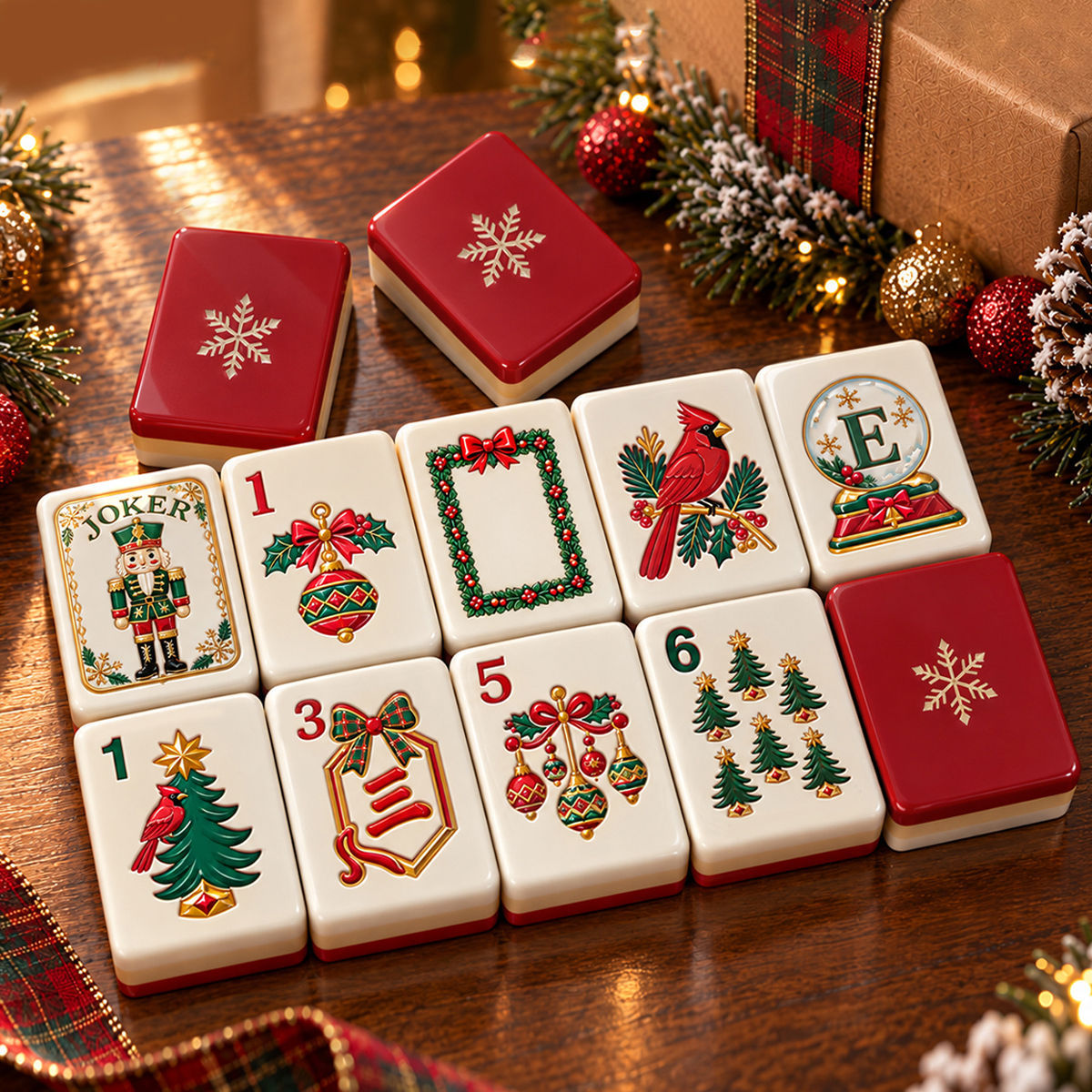
Chinese mahjong uses 144 tiles (Bams, Craks, Dots 1–9 in triples, plus Winds, Dragons, no Flowers or Jokers) and allows chows (1-2-3 sequences) that can be called and exposed—unavailable in American mahjong. American competition mahjong uses 152 tiles (all suits in quads, plus 8 Flowers and 8 Jokers), forbids sequences entirely, and requires hands to match the current National Mah Jongg League seasonal card. Chinese play is fluid and improvisational; American play is rigid and card-dependent. A Chinese round typically takes 30–45 minutes; American games often run 60–90 minutes due to hand verification. Both are four-player games. Neither is "harder"—they reward different strategic thinking. If you're joining a local club or tournament, ask which variant they play; equipment varies too. For American players, our best-selling mahjong sets ship ready to play with the League card. --- 🀄 Shop best-selling mahjong sets →
What's the biggest rule difference between the two?
Chinese mahjong lets you claim and display sequences (chows)—three consecutive numbered tiles like 3-4-5 Bams. American mahjong forbids chows entirely; you can only expose pungs (three identical), kongs (four identical), quints (five), and sextets (six). This single rule change reshapes strategy: Chinese play rewards flexible hand-building and speed; American play demands pattern-matching against a reference card and slower, more deliberate thinking. Chinese games reward intuition; American games reward memory and rule mastery.

How many tiles are actually in each set?
Chinese mahjong sets contain exactly 144 tiles: 108 suited tiles (Bams, Craks, Dots, numbers 1–9, four copies each), 16 Winds (four each: North, East, South, West), 12 Dragons (four each: Red, Green, White), and zero Flowers or Jokers. American mahjong competition sets contain 152 playing tiles: the same 108 suited tiles, 16 Winds, 12 Dragons, plus 8 Flowers and 8 Jokers. That eight-tile difference is structural, not cosmetic. Our 160-tile sets give you 152 playing tiles plus spares for games where tiles wear or go missing.
Can you explain how hand-winning works in each game?
In Chinese mahjong, you win by forming four melds (exposed or concealed) plus a pair—a standard "pung-pung" or "kong-kong" pattern. You can earn bonuses (fans) for special combinations like "all terminals," "all Honors," or "all one suit." Scoring varies by region (Cantonese, Shanghai, Sichuan rules differ). In American mahjong, you win only by matching a complete hand pattern from that season's National Mah Jongg League card. There is no improvisation: your hand must appear on the card, in the exact combination of suits and numbers printed. Scoring is standardized: all winning hands are worth the same point value. American play is essentially "pattern hunting"; Chinese play is "combination building with regional bonuses."
Why do people say American mahjong is harder to learn?
Beginners find American mahjong steeper because you must memorize (or constantly reference) the seasonal League card—hundreds of valid patterns. You must learn American tile names, which suit pairs with which dragon (Red with Craks, Green with Bams, White "Soap" with Dots), how Jokers work (as wildcards, never in a single or pair), and the Charleston pre-game tile-passing ritual. Chinese mahjong has fewer named patterns to learn upfront; players develop speed and intuition through repetition. However, American mahjong's rigidity is also its strength: once you know the card, every game follows identical logic. Chinese mahjong's regional variants mean the rules can shift if you travel or join a new table. For learners, American mahjong's fixed structure eventually feels less overwhelming than Chinese mahjong's contextual scoring and regional exceptions.
Which game is faster to play, and does that matter for hosting?
Chinese mahjong rounds typically finish in 30–45 minutes per game; American mahjong rounds run 60–90 minutes. Why? American games require hand verification: when someone calls mah jong, all four players must inspect the winning hand against the card to ensure it's legal. Disputes halt play. Chinese games move faster because winning is self-evident—you announce your melds and your hand type (no card to check). If you host a weekly game and want to fit three rounds in an evening, Chinese mahjong lets you do it comfortably. If you prefer deep strategic play and don't mind one or two rounds per session, American mahjong's longer pace is a feature. Tournament players expect the check; casual home players sometimes find it annoying. Group size and session length should shape your choice.
Aspect | Chinese Mahjong | American Mahjong |
Tile count | 144 | 152 (150 + 2 spares) |
Sequences (chows) allowed | Yes, can expose | No, forbidden |
Winning pattern | Improvised, region-dependent | Fixed to League card |
Scoring system | Regional bonus fans | Standardized per card |
Time per round | 30–45 min | 60–90 min |
Hand verification | Self-evident | Card check required |
Rule consistency | Varies by region | Identical nationwide |
Beginner learning curve | Medium (intuition-first) | Steep (card-first) |
🎁 See our most-loved mahjong sets & accessories →

How does the Charleston work, and is it the same in both games?
The Charleston is the pre-game tile-passing ritual unique to American mahjong; Chinese mahjong does not use it. In American play, before the hand begins, each player passes tiles to neighbors in a fixed sequence: three tiles right, three tiles left, then three tiles across—a total of two exchanges per player. The Charleston serves two purposes: it randomizes the tile pool (no shuffling shuffle the wall into a wall-building ritual) and it gives players a moment to shape their opening hand. Chinese mahjong skips the Charleston; players simply draw tiles from the shuffled wall. If you're switching from Chinese to American mahjong, the Charleston will feel ritualistic and slow at first. It's essential to American fairness, though—it prevents one player from controlling the tile distribution via shuffle technique. Learn the Charleston order before your first American game; our full guide walks you through it step-by-step.
What about Jokers—do both games use them?
Chinese mahjong does not use Jokers. All 144 tiles are "active" in play; wild cards do not exist. American mahjong includes 8 Jokers (in a 152-tile set), which function as one-tile wildcards in exposed melds only. Critically: a Joker can never be used in a single tile, a pair, or a concealed meld—only in an exposed pung, kong, quint, or sextet. If you build a hand with a Joker, everyone sees it; you cannot hide wildcards. This rule prevents fraud and keeps American mahjong's hand-checking process fair. Chinese players accustomed to a closed-hand game find American Jokers jarring—they make exposed melds more common and create a "wild card fatigue" where the board feels less predictable. If your group plays both variants, label your sets clearly; mixing Chinese and American tiles mid-game is a recipe for arguments.
Which game is better for casual home play vs. tournaments?
Casual home play: Chinese mahjong is gentler. No card to memorize, regional rules allow for playful bonuses ("three dragons pays double"), and speed keeps energy high. Perfect for neighborhood tables or multi-generational family nights where not everyone wants to study before playing. Tournament play: American mahjong dominates. The League card ensures all players follow identical rules nationwide; scoring is standardized; hand verification is auditable. Tournaments require American mahjong because consistency is non-negotiable. You cannot run a fair tournament with six regional Chinese variants in the room. If you're curious about tournament play, contact local mahjong clubs through community centers, libraries, or synagogues—they host beginner-friendly leagues and can tell you whether your area runs American or Chinese competitions. Most urban areas in the US support American league play. Rural or newer communities may have informal Chinese groups.
Do I need different tiles or a different mat for each game?
Yes—tile design and count differ, so sets are not interchangeable. A Chinese 144-tile set lacks Flowers and Jokers; an American 152-tile set includes both. If you own a Chinese set and try to play American mahjong, you are four Jokers and eight Flowers short. You cannot substitute. Tiles are also often marked differently: Chinese tiles use simplified characters; American tiles use English suits (Bam, Crak, Dot). Mats and racks, however, are universal—a mat or rack designed for one game works for the other. The tiles sit the same way, the wall builds identically, and pushers operate the same mechanism. Our mahjong mats and racks with pushers work for both variants, so you can invest once in those and swap tile sets as your group prefers.
What to check before you buy
Variant clarity: Ask your host or group which game you're learning—Chinese or American. Buying the wrong set wastes money.
Tile durability: If you host weekly, tiles wear. Acrylic tiles outlast bamboo or plastic for ten-plus years of heavy play.
Storage: Chinese sets (144 tiles) fit smaller cases. American sets (152 tiles) need space. Measure your shelf before ordering.
Joker confidence: New American players often forget Joker rules. Read how Jokers work before your first game; it saves embarrassment at the table.
Card access: For American mahjong, confirm your group has the current League card. Old cards (prior season) can cause disputes.
✨ Find your Mahstead set — free US shipping →

FAQ
Can I play American mahjong rules with a Chinese 144-tile set?
No. American mahjong requires 8 Jokers and 8 Flowers—152 tiles total. A 144-tile Chinese set is missing both. You cannot substitute or improvise; the hand verification will fail. Buy an American set if that's your game.
Is one game harder than the other, or just different?
Different, not harder. American mahjong's learning curve is steeper upfront (card memorization) but flattens faster (fixed rules everywhere). Chinese mahjong's curve is gentler but less uniform (regional bonuses vary). Most players say American feels more "mental" and Chinese feels more "intuitive."
If my group plays Chinese mahjong, can I ever play in an American tournament?
Yes, but expect a learning period. You'll need to study the League card, Joker rules, and the Charleston. Many clubs offer beginner clinics in winter/spring; ask locally. Your Chinese experience—pattern recognition, tile reading—transfers well; the card just adds a reference layer.
Do mahjong mats or racks differ between Chinese and American play?
No. Mats and racks are universal; they work for both games. Only the tiles themselves differ in count and markings. A mat is a mat; a rack is a rack.
How do I know which variant a mahjong club near me plays?
Call or visit. Check community center bulletin boards, library websites, synagogue social calendars, and country club announcements. Online Meetup boards sometimes list mahjong groups by city. When you contact them, ask directly: "Do you play American League mahjong or Chinese classical?" The answer shapes everything.
Can I switch between games at the same table?
Technically, yes—but don't mix tiles mid-session. If your group wants to play one round Chinese and one round American, break, swap sets, shuffle the wall, and restart. Mixing tile sets in one game is chaos and invites accusations of cheating.


View More
View More
View More
