
Chinese Mahjong Tile Set: American Play & Variants
Last updated: Nov 23, 2026
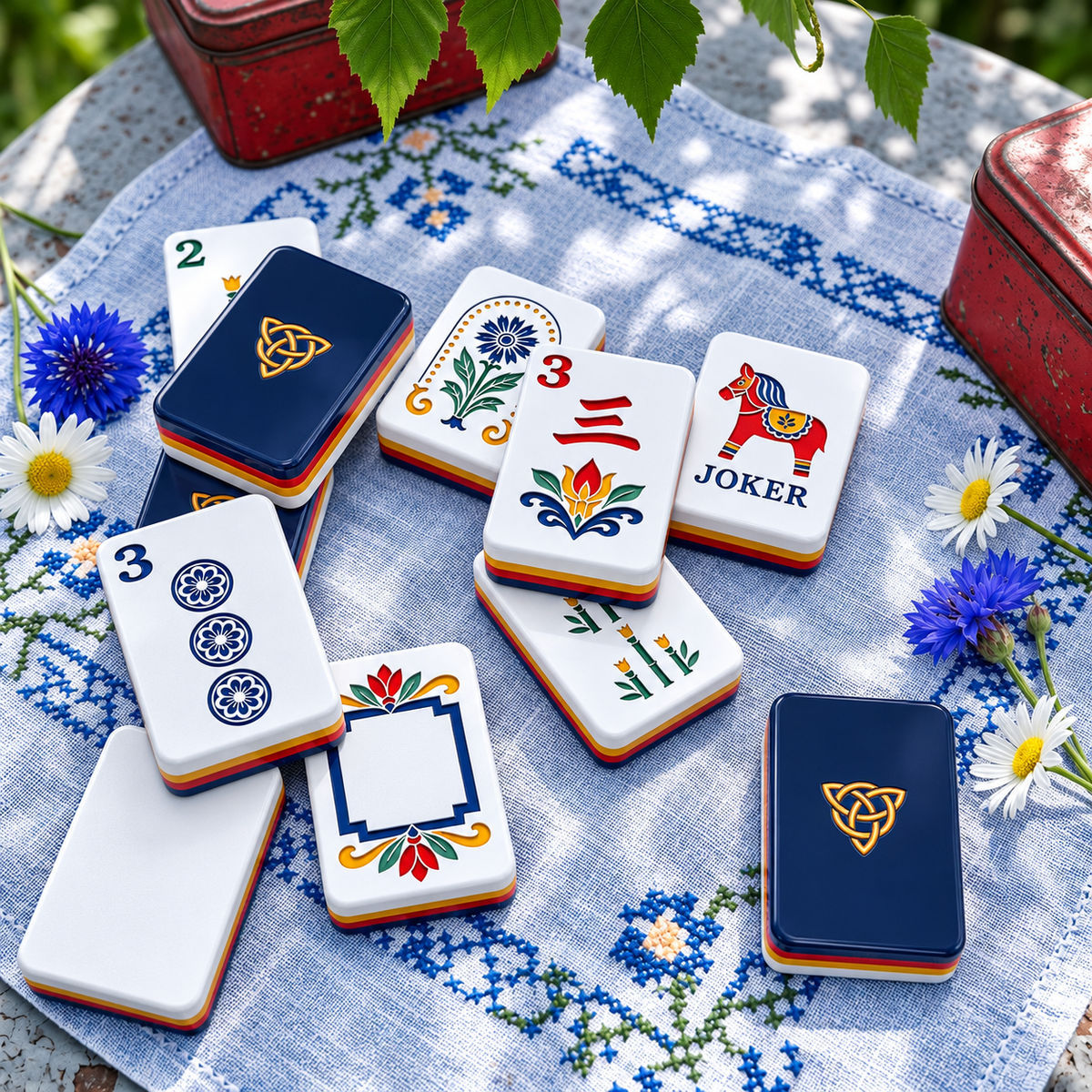
A Chinese mahjong tile set typically contains 144 tiles—three suits (Bams, Craks, Dots) numbered 1–9, each repeated four times (108 tiles), plus 16 winds and 12 dragons. Chinese mahjong includes chows (sequences like 1-2-3), which American mahjong forbids; you can declare and win on sequences in Chinese play. American mahjong uses 152 tiles with 8 jokers and restricts hands to patterns printed on the annual National Mah Jongg League card. If you host American games, stick with a 160-tile set (152 playing tiles plus spares); if you play Chinese variants, a 144-tile set from our best-selling collection works, though acrylic American sets adapt well to casual Chinese play. Key difference: Chinese rewards flexible hand-building; American requires rigid adherence to the card. Cost varies widely; see the product page for your chosen design.
🀄 Shop best-selling mahjong sets →
Why does the tile count matter between Chinese and American?
American mahjong uses exactly 152 tiles plus 8 jokers (160 total in a standard set). Chinese mahjong uses 144 tiles with no jokers. The extra 8 American tiles account for jokers, which can substitute for any tile and appear on the NMJL card as wild-card placeholders. Chinese players build hands by collecting sequences (chows) and sets, then declaring "mahjong" when they complete their hand—no card required, just strategy. American players must match hands to the current year's card before calling. This fundamental difference means an American set cannot fully replace a Chinese set in a traditional Chinese game, though a Chinese 144-tile set can work for casual American play if jokers are represented with blanks or coins.

How do rules differ in Chinese vs. American play?
American mahjong forbids chows—you can only expose or win with pungs (three identical), kongs (four identical), quints (five) and sextets (six). Chinese mahjong demands chows; a complete hand must contain at least one chow (1-2-3 sequence in one suit). American hands come only from the NMJL card; Chinese allows any combination that fits the scoring rulebook. American scoring is point-based and complex; Chinese scoring is simpler per hand rank. Winning conditions also differ: American requires a finished hand matching the card before calling; Chinese allows "waiting" on one or two tiles openly. If you're hosting a mixed group—some American, some Chinese players—clarify rules upfront and consider running separate weekly games rather than blending both systems.
What's the actual difference in equipment setup?
Element | American 160-tile set | Chinese 144-tile set | Best for |
Total tiles | 152 playing + spares | 144 total | American card game or casual play |
Jokers included | 8 jokers in play | None | American (required by card) |
Flowers | 8 (1–4 of each season) | Often 8 | Ritual/luck in both variants |
Suit tiles | 108 (3 suits × 1–9 × 4) | 108 (3 suits × 1–9 × 4) | Identical |
Honors | 16 winds + 12 dragons | 16 winds + 12 dragons | Identical |
Hands allowed | Only NMJL card patterns | Any scoring combo | American league; Chinese freestyle |
Setup time | ~10 min (Charleston + draw) | ~5 min (brief shuffle) | Quick Chinese rounds |
Our best-selling acrylic sets ship with 160 tiles and spare jokers/blanks; they're engraved for American play but work equally well for Chinese games if you skip the jokers or treat extras as wildcards.
🎁 See our most-loved mahjong sets & accessories →

Which variant should you choose for a home game?
American mahjong suits consistent groups—players learn one year's card and practice the same hands weekly. Games last 2–4 hours with 4 players rotating positions and roles. Chinese mahjong rewards quick learners who memorize sequences and scoring ranks; rounds play faster (20–40 minutes per hand). Hong Kong and Taiwanese variants add more scoring layers and region-specific flowers or jokers. If your household plays casually and changes players often, American is steadier because the card standardizes play. If you want speed and flexibility, choose Chinese. If you're splitting time between communities, buy an acrylic American set from our best-selling collection—it adapts to all variants and travels well. Avoid plastic or paper-thin tiles; they warp in humidity and crack when dropped. Acrylic holds up through years of weekly play.
What physical features should a good Chinese set have?
Tile size is personal: standard Chinese tiles are 25–28 mm (roughly 1 inch); some prefer larger 30+ mm tiles for easier grip. Weight matters—heavier tiles (5–8 grams each) feel premium and sit steadily during shuffles; lighter tiles slide too easily. Material: acrylic (durable, easy to clean), bone and bamboo (traditional, pricey, fragile), or plastic (cheap, warp-prone). Engraving clarity is crucial—faded characters make tiles hard to read during fast play. Our best-selling sets feature crisp engraving and consistent weight, designed for weekly play. Check that wind and dragon tiles are distinct from one another at a glance; squinting slows the game. If your group speaks multiple languages, confirm that tiles show Arabic numerals (1–9) in addition to Chinese characters so newer players read hands quickly. Storage matters: a durable travel bag or case protects tiles from chips and keeps counts correct.
What to check before you buy
Tile count & content — Confirm 144 tiles for Chinese or 152 for American. Verify jokers (American only) are included if needed.
Engraving clarity — Tilt tiles under light to check characters are sharp, not faded. Faded tiles slow play.
Weight & balance — Pick up a tile; it should feel solid (5–8 grams), not hollow or lightweight.
Material durability — Acrylic resists chips and stains; bone/bamboo are fragile. Match material to your play frequency.
Wind & dragon legibility — Ensure winds (N/E/W/S) and dragons (Red/Green/White) are visually distinct at arm's length.
Storage included — Check if a bag or case is bundled; if not, budget for one separately to protect tiles.
Suit tile consistency — All Bams should look identical, all Craks identical, etc. Mismatches signal poor manufacturing.
Spare tiles — Confirm extras (jokers or blanks) are included so you can replace lost or chipped tiles.
✨ Find your Mahstead set — free US shipping →

FAQ
Can I use an American mahjong set to play Chinese mahjong?
Yes, mostly. Skip the 8 jokers or treat them as blanks. The 152 core tiles (108 suit + 16 winds + 12 dragons) match a Chinese 144-tile set. You'll have 8 extras, which you can leave in the bag. American acrylic sets work fine for casual Chinese play.
What's the difference between Hong Kong and Chinese mahjong?
Hong Kong mahjong uses 144 tiles but adds heftier scoring rules—knitting (all sequence pairs), special tile combos, and penalty scoring. Play is faster and riskier. Both forbid chows from American play. Tile counts are identical; rule books differ.
Do I need a mat for Chinese mahjong?
Not required, but highly recommended. A mat protects tiles from scratches, defines player zones, and stops tiles sliding during shuffles. Our mahjong mats fit any variant—Chinese, American, or Hong Kong.
How do I store a Chinese mahjong set long-term?
Keep tiles in a durable bag or case away from direct sunlight, heat and humidity. Acrylic resists warping; avoid damp basements. Count tiles annually to catch losses. Wipe tiles with a soft, dry cloth.
Can beginners jump straight to Chinese mahjong?
Yes, if they learn sequences first. Chinese reward pattern-building over rote card-matching, so new players often adapt faster. Pair them with an experienced player for the first 3–4 rounds; then confidence builds. Rules are fewer than American, so onboarding is quicker.
What size mat should I buy for Chinese play?
Standard mats are 27–35 inches square. Chinese games need space for four player zones, a central discard pile, and a dead wall. A 31-inch mat is the sweet spot for home play. See our mat selection guide for detailed sizing.


View More
View More
View More
