
Chinese Mahjong Special Hands: Scoring Patterns Explained
Last updated: Nov 23, 2026
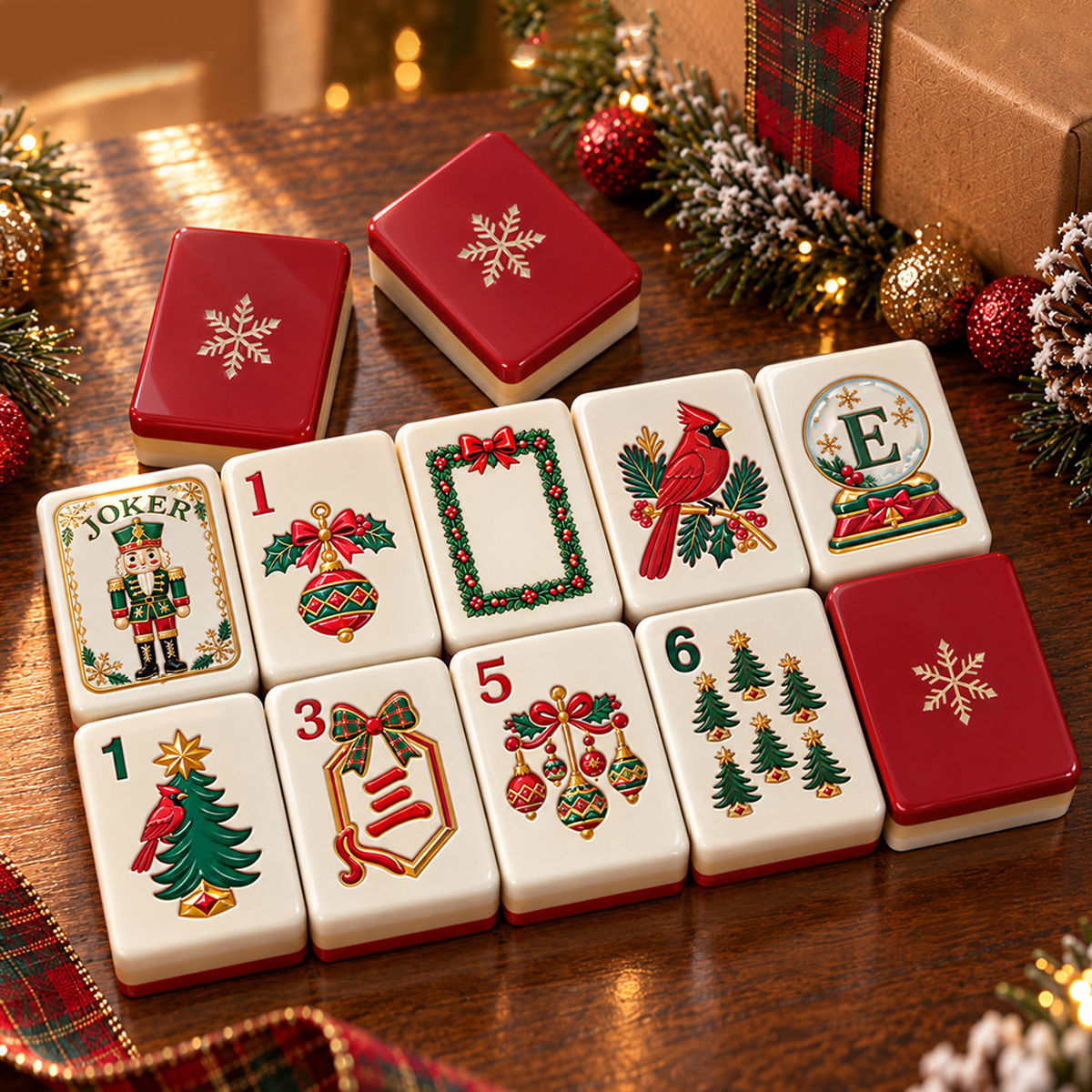
Chinese mahjong special hands (胡牌 hu) are winning tile combinations that score fixed bonus points beyond basic meld values. Unlike American mahjong, which locks hands to a single year's card, Chinese variants (Cantonese, Shanghai, Sichuan) recognize 40–80+ named patterns—from simple "all pungs" (all triplets) to rare "thirteen terminals" (one each numbered 1 and 9, plus all winds and dragons). A hand scores by matching any qualifying pattern; multiple patterns stack to multiply the base score. Scoring starts at a minimum threshold (often 1 faan in Cantonese, or 70 points in Shanghai); hands under that threshold don't win. Most games use a 2–3 faan minimum for beginners. The key difference: American mahjong hands are fixed each season; Chinese hands are named patterns valid any time. We recommend learning one variant deeply before switching—the rule sets diverge sharply on joker use, chow legality, and exposure rules.
Chinese mahjong recognizes a vast set of special hands—melds that score fixed bonus points beyond base tile values. Unlike American mahjong, which locks hands to a single year's card, Chinese variants (Cantonese, Shanghai, Sichuan) recognize 40–80+ named patterns—from simple "all pungs" (all triplets) to rare "thirteen terminals" (one each numbered 1 and 9, plus all winds and dragons). A hand scores by matching any qualifying pattern; multiple patterns stack to multiply the base score. Scoring starts at a minimum threshold (often 1 faan in Cantonese, or 70 points in Shanghai); hands under that threshold don't win. Most games use a 2–3 faan minimum for beginners. The key difference: American mahjong hands are fixed each season; Chinese hands are named patterns valid any time.
🀄 Shop best-selling mahjong sets →
What is a "faan" and how does it multiply your score?
Faan (番) is a unit of hand value in Cantonese and many Asian variants—each faan doubles the base score or adds a fixed multiplier. A 1-faan hand scores 1 unit; 2 faan = 2 units (or double); 3 faan = 4 or 8 units, depending on house rules. Players agree at the start whether faan stack additively or multiplicatively. This is why Chinese hands are both easier and harder than American: easier because you only need one matching pattern to win; harder because scoring combines patterns, and you must track which ones apply to your tiles. A typical "all pungs" (no sequences allowed) might be 2–3 faan; "all honors" (only winds and dragons) might be 5 faan. No American mahjong hand has a faan system—American scoring is deterministic from the card and rarely involves multipliers. If you learn Chinese mahjong first, switching to American feels very rigid; if you learn American first, Chinese feels open-ended.

Which patterns count as bonus hands, and how do they stack?
Most Chinese variants recognize 20–60 bonus patterns; here are the core ones across Cantonese play:
All Pungs (碰碰胡): no sequences, only triplets and the pair. 2 faan.
All Terminals & Honors (字一色): only 1s, 9s, winds, dragons—no number tiles 2–8. 6+ faan.
All Honors (全字): only winds and dragons. 5 faan.
Dragons (三元牌): all three dragons as triplets. 1 faan. Can stack with "all pung."
Winds (三風牌): any three winds as triplets. 1 faan.
All Same Suit (清一色): only Bams, Craks, or Dots (not mixed). 6 faan.
All Terminals (清老): only 1s and 9s, no number tiles 2–8. 4 faan.
One Suit + Honors (混一色): one number suit + winds/dragons (no other suits). 3 faan.
Two or three patterns often apply to the same hand—for instance, "all pungs" + "all terminals" might give 2 + 4 = 6 faan, depending on rule overlap. Some hands are mutually exclusive: you cannot score both "all pung" and "no pair" simultaneously. A score sheet (usually agreed before play) clarifies which combos stack.
🎁 See our most-loved mahjong sets & accessories →
How does American mahjong differ in special hands?
American mahjong has no named special hands—instead, the National Mah Jongg League card (updated yearly) lists 50–60 exact hand patterns. Each pattern is a fixed triplet-pair-triplet-triplet arrangement; a pattern is either your entire hand or it is not your hand. There are no bonus multipliers, no stacking, no faan. For example, the card might show a hand like "Bam 1-2-3-4-5 / Crak pair / Dot triplet / Dragon triplet"—if your tiles exactly match this line, you win that hand as written. If they don't match any line on the current card, you don't win, even if they look similar to a Chinese pattern. American mahjong also forbids sequences (chows) from being called or exposed; you may only expose triplets (pungs), quads (kongs), and longer combos, plus one pair. Chinese mahjong requires sequences—most hands include 1–4 sequences of three consecutive tiles. This rule gap makes the two games feel fundamentally different: American is a card-matching game; Chinese is a tile-combination game.

Should you learn Chinese or American first?
We recommend starting with American mahjong if you're in North America and want to play with established groups—most clubs, libraries, and synagogues run American games. If you're in or closely tied to a Chinese-speaking community, or you want the intellectual challenge of pattern recognition and stacking, Chinese mahjong rewards deep study. The decision depends on who you want to play with. American mahjong has a large active base through the National Mah Jongg League; Chinese variants have stronger roots in specific cities and family traditions. Don't try to mix them in one session—the rule conflicts will derail the game. Pick one, master the hand list or pattern set, and commit to three months of weekly play before switching. Many of us have played both; the gear carries over (tiles, racks, mats work in any variant), but your mental model must reset each time you switch variants.
Variant | Hand Type | Sequences Allowed? | Bonus System | Easiest Learning Path |
American | Fixed card patterns | No (forbidden) | None | Play with a card each hand |
Cantonese | Named patterns | Yes (required) | Faan (1–13) | Memorize 20 core patterns first |
Shanghai | Named patterns | Yes (required) | Points (fixed) | Start with "all pung" hands |
Sichuan | Named patterns | Yes (required) | Faan × point multiplier | Study written rule sheet in advance |
What do you need to play Chinese mahjong at home?
You'll need a 160-tile acrylic mahjong set—exactly 152 playing tiles plus spares—plus a score sheet or written rules posted at the table. A mat with scoring guide helps four players stay organized. A rack with pushers keeps your hand tidy and hidden. A dice pair determines dealer and wall position (same in most variants). For travel or storage, a bag or case protects tiles from wear. Unlike American mahjong, you don't need a card—you need a pattern list written down or printed. Many players photograph or laminate a sheet showing the 20–30 patterns you'll use. Before your first game, agree on: minimum faan to win (usually 2–3), whether patterns stack, which hands are "dead" (unplayed), and who scores the hand. Write it down. Rule disputes end fast when the standard is visible.
✨ Find your Mahstead set — free US shipping →
How do you avoid common scoring mistakes?
Count tiles first. Before declaring a hand, verify you have 14 tiles (one more than the 13 you draw per turn, except after your draw). Miscount and you void the hand.
Know your minimum. If your game requires 3 faan and your hand has only 2, you lose even if your hand is otherwise valid. Ask the table before you draw.
Check for dead hands. Some variants forbid "no pair" hands or hands with only one suit. Agree on dead hands before play starts.
Identify all patterns in your hand. Write down which patterns apply. If "all pung" + "all terminals" both fit, confirm they stack under your house rules. If they don't, your hand scores as the higher-value pattern only.
Verify tile ownership. In some Chinese games, a discard belongs to the wall until the next player draws; in others, the discarder loses it instantly. Misunderstanding who owns a discard can void a meld.
Never split a pair. Once you declare a pair, it locks in. You cannot unmake it to form a sequence or second triplet.
Ask before mixing suit and honor tiles. "One suit + honors" is valid; other mixed hands often aren't. Confirm with the table.
A scorepad and dice help track whose turn it is and what faan each player has scored. Many players photograph pattern sheets for easy reference mid-game.

FAQ
How many special hands exist in Chinese mahjong?
Cantonese mahjong recognizes roughly 20–30 core patterns; Shanghai and other variants add regional hands, bringing totals to 40–80+ depending on house rules. No global standard exists—each region or family has a preferred list. Start with your group's written rules.
Can you score multiple special hands in one winning combination?
Yes, if the patterns don't conflict. For example, "all pung" (2 faan) + "all terminals" (4 faan) in the same hand typically scores 6 faan total. However, some combos are mutually exclusive—check your rule sheet to see which patterns stack.
Is joker use different in Chinese versus American mahjong?
Yes. American mahjong uses jokers extensively as wild tiles in exposed melds (but never in a pair or single tile). Most Chinese variants allow no jokers at all, or allow them only in very limited ways (e.g., one joker per hand maximum). Confirm joker rules before play.
What happens if I declare a hand but it doesn't match any special pattern?
In Cantonese and most Chinese play, if your hand doesn't reach the minimum faan threshold and doesn't match a valid pattern, it's a dead hand and you lose. In American mahjong, you simply don't win—there's no penalty beyond losing your turn.
Can I switch between American and Chinese mahjong if I play both?
Yes, but not in the same evening. The hand logic, allowed melds, and scoring differ too sharply. Dedicate one night to American, another to Chinese. After a few months of each, switching becomes automatic; beginners should play one variant for at least 3 months before mixing.
Do I need different tiles for Chinese mahjong or can I use the same set as American?
The same 152-tile set works for both—most Mahstead sets are dual-purpose. The tile count and suit symbols are identical. The only difference is the hand list you follow and the scoring rule sheet on the table.


View More
View More
View More
