
Changsha Mahjong: Rules, History & How It Differs from American Mahjong
Last updated: Nov 23, 2026
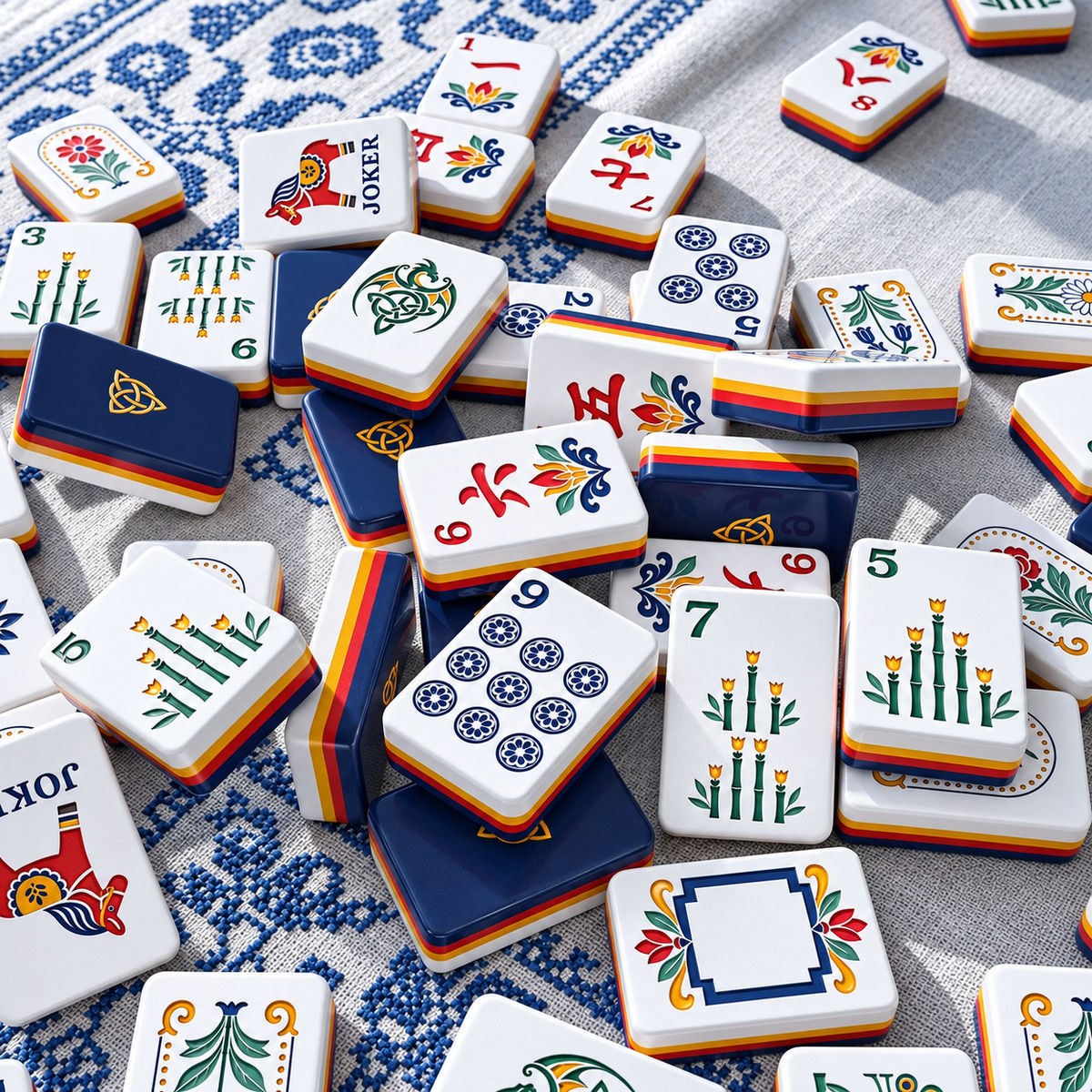
Changsha mahjong is a simplified Chinese regional game from Hunan Province that uses 120 tiles (not 152 like American mahjong) and follows hand-building rules unique to central China. Players collect three-tile melds called pungs, sequences called chows, and pairs to form winning hands within a single turn or across draws. Unlike American mahjong, which requires hands from a printed seasonal card and forbids sequences in exposed plays, Changsha allows chows in exposed melds and relies on memory and quick calculation rather than reference cards. The game is typically played for stakes in fast rounds lasting 10–15 minutes, making it a gambling tradition in Changsha teahouses and homes. Tile cost is lower than Western sets because the variant uses fewer pieces; if you play American mahjong and want to experiment with Changsha rules, you'll need a dedicated 120-tile set rather than adapting an American one from our best-selling collection.
Changsha mahjong is a regional Chinese variant played with 120 tiles and fast-paced hand-building rules. It differs sharply from American mahjong in tile composition, hand structures and gambling conventions.
What is Changsha mahjong and where is it played?
Changsha mahjong originated in Changsha, Hunan Province, and remains the dominant form played in teahouses, family homes and casual gambling circles throughout central and eastern China. It is not an international tournament game like American mahjong; there are no official league cards or standardized rules enforced across regions, though core principles remain consistent. Players typically play in groups of four, passing tiles in rapid cycles and completing hands within single turns. The game thrives in social settings where speed, memory and reading opponents matter more than reference materials. If you've played American mahjong, you'll notice immediately that Changsha feels more improvisational and less rule-bound—no card to check, no strict hand list, no jokers reshuffling strategy.

How many tiles does Changsha mahjong use?
Changsha mahjong uses exactly 120 tiles, compared to the 152-tile standard in American mahjong. The composition includes three suits (Bams, Craks, Dots) numbered 1–9, with four copies of each number per suit, totaling 108 tiles. The remaining 12 tiles are typically winds (East, South, West, North) and honors like dragons, though regional variants may swap or drop certain honors. There are no jokers in traditional Changsha play, and no Flowers tile set. This leaner composition makes the game faster and reduces the complexity of hand calculation compared to American play, where tracking 8 jokers and 16 wind tiles across 152 pieces adds strategy layers.
What are the core rules for winning a hand?
A winning Changsha hand consists of four melds (each a pung, kong, or chow) plus one pair, identical to the structure American players know. A pung is three identical tiles; a kong is four; a chow is three consecutive numbers in the same suit (e.g., 3–4–5 Dots). Unlike American mahjong, chows can be exposed and called during play, meaning you can claim a discard from any player to complete a sequence in your rack. A pair must be identical tiles—two 7 Bams, two East winds, etc. A hand wins when a player draws or calls a tile that completes the fourth meld and the pair; there is no waiting period, no "pung-only" restriction, and no card reference needed. Speed is prized; rounds move so fast that beginners often feel overwhelmed by the pace and tile-reading demands.
How does the tile-passing ritual differ from the Charleston?
Changsha mahjong does not use the Charleston tile-exchange ritual that American players perform before the hand. Instead, players draw and discard tiles in rapid clockwise order after a brief initial shuffle and deal. There is no three-pass rule, no strategic holding of tiles before play begins. Tiles are dealt face-down in stacks, then players organize their 13 initial tiles and immediately begin drawing and discarding in turn order. This streamlined setup speeds up the game and puts more emphasis on reading live discards and predicting opponents' hands rather than pre-hand negotiations. For American mahjong players, this is often the most disorienting rule change—you lose the strategic breathing room the Charleston provides.
What is the relationship between Changsha and other Chinese variants?
Changsha mahjong sits on a spectrum of regional Chinese games, including Canton (Guangzhou), Shanghai, and Sichuan variants, each with distinct tile counts, hand patterns and scoring systems. Changsha is closest in spirit to Canton mahjong but uses fewer tiles and simpler scoring. Shanghai mahjong, by contrast, uses 144 tiles and emphasizes concealment (melding tiles face-down only). Riichi mahjong (Japanese) uses 136 tiles and adds a betting layer after declaring readiness. American mahjong stands apart: it uses 152 tiles, forbids exposed chows, requires hands from a printed card issued every year, and incorporates 8 jokers that fundamentally change hand construction. If you already play American mahjong, switching to Changsha means unlearning the card-based hand list and relearning meld-calling conventions—two major mental shifts.
Variant | Tile Count | Chows Allowed? | Hand Reference | Jokers? | Primary Region |
Changsha | 120 | Yes, exposed | Memory | No | Hunan, China |
American | 152 | No | Printed card | Yes, 8 | USA, global |
Canton | 120–144 | Yes, exposed | Memory | Regional | Guangzhou, China |
Shanghai | 144 | No | Memory | No | Shanghai, China |
Riichi (Japanese) | 136 | Yes, exposed | Memory | No | Japan |
This table shows why Changsha feels so different: no printed hand guide, smaller tile pool, and exposed chow-calling speed up play and reward pattern memory over rule reference.
How do scoring and betting work in Changsha?
Changsha mahjong scoring varies by local house rules and is almost always tied to monetary stakes, even in casual home play. A winner typically collects from all three opponents based on the hand's "fan" (multiplier) count and the base unit bet. Simpler hands (a pung win or drawing a winning tile yourself) may pay 1–2 units per opponent; complex hands with all pungs, no pairs, or self-drawn wins can pay 4–8 units or more. Scoring is calculated live during play, not referenced from a card. Unlike American mahjong, which scores based on the National Mah Jongg League card and emphasizes point totals across multiple rounds, Changsha prioritizes immediate settlement—each hand is a separate betting event, and players often walk away after a session without a running tally. This makes the game more volatile and gambling-focused, which is why casual Western players sometimes find it harder to track.

How can American mahjong players learn Changsha rules?
American mahjong players switching to Changsha should focus on three mental resets: first, memorize the hand-winning structure (4 melds + 1 pair) without a card—use practice rounds to build pattern recognition. Second, learn to call chows quickly when a discard hits your rack; American players are used to never calling sequences, so this requires muscle-memory retraining. Third, accept that local house rules will vary; there is no official Changsha league, so ask experienced players about scoring multiples and special hand bonuses before playing for money. Online tutorials and regional community groups (often found through Chinese social-media forums and WeChat communities) offer demo videos and rule clarifications. The fastest path is to watch 3–5 live hands with narration, then play 10–15 practice rounds at slow speed with forgiving opponents. Patience and humility go a long way—Changsha players pride themselves on speed, and beginners are expected to ask questions and take time to process.
🀄 Shop best-selling mahjong sets →
What to check before you buy a Changsha mahjong set
If you decide to purchase a Changsha set, verify the tile count is exactly 120 before ordering; some vendors mislabel or mix counts. Check that tiles are thick enough to shuffle without bending—cheaper plastic sets can warp after a few hours of rapid play. Confirm whether the set includes a tile rack or mat; Changsha games typically use a bare table, but a mat protects surfaces and helps organize tile stacks during rapid play. If you're buying your first set, ask the seller or an experienced player whether it includes wind and honor tiles, since some regional variants drop certain honors. Consider material: traditional Changsha sets use bone or bamboo; modern casual sets use acrylic. Acrylic is lighter, louder (which some players enjoy for the fast-paced atmosphere), and easier to transport. Wood or bamboo feels more traditional but requires more care. For travel to family or community games, a compact set with a carrying bag is practical; a table mat is less essential since many Changsha games happen on bare wood tables in teahouses.
How does Changsha compare for new players?
Changsha mahjong is not easier than American mahjong—it demands faster mental processing and relies heavily on memory rather than reference cards. For absolute beginners, American mahjong is gentler: a printed hand card acts as a safety net, jokers add flexibility, and rounds move at a manageable pace. For intermediate American mahjong players, Changsha offers a speed challenge and a chance to deepen tile-reading skills. If you've mastered American play and want to branch into other regional variants, Changsha is a natural next step because the core 4-meld + 1-pair structure is identical; you're only unlearning a few restrictions (no exposed chows) and relearning scoring. Expect 20–30 practice hands before you feel confident, and 50–100 before you play comfortably at tournament speed.
🎁 See our most-loved mahjong sets & accessories →
Resources for learning Changsha mahjong
Changsha mahjong has fewer English-language resources than American mahjong or Riichi, so you'll likely rely on video tutorials, regional community groups, and in-person teaching. Search YouTube for "长沙麻将" (Changsha mahjong in Chinese characters) to find native-speaker tutorials with real gameplay. Join Chinese-language mahjong forums or WeChat groups where Changsha is discussed; these communities often post rule clarifications and hand-type classifications. If you're in a city with a significant Chinese population (San Francisco, New York, Vancouver, Toronto, Sydney), local community centers, country clubs, or associations often host Changsha games open to learners—inquire at these venues directly. Some private mahjong teachers offer Changsha-specific lessons; ask within community networks for recommendations. Online multiplayer platforms popular in China (like Mahjong Soul or regional proprietary apps) sometimes include Changsha variants with AI opponents and adjustable difficulty; these are excellent for drilling without real-money pressure.
✨ Find your Mahstead set — free US shipping →
Why Americans who play both variants find value in each
Players who split time between American and Changsha mahjong often say each teaches the other. American mahjong's rigid hand card forces you to internalize specific patterns and builds composure under constraint; Changsha's open memory-based rules train rapid pattern recognition and seat-reading. American jokers teach creativity in hand salvage; Changsha's no-joker rule teaches discipline and planning ahead. American Charleston teaches negotiation and risk assessment; Changsha's immediate play trains snap decision-making. Many experienced players view Changsha as the "thinking player's variant" and American as the "rule player's variant." Having a reliable American mahjong set from our best-selling collection at home and access to a local Changsha group offers a complete mahjong education. The skills transfer: faster mental math, better tile retention, deeper understanding of probability and opponent behavior.

FAQ
Can I use an American mahjong set (152 tiles) to play Changsha mahjong (120 tiles)?
No. You'd have 32 extra tiles that stay in the box every game, which defeats the set's purpose and confuses tile distribution. Changsha requires a dedicated 120-tile set to maintain correct odds and draw sequences. Mixing set types is not recommended.
Do I need an engraved mahjong set, or can I play Changsha with blank tiles?
Changsha sets always have engravings (characters or symbols indicating Bams, Craks, Dots, winds and honors). Blank tiles are unusable. Quality engravings must be deep enough to read quickly during fast play—cheap, shallow engravings become illegible after 10–20 gaming hours.
Is Changsha mahjong played legally in casinos or only in home games?
Changsha mahjong is played illegally in most contexts outside China; it is intrinsically tied to gambling, and most jurisdictions restrict unregulated mahjong gambling. In China, it thrives in licensed teahouses and private home settings. Check local gambling laws before organizing public play.
How long does a typical Changsha round take?
A single hand typically lasts 10–15 minutes of fast play, compared to 20–30 minutes for an American mahjong hand. Changsha sessions run 1–3 hours with multiple short hands, whereas American mahjong games usually last 2–4 hours with fewer, longer hands.
Can I learn Changsha online, or do I need in-person teaching?
Both paths work. Online video tutorials and mobile apps teach rules and patterns; in-person play with experienced players accelerates learning and exposes you to house-rule variations. A mix of online study (20 hours) plus 10–15 hours of supervised in-person play is ideal for beginners.
What's the biggest rule mistake American mahjong players make when switching to Changsha?
Trying to play Changsha hands like American hands—waiting for the perfect "card" pattern and refusing to call exposed chows. Changsha rewards opportunism and speed; you must call anything that advances your hand and discard fast to stay competitive.


View More
View More
View More
