
How to Host an Easter Mahjong Party: Tiles, Setup & Rules
Last updated: Nov 23, 2026
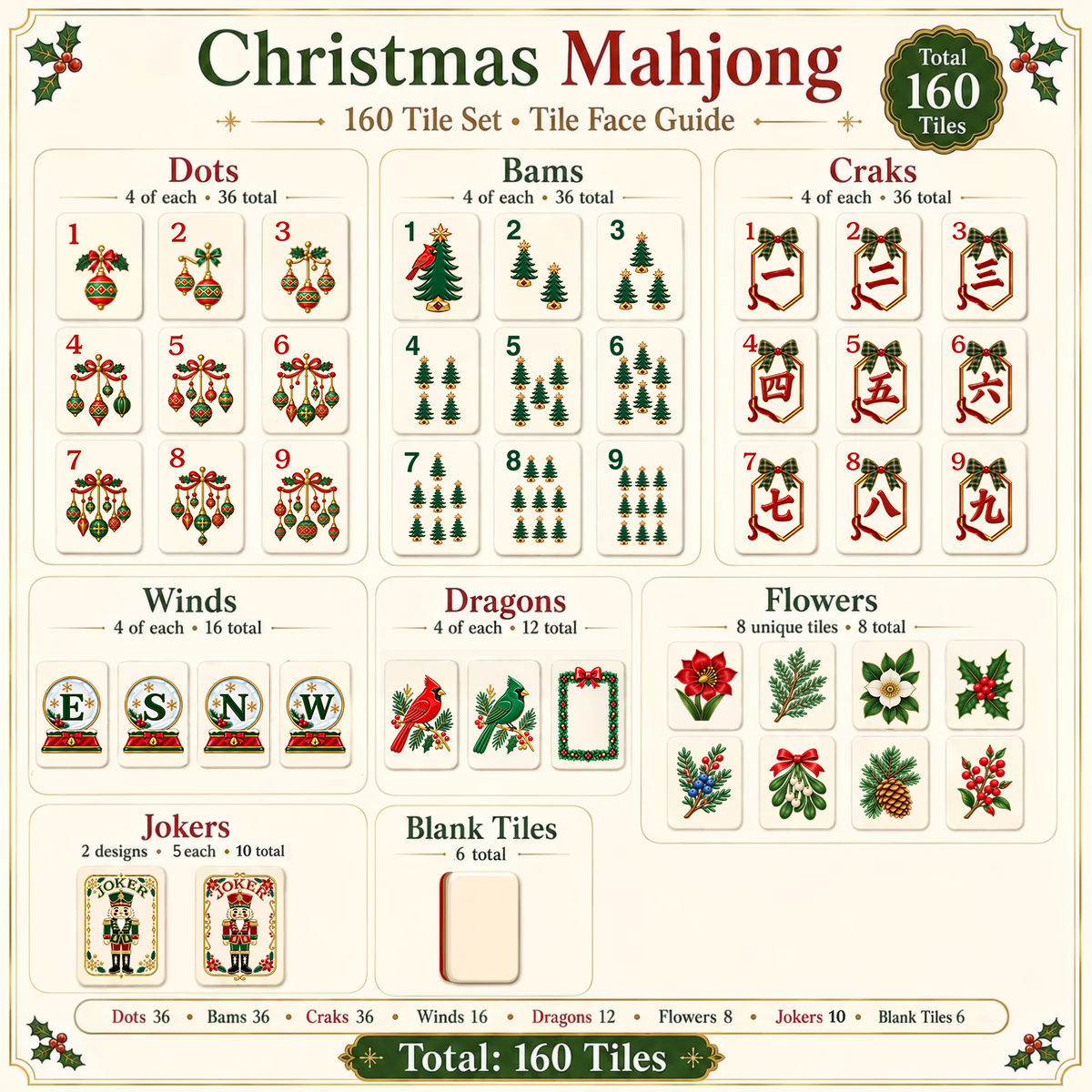
An Easter mahjong party needs four players, one 160-tile set (containing 152 playing tiles plus spares), a mat, racks with pushers, and the current year's National Mah Jongg League card. Set up a hard, flat table; arrange tiles face-down in a wall; conduct the Charleston (a three-stage tile-passing ritual); deal 13 tiles to each player; then each player builds a 14-tile hand from the wall and discard pile, exposing only pungs (3), kongs (4), quints (5) or sextets (6) of identical tiles. A hand is won when one player declares "mahjong" with a valid pattern from the current League card. Plan 2–3 hours; beginners take longer. Avoid common mistakes: jokers cannot replace the pair, hands must come only from the official card (not a house variant), and all four suits must use the same rules. Mahstead's best-selling mahjong sets combine durable acrylic tiles, engraved racks, and quality mats—ideal for hosting throughout the year.
Do you need all four players, or can Easter mahjong work with fewer?
American mahjong is designed for exactly four players—one sits East (dealer), then South, West, and North in turn order. Three-player and two-player variants exist, but they use different rules and tile counts. If you have fewer than four on Easter afternoon, you have three choices: ask a fifth friend to join as a sub who rotates in after one hand, learn the two/three-player ruleset (which changes wall layout and discard rules), or play a practice hand with fewer players to teach newcomers, then wait for a full table. Most hosts simply gather a fourth if possible; it makes the game authentic and speeds learning.

How long does setup take before the first hand begins?
Wall setup—arranging 152 tiles face-down in a square wall around the table—takes about 5–10 minutes the first time you host. Shuffling and arranging tiles beforehand (the night before) saves 3–4 minutes on game day. The Charleston ritual (the tile-passing sequence that distributes tiles fairly) takes another 5–7 minutes once all four players understand the three passes. Dealing and drawing the opening hand adds 2–3 minutes. Total: 15–25 minutes from shuffled tiles to the first discard. Use engraved mahjong racks with pushers to speed tile organization—players can organize their hands while you set the wall, cutting dead time in half.
🀄 Shop best-selling mahjong sets →
What exactly is the Charleston, and why must we do it before every hand?
The Charleston is a three-stage tile-passing ceremony that happens before each game hand begins, after the wall is built and dealt. In stage one, each player passes three tiles to the player on their left (secretly, without looking at what they receive). In stage two, passes go across the table. In stage three, passes go to the right. Then the player seated East discards one tile, and play begins. The Charleston ensures that no player can stack the wall with favorable tiles beforehand—it's randomization by hand. Beginners often rush or pass randomly without thought; the ritual works only if every player passes intentionally, taking a moment to choose which tiles they want to give away. This creates a tiny negotiation each time, and it's part of mahjong culture. If you skip it, your hand distributions become predictable and less fun.
Which specific tiles go into an American mahjong set, and do I need to know them all to host?
An American mahjong set contains 152 playing tiles: three suits (36 Bams, 36 Craks, 36 Dots—each numbered 1–9, four copies of each number); 16 winds (four each of North, East, West, South); 12 dragons (four Red, four Green, four White/Soap); plus 8 flowers (four Spring, four others) and 8 jokers. A 160-tile set adds spare jokers or blanks for replacements if a tile cracks. When hosting, you don't need to memorize suit names—just understand that the League card shows hands using symbols (bamboo stalks, circles, dots, characters for winds). Your job is to call out discard announcements (e.g., "5 Crak" or "Red Dragon") so all players track what's been thrown. Learning the tiles takes one game; confidence takes three. New players often confuse the 1 Bam (which shows a bird) with flowers—a quick pre-game clarification prevents confusion mid-play.

How do you decide who gets to play, and what if someone is learning for the first time?
Seat one experienced player as East (dealer) to anchor the game and make fast calls. Pair that player with three players who've played before, or two experienced players plus one eager beginner. If all four are new, run a brief tutorial hand: shuffle, build the wall, conduct a simplified Charleston, deal tiles, and play one complete round slowly so everyone sees discard, calling, and how jokers work. Use the National Mah Jongg League card with a beginner—have them read aloud which hand patterns are "like Like" (dots), "Like Like Like" (winds), or "dragons + flowers + jokers"—talking through it builds confidence. For Easter parties especially, expect one or two first-timers; host it as a teaching round, and actual scoring games happen rounds 2 and 3. Experienced players know this and rarely mind; it's the mahjong tradition to bring newcomers in gently.
🎁 See our most-loved mahjong sets & accessories →
What table setup and mat size work best for four players around a dining table?
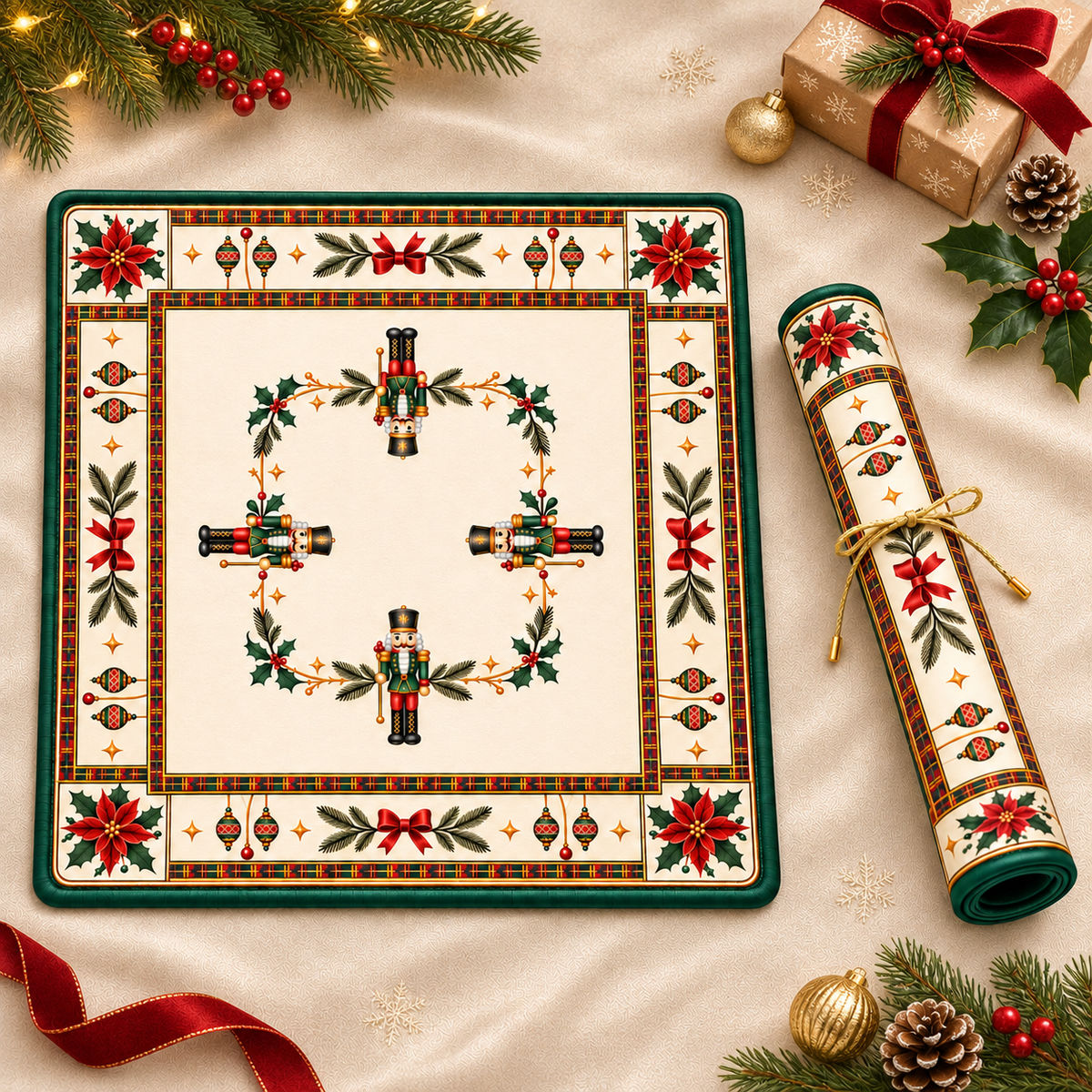
A standard dining table (36–42 inches wide and 60–72 inches long) accommodates four players comfortably with a mahjong mat in the center. Mats typically measure 36 by 36 inches (large enough to hold the wall and discard area, with player racks positioned just outside). Seat one player on each side of the table—East facing south, South facing west, West facing north, North facing east (a compass pattern). Each player gets 18–24 inches of table edge for their rack and personal tiles. Hard, flat surfaces (wood or laminate) beat cloth tablecloths, which bunch under tile weight. If your dining table has a drop leaf or glass top, use a mat to anchor tiles and prevent sliding. Position a small dish or coaster at the center of the mat to hold the dice during the opening hand's counting. Avoid placing food or drinks within the wall or discard zones—spills wreck tiles. Consider a mahjong bag to keep your set in one place and transport it safely to your Easter gathering.
What common hosting mistakes lead to confusion or arguments during play?
Mistake 1: Not announcing discards clearly. Every time a tile leaves a player's hand, the entire table must hear the suit and number (e.g., "7 Dot"). If someone mumbles, players miss calls and hands unravel mid-game. Appoint one caller (often East) to echo every discard aloud.
Mistake 2: Allowing jokers to replace the pair. In American mahjong, the pair (the two identical tiles that complete a hand) cannot include a joker. Many beginners try this and argue about it. Pre-game reminder: "Pair is always real tiles—no jokers."
Mistake 3: Mixing house rules with League card rules. Some families play "any sequence counts" or "wild dragons." The Easter party will be chaos if half the table expects League rules and half expect Grandma's rules. Announce at the start: "We're playing 2026 National League rules—no house variants today."
Mistake 4: Losing track of who's played what. Designate one player (East) to keep a mental note of big tile sets (kongs, quints) that have been exposed. If someone exposes a fourth Red Dragon late in the hand, that's an error—only four exist in the entire set. A scorepad or running count prevents arguments.
Mistake 5: Playing without a current League card. The National Mah Jongg League releases a new card every spring. Using last year's card means hands that were legal last Easter no longer count. Obtain the 2026 card before your party; many community centers, libraries, and mahjong shops stock them.
Hosting Timeline & Checklist
Task | When | Notes |
Order or gather set, mat, racks | 2 weeks before | Mahstead ships free; allow time for arrival |
Get current League card | 1 week before | Download or purchase locally |
Invite four players | 2 weeks before | Confirm Easter date and RSVP |
Shuffle and pre-set tiles (optional) | Night before | Saves 3–4 min. on party day |
Set table, build wall | 30 min. before guests arrive | Use hard surface; position mat centrally |
Seat players, explain Charleston | 15 min. before first hand | Quick walkthrough for newcomers |
Play hands | Party day | Allow 2–3 hours total |
What to Check Before You Buy
Set completeness: Verify your 160-tile set includes all three suits (Bams, Craks, Dots) with numbers 1–9, four of each; 16 winds; 12 dragons; and 8 flowers. Count or photograph the contents when it arrives.
Tile clarity: Acrylic tiles should have sharp, legible engraving. If symbols are faint or worn, tiles become hard to read under lamp light—a poor hosting experience.
Rack fit: Racks with pushers should hold 14–15 tiles comfortably without tiles falling out. Test on a few tiles before your party; a rack that pops tiles loose every hand frustrates players.
Mat durability: A mat should lay flat without bunching and resist water spills if drinks are nearby. Check that seams are stitched solidly—worn seams fray after a few games.
Bag protection: If you're traveling to a friend's Easter dinner with your set, a padded mahjong travel bag prevents tiles from cracking in the car. Loose tiles in a cardboard box bounce and chip.
✨ Find your Mahstead set — free US shipping →
Hosting an Easter mahjong party transforms an afternoon into a memory. You're not just playing a game; you're welcoming friends into a tradition that spans decades. The tiles, the rhythm of the Charleston, the moment someone calls "mahjong"—these moments stick with people. Start with the right equipment (a quality set, a good mat, solid racks), know your rules cold, and give your guests patience and clear voice. In return, you'll host a party they talk about until next Easter—and they'll ask when you're hosting again.
FAQ
Can we play Easter mahjong with leftover Christmas tiles from a different year?
Yes, the tiles themselves don't change year to year—a 2026 Red Dragon is identical to a 2025 Red Dragon. But the hand patterns on the League card do change every spring. You must use the current 2026 card with any tiles. If you mix an old card with new tiles (or vice versa), hands won't match and players will declare false melds. Always match the card year to your table's agreed-upon ruleset.
What's the fastest way to teach a beginner before the first hand starts?
Teach the three things: (1) You build a 14-tile hand from the wall and discards. (2) Your hand must match a pattern on the League card—show them one simple pattern (e.g., "three of the same number in Bams, three in Craks, three in Dots, a pair"). (3) Jokers are wild and can replace any tile except the pair. Run through one complete practice hand slowly; don't worry about scoring yet. Beginners learn by doing, not by lecture.
Do I need to track scores on paper, or is it just for fun?
American mahjong uses a point system based on the hand pattern and how you won (by drawing or by claim from the discard). If your group plays for stakes (money), scoring becomes crucial. If you play for fun, many hosts skip formal scoring—the joy is completing hands and joking around. If you want to score, get a pad and tally points per hand; after four rounds (each player deals once), see who has the most points. The mechanics are simple once you try one hand.
What if someone accidentally exposes a tile from the wall too early?
This is called "fouling the wall." If a tile is flipped before its proper turn, set it aside as a discard (dead tile) and do not reuse it that hand. Reshuffle remaining wall tiles to randomize positions. Most hosts treat it as a mistake, not a cheat, and move on. Experienced players develop a rhythm that prevents this—they draw deliberately and cover the wall with one hand while drawing with the other.
Can we adapt the game for an Easter theme—like using themed tiles or special rules for "Easter hands"?
Tile themes are purely visual—using spring-themed or pastel-colored tiles doesn't change gameplay rules; it just makes your set feel festive. "Easter hands" as house rules (e.g., "hands with four flowers win double") would violate League rules and confuse players. Keep the ruleset pure and let the festive tiles and snacks set the Easter mood. If your group wants to experiment with variant rules later, do it as a separate game, not alongside standard League play.


View More
View More
View More
