
Seat Wind in Mahjong: Meaning, Points & Strategy
Last updated: Nov 23, 2026
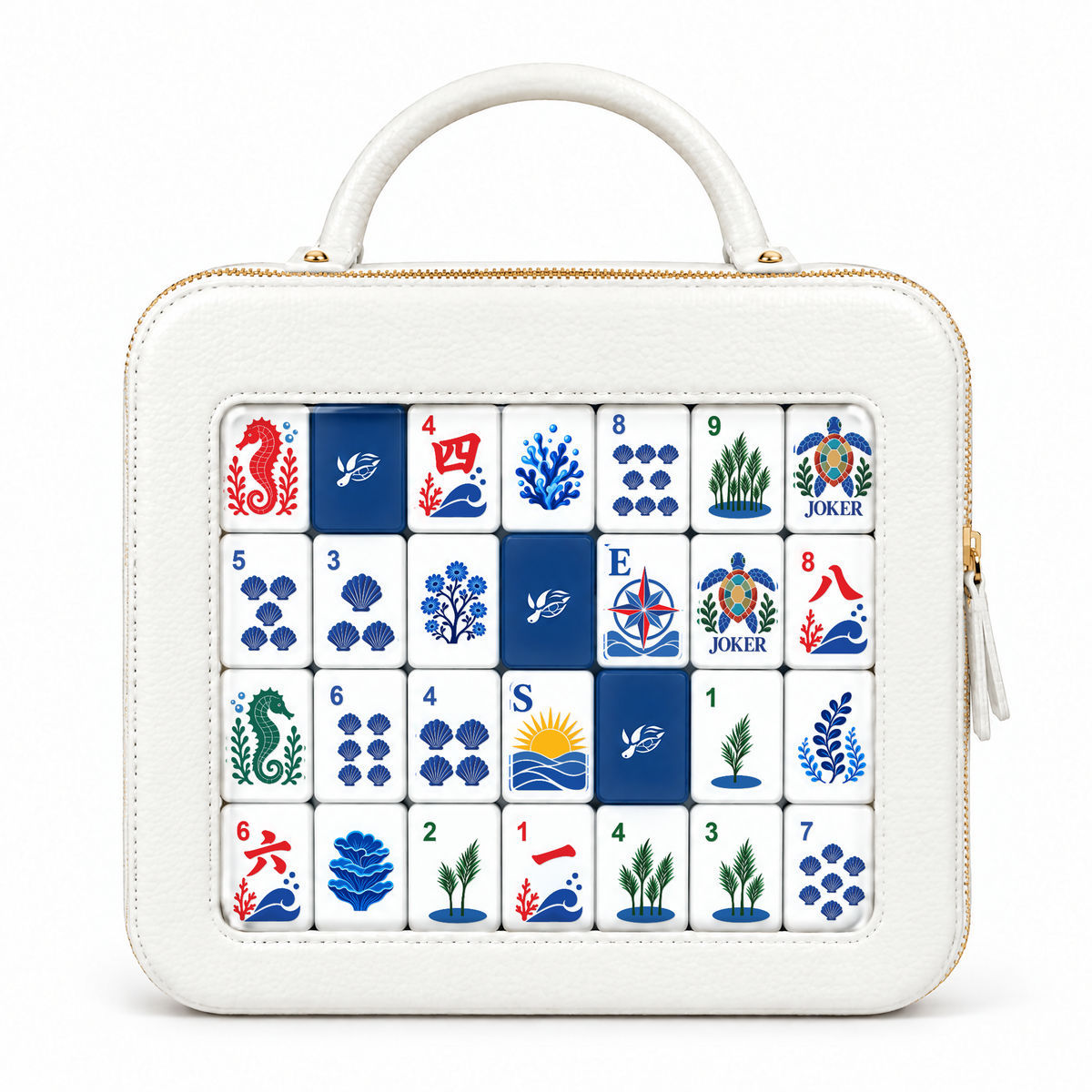
In American mahjong, seat wind is the wind tile (North, East, South, or West) assigned to your seat at the table before the game begins. When you win a hand that includes a pung (three identical tiles) or kong (four identical tiles) of your seat wind, you earn bonus points that multiply your hand's base score by two. For example, if you're sitting East and your winning hand contains a pung of East wind tiles, you collect the base points for that hand and then double them—a seat wind bonus. This rule applies only in American mahjong played with the current year's National Mah Jongg League card. Our best-selling mahjong sets come with wind tiles clearly marked so you can quickly spot seat wind combos during play.
What does "seat wind" mean exactly?
Seat wind is your assigned compass direction for that game—North, East, South, or West. Before tiles are dealt, the group decides who sits where, and that position stays fixed for the entire hand. Your seat wind is the corresponding wind tile: if you're North, your seat wind is North tile; if you're East, it's East tile. This is distinct from "prevalent wind" (a bonus earned only in Chinese variants and not used in American mahjong). Seat wind matters only when your winning hand contains a pung or kong of that exact tile.

How does seat wind scoring work in American mahjong?
Seat wind adds a multiplier to your hand's point total. Look up your winning hand on the current year's National Mah Jongg League card to find its base point value. If that hand contains a pung or kong of your seat wind tile, you double the base points before collecting payment from the other three players. A hand worth 30 points with a seat wind pung becomes 60 points. A hand worth 50 points with a seat wind kong still becomes 100 points—you multiply once, not twice, even if you hold both a pung and a kong of seat wind. Only pungs (three tiles) and kongs (four tiles) of your seat wind count; a pair does not.
Which tiles count toward seat wind bonus?
Only the wind tiles themselves qualify: North, East, South, and West. Each wind tile appears four times in a standard 152-tile American mahjong set (16 wind tiles total: four of each). You cannot earn seat wind bonus from honor tiles like dragons (Red, Green, White) or flowers. You also cannot earn seat wind if your hand uses a joker to represent your seat wind tile—the tile must be actual wind tile(s) in your hand. This is a common mistake: many players think a joker standing in for their seat wind still counts. It does not. Only the genuine tile triggers the bonus.
When should you hunt for seat wind hands?
Seat wind becomes strategically valuable mid-game, after other players have exposed melds and the wall is wearing down. Early in the hand, focus on the hand patterns the National Mah Jongg League card offers; seat wind is a bonus you stumble into, not a primary strategy. However, if you're holding your seat wind tile and see a pattern on the card that includes a pung or kong of it, that hand jumps in attractiveness. Example: you're South. You've drawn three South wind tiles naturally. A pattern on the card calls for a South wind pung plus a Crack sequence and dots—pursuing that pattern now makes sense because you'll earn the seat wind double if you win. In the final rounds, if you're one tile away from winning and your hand includes a seat wind pung, opponents play more cautiously because they know the payout will be large.
How does seat wind differ across mahjong variants?
American mahjong uses seat wind as a simple point multiplier (base × 2). Chinese mahjong has a similar concept but calls it "dragon" or "own wind" and often includes "prevalent wind" (the wind of the round, not your seat) as a separate, smaller bonus—rules vary by region. Hong Kong mahjong also uses self-wind bonuses but combines them with complex hand values calculated differently than American scoring. Riichi (Japanese mahjong) uses wind tiles in a completely different way: winds are part of the hand's composition and contribute to "yaku" (winning patterns), not a seat-position multiplier. Taiwanese mahjong integrates wind bonuses into a point system that shifts each round. If you play multiple variants, verify the rules of your table before each game—seat wind scoring is not universal. Understanding American mahjong scoring rules will help you avoid confusion when switching between variants.
Why do table position and wind assignment matter?
Table position determines which bonus you can earn that hand, which affects your hand-hunting strategy and risk assessment. If you're sitting East (the "Dealer" role in some groups, though American mahjong doesn't formalize this), East wind tiles are everywhere in play because four players are discarding tiles constantly. You're statistically more likely to collect three or four East tiles than if you sit North and hunt North wind in a table where North tiles are less common. Seat wind creates a mild advantage for the player whose seat wind tiles appear frequently in early discards. Smart play means: watch which wind tiles come out early, remember your seat, and note if your seat wind is flowing toward your hand naturally. If it's not, don't chase seat wind—pursue other hands. Conversely, if your seat wind is abundant, keep one in reserve and stay alert for a card pattern that fits.

What's a real-world seat wind example?
You're sitting South. Your seat wind is South. The dealer (the player who won the last hand) is North. The current hand pattern you're pursuing is: South wind pung + Bam 2–3–4 (a sequence) + Dot pair. On turn six, you've drawn a fourth South tile, so you hold three South tiles. A fourth South tile sits in the wall or might be discarded. Your hand is worth 30 base points on the card. If you win with South wind pung, you collect 60 points from each player (three payments = 180 total). One of your opponents discards a South tile on turn nine. You call it, complete your pung, wait one turn for your sequence to close, and when another player discards a Dot, you claim it and go out. You show your hand: three South wind tiles (the pung), Bam 2–3–4, and Dot pair. You've won and earned seat wind bonus. Before opponents pay you, the scorekeeper confirms the hand on the card, verifies it's worth 30 points, sees the South wind pung in your hand, and announces 60 points per player. You collect payment.
Common mistakes to avoid with seat wind
Mistake 1: Jokers don't count. A joker representing your seat wind does not trigger the bonus. Many newer players assume it does. Example: you're West, holding a pung of West wind tiles, but one is actually a joker standing in. The hand still wins, but you collect the base points only, not the double.
Mistake 2: Only pungs and kongs qualify. A pair of your seat wind (two tiles) earns no bonus. This trips up players who confuse pair-and-set bonuses with seat wind. You need at least three identical tiles of your seat wind.
Mistake 3: You double once, not twice. If your hand contains both a pung and a kong of your seat wind in the same hand, you still multiply your base points by 2, not 4. The bonus applies once per winning hand.
Mistake 4: Seat wind ≠ prevalent wind. In American mahjong, there is no "prevalent wind" bonus. Seat wind is the only wind multiplier. Players switching from Chinese variants sometimes expect a second wind bonus; it doesn't exist in American rules.
Mistake 5: Wrong wind means no bonus. If you sit East but include a pung of North wind in your hand, there's no seat wind bonus. Only your assigned seat wind tile activates the multiplier.
Comparison: When to Pursue Seat Wind vs. Other Bonuses
Scenario | Seat Wind Bonus | Dragon Bonus | Neither |
You hold 3 of your seat wind; pattern includes seat wind pung | Yes, hunt it | Check card for Red/Green/White pung | Prioritize seat wind |
You hold 0 of your seat wind; pattern requires dragon pung | Skip | Hunt it | Follow card only |
Final round, you need one tile to win, hand has seat wind pung | Go out | Irrelevant | Go out anyway |
Multiple patterns fit, one includes seat wind pung, one includes dragon | Choose seat wind (higher payout) | Competitive | Seat wind wins |
You're holding 2 of your seat wind (pair only, no pung yet) | Low priority | Check if dragon available | Find other hands |
What to check before you buy a mahjong set to learn seat wind
Confirm the set includes wind tiles. All American mahjong sets come with North, East, South, West tiles. Verify packaging lists "16 winds" or "4 each wind" to ensure nothing is missing.
Wind tiles should be clearly marked. Look for sets where each wind character is large and legible—you'll be scanning for seat wind tiles quickly during active play.
Consider a mat with seat position labels.A mahjong mat with zone markings helps newer players remember which seat is which, reducing errors.
Use racks with pushers to organize tiles by type. Grouping wind tiles together makes spotting a pung or kong instant.
Keep a printed National Mah Jongg League card handy. Verify your hand pattern on the current year's card before claiming seat wind bonus.
🀄 Shop best-selling mahjong sets →
The real-table payoff: why seat wind matters at your weekly game
Seat wind is a straightforward bonus that doubles your payout on hands containing a pung or kong of your assigned wind tile. It rewards strategic awareness—noticing which wind tiles are flowing your way and holding them until a matching pattern surfaces. For newer players, it adds a minor layer of strategy without overcomplicating rules. For experienced players, seat wind shifts hand selection in the final rounds, when scores tighten and every extra point counts. The bonus is modest (a 2× multiplier, not 3× or higher), so it won't swing a whole game, but over a season of weekly games, players who hunt seat wind hands strategically earn small consistent advantages. The real win is the mental exercise: learning to scan the card, track your tiles, and make faster decisions under play-time pressure.
🎁 See our most-loved mahjong sets & accessories →
Next steps: practice seat wind recognition
Run one practice hand with a group. Assign seats (North, East, South, West) before shuffling. Deal. After the hand plays out (whether someone wins or the wall closes), ask each player to identify whether their seat wind tile appeared and whether they could have built a hand around it. This quick debrief trains pattern recognition and builds comfort with the rule. For a deeper dive into American mahjong rules and scoring, review the full scoring guide. If you're new to the game, start with our beginner's guide to anchor seat wind in the broader context of hand values and the Charleston pass.
✨ Find your Mahstead set — free US shipping →

FAQ
Does seat wind bonus apply if I use a joker to represent my seat wind tile?
No. Jokers do not count for seat wind bonus. Your hand must contain the actual seat wind tile (three or four real copies) to earn the double multiplier. This is one of the most common mistakes at the table.
Can I earn seat wind bonus on a pair of my seat wind tile?
No. You need at least three identical tiles (a pung) to trigger seat wind bonus. A pair alone does not qualify, even if it's your seat wind.
If my hand has both a pung and a kong of my seat wind, do I multiply by 4?
No. You multiply your base points by 2 once, regardless of how many pungs or kongs of your seat wind appear. The bonus is not cumulative.
Is seat wind the same in all mahjong variants?
No. American mahjong uses seat wind as a simple 2× multiplier. Chinese, Hong Kong, Riichi, and Taiwanese variants have different wind-related bonuses and rules. Verify your table's rules before playing a variant you haven't played before.
What if I'm not sure which wind is my seat wind during the game?
Before dealing, the group assigns seats and announces them aloud (e.g., "North is Jenny, East is Bob, South is Tom, West is Sarah"). Write this down or use a mat with labeled zones. If you forget mid-hand, ask the dealer or scorekeeper to remind you—it's better to clarify than to play the hand wrong.
Does seat wind bonus apply if the hand is incomplete or doesn't match the card?
No. Your hand must be a valid pattern on the current National Mah Jongg League card and you must have actually won (another player discarded your last tile, or you drew it legally). Seat wind bonus applies only to winning hands that match the card.
Can I win a hand without seat wind bonus?
Yes. Most hands you win will not include your seat wind tile at all. That's normal. Seat wind bonus is an occasional extra payout, not a requirement for every hand.
How often does seat wind bonus actually come up in a real game?
It varies. Over a four-hour game, expect seat wind bonuses to activate in 1–3 hands, depending on luck and how actively you're hunting them. It's common enough to be worth tracking, but rare enough that you shouldn't rely on it.


View More
View More
View More
