
Cantonese Mahjong Winning Hands: Rules and Hand Patterns
Last updated: Nov 23, 2026
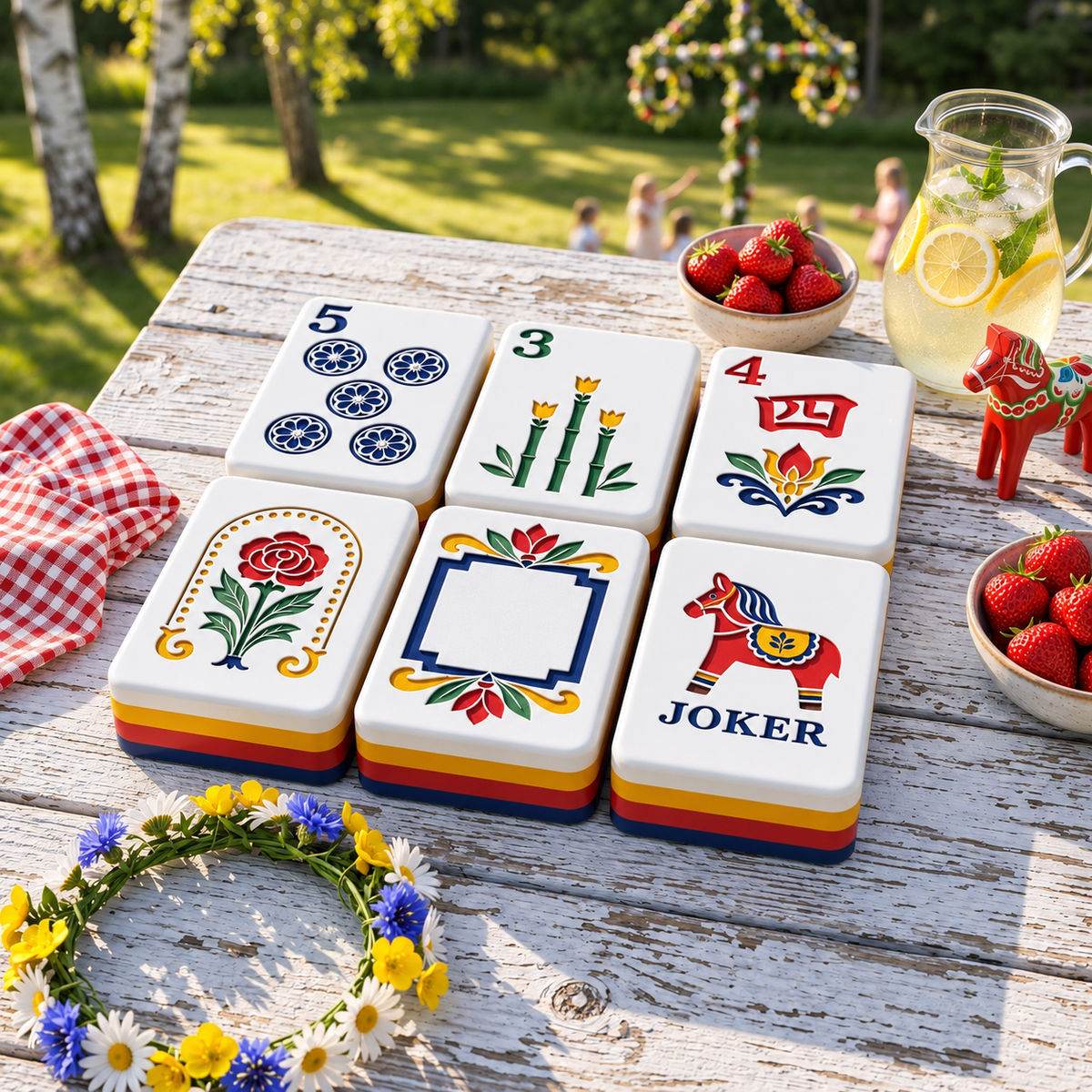
Cantonese mahjong winning hands require exactly one pair (the "eyes") plus four melds of three tiles each—either pungs (identical triplets), kongs (identical quads), or chows (sequences like 1-2-3 of the same suit). A hand is complete when all 14 tiles form this structure. Unlike American mahjong, which uses a printed card and allows exposed melds before winning, Cantonese is more fluid: you draw and discard one tile per turn, melds can be hidden, and the winning hand must follow basic pung-chow-eyes logic. Scoring varies by which tile completes the hand (self-draw, winning from a discard, special patterns) and applies multipliers based on concealment and tile rarity. Our players switch between variants by keeping our best-selling mahjong sets stocked with the full 152-tile deck—the same set works for both rule systems, though Cantonese players focus on meld probability rather than seasonal or hand-card matching.
What does "winning hand" mean in Cantonese mahjong?
A winning hand in Cantonese mahjong is any combination of 14 tiles arranged as one pair (two identical tiles) plus four melds of three tiles each. Each meld must be either a pung (three identical tiles), a kong (four identical tiles), or a chow (three consecutive tiles of the same suit—for example, 5 Bam, 6 Bam, 7 Bam). You complete your hand when you draw or win a discard that fills your final meld or pair slot. The moment that 14th tile locks into place, you declare victory.
Cantonese winning hands feel more permissive than American rules at first glance because you're not consulting a printed card—any mathematically valid pung-chow-eyes structure wins. However, the rule is stricter in one way: you cannot use jokers as wild tiles (Cantonese recognizes no joker substitution), and you must form real tiles, not symbolic placeholders. This means your odds depend entirely on tile probability, not on clever card-reading or seasonal patterns. Play typically ends quickly once someone completes a valid 14-tile structure.

How do Cantonese winning hands differ from American mahjong?
American mahjong uses a National Mah Jongg League card updated each spring; you must match a specific printed hand or combination. Cantonese mahjong has no card—any pung-chow-eyes structure wins. American allows exposed melds (pungs, kongs, quints, sextets) during play before you win; Cantonese typically builds melds privately and only reveals them when you declare win. American lets jokers substitute for any tile in exposed melds but never as a single tile or pair; Cantonese permits no jokers at all in winning hands.
Scoring also diverges sharply. American mahjong points come from the specific hand name and position; Cantonese scoring multiplies based on concealment (a fully hidden hand scores much higher), which tile completed it (self-draw versus winning from another player's discard), and whether the winning tile came from the wall or the discard pile. A Cantonese player values surprise and economy; an American player values pattern recognition and the printed card's authority.
Both games use the same 152-tile deck—three suits (Bams, Craks, Dots numbered 1–9, four copies each), winds, dragons, and flowers—so transitioning between them depends purely on rule knowledge, not equipment.
What tile combinations make a valid Cantonese winning hand?
Valid Cantonese winning hands follow five basic types:
All Pungs: Four identical triplets plus one pair—for example, three 5 Craks, three North Winds, three 2 Dots, three Red Dragons, plus two 3 Bams.
Three Pungs + One Chow: Three sets of identical triplets and one sequence of consecutive tiles—such as three 8 Bams, three 4 Craks, three White Dragons, plus 1 Dot–2 Dot–3 Dot, plus a pair of 7 Craks.
Two Pungs + Two Chows: Two triplets and two sequences—for instance, three 9 Craks, three Green Dragons, plus 4 Bam–5 Bam–6 Bam, plus 3 Dot–4 Dot–5 Dot, plus a pair of South Winds.
One Pung + Three Chows: One triplet and three sequences (the most flexible but hardest to achieve mid-game).
No Pungs (All Chows): Four sequences and one pair—rare but prized for high score.
In every valid hand, the pair must be standard identical tiles—no "honor pair" tricks. Chows cannot wrap around (8 Dot–9 Dot–1 Dot is invalid); they are always consecutive within 1–9. This simplicity means Cantonese games reward quick hand-reading and probability judgment rather than card memorization.
Hand Type | Structure | Typical Score Multiplier | Rarity |
All Pungs | 4 triplets + pair | 2× | Moderate |
3 Pungs + 1 Chow | 3 triplets + sequence + pair | 1.5× | Common |
2 Pungs + 2 Chows | 2 triplets + 2 sequences + pair | 1× | Very common |
1 Pung + 3 Chows | 1 triplet + 3 sequences + pair | 1× | Common |
All Chows | 4 sequences + pair | 3–4× | Rare, highest score |
Concealment multiplier (all tiles hidden until win): 2–4× additional bonus depending on local rules.
What are the most common mistakes players make with Cantonese winning hands?
Mistaking a chow for a sequence across suits: You cannot make 1 Bam–2 Crak–3 Dot. All three tiles must belong to the same suit.
Forgetting the pair rule: A hand needs exactly one pair. If you have two pairs and four triplets, that's not a win—you've formed five melds instead of four, which is invalid.
Assuming jokers work in Cantonese: Many American players automatically substitute a joker when a tile is missing. Cantonese play uses no jokers in the winning hand; if the tile isn't real, the hand doesn't form.
Calling a partial win early: Saying you've won when you still have 13 tiles costs the game and reputation. Count your 14 tiles visibly before declaring.
Confusing self-draw with discard-draw scoring: A tile you draw yourself from the wall scores higher than a tile you win from an opponent's discard. Always note which way your winning tile came to you—the score depends on it.
Mixing Cantonese and American rules mid-hand: If you're learning both variants, write down which rule set your table is using before the game starts. Many casual groups play a hybrid that confuses everyone.
We recommend keeping a dedicated reference sheet or asking experienced players to sign off on your hand shape before you declare. A 14-tile pause costs nothing; a misdeclared win costs the round.

How do you calculate score for a Cantonese winning hand?
Cantonese scoring multiplies a base point value (typically 1 for a simple hand, higher for complex ones) by the number of "doubles" or "faan" your hand earns. Common faan sources include:
Method of completion: Self-draw = 1 faan; winning from an opponent's discard = 0 faan (base case).
Tile rarity: Winning on a terminal (1 or 9) or honor (wind, dragon) = 1 faan. Winning on a common middle tile = 0 faan.
Concealment: All tiles hidden until win = 1–2 faan. One or more melds exposed before winning = 0 faan.
All Pungs: 1 faan (regardless of other bonuses).
All Chows: Varies by rule set (1–2 faan).
No Honor Tiles (only Bams, Craks, Dots): 1 faan.
Limit hands (very rare patterns like all of one suit): flat multiplier (e.g., 8× or 16× base unit) regardless of faan count.
Once you total your faan, multiply by a base unit (often 1 point per faan, scaled to stakes). Each player who didn't win pays the winner; if you self-drew, all three players pay equally. If you won from a discard, the discarder pays the full amount while the other two players pay half each. Settle in cash or points depending on your table's custom.
🀄 Shop best-selling mahjong sets →
What equipment do you need to play Cantonese mahjong?
You need a full 152-tile set—the identical tiles used in American mahjong—plus a surface for arranging them and a way to track discards. Unlike American play, which demands a printed card, a mat with position markers, and racks with pushers, Cantonese is more minimalist. You can play on any flat table; many players arrange tiles in a line or semi-circle. A mahjong mat is optional but speeds play and protects tiles from sliding. Racks with pushers help you hide your hand and organize your tiles neatly—especially useful when learning to spot valid pung-chow-eyes patterns quickly. A dice set determines who deals first by roll.
Many Cantonese players use the same tile sets we ship for American games because the tile inventory is identical; the only difference is rule knowledge. If you travel or play multiple variants, a durable bag or case keeps your set safe and lets you switch between Cantonese and American without confusion.
🎁 See our most-loved mahjong sets & accessories →
Can you play Cantonese mahjong online or with fewer than four players?
Yes, Cantonese mahjong works with fewer players, though the game changes significantly. With three players, one seat stays empty; the wall is dealt the same way, but only three players draw, discard, and win. Odds shift because fewer players means fewer discards, making self-draw wins more likely. Some groups adjust scoring or wind assignments for three-player games to keep stakes fair. Two-player Cantonese is rare and usually plays as a practice variant—many local rule sets don't define it clearly, so check with your group first.
Online Cantonese mahjong is widely available through dedicated apps and websites, especially in regions with large Hong Kong or Guangdong communities. Digital play eliminates physical tile handling but removes the tactile learning curve—many beginners find online play harder than table play because they can't physically arrange and study tiles the same way. If you're learning, practice with a physical 160-tile acrylic set first so your hands recognize valid pung-chow-eyes shapes by muscle memory.
What to check before you buy a Cantonese mahjong set
Tile clarity: Numbers and suit symbols must be crisp and visible under table lighting; acrylic tiles read faster than bamboo under glare.
Weight and balance: Tiles should feel substantial enough to settle without skittering; light plastic sets frustrate players trying to sense a developing hand.
Suit consistency: Verify all three suits (Bam, Crak, Dot) are represented equally; a missing or miscolored suit breaks gameplay.
Joker count: Cantonese doesn't use jokers, but check that your set includes all winds, dragons, and flowers so you have the full 152-tile pool.
Case or bag durability: If you travel or share your set, invest in protective storage to avoid tile loss or damage.
✨ Find your Mahstead set — free US shipping →

FAQ
Can you win a Cantonese mahjong hand using only honor tiles (winds, dragons)?
Yes. As long as you form four valid melds (pungs or kongs of honors only) plus one honor pair, it's a legal win. Many honor-heavy hands earn bonus faan.
What happens if two players try to win on the same discard in Cantonese mahjong?
Priority usually goes to the player who would win with the fewest remaining tiles (closest to completion). Some rule sets give priority by seating order or by highest faan count. Clarify house rules before play begins.
Is a chow like 9 Bam–1 Dot–2 Crak valid in Cantonese mahjong?
No. All three tiles in a chow must belong to the same suit and be consecutive numbers; this example spans two suits and is invalid.
How does self-draw scoring differ if the winning tile came from the dead wall in Cantonese play?
In most Cantonese rule sets, self-draw from the main wall and self-draw from the dead wall (the replacement tiles used for kongs) score identically. Check your table's custom before the first hand.
Can you form a pair of different honor tiles (like one North and one East) in a Cantonese winning hand?
No. The pair must be two identical tiles—same number, same suit, or same honor. Mixed pairs don't count.
What's the easiest Cantonese winning hand to form for beginners?
Two Pungs + Two Chows is the most common and forgiving; it requires fewer rare tiles and leaves you flexible during discard management. Focus on completing triplets and short sequences early.


View More
View More
View More
