
Cantonese Mahjong Dice and Wall Breaking: Rules and Setup
Last updated: Nov 23, 2026
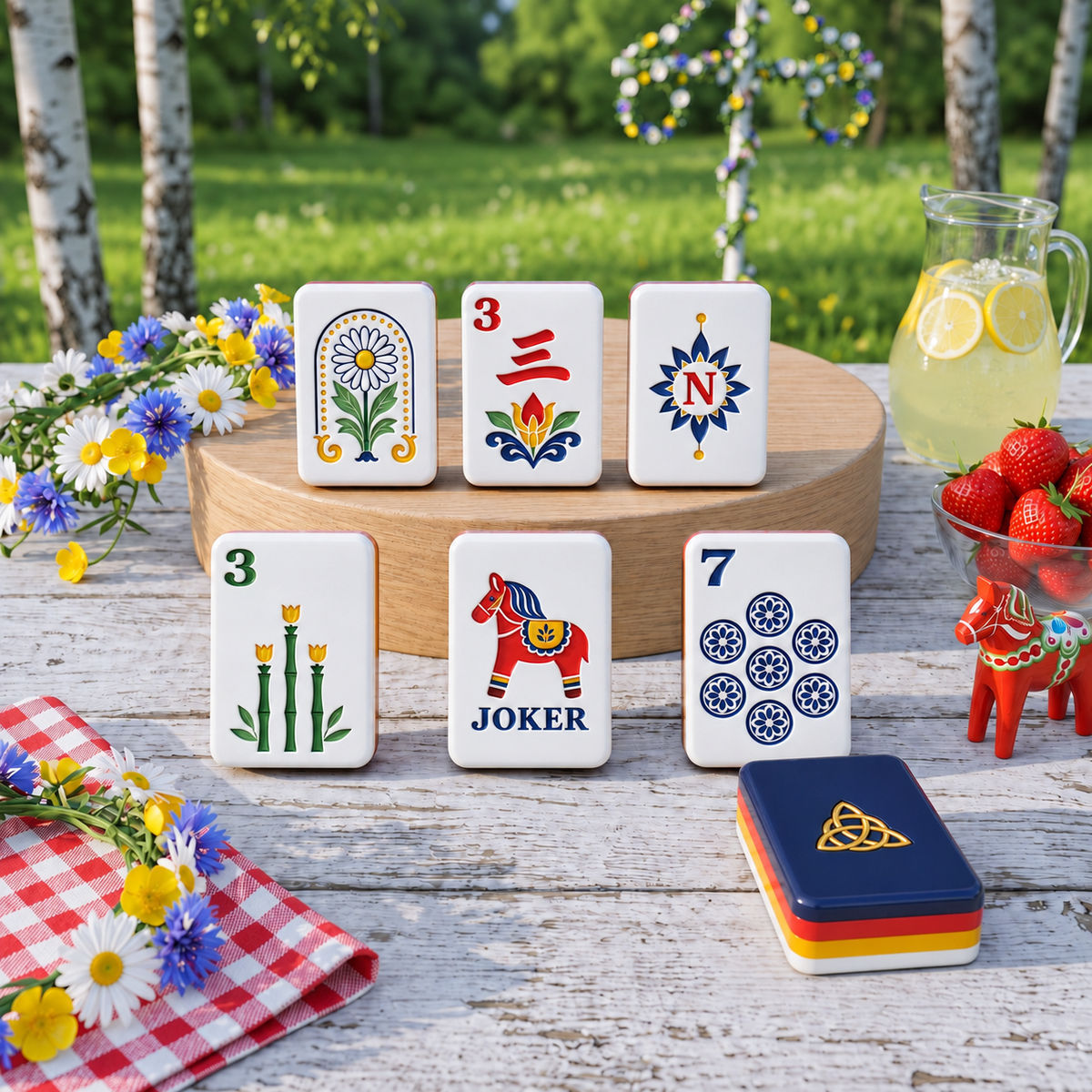
Cantonese mahjong uses two dice to determine seating and wall-breaking position before tiles are dealt. After players are seated by compass direction, the dealer (East) rolls two dice; the sum points to a seat, which then rolls again to indicate where the wall is "broken" (divided for drawing). The player opposite that position draws the first tile. This randomizes the starting tile pool and maintains game integrity across hands. Unlike American mahjong, which has no dice involvement, Cantonese games rely on dice for fairness and vary by regional house rules—some use a single die, others use three. If you play Cantonese regularly, investing in a dedicated pair of mahjong dice ensures quick, audible rolls and clear results at your table.
Cantonese (Hong Kong) mahjong uses two dice to determine seating and wall-breaking position before tiles are dealt. After players are seated by compass direction, the dealer (East) rolls two dice; the sum points to a seat, which then rolls again to indicate where the wall is "broken" (divided for drawing). The player opposite that position draws the first tile. This randomizes the starting tile pool and maintains game integrity across hands. Unlike American mahjong, which has no dice involvement, Cantonese games rely on dice for fairness and vary by regional house rules—some use a single die, others use three. If you play Cantonese regularly, investing in a dedicated pair of mahjong dice ensures quick, audible rolls and clear results at your table.
Why does Cantonese mahjong use dice, but American mahjong doesn't?
Cantonese and American mahjong solve the "where do we start?" problem differently. American mahjong uses the Charleston—a ritualized tile pass that determines hand distribution and is codified in the National Mah Jongg League card. Cantonese mahjong predates that standardization and uses randomization instead: two dice rolls establish seating and wall break. This method is faster, works across regions without a printed reference card, and is easy for players already familiar with dice games. American mahjong eliminated dice to create reproducible hands tied to published card years; Cantonese mahjong keeps dice to ensure no two walls start identically. Each system reflects its culture: American emphasizes published strategy; Cantonese emphasizes live variance.

How do you roll dice to break the Cantonese wall step-by-step?
Follow this sequence:
Seat four players by compass: East (dealer), South, West, North.
East rolls two dice (sum = 2 to 12). Count that number around the table clockwise starting from East = "the breaker seat."
The breaker rolls two dice again. Count that sum clockwise from themselves.
Count down the wall (a stack of tiles) from the breaker's seat. The wall is split at that position.
The person opposite the break point draws the first tile from the broken section.
Example: East rolls a 7. Count seven seats clockwise (East→South→West→North→East→South→West = West is the breaker). West rolls a 9. Count nine tiles along the wall, split there, and North (opposite West) draws first.
House rules vary: some count counterclockwise, some use a single die (lowest roll is breaker), and some reset the count after the first hand. Always confirm house rules before your first game.
What's the difference between a single die and two dice in Cantonese play?
Some regions and players use one die; others use two or even three. Here's how they change the game:
Die Count | Outcome Range | Speed | Fairness | Common In |
One die | 1–6 | Fastest | Slightly skewed (1 appears 16.7% often) | Home games, casual play |
Two dice | 2–12 | Moderate | Even distribution | Standard Hong Kong play |
Three dice | 3–18 | Slowest | Highly variable | Tournament play, rare |
One die is faster but slightly favors certain numbers over 100 hands. Two dice are the Hong Kong standard and offer true randomness. Three dice are used in some tournament formats to further randomize and reduce the advantage of knowing prior patterns. Ask your group which they prefer; switching mid-session breaks rhythm and causes disputes.
Can dice rolls be disputed or challenged?
Yes, which is why table setup matters. A clear roll means both dice land flat, visible, and unobstructed. If a die lands on an edge, rolls off the table, or lands under another tile, it's a no-roll—roll again. If a player contests the result, re-roll from the same player. To avoid disputes: use a dedicated dice tray or bowl (keeps dice on the table and visible), ensure the table surface is level, and establish before play begins whether re-rolls happen if a die contacts a tile. Many groups use a shallow cup or bamboo tray sold as mahjong accessories; these contain rolls and prevent the "lost die" argument.

How does wall breaking differ if you're playing with jokers or house-rule variants?
Standard Cantonese play (no jokers) breaks the wall after East's initial roll sequence—clean and simple. When jokers are introduced (usually in overseas or hybrid Cantonese games), some players re-roll or ignore the joker positions entirely, drawing only from standard tiles. Other groups break the wall identically but remove jokers post-deal.
The core rule stays the same: dice determine the break point, not the content of the wall. If your group plays Cantonese with house variants (bonus tiles, reduced suits, multiple decks), clarify whether dice rules change. Most do not—dice are about fairness of position, not tile mix. The variant that changes most is three-player Cantonese, where seating geometry shifts (East, South, West play; North's position is empty). Dice still work, but the count resets to three players, not four.
🀄 Shop best-selling mahjong sets →
What you'll need for Cantonese play: dice and a level surface
If you host Cantonese games, two key tools make wall breaking smooth: a quality pair of mahjong dice (easy to read, audible, standard 16mm size) and a stable mat or table. Mahjong dice are larger and more visible than standard gaming dice—critical when six people are watching the roll. A non-slip mat keeps tiles and dice from sliding; mahjong mats also mark the wall area clearly and help the breaker identify their position. If players bring their own best-selling sets, ensure all dice match in size and markings to prevent accusations of bias. Many players carry a dedicated dice pair in their bag or case alongside their set—this avoids the "whose dice are we using?" negotiation.
Before your first Cantonese game: what to confirm with your group
Single or two dice? Ask before arriving; switching mid-session derails play.
Clockwise or counterclockwise count? Regional traditions differ; confirm house rules.
Does the wall break reset after each hand, or only at the start of a round? Some groups break once per round; others break every hand.
What happens if a die is disputed? Establish the re-roll rule beforehand (e.g., re-roll immediately, or call a neutral player to judge).
Do jokers or bonus tiles affect the break? If your set includes extras, clarify whether they're ignored, removed, or included.
🎁 See our most-loved mahjong sets & accessories →
Common mistakes to avoid:
Counting the wrong direction: Cantonese standard is clockwise; if your group uses counterclockwise, a mismatch causes a table argument and a misdealt hand.
Forgetting to count from the correct seat: After the first die roll establishes the breaker, always count the second die roll from that person's seat, not from East.
Mixing die sizes or marking styles: If one die is large and one small, or one is worn, the result looks rigged. Use a matched pair, and replace them if paint fades.
Not establishing house rules in advance: Cantonese mahjong has legitimate regional variants. Assuming everyone plays the same way leads to conflict mid-game.
✨ Find your Mahstead set — free US shipping →
How Cantonese wall breaking compares to other variants
American mahjong eliminates dice entirely: seating is determined by chip draw, and hands come from a published card; no randomization per hand.
Chinese (Mainland) mahjong uses a wall-breaking method similar to Cantonese but with single-die rolls and different tile distributions (no flowers or winds in most regional games).
Riichi (Japanese) mahjong has no wall break in the Cantonese sense; instead, a predetermined "discard wall" and a "dead wall" (for kans) are set before any dice roll.
Vietnamese mahjong often uses dice but counts backwards from the breaker, and includes additional tiles not seen in Cantonese play.
Each system reflects its region's math and tradition. If you're learning Cantonese, don't assume other variants work the same way—ask a local player or consult a rules summary before sitting down.

FAQ
Can you use a single standard die instead of mahjong dice?
Yes, but it's less clear. Standard dice are small, hard to see across a table, and take longer to read. Mahjong dice are 16mm (larger), marked boldly, and audible when they land. For casual play, one standard die works; for regular games, a mahjong dice pair is worth the investment—it cuts disputes and keeps the game moving.
What if both dice rolls give the same number (snake eyes or double six)?
Treat it as a normal roll: the sum (2 or 12) is your count. Some house rules re-roll doubles; others use the sum. Confirm your group's rule before play starts.
Do you break the wall the same way in three-player Cantonese?
The dice count changes to three seats instead of four, but the method is identical. East still rolls first; the sum determines the breaker among East, South, and West. North's seat is empty (no player). The breaker then rolls again and the wall is split as normal.
If the wall is broken and a tile falls or is knocked over, do you re-roll?
No. Once the wall is broken and the first tile is drawn, the position is fixed for that hand. A knocked-over tile is replaced in its original location. Only if a die roll is disputed before the wall is broken do you re-roll.
Can house rules for wall breaking change how hand payouts work?
No. Dice determine position, not scoring. Payouts are calculated by hand rank and winner status (self-drawn vs. called win). Wall breaking is purely about fairness of starting position and does not affect the value of a winning hand.
Is there a standard way to hold or roll mahjong dice to prevent cheating?
Not an official rule, but best practice: roll from a cup, bowl, or dice tray so both dice land clearly visible and unobstructed. If rolling by hand, use a cupped palm over the table and release cleanly. Never roll off the edge or under tiles. If a player suspects bias, any other player may request a re-roll by the same person or by a neutral observer.


View More
View More
View More
