
Mahjong Travel Bag for Beginners: What to Choose
Last updated: Nov 23, 2026
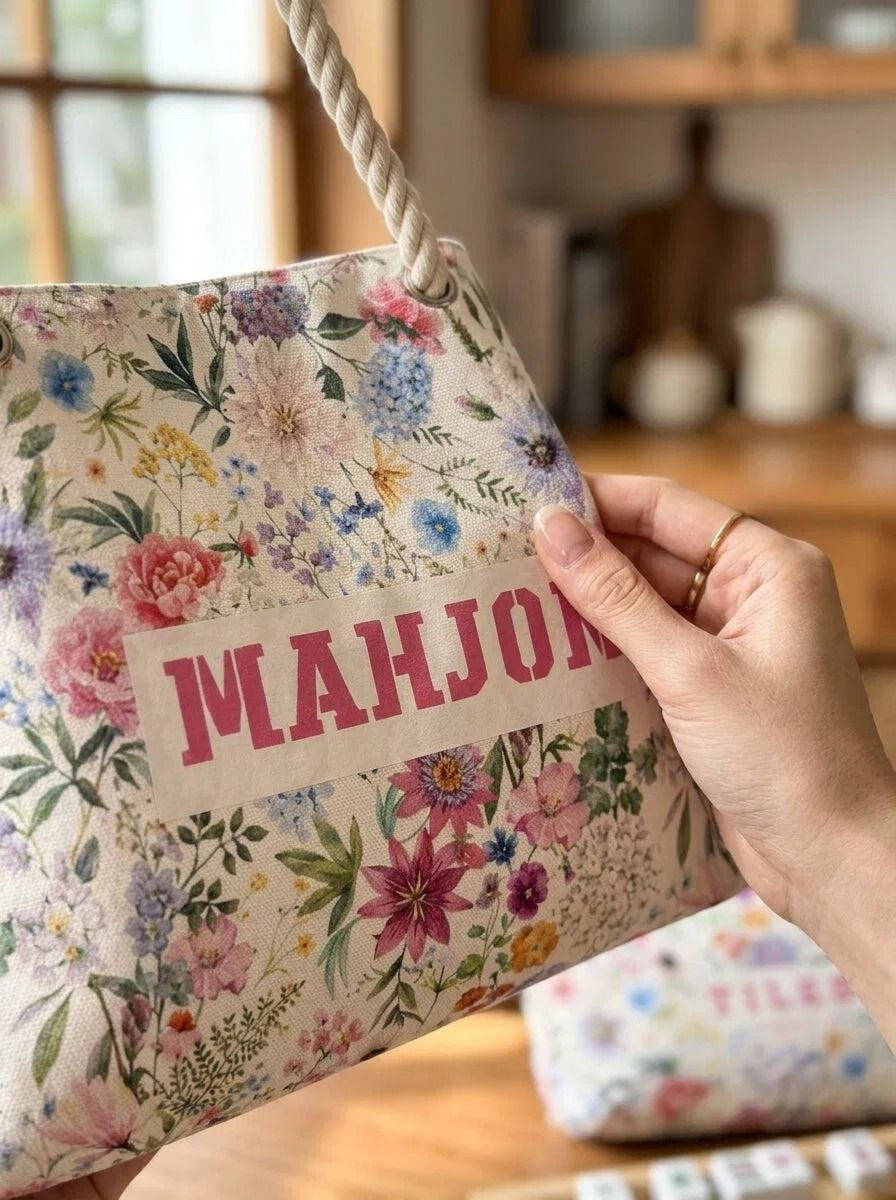
A mahjong travel bag for beginners is a protective carrier designed to hold a 160-tile acrylic set, your rack with pushers, and often a mat—all in one place. Most beginner bags are soft-sided nylon or canvas with interior dividers, fitting easily into a car or carry-on. Prices vary by size and material: simple drawstring pouches start lower, while quilted or structured cases with shoulder straps or handles cost more. You'll want a bag with compartments to keep tiles separate from your mat (so they don't scatter), reinforced seams, and a size that accommodates your set without forcing it. Common beginner mistakes: buying a bag too small for a full 160-tile set, choosing one without padding (tiles rattle and crack), or picking a decorative bag that looks nice but offers no real protection. Mahstead offers several travel bag designs sized for American mahjong sets, many with interior organization that protects both tiles and accessories during transport. 🀄 Shop best-selling mahjong sets →
Should I buy a soft or hard mahjong bag?
Soft bags (canvas, nylon, quilted fabric with padding) are lighter, pack into smaller spaces, and cost less. They're ideal if you carry your set in a car and want easy tossing in a trunk or backseat. Hard cases (rigid plastic or molded shells) protect tiles better if your bag gets crushed, sat on, or thrown around by airline handlers, but weigh more and take up shelf space. For most beginners playing weekly at friends' homes or local game nights, a padded soft bag with reinforced handles is enough; reserve hard cases for frequent travel or tournaments where baggage takes real abuse.

What size bag do I need for a 160-tile set?
A 160-tile American mahjong set fits in roughly 12" × 10" × 8" when stacked in its rack. Look for a bag with interior dimensions of at least 14" × 12" × 9" to avoid forcing tiles in (cracking acrylic) or compressing your rack. If you also plan to carry a mat (which adds 2–3 inches rolled), go up to 15" × 13" × 9" or larger. Measure your rack with tiles stacked before ordering, or contact Mahstead to confirm a specific bag will fit your set configuration.
What features matter most for protecting tiles?
Compartment dividers are non-negotiable: they keep your tile rack separate from loose racks or mats, and prevent tiles from tumbling loose during transport. Padding (at least 1/4 inch) absorbs shock from car bumps or drops. Double-stitched seams resist splitting after years of weekly use. A handle or shoulder strap you'll actually use beats a beautiful bag you leave at home. Zippered pockets hold dice, personal cards (the rules reference), or scoring sheets. Test the bag's weight when loaded—if it's too heavy to carry comfortably one-handed, you won't bring it.
How much should a beginner spend on a mahjong travel bag?
Entry-level soft bags start at a lower price point and work well for casual weekly play. Mid-range quilted or canvas bags with better padding and more compartments cost moderate amounts. Premium structured cases with lockable zippers or molded interiors cost the most but last decades. For beginners, mid-range is the sweet spot: you avoid cheap bags that fail after a year, but don't overspend on tournament-grade protection you don't yet need. See current price on the mahjong travel bag collection for options across all budgets.
How do I pack a mahjong set in a travel bag correctly?
Place your rack (with tiles stacked inside) in the largest compartment first—this is the heaviest item. Lay your mat (rolled, not folded) against the side or in a separate padded sleeve. Nestle dice and your personal card reference in the small pockets. If carrying a second rack or pushers, tuck them in a dedicated slot. Avoid shoving loose tiles into corners; they'll crack or scatter. Never pile heavy items on top of your closed rack—pressure warps acrylic. If your bag has a shoulder strap, test it when fully loaded; if it cuts into your shoulder, the bag is too packed or poorly designed.
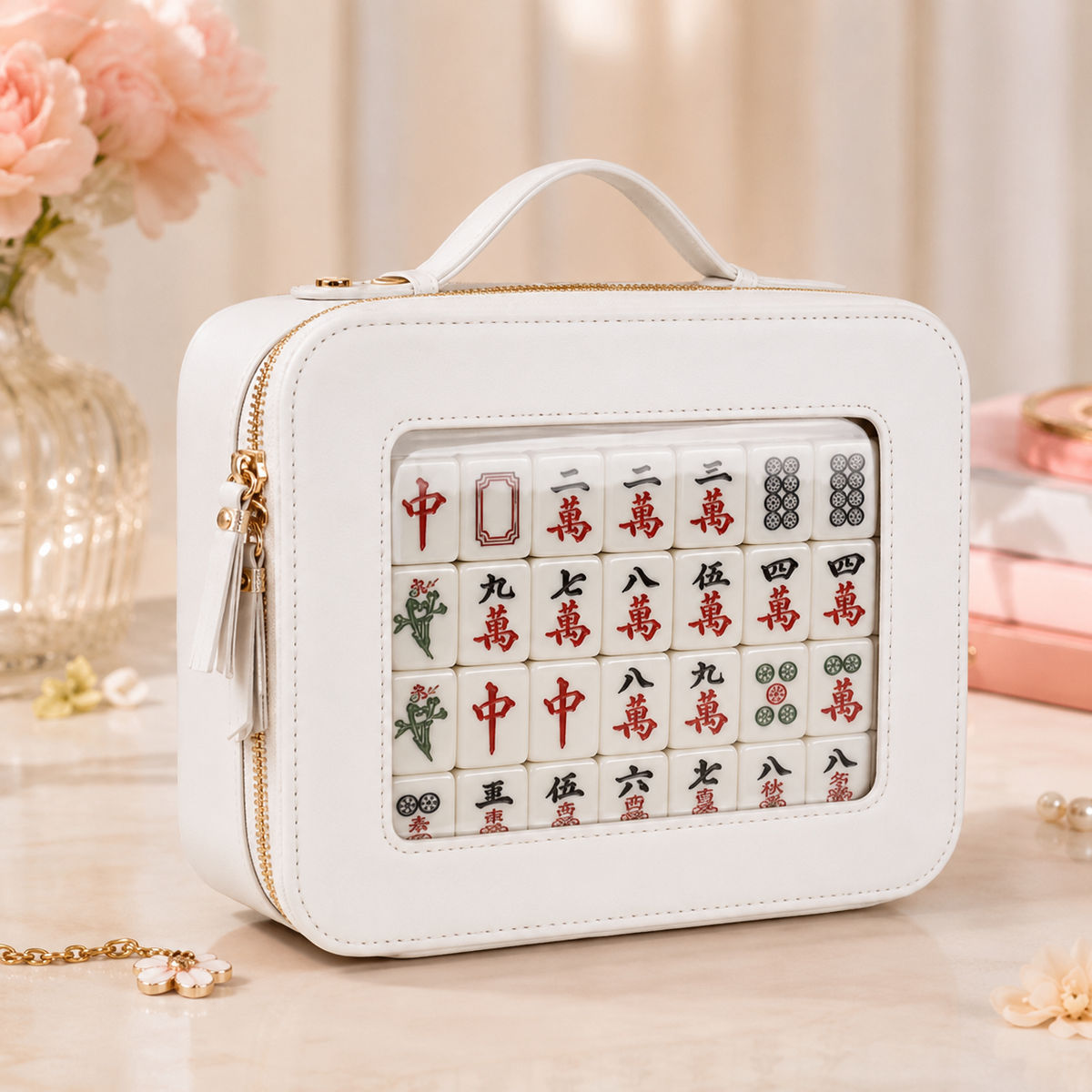
Comparison: Three Beginner Bag Types
Bag Type | Who It's For | Durability | Storage | Ease of Use |
Basic Drawstring Pouch | Ultra-casual players | 2–3 years | Tiles only; no mat space | Lightweight; quick pack |
Quilted Soft Case | Weekly game-night players | 4–6 years | Tiles + mat + small accessories | Comfortable handles; organized |
Structured Canvas Tote | Frequent travelers | 6–10 years | Tiles + mat + extra racks + personal gear | Roomier; heavier when loaded |
🎁 See our most-loved mahjong sets & accessories →
What to Check Before You Order a Travel Bag
Size: Measure your loaded rack (including tile stacks). Compare to the bag's interior dimensions, not exterior. Add 2 inches clearance so you don't have to force tiles in.
Material: Read the description for padding thickness, seam type (single vs. double-stitched), and water resistance. Nylon and canvas handle spills better than uncoated fabric.
Compartments: Count the dividers. You need at least two: one for the rack, one for the mat. Pockets for dice and personal card are bonuses.
Handles: Check weight capacity and handle type (over-shoulder, both-hand carry, rolling options). If the bag holds 10+ pounds, test that it won't cause shoulder strain.
Fit: Many soft bags fit American 160-tile sets designed for home play, but always confirm before ordering. Mahstead's mahjong travel bag collection includes detailed dimensions and material notes; if unsure, email the store with your set's dimensions.
Return policy: Know what you can do if a bag doesn't fit. Mahstead ships free across the US, so exchanges are painless if you measure wrong the first time.
Pairing Your Bag with the Right Set and Accessories
Once you've chosen a travel bag, make sure the set inside is beginner-ready. A best-selling mahjong set with large, easy-to-read tiles and a good-quality rack helps beginners learn faster and enjoy transport time without worry. If you don't yet have racks with pushers, a travel bag with enough depth for two racks lets you keep a backup set organized at home while carrying your play set.
Many beginners also add a mahjong mat to their travel kit. A mat with a non-slip base (often rubber or neoprene) prevents your tiles from sliding across a worn table. Rolled mats pack flat in a padded bag; choose a bag designed for both tiles and mat if you plan to bring both.
Common Beginner Mistakes to Avoid
Buying a bag before owning a set: Know the exact dimensions and weight of your tiles + rack first. Many beginners buy a cute small bag, then realize it won't hold their 160-tile set.
Confusing Chinese or tournament sets with American sets: American sets are bulkier (160 tiles, heavier racks). If you order a bag for a Chinese set (144 tiles), it may be too small.
Picking bags with poor drainage: Bags made of waterproof plastic without ventilation trap condensation inside, which can damage wooden racks or cause mold on mats. Look for breathable material or air-hole design.
Ignoring seam quality: A bag with single-stitched seams fails within a year if you play weekly. Double-stitched seams add cost but last years longer.
Forgetting to remove tiles before long storage: If your bag sits closed in a hot garage, acrylic tiles can warp. Always unpack your set after travel and store it flat in a cool, dry place.
✨ Find your Mahstead set — free US shipping →

FAQ
Can a mahjong travel bag fit on an airplane as a carry-on?
Most soft mahjong bags are small enough to fit overhead bins (roughly 22" × 14" × 9" per TSA rules), but always check your airline's carry-on size limits. Hard cases may exceed dimensions; consider checking those or using a larger rolling suitcase. Acrylic tiles are allowed in carry-on and checked luggage by US and EU regulations.
Do I need a different bag for Chinese mahjong versus American mahjong?
Yes—Chinese sets are smaller (144 tiles, lighter racks) than American sets (160 tiles, heavier racks). A bag sized for an American set will feel roomy for a Chinese set; a bag for Chinese tiles may be too small for American tiles. Always confirm the set type before buying a bag.
How often should I replace my travel bag?
A well-made quilted or canvas bag with double-stitched seams lasts 4–10 years with weekly use. Replace it if zippers jam, handles tear, or padding compresses flat. A cheap bag may fail after 1–2 years. Investing in a mid-range bag upfront saves money over time.
Should I buy a bag with wheels or a shoulder strap?
Shoulder straps are best for short trips (car to a friend's house) and fit into car interiors easily. Rolling bags are better for airports or long-distance travel, but they're bulkier and require level surfaces. For weekly local play, a shoulder strap is simpler; for tournament travel, consider wheels.
Can I fit dice, a personal card, and pushers in the same bag as my tiles and mat?
Yes, if the bag has multiple compartments and interior depth of 8+ inches. Use small pockets or zippered dividers for dice and cards; tuck extra racks or pushers in side slots so they don't press against your tile rack. Don't overstuff—compressed bags can warp acrylic or break zippers.
What's the difference between a mahjong travel bag and a regular tote bag?
Mahjong bags have interior padding, dividers, and structured compartments to prevent tiles from shifting or scattering. They're reinforced for heavier loads (tiles + racks + mat = 8–12 pounds). A regular tote offers no protection; tiles rattle, acrylic cracks, and your set deteriorates quickly.


View More
View More
View More
