
Can You Use a Joker in a Pair in Mahjong?
Last updated: Nov 23, 2026
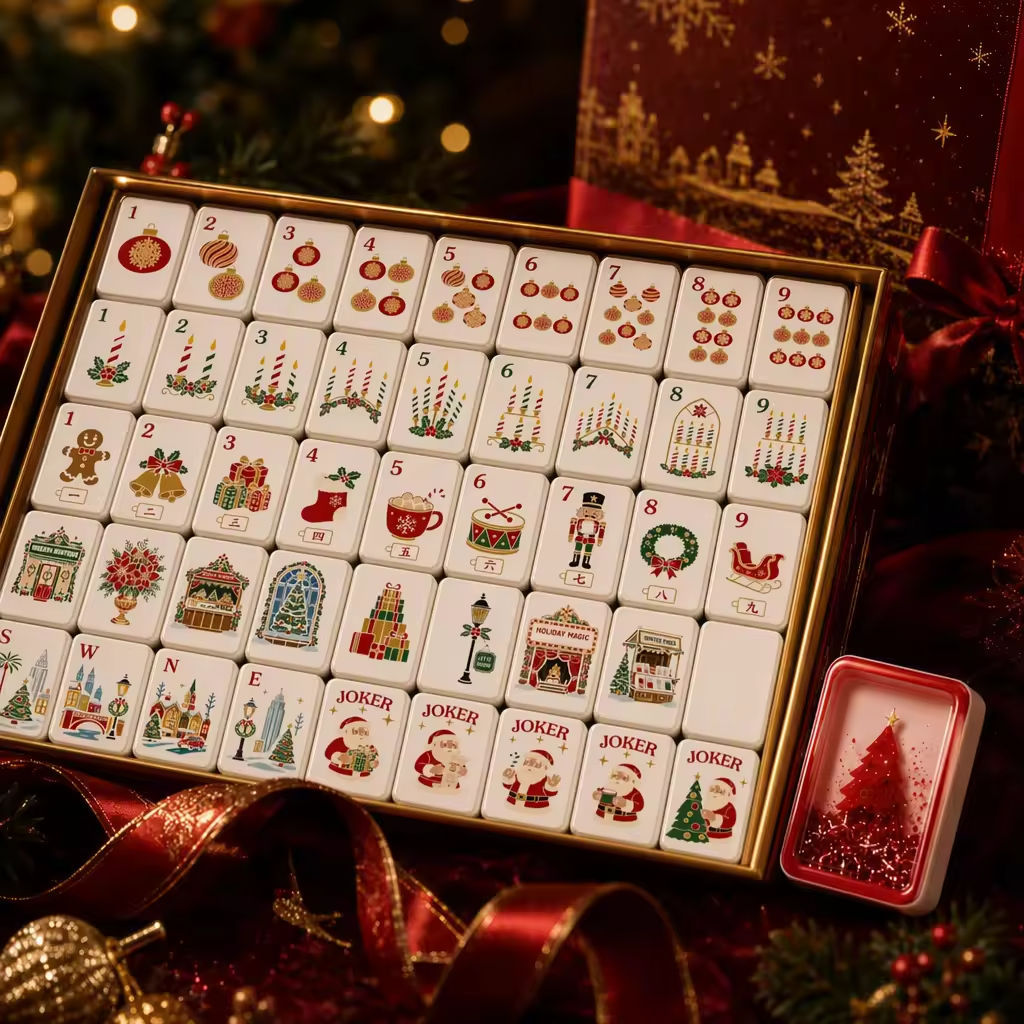
No. In American mahjong, jokers can never be used in a pair, whether the pair forms part of your hand or appears as a separate winning pair on the card. Jokers substitute only for missing tiles within exposed groups (pungs, kongs, quints, sextets) or within melds you declare — never as a pair member. A pair must always consist of two identical tiles with no joker substitution. This rule exists across all American games because the pair is the foundation of hand structure on the Mah Jongg League card. Jokers can substitute for one missing tile in a pung of three, one in a kong of four, one or more in larger groups — but the pair stands alone and must be genuine.
No. Jokers cannot form or complete a pair in American mahjong — this is non-negotiable. A pair must always be two identical tiles, period. Jokers substitute only for individual missing tiles within exposed groups like pungs (three identical tiles) or kongs (four identical tiles), never as a pair member or in place of a pair tile. Understanding this rule prevents illegal hands and keeps your game honest.
Why is the pair rule so strict?
The pair is the backbone of every American mahjong hand. On the Mah Jongg League card each year, every winning hand shows one pair and two or more melds (groups of identical tiles, sequences of consecutive numbers in one suit, or specific patterns). Because pairs anchor hand structure and appear on the card in fixed positions, they cannot be fudged with jokers. If you allowed jokers in pairs, you could claim almost any two tiles as a pair and call hands that don't actually match the card — breaking the game. The pair must be provable and genuine, so a joker has no role there.

Where can jokers actually go?
Jokers substitute for one missing tile within an exposed group only. If you need a 5 Dot to complete a pung of 5 Dots, you can use a joker as that one tile and expose the pung (three tiles: two 5 Dots + one joker). In a kong of four identical tiles, a joker can stand in for one of the four — but the other three must be real. Jokers cannot appear in your hand as hidden melds (you can only hide tiles; you cannot call or expose a meld with a joker in your closed hand). Once you declare a meld, any joker in it is visible and counted. This rule is universal in American mahjong and applies regardless of which hand you're playing.
🀄 Shop best-selling mahjong sets →
What happens if you accidentally use a joker in a pair?
You have an illegal hand. If you declare a hand with a joker as one of a pair and another player (or you, before you place the hand down) spots it, that hand is dead and cannot be won. In casual games, the correction is often made before tiles are laid; in serious play with a scorecard, the error may result in zero points for that hand or a penalty, depending on house rules. The best practice: before you call mahjong, visually confirm your pair contains two actual tiles, not a tile and a joker. Many players develop the habit of keeping their pair separate and checking it last, so they catch the mistake before announcing.
How does this compare across mahjong variants?
American mahjong's pair rule is strict and non-negotiable because hands are validated against a printed card each year. Chinese and Hong Kong mahjong, by contrast, allow some joker use within pairs in certain circumstances, though rules vary by region and house. Riichi and Taiwanese mahjong have their own joker conventions — some variants use no jokers at all. If you play multiple variants, always confirm the local pair rule before sitting down. American mahjong remains the most rigid: pair = two identical real tiles, no exceptions, and the pair structure is what makes reading the card possible.

Common mistakes to avoid at the table
Mistake 1: Misplacing a joker in a hidden meld. You draw tiles into your hand and don't realize a joker is sitting where you thought a pair was. Check your hand before you call mahjong — separate your pair and confirm both tiles are real.
Mistake 2: Confusing "pair" with "a group that needs two of the same tile." A pung needs three identical tiles; if you use a joker, you have two real tiles + one joker, which is legal. But a pair is always exactly two, no joker. These are not the same thing.
Mistake 3: Not knowing your table's house rules for penalties. Some casual games let you uncall and take back the hand; others enforce a zero or a point deduction. Ask before you play.
Best practice: In the final seconds before calling mahjong, lay out your pair in front of you where everyone can see it clearly. Make sure both tiles match exactly. Say the pair name aloud: "Pair of 3 Craks" or "Pair of Red Dragons." This one-second ritual prevents almost all pair errors.
Scenario | Allowed? | Why |
Joker in a pung (3 tiles) | Yes | Joker substitutes for one missing tile in a group |
Joker as both tiles in a pair | No | Pairs must be identical real tiles |
Joker as one tile in a pair | No | Same as above — pair cannot include a joker |
Joker in a kong (4 tiles) | Yes | Joker substitutes for one missing tile; three must be real |
Joker hidden in your hand as a "fake pair" | No | Illegal; pair must be real when you call mahjong |
Joker replacing a pair tile in a larger meld | No | Not applicable — pairs stand alone |
🎁 See our most-loved mahjong sets & accessories →
What to check before you buy a new set
When you shop for an American mahjong set, confirm the set includes 152 playing tiles plus jokers (a 160-tile set from Mahstead contains spare tiles for replacement and practice). Read the rules sheet that comes with the set or download a copy from the National Mah Jongg League — it clarifies the pair rule and other key restrictions. If you're new to the game, start with the mahjong-for-beginners guide to lock in fundamentals. Play your first few hands with an experienced player at the table who can catch errors before they stick. Quality tiles and a clear mat make mistakes easier to spot — your pair should be visually distinct on the playing surface, which is why many players prefer sets with crisp engraving and a mat with a clean layout.
✨ Find your Mahstead set — free US shipping →
How jokers and the pair rule fit into the bigger game
The pair rule is inseparable from how American mahjong works. Every hand on the current year's Mah Jongg League card includes one pair and multiple melds. Because hands are validated against the card, the pair cannot be ambiguous or substituted — it is the proof that you matched the card correctly. Learning how jokers work overall gives you a complete picture: jokers are wild only within groups, never in pairs, and never as a single tile standing alone. Once you internalize this, reading hands and calling mahjong becomes second nature.

FAQ
Can I use a joker to replace one of two tiles I need for a pair?
No. A pair must be two identical real tiles. If you are missing one tile, you cannot use a joker to "complete" the pair. You must draw or be dealt an actual matching tile.
What if I accidentally call mahjong with a joker in my pair and no one notices until I lay down?
The hand is illegal and cannot win. You forfeit the hand and typically score zero points. Some casual games allow an uncall and play continues; confirm house rules before the game starts.
Is the pair rule the same in Chinese or Hong Kong mahjong?
No. Different variants have different joker rules. Chinese and Hong Kong mahjong allow some joker use in pairs under specific conditions; American mahjong is stricter. Always confirm the variant and house rules before sitting down.
Can a joker ever appear in any part of a pair, even if I keep it hidden in my hand?
No. Once you call mahjong, your hand is exposed and validated. If a joker is present where a pair should be, the hand is illegal. Jokers must stay within exposed melds only.
How do I make sure I don't make a pair mistake before I call mahjong?
Lay out your pair on the mat where everyone can see it, confirm both tiles are identical, and say the pair name aloud. This one-second check catches almost all errors and proves transparency.
If I'm learning, should I use a set with clearly marked tiles or engraved tiles?
Yes. Crisp, high-contrast tiles make it easier to spot mistakes, especially early pairs. Quality engraving or clear printing on a well-lit mat reduces confusion and keeps the game moving smoothly.


View More
View More
View More
