
Classical Chinese Mahjong Scoring: Rules & Point System
Last updated: Nov 23, 2026
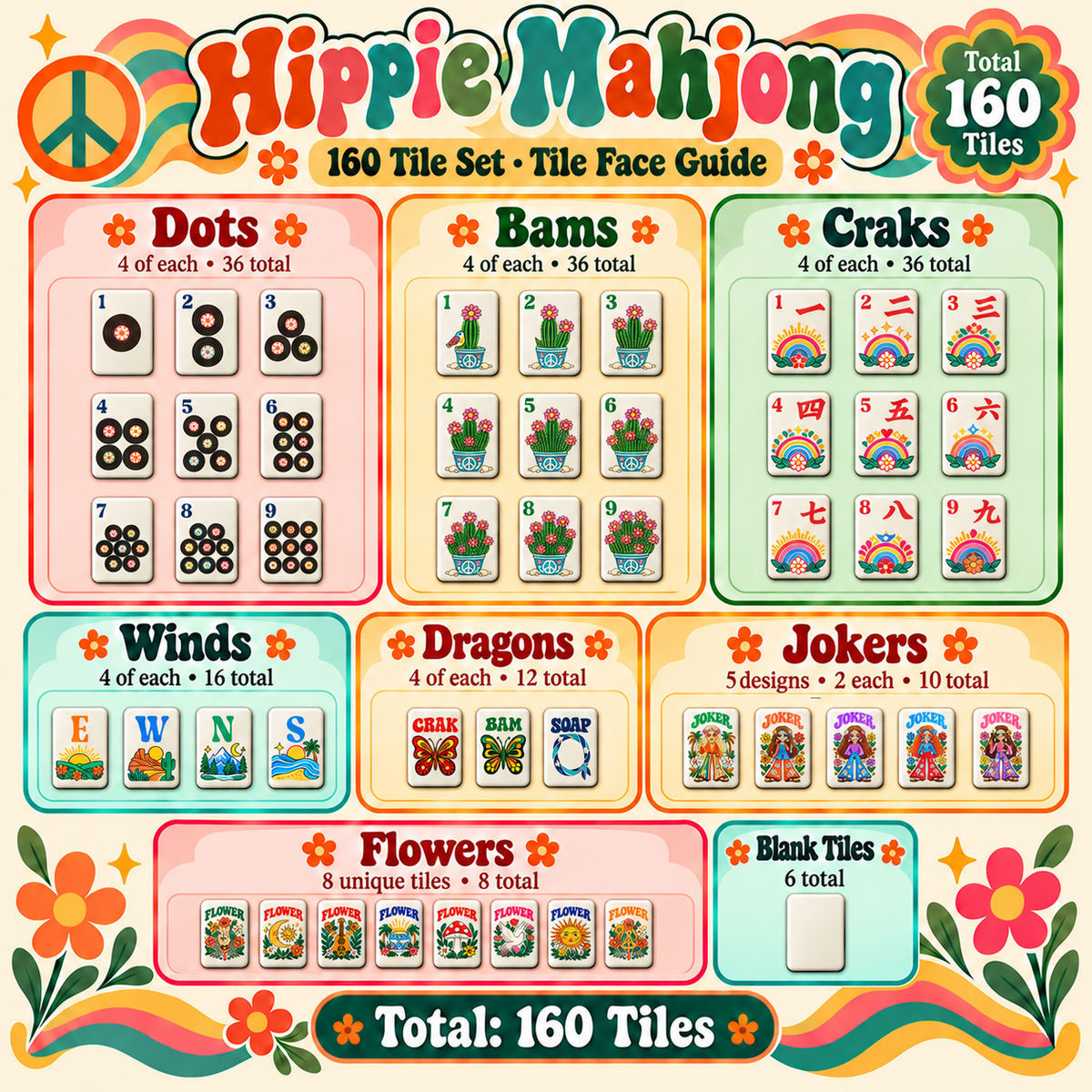
Classical Chinese mahjong scoring rewards specific combinations and strategic play more transparently than American mahjong. Players accumulate points through tile patterns, position, and winning method; a game's final score reflects both luck and decision-making. Understanding the fan system is essential—each fan category (flower tiles, dragon pungs, simples, honors) determines multiplier depth and final payment.
How does the fan system work in Classical Chinese mahjong?
The fan system is a multiplier framework. You earn one fan for each qualifying pattern in your completed hand: a pung of dragons, a kong of winds, a hand of all simples, a self-draw win, or winning on the final tile of the wall. Most hands target 1–3 fan for casual play; 5+ fan earns significant payments. Each house sets a maximum fan (often 8 or 13), capping payouts to keep stakes reasonable. A 2-fan hand at 20 base points pays 4× the base (or more, depending on seat position and who discarded). The beauty of the fan system is transparency—both players see the hand's value before payment, reducing disputes.

What's the difference between a chow and a pung in scoring?
A pung (three identical tiles: three 5 Bams, three North Winds) scores fixed fan by category—dragons, winds, or terminal tiles each contribute one fan. A chow (three consecutive numbers: 4–5–6 Dots) typically scores zero fan on its own but supports other patterns; four chows of simples might earn "all simples" fan. Pungs are high-value components because they carry categorical bonus points. Kongs (four identical tiles) score like pungs but count as both a meld and a set, allowing a hand to include two kongs plus two chows plus a pair, for example. Strategic tile retention often revolves around pungs: holding three 7 Craks reserves a pung of a common suit tile, whereas collecting 2–3–4 Dots builds flexibility into runs.
How does seat position affect payment in Classical Chinese mahjong?
Position (East, South, West, North) and winning method determine who pays what. East seat (the dealer) pays and receives double. If you win by claiming a discard, the player who discarded pays you double; others pay once (or sometimes do not pay at all, depending on house rules—clarify before play). If you win by self-draw, all three players pay equally. A hand worth 2 fan might pay 40 points from the discarder to a non-dealer and 80 from the discarder to East, while all other players pay 20 or 40. Some regions use "heads-up" rules where only the discarder pays non-dealers; others split evenly among the three losers. The dealer advantage—paying double and receiving double—makes East seat desirable; players rotate clockwise after each hand, so position risk and reward shift continually.
What are the highest-scoring hands and how do you build them?
Limit hands (8+ fan, capped at full payment) include all honors (wind and dragon tiles only), all terminals (1s and 9s only), seven pairs, and all pung (no chows, only sets). A hand of all honors with a dragon pung, East wind pung, and North wind pair is both beautiful and rare—it carries maximum fan, so the discarder pays the winner the house maximum (often 320–500 points or a preset limit). Hands scoring 5–7 fan are far more common: a self-draw win (1 fan) plus a dragon pung (1 fan) plus a wind pung (1 fan) plus all simples (1 fan) totals 4 fan, paying 80 base points to each player. Beginners often build toward one obvious pattern; experienced players read the discard pile, count wait tiles, and pivot their hand to maximize fan as they approach 13 tiles. The tile wall shrinks each draw; late-game hands tend to prioritize completion over perfection, trading high fan for certainty.
Scoring Scenario | Hand Composition | Fan Count | Who Pays | Notes |
Self-draw, all simples, dragon pung | No honors, three 7 Bams, 2–3–4 Dots, 5–6–7 Craks, pair of 1 Dots | 3 fan (1 + 1 + 1) | All three players, equal | Flexible; common mid-game win |
Discard claim, three kongs, East dealer | Four 9 Dots, four East winds, four 3 Craks, North pair | 6–7 fan (kongs + honors) | Discarder pays double; others may sit out | Rare; requires early planning |
All honors limit hand | East, South, West, North, Red dragon, Green dragon, White, pair of winds | 13 fan (capped) | Discarder pays maximum house limit | Celebrated; often signals end of night |

How do regional variations affect Classical Chinese scoring rules?
Cantonese mahjong (Hong Kong style) emphasizes melds over base-point multipliers and includes unique patterns like "no terminals in hand," "self-drawn only," and "mixed melds." Shanghai and Sichuan variants reward specific suit combinations and honor sequences differently. Taiwanese mahjong uses flower tiles for bonus draws and scoring. Riichi mahjong (Japanese) layers a betting system and "closed hand" rule (concealing your melds until win). Scoring tables differ region to region—a 2-fan hand in Cantonese might pay 32 points base, while Shanghai scores it at 40. Before joining any game, ask about local ruleset: ask which patterns count as fan, whether self-draw is mandatory or optional for payout, and if the house cap exists. Most casual weekly games adopt a blended ruleset, so clarify scoring before the first hand. Understanding your region's nuances prevents misunderstandings and keeps the table friendly.
🀄 Shop best-selling mahjong sets →
What mistakes do new Classical Chinese players make with scoring?
New players often forget that a winning hand must have exactly four melds plus a pair—five melds or one meld plus two pairs disqualifies the hand (though some regional rules permit "seven pairs"). Misidentifying chows as sequences of honor tiles (impossible; only numbered suits form chows) costs points. Assuming all three players pay equally is wrong in most regions; the discarder carries primary liability. Another pitfall: counting fan twice for overlapping patterns—if your hand is all simples and wins by self-draw, you score two separate fan, not one doubled. Some players ignore seat position until score-settling, then dispute payment; mark dealer and compass position at the table's start. The clearest mistake: not agreeing on the house cap before play—a 9-fan hand pays differently at cap-8 versus cap-13, creating embarrassment. Post the scoring table on your phone or mat and refer to it openly; transparency makes the game faster and fairer.
When should you switch your target fan mid-hand?
Early in the hand (tiles 1–8 drawn), commit to a high-fan direction if you see a clear path: three dragon pungs, or all honors plus a wind set. By tile 10–12, if that pattern seems blocked (you have only one dragon, or you drew numbered tiles despite aiming all-honors), pivot. Look at your three melds-in-progress and ask: which combination finishes soonest? Can you complete a simples hand and self-draw? A self-draw win (1 fan) that occurs on tile 13 beats a 4-fan dream hand that never forms. Reading the discard pile helps: if the 7 Craks has appeared three times, your 5–6–7 Crak wait is dead; abandon it and chase 4–5–6 instead. The best players recalculate fan probability after each discard, staying flexible. Rigid commitment to a single pattern is the second-most common reason beginners lose—the first is not watching what others discard.
🎁 See our most-loved mahjong sets & accessories →
What to check before you buy a Classical Chinese mahjong set
Before playing Classical Chinese mahjong regularly, confirm your set has exactly 144 tiles (four copies of each number 1–9 in three suits, plus 16 winds, 12 dragons, 8 flowers, totaling 144—no jokers). Verify your set includes a clear scoreboard or a smartphone app to track fan and payments; mental math during rapid play invites mistakes. Check that tiles are readable even across a dim table—bone and bamboo sets look traditional but require good light; acrylic sets with engraved suits and numbers stay legible in any room. If you play weekly with the same group, an engraved set personalized for your players becomes a lasting memory. A durable mahjong mat protects your tiles and organizes the layout so melds stay separated from hand tiles, reducing scoring errors. Strong racks with pushers let you hold your hand cleanly, keeping winning hands stable and visible until final payment.
✨ Find your Mahstead set — free US shipping →

FAQ
Can you score a hand with two pairs instead of one pair?
No. Classical Chinese mahjong requires exactly four melds plus one pair. Two pairs plus three melds is not a valid winning hand. Some regional variants (like seven-pairs play) permit an all-pairs hand, but standard Classical Chinese does not. Clarify this rule before your game starts.
Do you have to declare your hand before others pay, or is payment automatic?
You declare "mahjong" and show your complete hand before payment. All players verify the melds and pair match the fan claimed; disputes are settled by reference to the ruleset or table's scorekeeper. Payment is automatic once the hand is verified. Honesty speeds this up.
If two people could claim the same discard, who wins?
Priority goes to pung or kong claims first, then to chow claims. If two players both need that tile for a pung, the player seated closest clockwise from the discarder claims it; however, any player holding a waiting pair wins over non-waiting players. Check your regional ruleset—some games award it to East (dealer) automatically. Agree before the first hand.
Does a flower tile drawn during the game add points to my score?
Flowers are bonus tiles. If you draw a flower, you draw an extra tile from the wall to replace it. Some regional rules grant one fan per flower held; others award no fan but allow you to draw extra, improving your hand odds. Clarify whether flowers score before play.
What happens if the wall runs out of tiles and no one has won?
The hand is "dead" or a draw; no points are awarded. Some houses rotate the dealer; others have East stay. Agree beforehand whether dead hands reset the game or carry forward to the next hand. This rule prevents frustration and keeps play fair.


View More
View More
View More
