
Can You Take Back a Discard in Mahjong?
Last updated: Nov 23, 2026
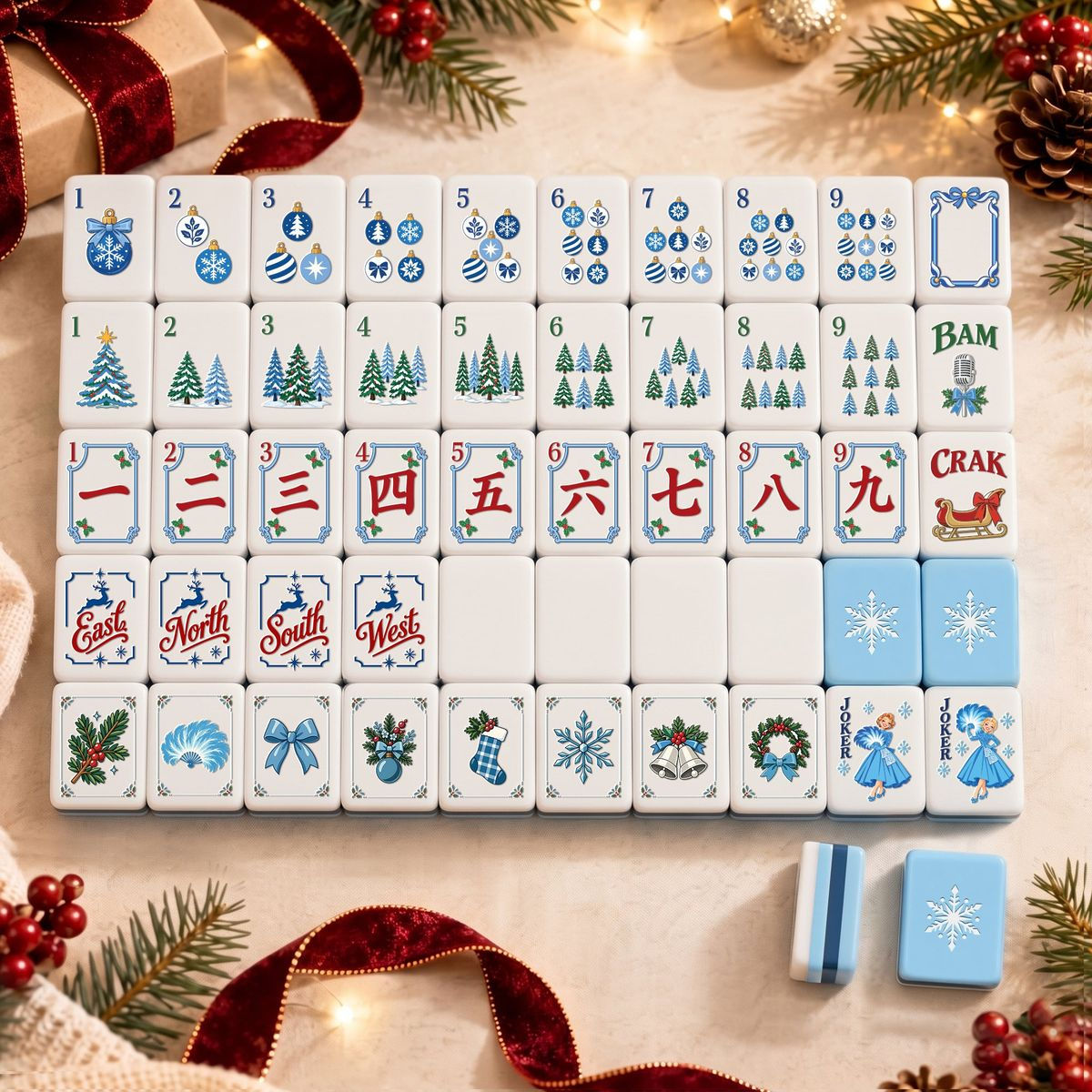
No. Once you discard a tile in American mahjong, it cannot be taken back under any circumstance. The tile becomes part of the discard pile the instant it lands on the table, and play moves to the next player. If you discard a tile by accident—wrong suit, wrong number, a joker you meant to hold—the tile stands. If that discard allows another player to win (they call it for a pung, kong, or to complete their hand), you are bound by the rule. The only exception is if the table agrees beforehand that you have a brief time window (usually a few seconds) to correct an obvious fumble before anyone calls; however, the standard American game has no such grace period. Play moves fast for a reason: discards are irreversible, and that tension is part of the game's strategy.
Once you discard a tile in American mahjong, it cannot be taken back under any circumstance. The tile becomes part of the discard pile the instant it lands on the table, and play moves to the next player. If you discard a tile by accident—wrong suit, wrong number, a joker you meant to hold—the tile stands. If that discard allows another player to win, you are bound by the rule. The only exception is if the table agrees beforehand that you have a brief time window (usually a few seconds) to correct an obvious fumble before anyone calls; however, standard American play has no such grace period. Play moves fast for a reason: discards are irreversible, and that tension is part of the game's strategy.
Why is a discard permanent in American mahjong?
A discard becomes locked the instant you release it onto the table. This finality enforces one of mahjong's core principles: you must think before you act. Once your tile hits the table, other players can immediately call it to build a pung, kong, or complete their winning hand. If the table had to wait for your approval, the game would halt and the advantage of speed and observation would vanish. The rule applies equally to accidental and intentional discards—there is no "oops" clause in American play. Your mental discipline and tile management become your defense.

What happens if you discard the wrong tile by mistake?
If you release a tile you didn't mean to discard, the tile stands immediately upon landing. If no one calls it within a few seconds (to form an exposed set or win), it stays in the discard pile and the next player draws. If a player does call it—"Pung!" or "Kong!"—you cannot reclaim it. If that called tile completes another player's winning hand, you are responsible for the loss, and your payment is typically doubled or the hand is scored against you as a loss. The best defense is to hold your rack steady, double-check your tiles before releasing, and maintain a physical barrier between your hand and the table until you are certain of your discard.
How do you avoid discarding a tile you need?
The most common mistake is discarding under pressure when the game moves fast. Use these strategies: (1) Organize your rack by suit before each draw—this prevents scanning misses. (2) Keep your eyes on the drawn tile for a full second before placing it in your rack; confirm it fits your hand. (3) Use a mahjong rack with pushers to hold tiles upright and separate—pushers give you a physical boundary and force you to slow down when moving tiles. (4) Never discard a tile at the edge of your hand; slide it to the center of your rack first, so you cannot grab it by accident. (5) Before discarding, say the tile aloud (e.g., "5 Dot") so your brain confirms the decision. Most experienced players swear by racks with pushers because the physical act of sliding a tile into place creates a pause that prevents fumbles.
🀄 Shop best-selling mahjong sets →
Can the table override the discard rule if everyone agrees?
In casual home games, some tables adopt a "grace period" rule—allowing a player a few seconds to take back a discard if no one has called it and play hasn't advanced to the next draw. This is not part of the National Mah Jongg League ruleset, so if you are playing in a league setting or with players who follow standard rules, the grace period does not apply. If your weekly group agrees on a house rule, you must clarify it before the game begins, not after a mistake. Write it down or state it aloud so all four players confirm. Many experienced groups reject the grace period because it slows the game and creates disputes about timing ("Did I call before she grabbed it back?"). The safest approach: play by standard rules—once it's gone, it's gone—and let your rack discipline prevent the problem.

What's the difference between American and other mahjong variants on discard rules?
Chinese, Hong Kong, and Riichi mahjong games follow the same discard-finality rule—once a tile leaves your hand, it cannot be returned. However, some variants allow different window for "calling" a discarded tile: in Riichi mahjong, for example, a player can call a discard only during a specific window before the next player draws. In American mahjong, any player may call a discard at any time during the current hand, which makes discards even more critical. The core principle—a discard is permanent—is universal across all variants, so the discipline you build in American play transfers to other games.
Variant | Discard is final? | Who can call the discard? | Time window to call |
American | Yes, immediately | Any player | Any time before hand ends |
Chinese (Classical) | Yes, immediately | Any player | Depends on melds |
Riichi | Yes, immediately | Next player first | Limited to specific turns |
Hong Kong | Yes, immediately | Any player | Any time during hand |
All variants lock discards immediately; American mahjong allows the widest calling window, so you must be most careful with your discards.
🎁 See our most-loved mahjong sets & accessories →
What to check before you buy a mahjong set to minimize fumbles
Tile size and weight matter. Tiles that are too small are harder to grip and sort in your rack; tiles that are too light slide around and feel loose. When shopping for a set, hold the tiles and confirm they sit comfortably in your fingers. Tiles should feel substantial—not delicate—so you control the release and avoid accidental drops. Acrylic tiles from our best-selling collection are durable and have a smooth finish that doesn't slip. The engraved details on many sets make it easier to read tiles at a glance, so you spend less mental energy on identification and more on strategy. If you play weekly, a set with clear, deep engravings (or printed faces on new-arrival styles) will reduce squinting and fumble-causing confusion. Pair your tiles with a mat that has a defined center well—the well keeps your discard pile organized so you know exactly which tiles have been played, and a clearer board means fewer mistakes.
How the Charleston helps you avoid a bad discard
Before the hand begins, the Charleston is a tile-passing ritual where you exchange unwanted tiles with other players. A good Charleston leaves you with a more cohesive hand, so your discard decisions later are clearer and faster. If you rush the Charleston or neglect to think through your passes, you'll end up with scattered tiles that force last-minute, careless discards. Spend the first 30 seconds of the Charleston evaluating your hand and identifying which three tiles you absolutely do not need. The better your Charleston, the fewer panicked discards you'll make once play begins.
✨ Find your Mahstead set — free US shipping →
The psychological side: why fast play means safer discards
When the game moves slowly, players overthink their discards and second-guess themselves. When the game flows at a natural pace, each player discards with confidence because the rhythm leaves no room for doubt. Experienced players discard faster than beginners not because they are rushed, but because they have already decided. If you find yourself frequently hesitating over a discard, your hand is probably not organized well enough. Before your next game, commit to reading the mahjong card more carefully in the setup phase, and sort your rack by suit and number. The extra 30 seconds upfront will give you confidence and speed during play, which paradoxically reduces fumbles and regret.

FAQ
If I discard a winning tile and someone else wins off my discard, am I liable for their payment?
Yes. In American mahjong, the player who discards the winning tile pays the full value of the hand to the winner. This is called being "hit" or "out." Your payment is due immediately and often doubled to emphasize the cost of a careless discard. This is one reason seasoned players are ruthless about tile management.
Can I take back a discard if I realize I misread the tile?
No. Misreading (e.g., thinking a 4 Crak is a 4 Dot) does not overturn the discard rule. The tile is gone. You are responsible for reading your tiles correctly before release. Use good lighting, take a half-second to confirm, and you will avoid this trap.
What if two players try to call the same discard at the same time?
The player in the calling order closest to the discarder gets priority. If the discarder is East and South and West both call, South (next in turn) has priority. The second caller is "too late" and their call is invalid. This is why attention to turn order matters—timing on calls is strict.
Is there ever a rule that lets you "undo" a discard before the next player draws?
Not in standard American mahjong. Some casual home games adopt a house rule allowing a brief grace period (typically 2–3 seconds) if no one has called the tile, but this is non-standard and must be agreed before the game starts. Many serious players reject this rule because it slows play and causes disputes.
How do I know if I've made an illegal discard?
An illegal discard in American mahjong typically means you discarded a joker (jokers cannot be discarded) or you discarded a tile you do not hold (a count error). If this happens, the error should be caught before the next player draws. Once caught, the hand is usually voided and replayed, not because you can "take back" the tile, but because an error in the number of tiles in play occurred. Prevent this by counting your rack aloud before each turn: "I have 13 tiles; I drew 1; I now have 14; I discard 1; down to 13." A clear count prevents most illegal-discard situations.


View More
View More
View More
