
British Mahjong: History, Rules & How It Differs From American
Last updated: Nov 23, 2026
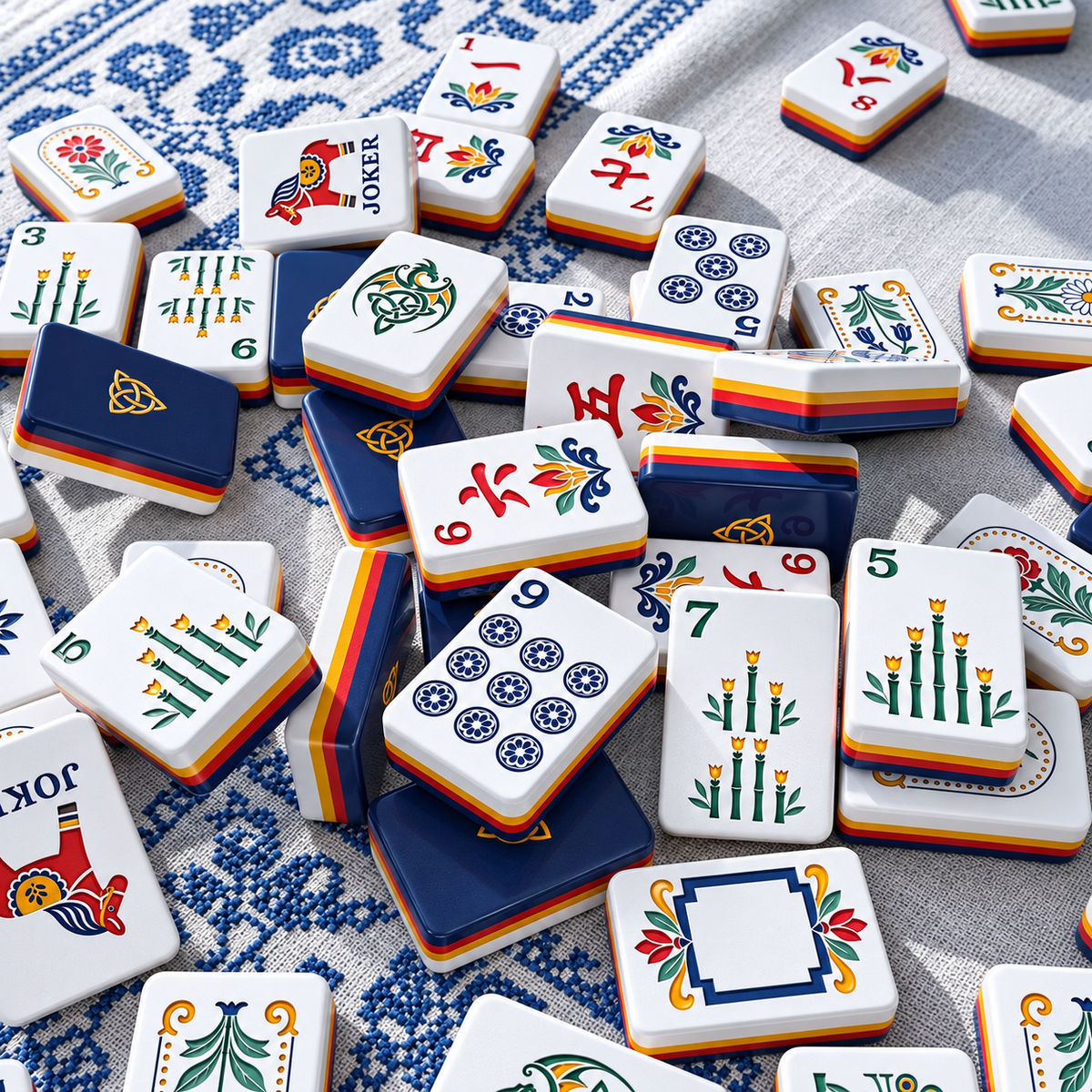
British mahjong is not a regional variant of American mahjong—it's the Hong Kong/international ruleset played across Europe, including the UK. It uses 136 tiles (including winds and dragons but no flowers), permits sequences (chows), and allows calling exposed pungs, kongs, and chows during active play. Hands must score according to a hand value system rather than the National Mah Jongg League card used in America. British players often use bamboo or bone tiles with traditional designs, though acrylic sets work equally well. The game emphasizes declaring melds openly and building complex scoring combinations, making it quite different from the closed-hand, card-dependent American version. Mahstead's best-selling acrylic sets can adapt to British play if you learn hand patterns yourself or consult an international rulebook.
🀄 Shop best-selling mahjong sets →
What is British mahjong exactly?
British mahjong is the international (Hong Kong) ruleset codified by the International Mah Jongg Association. It's not specific to Britain—it's played in Europe, Australia, and many Commonwealth countries—but British clubs and tournaments follow these standardised rules. The game uses 136 tiles (three bamboo/bam suits plus honour tiles: winds and dragons). No flowers or jokers exist in classical British play, though some informal games add jokers as wild tiles. Players draw 13 tiles, then take turns drawing one and discarding one, aiming to complete a winning hand of 14 tiles. Unlike American mahjong, British play requires you to declare all pungs, kongs, and chows immediately—melds are exposed on the table, visible to all players, and scoring is calculated from patterns rather than memorised combinations.

How many tiles are in a British mahjong set?
British mahjong uses exactly 136 playing tiles: 36 bamboo (1–9 in each bamboo suit, four copies per number), 36 character suits (numbered 1–9), 36 dot suits (1–9), plus 16 winds (four cardinal directions, four copies each) and 12 dragons (three types—red, green, white—four copies each). Most British sets sold today contain additional spare tiles (blanks or jokers) for replacements if damage occurs during play. Acrylic sets like ours often come as 160-tile packages to include those spares. Traditional bone and bamboo sets may display tiles differently—dragons and winds as picture tiles rather than numerals—but the count and function remain identical.
What are the key rule differences from American mahjong?
Feature | American Mahjong | British Mahjong |
Tile count | 152 playing tiles + 8 jokers | 136 tiles; no jokers (traditionally) |
Sequences (chows) | Not allowed; no sequences ever | Allowed and required in many hands |
Melds called | Pungs, kongs, quints, sextets only | Pungs, kongs, chows (can be called) |
Hand reference | Annual National Mah Jongg League card | No fixed card; pattern memorisation |
Scoring | Points awarded by hand pattern on card | Hand value calculated from melds |
Flowers | Yes (8 tiles) | No |
Joker rules | 8 jokers in play; complex substitution rules | No jokers (or optional as wilds) |
Exposure timing | Melds exposed when winning only | Melds exposed immediately when claimed |
American mahjong locks you into hands printed on the annual card—you must match the exact pattern to win. British mahjong requires you to memorise or look up winning patterns in rulebooks and know how each combination scores. American play uses 152 tiles plus 8 jokers as wild cards; British uses 136 with no mandatory wild cards. Sequences (e.g. 4, 5, 6 of bamboo) are forbidden in American play but central to British hands. American melds stay in your hand until you win; British melds go face-up on the table immediately when you claim them during play, signalling to other players what you're building toward.
🎁 See our most-loved mahjong sets & accessories →
Can I use an American mahjong set to play British mahjong?
Yes, but only if you ignore the jokers and flowers. An American set contains 152 tiles—108 suited tiles, 16 winds, 12 dragons, 8 flowers, plus 8 jokers. For British play, set aside the 8 flowers and 8 jokers, leaving exactly 136 tiles to play with. This is workable for informal games, but it wastes a third of your set and risks confusion if tiles get mixed up. Acrylic tiles from any modern set are durable enough; the real difference lies in tile marking. American sets label suits as Bam, Crak, and Dot using numerals and symbols. British sets use traditional Chinese characters or images—bamboo stalks, characters, and circles—which seasoned British players read instantly. If you're serious about joining a British club or tournament, buying a dedicated 136-tile British set (often sold as bamboo or bone) is a better long-term investment than adapting an American one.
How do British players read the tiles?
British tiles use traditional iconography rather than English numerals. Bamboo (or Bam) suits display 1–9 with stylised bamboo stalks; 1 often shows a bird perched on bamboo. Character suits display Chinese numerals for 1–9. Dot suits show 1–9 circles arranged in patterns (1 is a single dot, 9 is a 3×3 grid). Winds are marked as East, South, West, North in characters or compass symbols. Dragons are typically Red (with a character), Green (with a character), and White (blank or plain). Jokers and flowers, if present in a set, bear obvious markings. Learning to read tiles takes practice; many British clubs provide sets and printed tile guides during beginner sessions. Acrylic modern tiles often print the numerals and traditional symbols side-by-side to help learners, combining clarity with tradition.

What is a winning hand in British mahjong?
A winning British hand contains 14 tiles arranged as four melds (pungs, kongs, or chows) plus a pair (two identical tiles). Examples: Pung hand: three 1-bamboo + three 2-bamboo + three 3-bamboo + three dragons + two winds = win. Chow hand: 1–2–3 bamboo + 4–5–6 bamboo + 7–8–9 bamboo + pung of 1-dot + pair of winds = win. Mixed hand: chow (1–2–3 characters) + pung (two 5-dots) + chow (3–4–5 bamboo) + pung (four green dragons/kong) + pair (east wind) = win. The hand must be "closed" or "self-drawn"—you draw the 14th tile yourself, or "open"—you take a discarded tile to complete. Scoring then depends on the tiles involved (whether they're honours, terminal numbers, or dragons) and the pattern type (like all one suit, all terminals, etc.). A British rulebook lists 20–30 common patterns and their point values; serious players study these systematically.
Where can I learn British mahjong rules in detail?
Most British clubs operate through community centres, libraries, universities, or standalone mahjong bars in larger cities. Beginners can find local games by searching "[your city] mahjong club" on community boards, Meetup, or Facebook groups. The International Mah Jongg Association publishes an official rulebook; many clubs distribute simplified teaching guides. YouTube channels dedicated to Hong Kong or international mahjong demonstrate tile reading, hand-building, and scoring in real games. Online communities on Reddit (r/mahjong) include British players who answer rules questions. Many clubs offer free trial sessions so newcomers can watch or play supervised games. The IMJA website lists affiliated clubs by country, though you'll need to search for your region directly. Learning by playing alongside experienced players is faster than reading alone—expect 3–5 supervised games before you feel confident calling melds and calculating scores.
✨ Find your Mahstead set — free US shipping →
Which acrylic tile set works best for British mahjong?
Acrylic sets are durable, easy to read (especially versions with numeral labels), and travel well—ideal if you're new to the game or moving between club venues. Look for sets that clearly mark tiles with both traditional symbols and numerals so you can reference tiles while learning. Mahstead's acrylic mahjong sets offer clean, laser-engraved designs that hold up through hundreds of games. Acrylic tiles are lighter than traditional bone or bamboo, so they shuffle easily and feel smooth in hand. If you plan to join a club, check what tile style they use before buying—some clubs prefer bone or bamboo for aesthetic or tactile reasons, while others actively use acrylic. Acrylic sets are also affordable compared to artisan bamboo sets, making them an excellent entry point.
Acrylic sets designed with specific artwork or engravings can personalise your game—whether you're playing casually at home or hosting weekly British mahjong nights. Engraved American mahjong sets work equally well for British play if you discard the flowers and jokers, and custom engravings (names, dates, mottos) make them memorable gifts for club members or tournament prizes. Pair your set with protective gear: a mahjong mat keeps tiles from sliding during draws and discards, while a travel bag or case protects tiles during transport between venues.
What should you check before buying a set for British play?
Tile readability: Confirm the set includes clear symbols (bamboo stalks, characters, circles) plus numerals if you're learning. Worn or faded tiles slow play. Tile count: Verify the set includes at least 136 playable tiles (or 144 if you plan future American play). Extra spares (jokers, blanks) are useful replacements but not counted in active play. Weight and texture: Acrylic tiles are uniform and slide smoothly; bone and bamboo vary in feel. Test in-hand before committing if possible. Colour contrast: Dragon tiles (red, green, white) and wind tiles must be visually distinct—poor contrast causes misreads mid-game. Set completeness: Check that all four copies of each tile number are present; missing tiles halt play. Bonus features: If hosting, consider sets with matching racks and pushers to keep tiles organised and prevent accidents. Mahstead's sets are shipped fully counted and verified, reducing the risk of missing or duplicate tiles on arrival.

FAQ
Can I play British mahjong with fewer than four players?
Yes. Two- or three-player variants exist, though standard British play uses four. Fewer players change draw order and discard pressure; consult a rulebook for adaptations or ask your local club how they handle shorter tables.
Do British mahjong players use a mechanical or electronic dealer button?
No. British play rotates dealer status (East, South, West, North) manually between rounds. The player holding East wind position acts as the dealer for that hand, then the role passes. No physical dealer button or electronic timer is required in casual play, though tournaments may use timers.
How long does a typical British mahjong game last?
A single game (four rounds, one for each player as dealer) typically lasts 45–90 minutes, depending on player speed and familiarity with scoring. Casual club play averages 60 minutes; tournament play is often faster due to time controls.
What is the difference between "going out" and "winning" in British mahjong?
In British mahjong, "going out" and "winning" are the same thing—you complete a legal 14-tile hand and declare it. The hand must consist of four melds plus a pair. Once declared, you verify the tiles, calculate points, and collect payment from other players based on the hand's score value.
Are there official British mahjong tournaments I can enter as a beginner?
Yes. The International Mah Jongg Association organises tournaments across Europe, and British clubs host regular internal competitions. Most welcome beginners in a separate or handicapped bracket. Search for IMJA affiliated clubs in your region or ask a local club for tournament schedules and entry rules.
Can I use an American mahjong card to play British mahjong?
No. The American card lists specific hand patterns tied to American rules (no chows, joker substitution, 152 tiles). British hands use traditional patterns based on melds, honours, and scoring. You must learn or reference a British/international rulebook instead.


View More
View More
View More
