
British Mahjong for Beginners: Rules, History & How to Start
Last updated: Nov 23, 2026
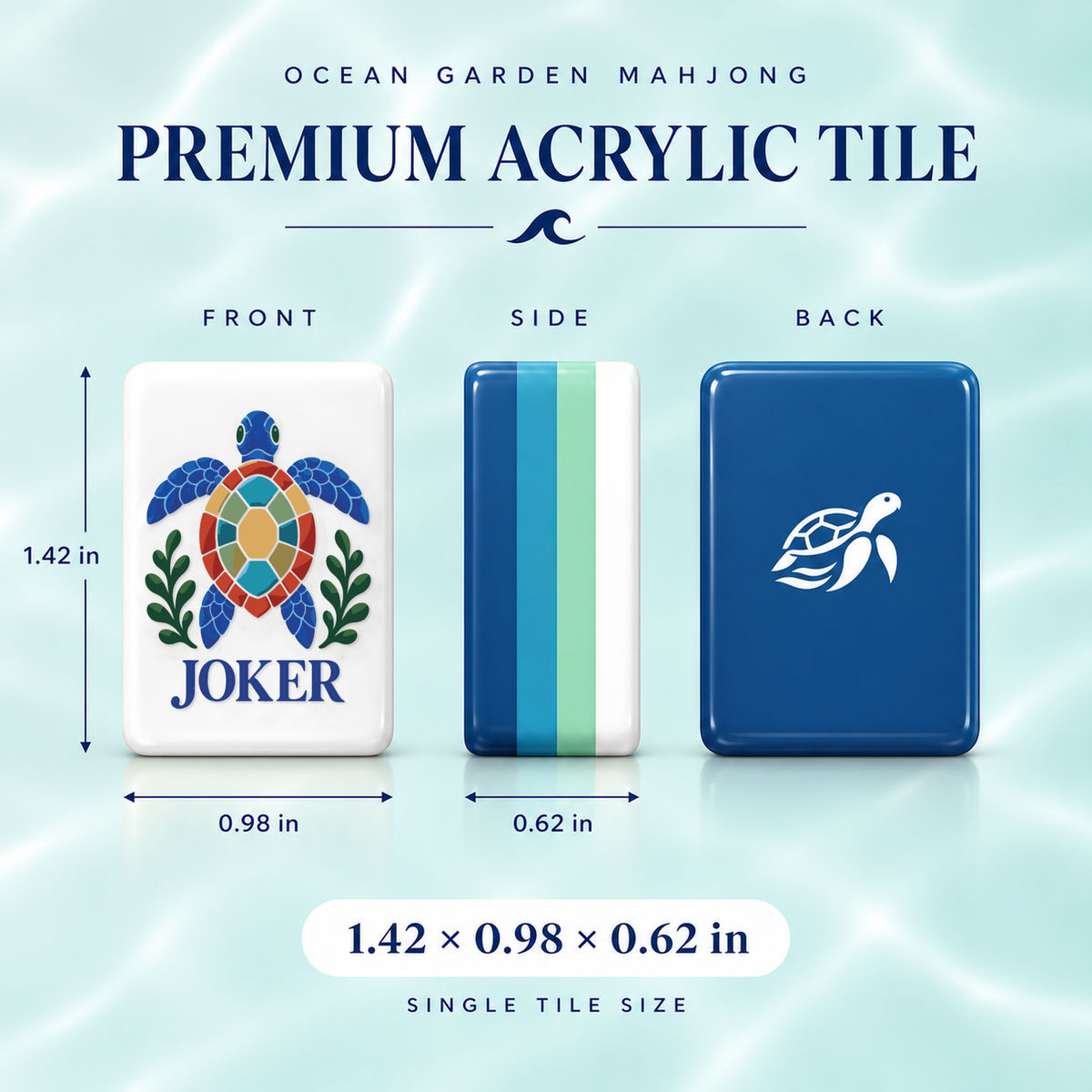
British mahjong uses 152 tiles (like American mahjong) but follows Hong Kong-style hand composition: pungs (3 identical), kongs (4), and sequences called chows—sets of three consecutive numbers in one suit (1-2-3, 4-5-6, etc.)—unlike American play where chows cannot be called. Jokers substitute for any tile and appear in most hands. A complete hand is 14 tiles: 13 sets plus a pair. Players draw and discard in turn; the goal is to complete your hand legally and declare mahjong (or mah-jong). Games typically last 10–30 minutes per round. British sets contain 152 standard tiles plus spare jokers. The game has no annual card system; hand patterns are learned or referenced in guides rather than printed annually. Setup and pace sit between casual Hong Kong and competitive American play, making it accessible for newcomers who want melds and strategy without strict American regulations. Mahstead's best-selling mahjong sets include variants suited to multiple rule systems. --- 🀄 Shop best-selling mahjong sets →
How does British mahjong differ from American mahjong?
The biggest difference is how you build hands. American mahjong requires every hand to match the current year's National Mah Jongg League card—strict, rule-bound, one card, many players memorize patterns. British mahjong is far more flexible: any 14-tile combination of valid melds wins. American play forbids chows entirely; British play makes them central. In American, only pungs (3 identical) and kongs (4 identical) and longer identical runs (quints, sextets) can be exposed; British allows any chow or pung to be exposed as soon as you complete it. American uses 8 jokers in a 152-tile game; British rules vary by table but typically allow jokers to replace any tile in any meld except the winning pair. Both games use the same 152-tile base: three suits (Bams, Craks, Dots) numbered 1–9, four winds, three dragons, flowers. Setup and tile-passing rituals differ slightly, but the core 152-tile count remains identical.

What tiles go into a British mahjong set?
A standard British set contains the same 152 playing tiles as American: 108 numbered suit tiles (36 per suit), 16 wind tiles (4 each), 12 dragon tiles (4 each), 8 flower tiles, and 8 jokers. Jokers are your wildcards and appear frequently in winning hands. Beyond the 152 tiles, sets often include spare jokers to replace any lost or damaged during play. Our best-selling mahjong sets come with all 152 tiles plus extras, packed in a secure case. When you open a fresh set, count the tiles or verify against the inventory list before your first game—lost tiles mid-season are frustrating and impossible to replace mid-round without pausing the whole table.
How do you build a winning hand in British mahjong?
You win by collecting 14 tiles arranged as four melds of three tiles each plus one pair of two identical tiles. A meld is either a pung (three identical tiles), a kong (four identical), or a chow (three consecutive numbers in the same suit—1 Bam, 2 Bam, 3 Bam, for example). Unlike American play, chows are not only allowed; they're expected and frequent. Jokers may replace any tile except in the pair itself (the pair must be two genuine identical tiles). Here's the step-by-step: you start with 13 tiles. On each turn, you draw one tile (from the wall or from a player's discard) and discard one tile to keep 13. When your hand is complete—all four melds valid, one pair ready—you declare mahjong. If you draw the winning tile yourself, you have a higher score than if you claim a discarded tile. Practice reading the wall (the stack of undrawn tiles) to know which tiles remain; seasoned players can track 20–30 discarded tiles and guess what others are hoarding.
🎁 See our most-loved mahjong sets & accessories →
What's the hand-reading and strategy in British mahjong?
Hand-reading in British mahjong revolves around probability and exposure. At the start, you have 13 tiles; look for one or two near-complete sets (two tiles of a pung or a chow), then fill in gaps. Jokers are your safety net—they complete any set instantly—so count how many jokers remain in play (8 total; if 3 are visible in other players' melds, 5 remain). Discard your most dangerous tiles early: tiles that no one else has shown or claimed, or tiles already visible in multiple players' melds (because the fourth copy is worthless). Watch what others claim. If someone takes your 5 Dot discard to complete a chow, you know they likely hold 4 Dot and 6 Dot; avoid throwing 3, 4, 6, 7 Dot near the end. If a player grabs two 3 Bams in three turns, they're hunting a pung or kong—don't throw a 3 Bam. This observation applies to sequences too: a player claiming two consecutive numbers usually needs the third. In the endgame (last 6–8 turns), hold back melds if possible; declaring early lets opponents adapt. Many British clubs score by rounds played rather than absolute points, so survival and observation matter as much as speed.

What are the key rules for starting a British mahjong game?
Set up the tiles in four walls of 38 tiles each (152 tiles total), stacked two high in front of each of the four players. Break the wall by drawing a random number or agreement (often the player of highest rank goes first). The first player draws two tiles from the top of their wall, others draw one each. The player with the highest initial tile begins; all players now have 13 tiles. The starting player draws one more tile (making 14) and immediately discards one, leaving 13 again. Play passes left (or right—agree before the game). Each player draws one tile and discards one, keeping 13. If you complete a legal set, you call it (e.g., "pung 3 Dot"), expose it face-up, and the discard belongs to you; you draw an extra tile from the wall to restore your count to 13. If your discard lets another player complete their hand, they declare mahjong, and the round ends. Flowers are usually drawn at setup; if you draw a flower, you immediately show it, set it aside, and draw a replacement from the wall. The rules are simpler than American mahjong because there's no annual card to memorize—any legal combination wins.
Aspect | British Mahjong | American Mahjong | Why It Matters |
Hand patterns | Any legal combo of melds + pair | Must match current year's card | British = flexible, American = rigid learning curve |
Chows allowed? | Yes, and central to play | No—never called or exposed | British is chow-heavy; American relies on identical pungs/kongs |
Winning hand | 14 tiles: 4 melds + 1 pair | 14 tiles: pattern from card | British is faster to learn; American requires card study |
Joker rules | Replace any tile in any meld (not pair) | Same—but no single-tile or pair use | Identical joker roles; both games treat them as wildcards |
Game pace | 10–30 min/round typical | 15–40 min/round typical | British suited to casual play; American to serious clubs |
Starting difficulty | Low—no memorization | High—card mastery essential | Beginners prefer British; veterans love American precision |
What should you check before you buy a British mahjong set?
Before ordering a set, confirm the tile count. British play requires exactly 152 tiles. Check whether the set includes spare jokers (helpful for replacement). Look at the tile size and weight—mahjong tiles range widely—and verify they're large enough for your table (typically 1 inch or larger so you can read numbers from across the table without squinting). Inspect photos of the tile face and back: some sets use Arabic numerals, others use traditional tile symbols; choose whichever your group prefers. Ensure the case is sturdy if you plan to travel; a damaged case won't protect tiles during transport. If you host weekly games, a mat is invaluable—it protects the table, keeps tiles in place, and lets you see everything clearly. Our mahjong mats collection includes options for different table sizes and durability needs. Finally, verify the set ships complete and that the seller includes an inventory list or photo so you can verify all 152 tiles on arrival.
✨ Find your Mahstead set — free US shipping →
Where can you learn or find British mahjong groups?
British mahjong clubs exist across the UK and Commonwealth; search community centers, libraries, and local clubs online for "mahjong" plus your city name. Many synagogues and cultural centers in urban areas host weekly games open to newcomers. Ask whether the group plays British, Hong Kong, or American rules before attending—rules can vary by club. Some groups post on community meetup boards; others operate quietly within a single venue. If no club exists nearby, start one yourself: begin with four friends, a set, and a basic guide like The Complete Book of Mahjong by Ann Israel or online resources dedicated to British play. Online communities and forums dedicated to British mahjong also offer advice on hand patterns and strategy. The social nature of the game means most groups welcome complete beginners—don't be shy. Before your first game, practice tile recognition (learn the three suits and winds) and watch one or two rounds without playing so you understand the rhythm. Most importantly, bring patience and humor; mahjong has a learning curve, but mistakes are part of the fun.
Our pick: equipment for British mahjong beginners
If you're starting British mahjong, a quality set with a protective mat is the best foundation. Our best-selling mahjong sets are designed for durability and readability. Pair your set with a mat—choose one that fits your table size—to prevent tiles sliding and reduce wear. A set with racks and pushers helps you organize your hand so others can't see it, a key rule in friendly play. If you travel to games, a padded mahjong bag or case protects your investment. Mahstead ships all sets with free US delivery, so no hidden costs.

FAQ
Can I play British mahjong with an American mahjong set?
Yes. Both use 152 tiles and the same base inventory. The only difference is strategy and hand patterns. An American set works fine for British play—you simply ignore the annual card and build any legal hand. Jokers work identically.
How many people can play British mahjong?
Standard British mahjong is a four-player game, using all 152 tiles and four walls. Some variants allow two or three players, but they require rule adjustments (fewer tiles in play, modified wall structure). Four is the classic and easiest entry point.
What's the difference between a chow and a pung?
A pung is three identical tiles (three 5 Bams, for example). A chow is three consecutive numbers in the same suit (4 Bam, 5 Bam, 6 Bam). British mahjong uses both; American mahjong uses only pungs and longer identical runs—no chows.
How do you score in British mahjong?
Scoring varies by region and club. Some groups use point systems where claiming a discard beats self-drawing. Others score only by rounds played, with winners rotating. Ask your local group for their scoring rules before playing—they differ widely.
Is British mahjong easier than American mahjong?
Yes, for most beginners. British mahjong has no annual card to memorize, no complex hand restrictions, and flexible meld rules. American mahjong has a steep learning curve because you must match the current year's card. If you want to play casually without study, British is faster to learn.
Where do I find replacement tiles if I lose one?
Replacement tiles are tricky. Most manufacturers don't sell individual tiles; you'd need to contact the original maker. Buy a set with spare jokers (most do) in case one breaks or goes missing. Prevent loss by storing your set in a secure case and keeping a mat under play.


View More
View More
View More
