
Blue Mahjong Table Cover: Mats vs. Covers for Your Setup
Last updated: Nov 23, 2026
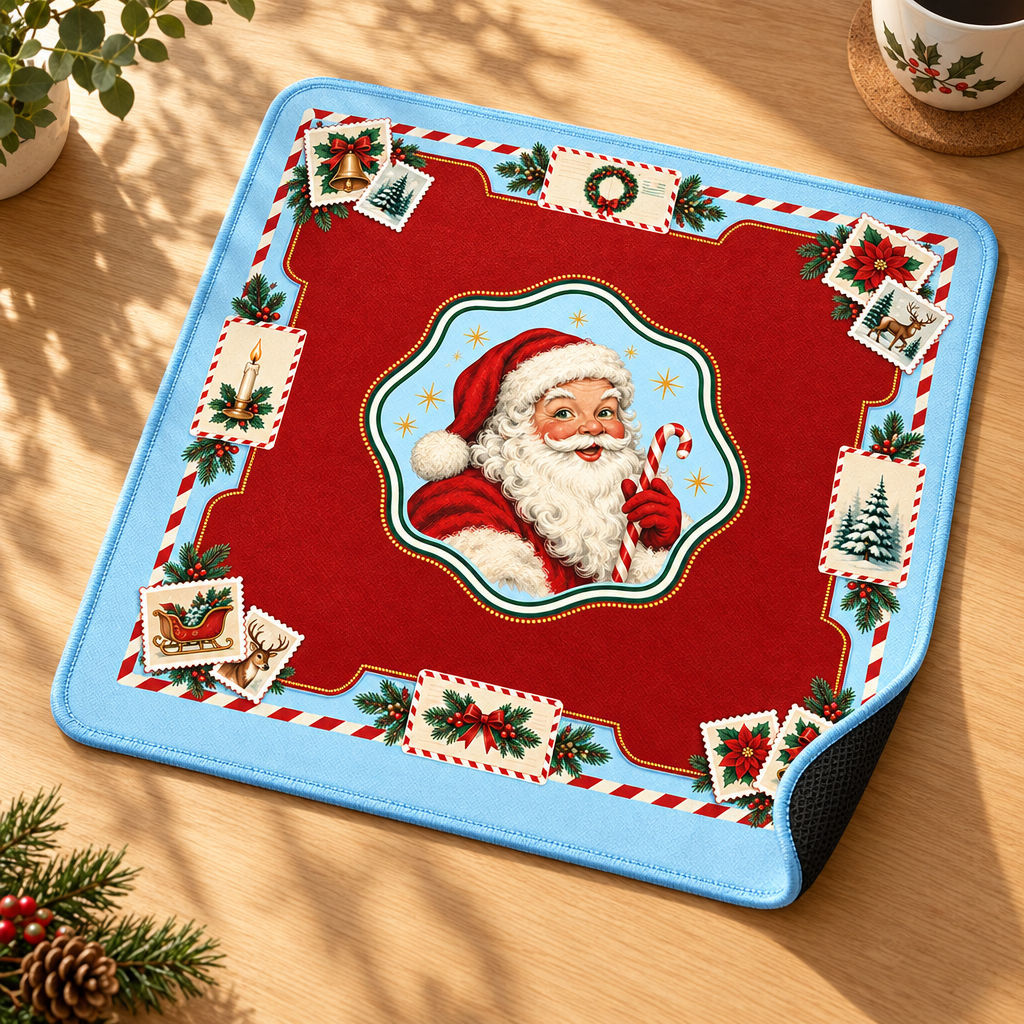
A blue mahjong table cover or mat is a protective layer placed on your table before tiles and racks are set out during American mahjong games. Table covers are typically thin fabric or felt; mats are thicker and often feature built-in rails or designated tile positions. Both come in various sizes—most fit standard dining tables (36"–48" wide)—and blue is popular for reducing glare and providing visual contrast with the tiles. At Mahstead, we carry quality mahjong mats designed for grip and durability. The choice depends on whether you prioritize portability (cover) or stability and marked play zones (mat). Most serious players use a mat; casual or traveling players often choose a cover. Neither is mandatory, but both extend your table's life and improve tile handling.
What's the difference between a table cover and a mahjong mat?
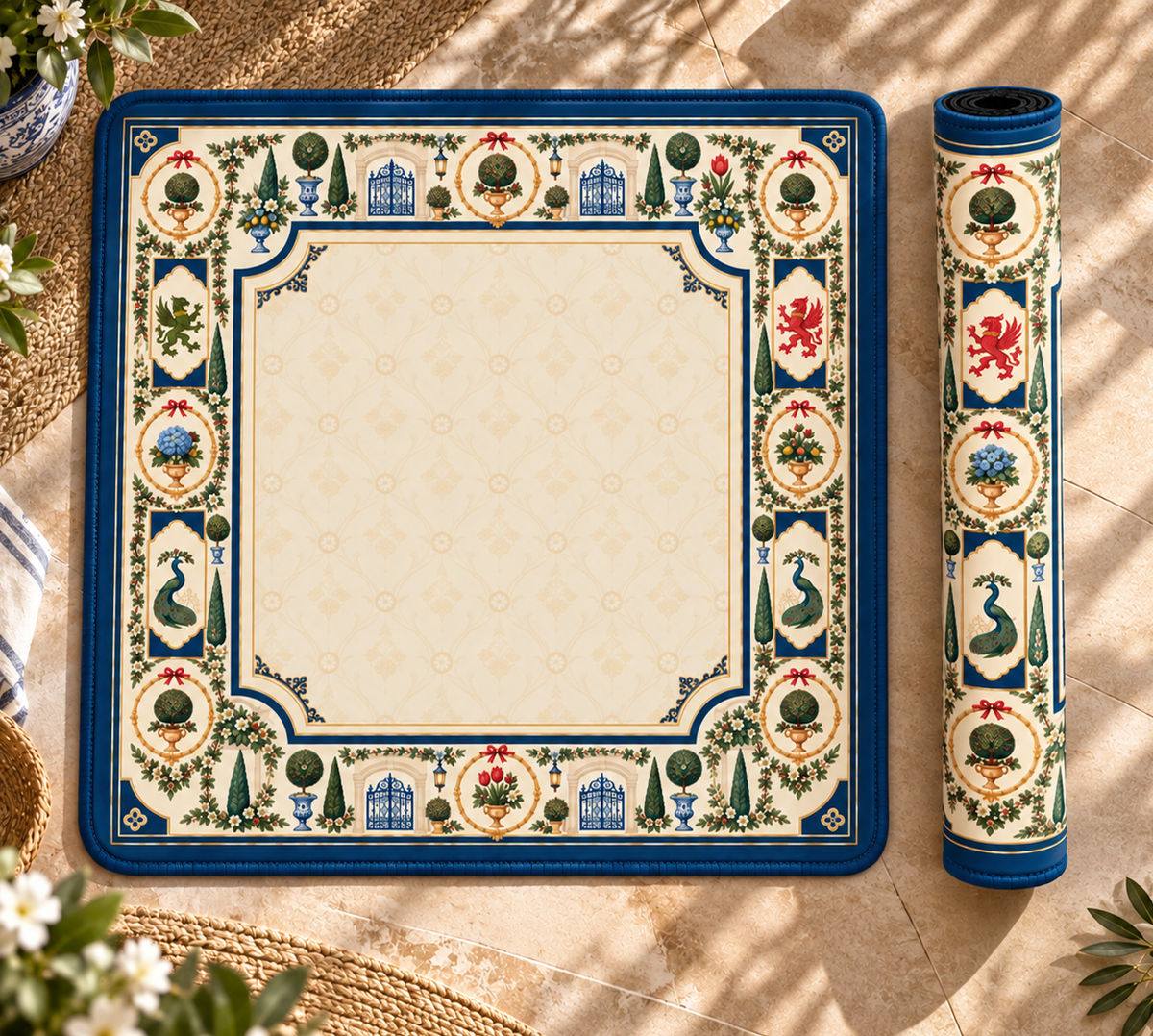
A table cover is a single layer of fabric—usually felt or neoprene—you lay flat on your table. It slides over the surface, offers light cushioning, and folds up for storage. A mahjong mat is thicker, often 1/4" to 1/2", sometimes with a raised edge or scoring rail, and may include printed zones for tile placement. Mats stay put during play; covers can shift if tiles aren't weighted. For weekly home games, a mat with a non-slip base prevents frustration. For occasional travel or rentals, a cover takes up less bag space. Choose the right mat for your situation here.
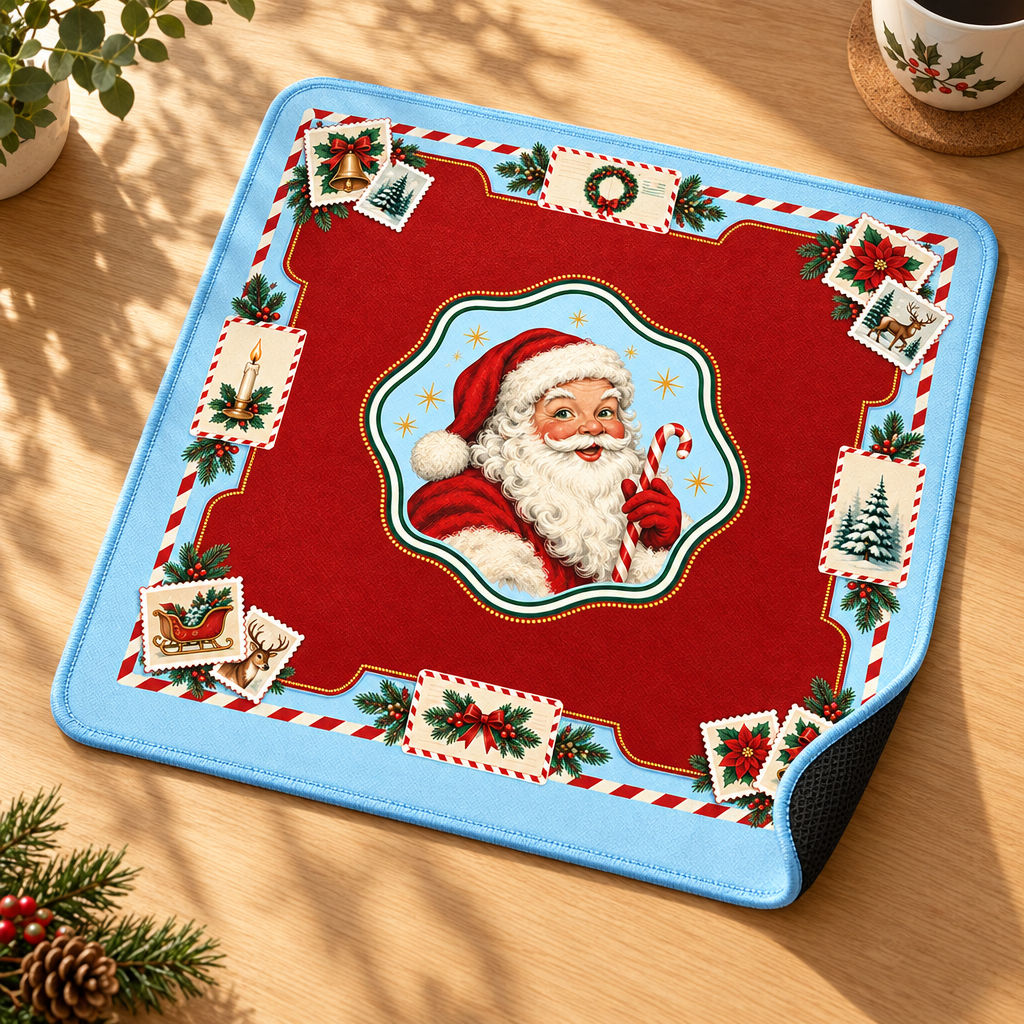
Why choose blue over other colors?
Blue reduces eye strain during long games—a common complaint from players at extended sessions. It provides neutral contrast without the harshness of white or black. Blue also hides dust and tile marks better than light colors and doesn't show sweat marks as readily as dark felt. Most casinos and tournament venues use green or blue for this reason. If you're hosting weekly games indoors under bright lighting, blue keeps everyone's eyes fresher for the full game cycle.
How do you measure for the right size?
Your mat or cover should overhang your table edge by 2–4 inches on all sides—this prevents tiles from rolling onto laps during active play. For a 36" round table, select a mat at least 44" across; for a 48" × 30" rectangle, choose 56" × 38" or larger. Measure your actual table first, not your room. Overhang also gives you space to set racks without crowding the tile play area. Most mahjong mats in our collection come in standard sizes: 34"–36" (small, for 2–3 players), 48"–52" (standard for 4), and 60"+ (premium for tournament setups). If you're unsure, measure your table and email specifics; irregular shapes may need custom solutions.
🀄 Shop best-selling mahjong sets →
What material holds tiles best without slipping?
Neoprene or rubber-backed felt grips tile undersides and keeps racks stable. Thin cotton or polyester covers offer minimal grip. Raised or textured surfaces (microsuede, embossed felt) increase friction compared to smooth finishes. If your table is slick (polished wood, glass, or laminate), you need a mat with a non-slip rubber base, not just a cover. Many players add a thin rubber shelf liner under a mat for extra stability—a practical hack we've seen work at dozens of games. Check the product description for base material; rubber or silicone non-slip backing is worth the small price difference.
How do covers and mats compare on durability and storage?
Feature | Table Cover | Mahjong Mat | Best For |
Thickness | <1/8" | 1/4"–1/2" | Mats absorb spills and impacts better |
Storage | Rolls into compact bag | Folds or rolls; larger footprint | Covers for travel, mats for home |
Durability (years of weekly play) | 2–3 | 4–6+ | Mats survive tile weight and movement |
Care | Wipe clean, air-dry | Spot-clean; keep away from heat | Both need washing every 3–6 months |
Cost basis | Lower entry point | Higher initial cost, longer lifespan | Mats = better value over time |
A thin cover wears faster under heavy tile traffic; stitching at edges separates after 200+ games. A quality mat with reinforced edges can handle 500+ games with minimal wear if stored flat. For a group playing weekly year-round, a mat is the smarter buy.
What should you check before ordering?
Table dimensions: Measure length and width; know if your table is round or rectangular.
Overhang preference: Decide if you want 2" or 4" on all sides (bigger overhang = less tile spillage).
Non-slip base: Confirm the mat or cover has a rubber or silicone backing, especially if your table is glossy.
Portability: If you host elsewhere (friend's house, club), verify it folds or rolls into your mahjong bag or case.
Color fastness: Check that the blue dye won't bleed onto tiles or white linens (ask the seller; Mahstead uses colorfast finishes).
Edge reinforcement: Look for stitched or bound edges that won't fray after a season of weekly play.
Cleaning instructions: Ensure you can hand-wash or spot-clean without damaging the surface.
🎁 See our most-loved mahjong sets & accessories →
Real-world hosting tips: protecting your table and keeping the game smooth
We host weekly games at home and have learned a few lessons. A blue mat under acrylic tiles (heavier than bamboo) needs stronger backing than a cover—acrylic tiles wear through weak felt in one season. Place the mat before you set up racks and tiles; moving tiles onto an already-covered table risks wrinkles that cause tiles to stick mid-play. If you use a felt mat, vacuum it lightly before each game to remove lint; lint catches on tile bottoms and slows the draw. For spills, blot immediately—don't rub—to avoid pushing liquid into fibers. A mat with a raised edge or rail keeps stray tiles and scoring chips from sliding onto the floor, saving game time. Keep your mat dry and flat between sessions; rolled mats stored upright can develop creases.
✨ Find your Mahstead set — free US shipping →
FAQ
Can I use a regular tablecloth instead of a mahjong mat?
A regular tablecloth is too slippery for tile play—tiles and racks will slide. Mahjong mats have non-slip backing and textured surfaces designed for grip. A tablecloth may work under a mat for aesthetics, but not alone. See the comparison of mats vs. table covers for details on what actually works.
How often should I replace my blue mat?
A quality mat with reinforced edges lasts 4–6+ years of weekly play if cared for properly. A thin cover wears out in 2–3 years. Replace it if edges fray, the non-slip base peels, or the surface becomes slick. Spot-clean every month and deep-clean every 3–6 months to extend life.
What size mat fits a standard dining table?
A standard dining table is 36"–48" wide and 30"–60" long. Choose a mat 4–8 inches larger on each side—typically 44"–52" for width and 38"–68" for length—to provide overhang and prevent tiles rolling onto laps.
Do I need a mat if I play rarely?
If you play fewer than 12 times a year, a thin blue table cover is fine and takes up less storage. For weekly players, a mat is worth the investment because it protects your table and keeps tiles stable during longer sessions.
Can a blue mat stain my table?
Mahstead mats use colorfast dyes that don't bleed. However, if a mat is wet and left on wood overnight, it may leave a moisture mark. Always store mats dry and flat between games. Test a corner on your table surface beforehand if you're concerned.
What's the best way to store a mat between games?
Roll it loosely (not tightly) around a tube, or fold it flat in a dry closet. Avoid storing a wet mat; air-dry it fully first. Tightly rolled or creased mats develop permanent wrinkles that slow tile play.


View More
View More
View More
