
Blue Large Print Mahjong Set: A Buyer's Guide
Last updated: Nov 23, 2026
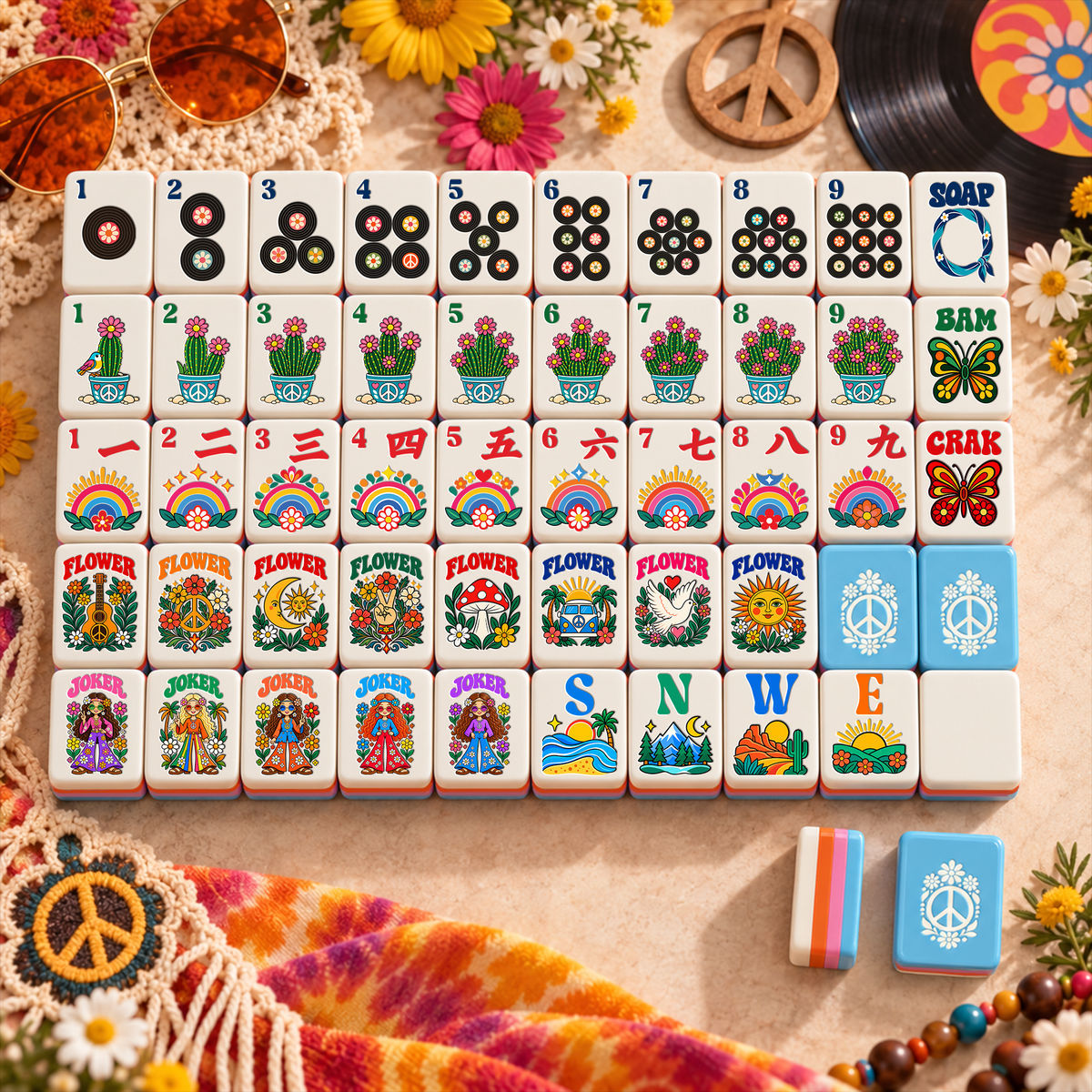
A blue large-print mahjong set uses darker blue tiles with oversized numerals and suit symbols, designed for easier reading during play. Most come as 160-tile acrylic sets (152 playing tiles plus spares) and feature white or ivory numerals on blue backgrounds for maximum contrast. Large print means the numerals are noticeably taller and bolder than standard sets—typically at least 30–40% larger depending on tile width. We sell blue large-print sets in our engraved American mahjong sets collection; they ship free across the US. Cost ranges by design and customization options (see the product page for current pricing). Before ordering, confirm the tile width matches your rack height, check that the print is recessed (engraved) rather than painted for durability, and verify the set includes jokers and all 152 playing tiles. 🀄 Shop best-selling mahjong sets →
Why does tile size matter for readability?
A larger tile carries proportionally larger print. When numerals sit on a 1.25-inch tile versus a 1.1-inch tile, the difference in visible height is immediate—especially from 18 inches away during play. Acrylic tiles hold engraved print sharper than painted surfaces over years of handling. Blue backgrounds with white numerals create the highest contrast ratio in mahjong design, which reduces eye strain during long games.

What does "large print" actually mean in mahjong?
Large print in mahjong is not a formal standard—it's a design choice by manufacturers. When we say "large," we mean the numeral height takes up 40–50% of the tile face, versus 20–30% in standard sets. The suit symbols (Bam, Crak, Dot) and wind/dragon characters scale up proportionally. You'll see the difference immediately when you hold a large-print set next to a standard one; numbers should be unmistakable from an arm's length away.
Blue versus other high-contrast color options
Color Option | Contrast Level | Durability | Best For ---|---|---|--- Blue + white numerals | Highest | Excellent on acrylic | Players with mild vision changes; daytime games Black + ivory numerals | Very high | Very good | Players who prefer darker tiles; low-light tables Green + white numerals | High | Excellent | Players seeking traditional feel without brightness Red + white numerals | Medium | Good | Decorative sets; less ideal for readability focus
Blue tiles with white print win on contrast science—the color difference between blue and white is roughly 90% perceived luminance contrast, among the best combinations available in tile design.
How does engraved print outlast painted numerals?
Engraved (recessed) print is carved into the acrylic before the tile is assembled or finished, so it cannot flake or fade with shuffling and stacking. Painted numerals sit on the surface and wear away with friction over months of weekly play. We engrave our acrylic sets at the design stage; the print becomes part of the tile structure. This matters most for blue sets because the white numerals can appear dingy if paint chips, but recessed white stands out permanently. Check the product listing to confirm your set specifies "engraved" rather than "printed" numerals.

What size tiles fit in standard racks?
American mahjong racks accept tiles 1.1 to 1.3 inches wide by roughly 0.85 inches tall. Larger tiles (1.5+ inches) won't fit standard mahjong racks with pushers—they'll sit too loose or jam. If you're buying a blue large-print set, confirm the tile width on the product page matches your current rack. If you don't have a rack yet, pair your set with one rated for that tile size; we sell racks and pushers designed for acrylic sets in standard American dimensions. Large print doesn't change tile dimensions; it only affects numeral and symbol size on the face.
✨ Find your Mahstead set — free US shipping →
Comparing blue large-print styles and customization
Our best-selling mahjong sets include several blue options. Decide first: do you want a classic blue base with white numerals (most readable), or do you prefer engraved design with monogram or club name? A monogrammed set costs more but turns a functional tool into a personalized keepsake—useful if you host regular games and want your set recognizable. Blank large-print sets (no engraving) are the fastest to ship and most affordable. Some players add custom engravings after purchase; others order a set pre-engraved from our catalog. Each approach works; it depends on your budget and timeline.
What to check before you buy:
Tile width: Measure your existing rack or confirm it matches the set's tile size (usually 1.1–1.25 inches).
Print style: Confirm numerals are engraved (recessed into acrylic), not painted.
Tile count: Verify the set contains exactly 152 playing tiles plus jokers and spares (a standard 160-tile set).
Blue shade: Check product images for the blue tone—some sets use navy, others cobalt or cerulean; pick the shade you prefer.
Joker quantity: Ensure the set includes at least 8 jokers (sometimes listed as joker count per set).
Shipping: Free US shipping is standard from Mahstead, so compare delivery times if you're on a deadline.
🎁 See our most-loved mahjong sets & accessories →
Who should buy a blue large-print set?
Players with presbyopia or mild vision changes benefit most from large-print sets. If you squint at numerals during play or ask others to read tiles for you, a blue large-print set will cut that friction. Card readers—players who follow hands on the current year's National Mah Jongg League card—also appreciate the readability; you spend less time jumping between the card and the table. Casual players who want an attractive, durable set without custom engraving often choose blue large-print as a practical baseline. Hosts who play weekly games sometimes use blue sets as "house sets" because the durability of engraved acrylic means they'll still be readable after two years of regular shuffling.
Common mistakes to avoid when ordering
Don't assume all "blue" sets are the same shade. Show product images to others in your game group before ordering; one player's navy may clash with another's cobalt preference.
Don't skip the tile-size check. A large-print set with 1.3-inch tiles won't fit a rack designed for 1.1-inch tiles. Measure or email Mahstead with your current set's dimensions if uncertain.
Don't conflate "large print" with "extra-large tiles." Large print refers to numeral size on standard-sized tiles, not the tiles themselves. An actual jumbo set (tiles 1.5+ inches) is rare and usually custom.
Don't order painted numerals if durability matters. If you play weekly, invest in engraved. Painted fades; engraved lasts.
Don't forget the Charleston. A new blue set is only half the equation. Brush up on the Charleston explained before your first game if you're new to the group.
Blue large-print mahjong sets solve a real problem: readability under game-table conditions. Pair yours with a matching mahjong mat and racks, and you'll have a setup that keeps everyone's attention on strategy, not squinting.

FAQ
What is the difference between large print and standard print in mahjong?
Standard-print numerals occupy roughly 20–30% of the tile face; large-print numerals take up 40–50%. Large print is visible from farther away and reduces eye strain. It doesn't change tile size—only the numeral and symbol size on the face.
Can I use a blue large-print set in a game with standard sets?
Yes. Tiles work in any American game as long as the set contains the correct 152 tiles and 8 jokers. Visual style doesn't affect gameplay, so mixing blue large-print tiles with standard sets at one table is fine, though most groups prefer uniformity.
How long do engraved numerals last compared to painted?
Engraved numerals last the life of the tiles—typically 3–5 years of weekly play before acrylic shows wear. Painted numerals begin to chip and fade after 6–12 months of regular shuffling. Engraved is always the better choice for durability.
Do blue large-print sets cost more than standard sets?
Blue large-print sets typically cost in the same range as other acrylic 160-tile sets; see the product page for current pricing. Custom engraving (monogram, club name) adds to the cost. Blank large-print sets are the most affordable option.
What tile width should I choose if I don't have a rack yet?
Most American mahjong racks fit tiles 1.1–1.3 inches wide. Order your set and racks together, ensuring the width matches—usually listed on both product pages. Standard acrylic sets are typically 1.1–1.25 inches; confirm before checkout.
Is "large print" the same as "high contrast"?
No. Large print means bigger numerals; high contrast means the color difference between the tile and numerals (e.g., blue background with white numerals). A set can be large print without high contrast (e.g., pale blue with pale white), or high contrast without large print. The best sets combine both.


View More
View More
View More
