
Big Four Winds mahjong: meaning, winning hand & points
Last updated: Nov 23, 2026
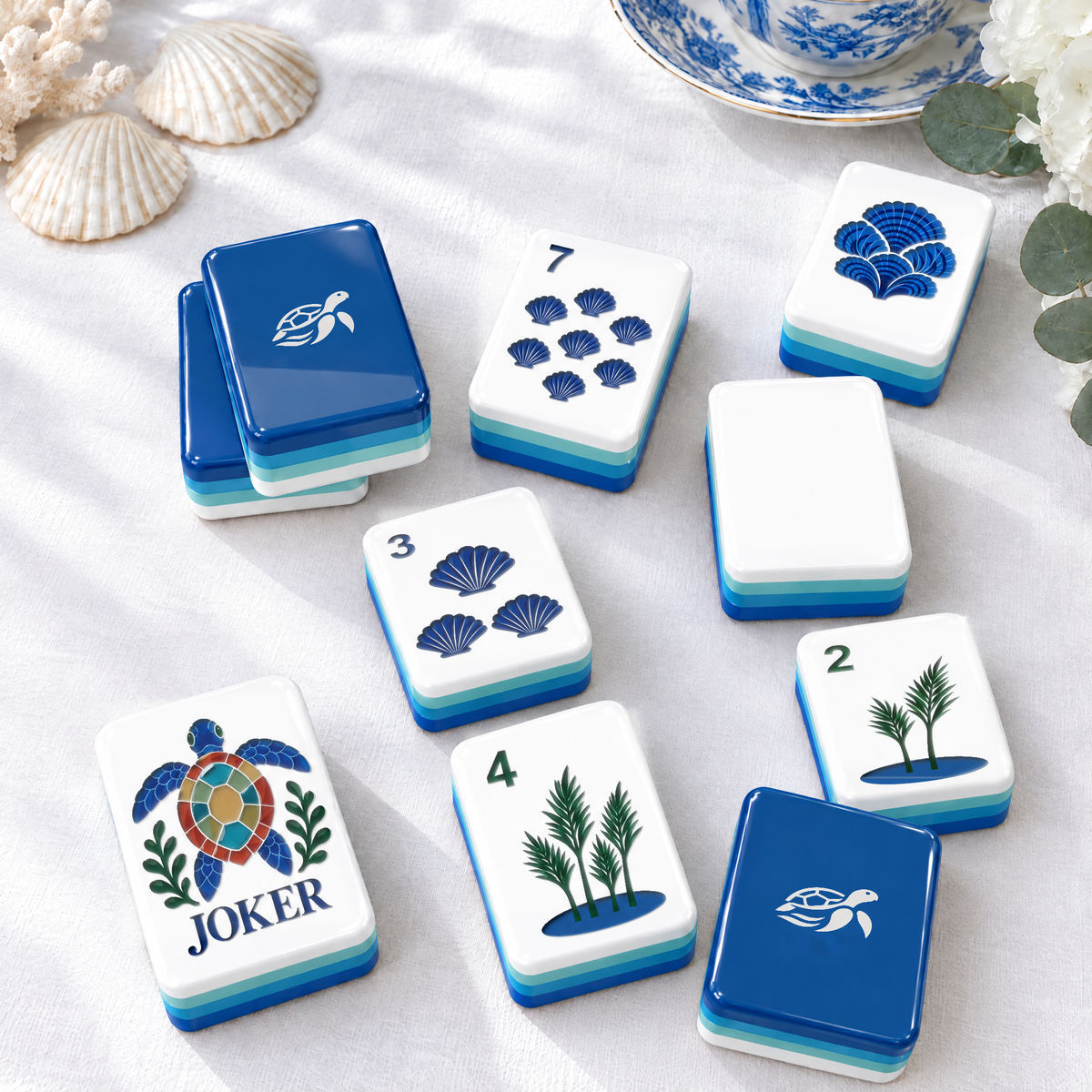
Big Four Winds is a single hand on the current National Mah Jongg League card worth 64 points in American mahjong. You build it by collecting four pungs (three identical tiles each) of North, East, South and West wind tiles, plus any pair to complete the hand — no jokers permitted in the wind pungs themselves. Each pung must be identical: three Norths, three Easts, three Souths, three Wests. The pair is unrestricted (can be winds, numbers, or dragons, and jokers may substitute in the pair). This hand feels rare because you need 12 of the 16 wind tiles in play, leaving only four winds scattered among three opponents. Once you recognize Big Four Winds on the card, you'll spot it quickly in weekly games. Shop best-selling mahjong sets designed for rapid, accurate card reading under table light.
What exactly are the wind tiles in American mahjong?
Wind tiles come in a set of 16 — four identical copies each of North (N), East (E), South (S) and West (W). On most sets, winds are marked with compass symbols or Chinese characters; some are honor tiles distinguished by their color or shape from number suits. In American play, winds are neither Bams, Craks nor Dots — they stand alone as honor tiles, like dragons. The 16 winds split evenly: four players each begin with one or two winds after the Charleston.

How do you build a Big Four Winds hand step-by-step?
Start by checking the current year's card section for Big Four Winds. The card lists it as: N pung + E pung + S pung + W pung + any pair = 64 points. On your rack, collect three North tiles into one pung (exposed or hidden). Repeat for East, South and West. Your 13th tile must be a pair — any matching two tiles (winds, numbers, dragons). If you draw or are passed a joker, it cannot replace tiles within the wind pungs; jokers can only stand in for the pair. Once you hold all four wind pungs plus a pair, you have won and must call "Mahjong!" immediately. The hand is complete in 14 tiles total.
Why are jokers forbidden in the Big Four Winds pungs?
Jokers are allowed in exposed kongs, quints and sextets but not in single tiles or pairs — and crucially, they cannot substitute inside the four wind pungs on this hand. This restriction exists because the hand's rarity and high point value (64 points) depend on you securing genuine, consecutive wind tiles, not shortcuts. If jokers were permitted in wind pungs, the hand would become too easy to complete and would dilute its prestige. The card maker set this rule to preserve the challenge and reward true collecting skill.
What's the point value and why does this hand score so high?
Big Four Winds pays 64 points in American mahjong. Compare that: a typical number pung is worth fewer points; most complete hands cluster between 20–50 points. The 64-point premium reflects the hand's scarcity: you must capture 12 of only 16 wind tiles at the table before an opponent calls Mahjong first. Statistically, three opponents draw most remaining winds, so blocking all three while keeping your four intact is genuinely difficult. The high score motivates players to pursue this hand opportunistically, even if it means discarding safer combinations. Some tables allow Big Four Winds only from the wall; others permit it from a kong draw, so check your group's local rules.
Common mistakes that cost you this hand
Mixing up wind tiles with number suits. Winds are not 1 Bams, 1 Craks or 1 Dots — they are separate honor tiles. If your set tiles are unclear under dim light, you'll discard a wind by accident. Forgetting the joker restriction. New players often assume they can use a joker in a wind pung since jokers work elsewhere; they call Mahjong prematurely, only to learn the hand is illegal. Exposing wind pungs too early. If you expose a pung before completing the pair, opponents know your strategy and will hoard pairs or block you. Waiting for the "perfect" pair. Many players fixate on matching the winds thematically (say, N+E pairing with a Craks honor) when any pair works — this hesitation costs precious draws. Discarding winds defenslessly. Once you commit to Big Four Winds, shield your hand. Throwing a wind face-up signals weakness; throw from a different suit or dragons instead, forcing opponents to guess.

Big Four Winds vs. other high-scoring American mahjong hands
Hand Name | Tiles Required | Point Value | Joker Use | Difficulty |
Big Four Winds | 4 wind pungs + pair | 64 | Pair only | Very hard |
All pungs (no melds) | 4 identical pungs + pair | 50–60 | Pair/kongs | Hard |
Consecutive sets | 3–4 numbered melds + honor | 30–50 | Varies by card | Medium |
Like number hand | All tiles same number | 25–40 | Yes, full flexibility | Medium |
Three dragons | 3 dragon pungs + melds | 40–50 | Yes in melds | Hard |
Big Four Winds sits at the summit of rarity and point return, but only when you secure all four winds and avoid the joker trap. New players sometimes chase all-pung hands (which allow jokers in kongs and sextets, making them more forgiving) before attempting Big Four Winds. The card layout changes yearly, so consult the current National Mah Jongg League card to confirm Big Four Winds appears in the season you are playing.
🀄 Shop best-selling mahjong sets →
How to spot Big Four Winds on your card quickly
Look at the card sections marked "Winds" or "Honor tiles." Big Four Winds is usually listed in a dedicated row; it shows N E S W + any pair. Many players photograph the card or write it on a note card and keep it face-up on the table. Some sets include laminated card inserts or mats with highlighted hand icons, which cuts lookup time dramatically — useful in fast games. When scanning the card for your next hand, train your eye to recognize the four-wind pattern before checking number suits. This muscle memory speeds up your calls and prevents hesitation during draws.
Real-table scenario: you hold three Norths and two Easts
You are holding three North winds and two East winds after 10 draws. You need one more East to complete an E pung, and you are still hunting for South and West. An opponent discards a West wind face-up. Do you take it? Yes, immediately. Capture the W pung even if it delays your E pung, because winds are rarer than number tiles — four opponents compete for only 16 total. Call the West pung exposing it on the table. Continue hunting for S and a closing pair. If you miss one wind in the draw rotation, your hand dies, so lock in certain pieces early. This aggression distinguishes Big Four Winds strategy from safer, number-heavy hands.
🎁 See our most-loved mahjong sets & accessories →
What to check before you buy a mahjong set for learning Big Four Winds
Wind tile clarity. Open the set and confirm wind tiles are visually distinct — either etched with compass letters (N, E, S, W) or printed symbols, and a different color or size from number tiles. Poor contrast causes misreads. Tile weight and grip. Heavier acrylic or bamboo tiles stack more stably during pung builds; lighter plastic shifts and scatters, frustrating beginners. Rack capacity. Your rack should comfortably hold 14 tiles (your complete hand) with room to arrange them by suit and honor. Cramped racks force you to look longer, slowing your wind-spotting reflex. Joker count. American sets include 8 jokers, which is sufficient for standard play. Ensure your set ships with all 8 to avoid miscalls mid-game. Lighting. Big Four Winds hunting happens under variable table light. Test your tiles indoors at night to confirm they remain clear — engraved or high-contrast sets outperform flat, matte finishes.
Choose a reliable mahjong set from our best-selling collection with crisp wind symbols and weight that inspires confident stacking.
Why weekly mahjong players love this hand
Regular players chase Big Four Winds for the bragging rights and the strategic puzzle. Unlike beginner hands that reward luck, Big Four Winds favors aggressive, attentive play — you must read the discard pile, count remaining winds, and negotiate the Charleston beforehand to improve odds. Winning Big Four Winds once cements your status as an intermediate player. Some groups keep a tally of Big Four Winds wins for the season; hitting it multiple times earns respect. The hand also teaches you to balance hand-building with risk — committing to winds means surrendering number tile safety, a lesson that sharpens play across all hands on the card.
✨ Find your Mahstead set — free US shipping →

FAQ
Can you use a joker in place of a wind tile in Big Four Winds?
No. Jokers are forbidden in the four wind pungs themselves. Jokers may only substitute in the pair (the 13th and 14th tiles). Any joker in an N, E, S or W pung invalidates the hand.
If I have three Norths and three Easts exposed on the table, can I complete Big Four Winds without showing the Souths and Wests?
Yes. You can expose pungs as you build them. Once you show three Norths, three Easts, three Souths and three Wests on the table, plus a pair in your hand, you call Mahjong — exposure order does not matter, only that all four are visible or accounted for when you declare.
What happens if another player discards a wind I need mid-hand?
If the discard is face-up and unclaimed, you can "pung" it by calling the tile, exposing your three matching winds plus the discard, and continuing play. This is a legal called pung in American mahjong and speeds your progress toward Big Four Winds.
Does Big Four Winds appear on every year's National Mah Jongg League card?
Not guaranteed. The League updates the card each spring. Big Four Winds has been a consistent hand for many years, but check your current year's card to confirm it is available before planning a strategy around it.
How many wind tiles must remain in the wall for a realistic chance at Big Four Winds?
At minimum, eight winds should still be unseen (distributed among the wall and opponents' hands). If you have already seen 10+ winds discarded or exposed by the time you commit to this hand, odds drop sharply — you may not draw the remaining two or three winds you need before someone else calls Mahjong.
Can Big Four Winds be completed with a kong instead of a pung?
The card specifies "pung" (three identical tiles). A kong (four identical) satisfies a pung requirement, so yes, you can hold a kong of one wind and pungs of the other three. The pair remains separate and must be exactly two tiles.


View More
View More
View More
