
Best Shanghai Mahjong App: How to Pick & Play Online
Last updated: Nov 23, 2026
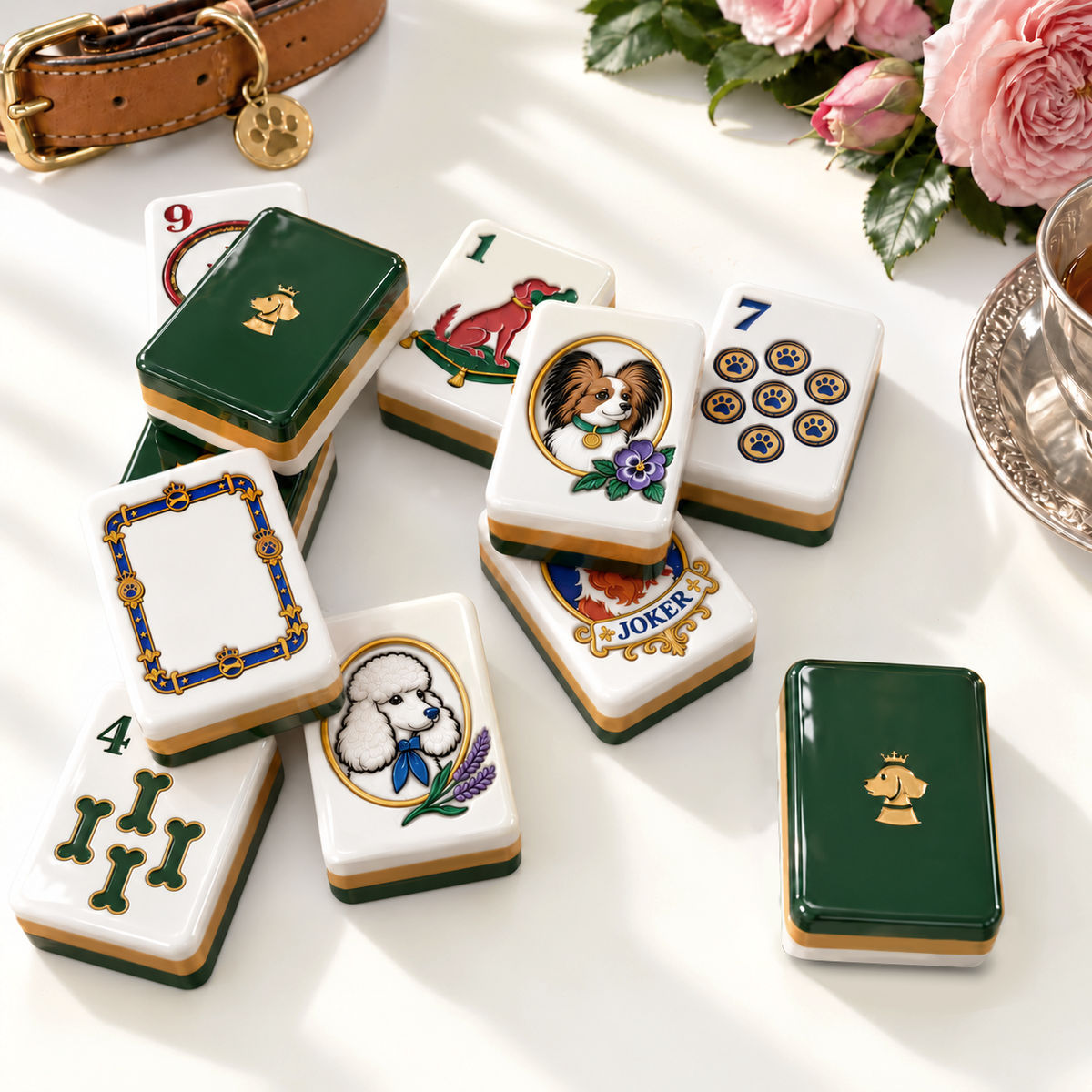
Shanghai mahjong apps range from casual mobile games (Mahjong Solitaire clones) to serious multiplayer platforms (4Shuai, Mahjong Soul, Mahjong Companion). True Shanghai apps enforce Kong declarations, discards within seconds, and real money or points. The best combine low lag, active English-speaking tables, and ruleset transparency—though none match the tactile flow and social depth of in-person play with a physical set. No single app dominates; choice depends on your speed tolerance (fast-paced 8-minute games vs. leisurely), language, and whether you want competitive rankings or casual fun. Many serious players use apps to practice but gather weekly for tile games using acrylic sets that let you see, hear, and shuffle real tiles—something no screen captures.
What separates a Shanghai mahjong app from a gimmick? The ruleset matters more than the graphics. Real Shanghai (also called Chinese standard) requires players to declare Kongs immediately, draw replacement tiles, and discard within a strict time window—usually 8–15 seconds per turn. Apps that let you pause, undo, or play without time pressure are teaching tools, not competitive platforms. The best Shanghai apps enforce these rules and connect players across regions.
🀄 Shop best-selling mahjong sets →
Which apps have the fastest, fairest Shanghai ruleset?
Mahjong Soul is the industry standard for serious play. It enforces strict Kong mechanics, shows discard histories, records win patterns, and separates casual and ranked lobbies. Games move at real tournament pace (8–12 minutes per round). 4Shuai (Chinese interface, growing English player base) favors speed and high-stakes play; it's favored by mainland and SEA communities but demands quick reflexes. Mahjong Companion offers friendlier pacing (10–15 seconds per turn) and stronger English translation, making it ideal for Western players learning Shanghai rules.

How does Shanghai mahjong differ from American mahjong online?
Shanghai mahjong has no hand-of-the-day card; winning hands are built from any combination of Melds (Pung, Kong, Chow) and a Pair. American mahjong is card-driven—you can only win hands listed on that year's National Mah Jongg League card. Shanghai allows Chows (1-2-3, 2-3-4, etc.); American never does. Shanghai uses a dead wall (Kang wall) and Kong replacement tiles; American does not. Most Shanghai apps play with point-based scoring tied to wait type (pair, simple, terminal) rather than American's hand-rank multipliers. If you play American weekly, a Shanghai app feels like learning a different sport—but the Tile recognition and speed transfer well.
What do serious players do: app or real tiles?
Online mahjong is unbeatable for speed runs, solo practice, and connecting across continents. You can play 10 games in 90 minutes on Mahjong Soul; in person, four games fill a night. Apps let you grind rankings and study patterns. But casual and competitive in-person players almost always prefer physical tiles for three reasons: social rhythm (chat, commentary, slow hands when needed), tactile feedback (shuffling, calling, the snap of a Kong), and no lag or misclicks. Many players use apps Monday–Friday and gather for tile games on weekends.
🎁 See our most-loved mahjong sets & accessories →
How do you avoid fake "Shanghai" apps that are just solitaire?
The App Store and Google Play are flooded with single-player "Mahjong Solitaire" and "Mahjongg Dimensions"—these are matching puzzles, not Shanghai mahjong. Red flags: no discard pile, no other players, no time pressure, and names like "Zen Mahjong" or "Tile Master." Real Shanghai apps show player names, a discard history visible to all, a visible Kong wall, and active lobbies with 50+ players. Check the game description for keywords: "multiplayer," "competitive," "real players," "Kong," "discard tracking," or "ranked." If a game doesn't explain its ruleset or lacks a leaderboard, skip it.
App | Best for | Pace | Community | Ruleset Depth |
Mahjong Soul | Competitive play & learning | 8–12 min/game | Global, English strong | Shanghai strict, all variants available |
4Shuai | High-speed grinders | 6–10 min/game | Mainland China, SEA | Shanghai strict, points-heavy |
Mahjong Companion | Casual learning | 12–18 min/game | Mostly US & EU | Shanghai simplified, beginner-friendly |
Casual games (solitaire) | Solo practice only | Self-paced | None | Pattern matching only, not real mahjong |

Should you buy a physical set if you play Shanghai apps?
Yes—but for different reasons than American mahjong. If you play Shanghai online often, a physical set lets you practice hand recognition away from screens, host occasional in-person games, and build deeper memory for tile combinations. You don't need to memorize a hand card (like American players do). Instead, you're drilling pattern speed and position awareness—skills that transfer directly to app play. A 160-tile acrylic set is durable, compact, and ships ready to play. Use it for weekend casual games or teaching friends; use the app for ranked practice. Many serious players own both and see them as complementary, not competing.
✨ Find your Mahstead set — free US shipping →
What to check before you buy or download an app
Ruleset clarity: Does the app explain Kong timing, chow rules, and win conditions explicitly?
Lag tolerance: Can you handle 2–3 second delays, or do you need sub-500ms response?
Language: Does it support English fully, or only menus?
Time pressure: Are turn timers strict (8 sec) or loose (30 sec)?
Real money: Do you want ranked gold, or just casual play?
Community size: Check live lobby counts; under 50 concurrent players = long wait times.
Phone or browser: Mobile apps feel snappier; web versions lag slightly.
Start with Mahjong Soul (free to download, optional ranked entry) on iOS or Android. Play 3–5 games. If the speed and ruleset feel right, you're set; if not, try Mahjong Companion's gentler pace. Don't pay for premium features until you've completed at least 20 free games and confirmed the app's ruleset matches how you learned Shanghai rules.
Why in-person mahjong beats apps—and when apps win
In-person mahjong with acrylic tiles builds memory, camaraderie, and the irreplaceable joy of live play. You hear the shuffle, see opponents' faces, and have zero technical lag. Apps never replicate this. But apps excel at solo practice, tournament grinding, and connecting you to a global 24/7 player base. The smartest approach: use apps to learn Shanghai rules and practice speed, then gather monthly or weekly for real tile games where the social experience matters most.

FAQ
Can I play Shanghai mahjong on my phone without internet?
No legitimate Shanghai multiplayer app works offline; they need live connection to verify discard sequences and tile draws. Single-player puzzle games ("Mahjong Solitaire") work offline but aren't real mahjong.
Which app is best for beginners learning Shanghai rules?
Mahjong Companion offers slower turns (12–18 sec) and clear rule tooltips, making it gentler than Mahjong Soul. Start there before moving to Mahjong Soul's tournament pace.
Do I need to memorize winning hands like American mahjong?
No. Shanghai mahjong has no hand-of-the-day card; any valid combination (Pung, Kong, Chow, Pair) wins if you can declare it. You memorize tile relationships, not licensed patterns.
How much do top Shanghai apps cost to play competitively?
Mahjong Soul and 4Shuai are free to download and play casually; ranked entry often requires a small fee or earned gold, but never more than a couple dollars per tournament. Check the app's pricing page for current terms.
Should I buy a mahjong set if I only play apps?
If you play 5+ times weekly and enjoy the social side, yes. A physical set lets you teach friends and play offline. If you're solo and screen-focused, apps are sufficient—though many players eventually want the tactile, social experience.
How is Shanghai mahjong scored differently than American?
Shanghai uses point multipliers tied to wait type and melds (simples, terminals, pairs). American uses hand rank and tile values from a licensed card. Both systems reward complex hands, but the math differs entirely.


View More
View More
View More
