
Best Mahjong Wind Indicator: Types & Buying Guide
Last updated: Nov 23, 2026
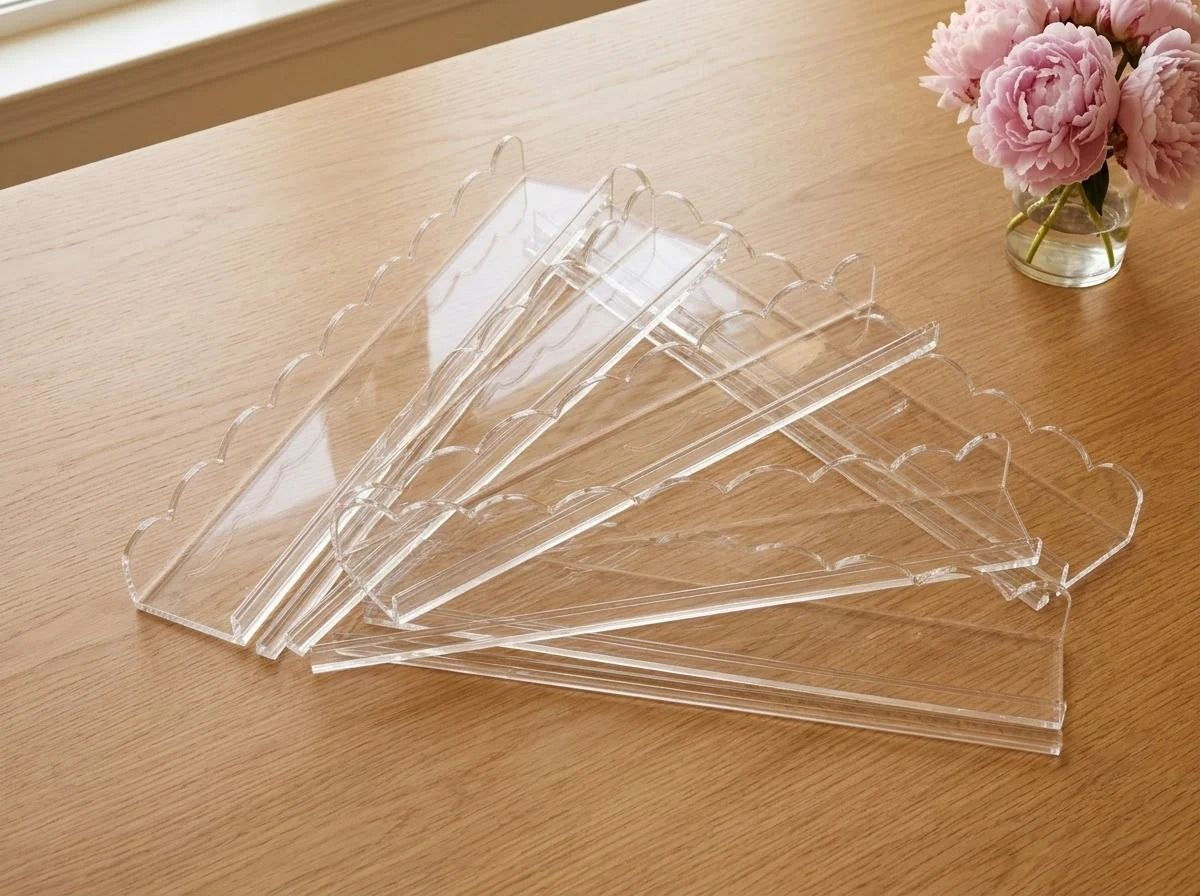
A wind indicator is a game token that designates the prevailing wind for the current round in American mahjong—critical for tracking whose turn it is to be East (dealer), and which wind resets after each completed hand. Most come as a standalone tile, spinner, or engraved marker made from acrylic, wood, or composite materials. In American mahjong, the game always starts with East and rotates through South, West, and North after each hand (unless you're playing with specific house rules). You don't legally need a separate indicator if you're tracking wind on paper, but players hosting regular games find them worth the investment for clarity and speed. Wind indicators at Mahstead's best-selling collection range from simple unmarked acrylic tiles to fully engraved designs that match your set; they're packed with your tiles and arrive within your set shipment across the US.
What does a wind indicator actually do?
A wind indicator is a physical marker placed at the center of the table (or in front of East) to show which round wind is in play. In each round, one player holds the East (prevailing wind), and the dealer position rotates after the hand ends. The indicator moves with it. Some players use a spare tile; others keep a dedicated marker. It prevents the common mistake of mistakenly resetting the wrong wind or playing out of order, especially in longer sessions where attention drifts.
🀄 Shop best-selling mahjong sets →

Why can't you just use a regular wind tile?
You can—and many casual groups do. However, a dedicated wind indicator is different from the 16 wind tiles in your set (four each of East, South, West, North). During active play, all four wind tiles sit in the wall or players' hands and cannot be moved to the table center without disrupting the game. A separate indicator solves this: it stays visible and out of the draw pile. Groups hosting weekly games find a dedicated marker eliminates the mid-hand confusion of "wait, is that wind tile counted in the wall or is it just marking the round?"
What are the main design types?
Design Type | Best For | Material | Why Choose It |
Simple engraved acrylic tile | Serious players who match everything | Acrylic (same as set tiles) | Blends seamlessly; durable; no extra learning |
Spinner (rotatable dial) | Visual, tactile players | Acrylic or resin | Shows all four winds at once; fun to turn; impossible to misplace |
Custom engraved marker | Groups with inside jokes or names | Acrylic with text/logo | Personalized; doubles as table decor; hosts appreciate the thoughtfulness |
Blank or minimalist tile | Budget-conscious or minimalist players | Acrylic or composite | Cheap; neutral; you mark it yourself if needed |
Decorative tile (themed) | Players who want character | Acrylic or resin | Adds personality; holiday or cultural themes available; same function as plain |
Each type functions identically—they're all stationary markers. The choice is pure preference. Serious players often choose engraved acrylic to match engraved American mahjong sets; casual groups pick whatever is cheapest or most fun.
How do you set up and use a wind indicator?
Setup:
Before the game begins, place the wind indicator in the center of the table or in front of the player designated East for round one.
Make sure all four players can see it clearly.
If you're using a spinner, rotate it to point to East (or use a marker pen to mark East beforehand if it's blank).
During play:
The wind indicator does not move or change during a hand, even if someone goes out.
It only moves after the hand ends and scoring is recorded.
After each hand:
If East won or the hand ended naturally, rotate the indicator to East (no change).
If East did not win (a non-East player won), rotate the wind counterclockwise: East → South → West → North → East.
Reset when beginning a new round.
Some groups track rounds on paper (round 1, round 2, etc.) so they know when to finish; others play a fixed number of winds (usually four rounds = one full circle). The indicator is the visual cue—paper is the memory. Using both together is fastest and prevents restart disputes.
🎁 See our most-loved mahjong sets & accessories →
What should you check before buying a wind indicator?
Size and visibility: Ensure it's large enough to see from all four seats without squinting. Acrylic markers from Mahstead's best-selling collection are typically sized to match standard tile height (around 1 inch) so they're immediately obvious on the table.
Engraving clarity: If you choose an engraved design, confirm all four winds are legible from arm's length. Poor contrast (light text on light material) causes squinting and slows the game.
Material durability: Acrylic handles weekly stacking and shuffling; wood or resin may crack if knocked or dropped during tile washing. Acrylic is the standard for reason.
Compatibility with your set: If you bought a matching engraved American mahjong set, order the wind indicator in the same finish (matte, glossy, etc.) so they pair visually.
Storage: Most indicators live in your mahjong bag or case or stay on the table during a session. Verify the design doesn't have sharp edges that could snag fabric.
Spinner mechanisms (if applicable): If you choose a rotating dial, test it for smooth movement before playing. Stiff spinners frustrate casual players and slow setup.

Comparison: wind indicator vs. house rules without one
Some groups skip a formal indicator and use verbal protocol ("I'm East, then you're South…") or move a single wind tile around. This works for very small or irregular groups but breaks down quickly:
With indicator: One-glance clarity; new players instantly understand whose turn it is to move; no arguments; speeds up four-round sessions by 5–10 minutes over a season.
Without indicator: Players rely on memory; position shifts mid-hand confusion; new players often misunderstand the rotation; makes recording results on paper harder.
If you're hosting even one weekly game with the same four people, a wind indicator pays for itself in saved debate time alone. It's also a no-cost way to make your setup feel professional and intentional.
✨ Find your Mahstead set — free US shipping →
How wind indicators differ in other mahjong variants
Chinese mahjong: Uses flower tiles and seasons for round tracking; wind (East, South, West, North) still exists but is tracked on paper or a separate score sheet. A physical indicator is less common because rounds are often continuous.
Hong Kong and Taiwanese mahjong: Also track winds verbally or on paper; a physical indicator is optional.
Riichi (Japanese) mahjong: Wind is tracked on the game board itself (a plastic or wooden device showing round wind and player position). A separate indicator is built in.
American mahjong is unique in being played on a bare table—there's no board—so a standalone wind indicator becomes both functionally necessary and a design choice. It's one of the few customization decisions that's purely American.
Common mistakes to avoid
Confusing wind tile with wind indicator. You have four North tiles in your set; your indicator is a fifth marker. Don't grab a wind tile from the wall thinking it's your indicator.
Forgetting to rotate after a non-East win. The indicator stays East if East won or the hand was a draw. It rotates only if a non-East player won.
Buying a spinner that's too loose or too stiff. Test the mechanics before committing; a wobbly dial looks unprofessional and annoys precision-focused players.
Ordering an indicator that's too small. A marker smaller than your standard tiles becomes a trip hazard or gets lost. Match the height and depth of your set tiles.
Mixing materials. An old wooden indicator looks jarring on a modern acrylic set table. Cohesion matters to players who care enough to have a formal indicator.
Final checklist: is a wind indicator right for you?
Buy a wind indicator if:
You host the same game group weekly or twice monthly.
Your group includes new players or players who lose track easily.
Your table is large (36+ inches) and seats need distance clarity.
You play four full rounds (East, South, West, North) and want to avoid tracking errors.
You like your table to feel intentional and complete.
Skip a wind indicator if:
You play rarely (fewer than six times per year) and don't mind verbal tracking.
Your group is very experienced and tracks wind flawlessly on paper.
Your table is tiny (fewer than 20 inches) and all players are arm's length from center.
You're building your first set on a budget and can add it later.
If you're already looking at mahjong mats and racks with pushers, a wind indicator is the natural next step—it rounds out the hosting toolkit and shows your group you take the game seriously. See current pricing and designs on the product page, and order with free US shipping.

FAQ
Do I *have* to use a wind indicator in American mahjong?
No. Wind tracking is legally optional—the National Mah Jongg League rules require only that players agree before play on wind rotation. However, a dedicated indicator prevents confusion and speeds up sessions, especially with new players or large groups.
Can I use any tile or marker as a wind indicator?
Yes. Any object larger than a single tile works: a penny, a poker chip, or a spare acrylic tile. Using an actual wind tile from your set is risky because it disrupts the draw pile. A dedicated marker stays on the table and is never drawn.
What happens if everyone forgets which wind we're on?
Check your score sheet or recording app—it lists each completed hand's results and the wind for that hand. Rewind to the last recorded hand and resume from the next wind. This is why pairing a wind indicator with paper notes is faster than relying on memory alone.
Does a wind indicator work for two- or three-player mahjong?
Yes, but the rotation differs. In two-player games, East and South alternate; in three-player, the unused wind position rotates. Consult your house rules and adjust the indicator's position accordingly. See two and three player mahjong rules for specifics.
Are acrylic wind indicators safer than wooden ones for tiles?
Both are safe; acrylic is less likely to chip if dropped. Wood can splinter and leave marks on acrylic tile edges if knocked hard. Neither will damage tiles under normal play—the indicator sits still in the center and rarely contacts tiles directly.
Can I order a wind indicator separately from a set?
Yes. Wind indicators are sold individually in Mahstead's best-selling collection. If you're replacing a broken one or adding to an existing set, order just the indicator—no need to rebuy the full set.


View More
View More
View More
