
Any Like Numbers Mahjong Rule Explained
Last updated: Nov 23, 2026
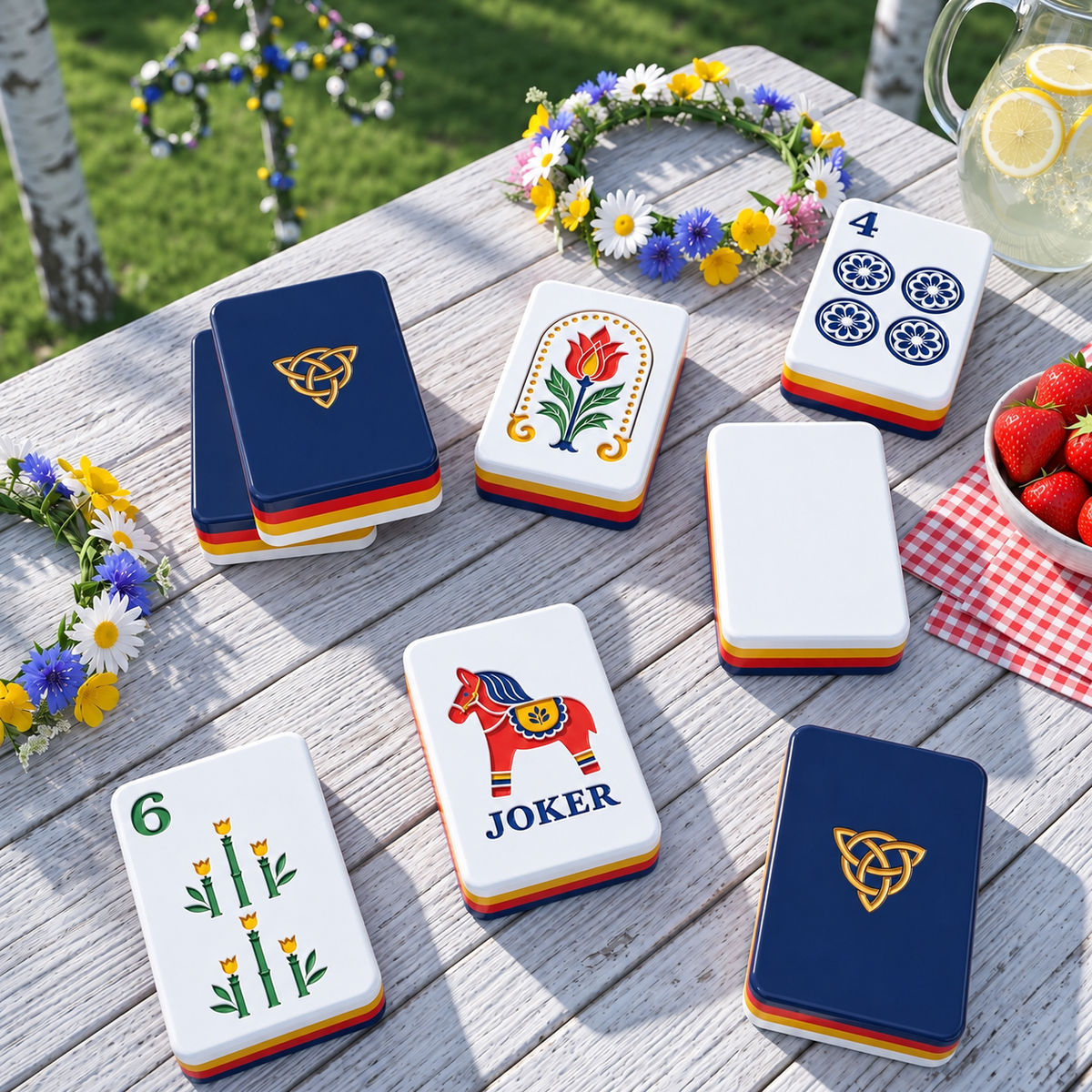
"Any like numbers" means you can form a pung (3 identical tiles), kong (4 identical), quint (5 identical), or sextet (6 identical) using any number in a single suit—for example, three 4 Bams, or four 7 Dots. The "any" part refers to your freedom to choose which number to use; the "like" means all tiles in that group must be identical. Jokers can replace any of these tiles except in pairs or singles. The pattern appears on the current National Mah Jongg League card, which you consult to determine valid winning hands. You cannot mix numbers (1-2-3 is not allowed in American mahjong—that's called a chow and isn't legal here). Each identical group must come from one suit only. This rule creates many winning combinations and rewards players who recognize flexibility on the card.
"Any like numbers" is one of American mahjong's most flexible patterns—but new players often misread it. Learn exactly which tiles qualify, where jokers land, and how to spot it on the card.
How does "any like numbers" differ from other patterns on the card?
The card organizes hands into sections: some ask for specific numbers like "1 2 3," while "any like numbers" lets you pick the numbers. Other patterns demand pairs in certain positions or sequences of specific suits. "Any like numbers" removes that constraint—you're free to use 2 Craks, 5 Dots, or 8 Bams, as long as every tile in each group is identical. This flexibility is why it's often one of the easiest patterns to complete if you know which number to chase.

What tiles actually count as "like numbers"?
Only identical tiles—same suit, same number, same pip count. In American mahjong, suits are Bams (sticks), Craks (characters), and Dots (circles), numbered 1–9. "Like" means all three, four, five, or six tiles in a group must match exactly. You cannot use three 5 Craks and one 5 Dot; they're different suits. You cannot mix 4 Bams and 5 Bams; they're different numbers. Dragons, winds, and flowers don't apply to "any like numbers"—this pattern uses only the numbered suits. Jokers are wildcards and can replace any numbered tile in a like-numbers group.
Can you use jokers in "any like numbers" hands?
Yes, jokers substitute freely within groups but with strict rules. A pung of three 6 Dots could be two real 6 Dots and one joker. A kong could be three real 3 Bams and one joker. The only tiles jokers cannot form are pairs or single tiles—if your hand needs a pair of 7 Dots, both must be real 7 Dots, not jokers. If a hand calls for two separate groups (say, three 2 Craks and four 2 Dots), you could use jokers in either group, but the underlying numbers stay locked to the card. Many new players over-rely on jokers and lose focus on the real tiles they're actually drawing.
What's the most common mistake when playing "any like numbers"?
Players confuse the freedom to choose numbers with freedom to mix suits or numbers within a single group. You might hold three 4s—one Bam, one Crak, one Dot—and think that counts as "any like numbers." It doesn't. Each group must be 4 Bams, or 4 Craks, or 4 Dots; all three together is a mix, which isn't allowed. Another mistake: players discard tiles too fast, not realizing that "any like numbers" has many winning combinations hiding in their rack. If your card has three "any like numbers" patterns, you're not locked into the first one you spot; track which suits and numbers appear across all three and hold tiles that work for multiple patterns. This decision alone can mean the difference between winning and playing to someone else's hand.
How do you read "any like numbers" on the actual card?
The card shows hands organized by pattern type and section. "Any like numbers" typically appears as a shorthand—often abbreviated or listed in a specific row or column—along with how many of each group you need (usually three groups plus a pair). The card always specifies whether you need pungs, kongs, or mixed groups. Read carefully: the card is your legal hand, and the phrasing tells you exactly what's allowed. Some variations of the card may show it as "any like #s" or similar. Our best-selling mahjong sets pair well with a clear, laminated card holder or mat so you can reference the rules without fumbling.
🀄 Shop best-selling mahjong sets →

Step-by-step: How to spot and complete an "any like numbers" hand
Pull your card and identify all "any like numbers" patterns. Note which positions allow mixed suits and which require single suits.
Track numbered tiles as you draw. Keep a mental tally: how many 3s do I have? Across which suits?
Separate tiles by number, not by suit. Group your 5s together, your 2s together, so you see multiples at a glance.
Identify jokers in your hand and reserve them strategically. Don't use a joker until you're certain it's the best move.
Count to winning position. Most "any like numbers" hands need 14 tiles (three groups of 3, 4, or 5, plus a pair). If your groups add to 14, you're close.
Discard the tile least likely to fit any pattern. If you hold two 7 Dots and one 7 Bam, and your patterns don't use Bams, the 7 Bam is your discard.
Call "Mah jongg" when your 14 tiles match the card exactly. Don't guess; verify suit and number on every tile.
Comparison: "Any like numbers" vs. other flexible patterns
Pattern Type | Rules | Difficulty | Tile Count | Strategy |
Any like numbers | Same suit, same number, 3–6 tiles per group | Easy to moderate | 14–18 tiles total | Hold multiple numbers, adapt as you draw |
Like numbers (specific) | Card specifies which numbers (e.g., 3 5 7) | Moderate | 14–18 tiles total | Less flexibility; chase the exact numbers |
Like suits | All tiles from one or two suits, any number | Moderate to hard | 14–18 tiles total | Requires focus; easy to trap yourself |
Consecutive (rare in American) | Numbers in order within one suit | Hard | 14–18 tiles total | Least flexible; demands specific draw sequence |
The table shows that "any like numbers" offers maximum freedom in choosing which number to pursue, making it forgiving compared to patterns locked into specific numbers or suits.
🎁 See our most-loved mahjong sets & accessories →
What to check before you play "any like numbers"
Card is current-year. The National Mah Jongg League issues a new card every spring; an old card may have different hand patterns.
You're using 152 tiles plus 8 jokers. An incomplete or mismatched set causes confusion mid-game.
Every player has the same card version. If one player has last year's card and another has this year's, hands won't match, and disputes arise.
Your mat or card holder is readable in table light. Many "any like numbers" mistakes happen because players can't see the card clearly and guess at the pattern.
You've practiced the hand once before playing for stakes. Dry-running a new pattern once during a casual game builds confidence.
Our mahjong mats come with built-in score pads and card slots so you can keep the card visible at all times. Mahjong racks with pushers also help organize your tiles clearly, so you spot "any like numbers" patterns before your opponents do.
How "any like numbers" plays differently across mahjong variants
American mahjong is the only variant that uses a yearly card and allows exposed melds (pungs, kongs). Chinese and Hong Kong mahjong use sequences (chows), which American mahjong does not—so "any like numbers" in those games might include consecutive patterns. Riichi and Taiwanese mahjong have their own hand-naming conventions and don't follow the card system. If you play multiple variants, memorize which game uses which rules to avoid mixing them mid-hand. Our guide to how to play American mahjong covers these differences in full.
✨ Find your Mahstead set — free US shipping →
FAQ
Can a pair be part of an "any like numbers" hand?
Yes. Most "any like numbers" hands require a pair (two identical tiles, always real—no jokers) plus three or four groups. The pair can be any like number: two 3 Bams, two 8 Dots, and so on, as long as they match the card.
If I have three 5 Craks and one joker, does that count as a pung for "any like numbers"?
Yes. A pung is three tiles; the joker replaces the fourth position or substitutes for one of the three. Three real 5 Craks plus a joker makes a valid pung in an "any like numbers" pattern.
What happens if I complete a hand but later notice I used tiles from two different suits in one group?
The hand is invalid. In American mahjong, you must call Mah jongg before picking up the next tile. Once you call, other players verify your hand against the card. A mixed-suit group violates the hand, and the error is caught before you win. Always double-check your tiles against the card before calling.
Do winds or dragons ever count in "any like numbers"?
No. "Any like numbers" uses only the numbered suits (Bams, Craks, Dots). Winds, dragons, and flowers are separate elements and do not appear in this pattern.
Is "any like numbers" the easiest pattern to win with as a beginner?
It's one of the most flexible, which makes it easier to track, but that doesn't guarantee a win. You still need the right tiles to land on your rack. Beginners often complete patterns with "any like numbers" because they have multiple paths to victory; compare it to patterns that demand specific numbers or pairs, which are more restrictive.
How many "any like numbers" hands are usually on the card in a given year?
The card structure changes yearly, but "any like numbers" is always represented multiple times—sometimes 15–30 hands out of 88 total, varying by year and card edition. The card is your only reference; count them yourself when you receive it.


View More
View More
View More
