
Best Mahjong Travel Bag: Choose the Right Case for Your Set
Last updated: Nov 23, 2026
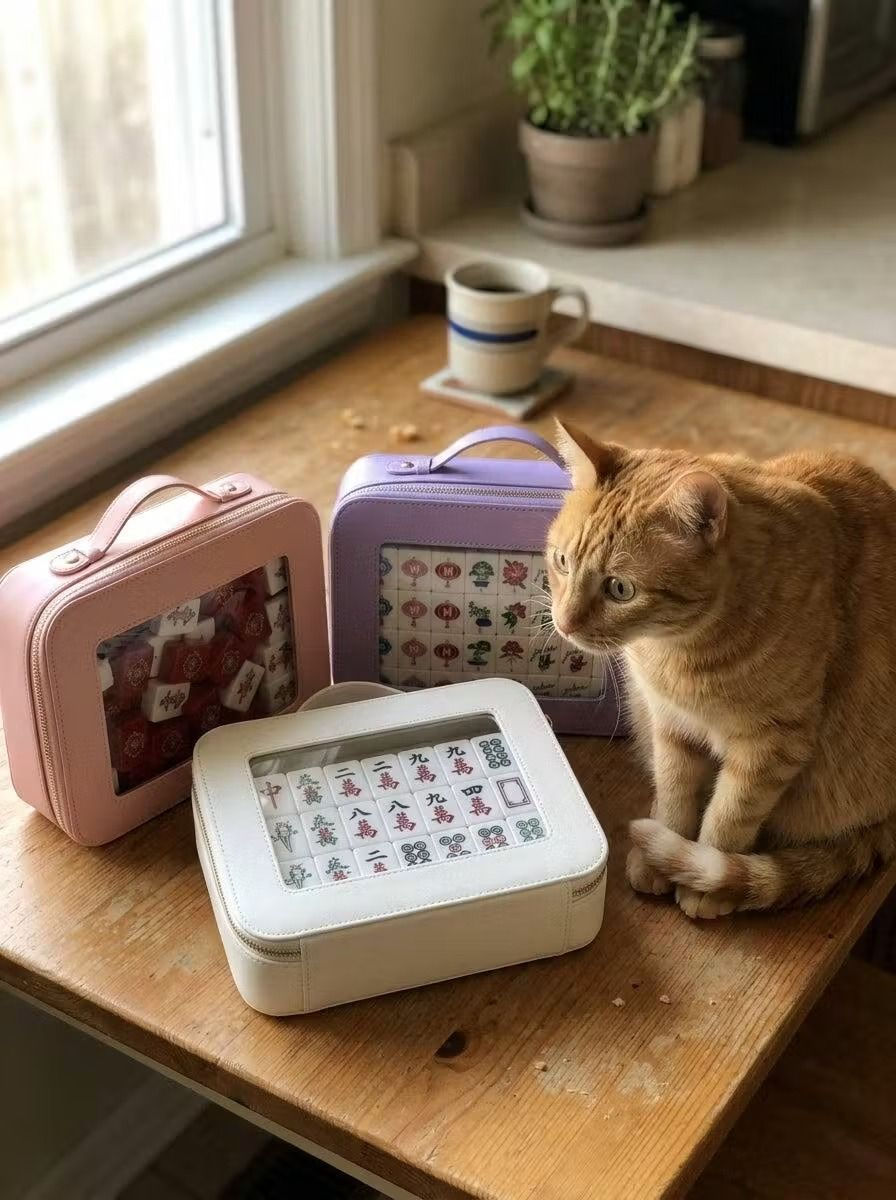
A mahjong travel bag is a padded or rigid case designed to hold a complete 160-tile set, optional mat, and racks with pushers without damage during transport. Sizes range from compact sets-only carriers (fit in a car trunk) to large rolling cases that hold a mat and multiple accessories. American sets are heavier than travel decks—a full set weighs roughly 5–7 pounds—so look for reinforced handles and sturdy zippers. Most bags sold by Mahstead come as part of our travel bag collection and ship free across the US; prices vary by capacity and material. Avoid soft fabric bags if you drive over rough roads; choose hard-shell or heavily padded versions if tiles are your investment, and measure your set's footprint before ordering. The right bag keeps your best-selling mahjong sets safe for years of weekly games.
What size bag do you actually need?
Most American mahjong sets (152 playing tiles plus 8 jokers) fit in a footprint roughly 10–12 inches square. If you carry just the set and racks, a compact bag works fine. If you also transport a mat—which typically rolls to 24–36 inches long—you'll need a larger tote or rolling case. Measure your mat rolled diameter and your set's box depth before ordering; oversizing wastes space, undersizing forces you to choose between the set and mat. A typical player carries set, racks, dice, and the season's mahjong card, so plan for roughly 40–50 cubic inches minimum.
Hard shell vs. padded soft bags—which wins?
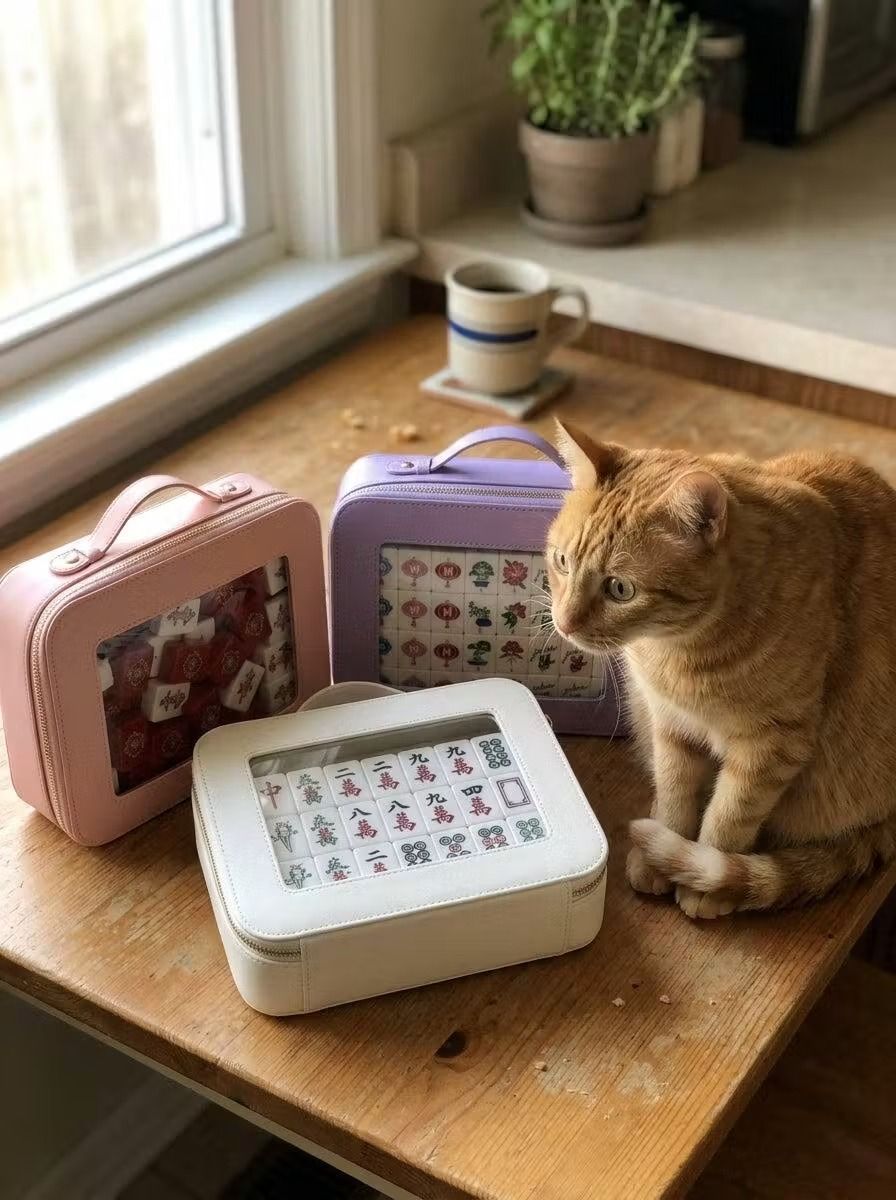
Hard-shell cases protect tiles against drops and compression but add weight and bulk. Soft padded bags are lighter and pack flat when empty, yet offer less protection if you toss them in a car backseat. For weekly local games, soft bags with thick foam cushioning are fine; for tournament travel or multiple trips per week, hard-shell wins. Our mahjong bags and cases collection includes both styles so you can compare durability, weight, and how they fit your lifestyle.
🀄 Explore mahjong bags & cases →
Should you invest in a rolling case or carry bag?
Rolling cases free your hands and back during long carries—essential if you travel between venues on foot or use public transit. Carry bags with shoulder straps or handles suit car players who load once and unload once per session. Rolling cases also hold more (set, mat, racks, and extras) in a single trip, eliminating multiple journeys. If your game moves to a new home every season or you attend tournaments, rolling saves time and strain. Carry bags are cheaper and easier to store in tight spaces.
Case Type | Best For | Weight | Capacity | Setup Time |
Compact carry bag | Car players, single set | 1–2 lbs | Set + racks only | <1 min |
Large padded tote | Local weekly games, set + mat | 2–3 lbs | Set, mat, racks, dice | 1–2 min |
Hard-shell rolling | Tournament travel, multiple trips | 3–5 lbs | Set, mat, racks, extras | 2–3 min |
What compartments and features matter most?
Look for dividers or zippered pockets that keep tiles separate from your mat and racks—mixing them invites loose tiles or mat creases. A waterproof bottom protects against spills during storage or transport. Inner mesh pockets hold dice, cards, and pushers without rattling. Reinforced corners and stitching prevent tears where stress concentrates. If you carry your set frequently, test the handle comfort; thin plastic straps cut into palms during heavy loads. Our mahjong bags and cases guide walks you through these features in detail so you spot quality before checkout.
✨ Find your Mahstead set & travel bag →
Does a bag protect your engraved or custom tiles?
Custom tiles and engraved mahjong sets are investments—they're worth the extra protection. Hard-shell cases with foam inserts or thick padded bags prevent chipping and cracking during bumps and falls. Avoid compressed or folded storage; store the bag upright or flat on a shelf. A soft bag left in a hot car can warp tiles slightly over time, so airflow and climate control matter. Engraved acrylic tiles are durable, but they deserve better than thrown-in-the-trunk treatment.

What to check before you buy
✓ Measure your set and mat rolled. Don't guess—width, depth, and length in inches. ✓ Verify the bag dimensions on the product page; compare to your measurements with 1–2 inches clearance. ✓ Check the handle design. Carry it loaded in-store or imagine a 6-pound bag in your hands for 10 minutes. ✓ Test zippers if you can. Smooth, sturdy zippers survive hundreds of opens; cheap ones jam fast. ✓ Look for reinforced corners and seams. These take the beating in daily transport. ✓ Confirm compartments fit your extras. Dice, cards, and pushers should nest without crushed tiles. ✓ Consider climate. Hot car travel favors hard cases; cool home storage allows soft bags.
How does your travel setup affect the bag you need?
A player who hosts in one living room every week needs only a lightweight carry bag; a player who rotates between four friends' homes or plays weekend tournaments needs a rolling case. If you also own mahjong mats and racks with pushers, you're moving more than just tiles, so larger is smarter. Consider whether you'll ever travel by plane (hard-shell cases survive baggage handling better) or only by car. A player with a second home who shuttles a set twice a year has different needs than one playing three times weekly in three different rooms.
🎁 See our mahjong sets & travel bags →
Comparing price and value across bag styles
Entry-level soft carry bags cost less and work for casual players who drive. Mid-range padded totes add durability and compartments—the sweet spot for weekly players. Premium hard-shell rolling cases cost more upfront but last a decade with proper care and handle rough transport without worry. If your set is one of our best-selling mahjong sets worth protecting long-term, the middle to premium tier pays for itself in avoided tile replacement or refinishing. New players or gift-givers often start with a compact carry bag and upgrade later; that's a valid path. Check the product page for current pricing and bundle options that pair sets with bags and mats.
Final checklist: choosing your travel bag in five steps
Measure your set box, mat rolled, and racks together.
Decide whether you carry by hand, shoulder, or roll—or mix all three.
Pick a style: compact carry, padded tote, or rolling case.
Read reviews on the product page and compare compartment layouts.
Order and test it at home before your first game.
We ship free across the US, so returns are painless if fit is wrong—measure once, order confidently. Every player eventually owns a travel bag; starting with the right one saves frustration and protects your tiles.

FAQ
Can I fit a mat and a full mahjong set in the same carry bag?
Yes, if the bag is large enough (typically 16×14×6 inches or larger). Measure both items rolled and compare to the product dimensions before ordering; most compact bags hold one or the other, not both.
What's the difference between a mahjong bag and a regular storage case?
Travel bags are designed for frequent transport with padded sides, sturdy handles, and compartments that prevent tile shifting during bumps. Storage cases are static and often more compact; travel bags prioritize durability and organization for in-transit protection.
Do hard-shell cases prevent tile cracking if I drop them?
Hard-shell cases reduce impact damage significantly, especially to corners, but no case prevents all damage in a severe drop. The foam interior matters too—thicker, denser foam absorbs more shock than thin padding.
Will a mahjong travel bag fit in my car trunk?
Most compact and medium carry bags fit easily in any trunk. Rolling cases vary; measure the case dimensions (length, width, height) and compare to your trunk space before ordering.
Can I use a mahjong bag for travel between states or on a plane?
Yes, mahjong bags are TSA-compliant for carry-on or checked luggage. Hard-shell cases are preferred for air travel because baggage handlers are rough; soft bags may get crushed if checked alongside heavy luggage.
Should I store my mahjong set in the travel bag when it's not in use?
Short-term, yes—it keeps tiles dust-free and organized. Long-term, store the bag in a cool, dry place away from direct sunlight to prevent acrylic fading or warping. Avoid compressed stacks of other items on top.


View More
View More
View More
