
Best Mahjong Set for Families: Which Type to Choose
Last updated: Nov 23, 2026
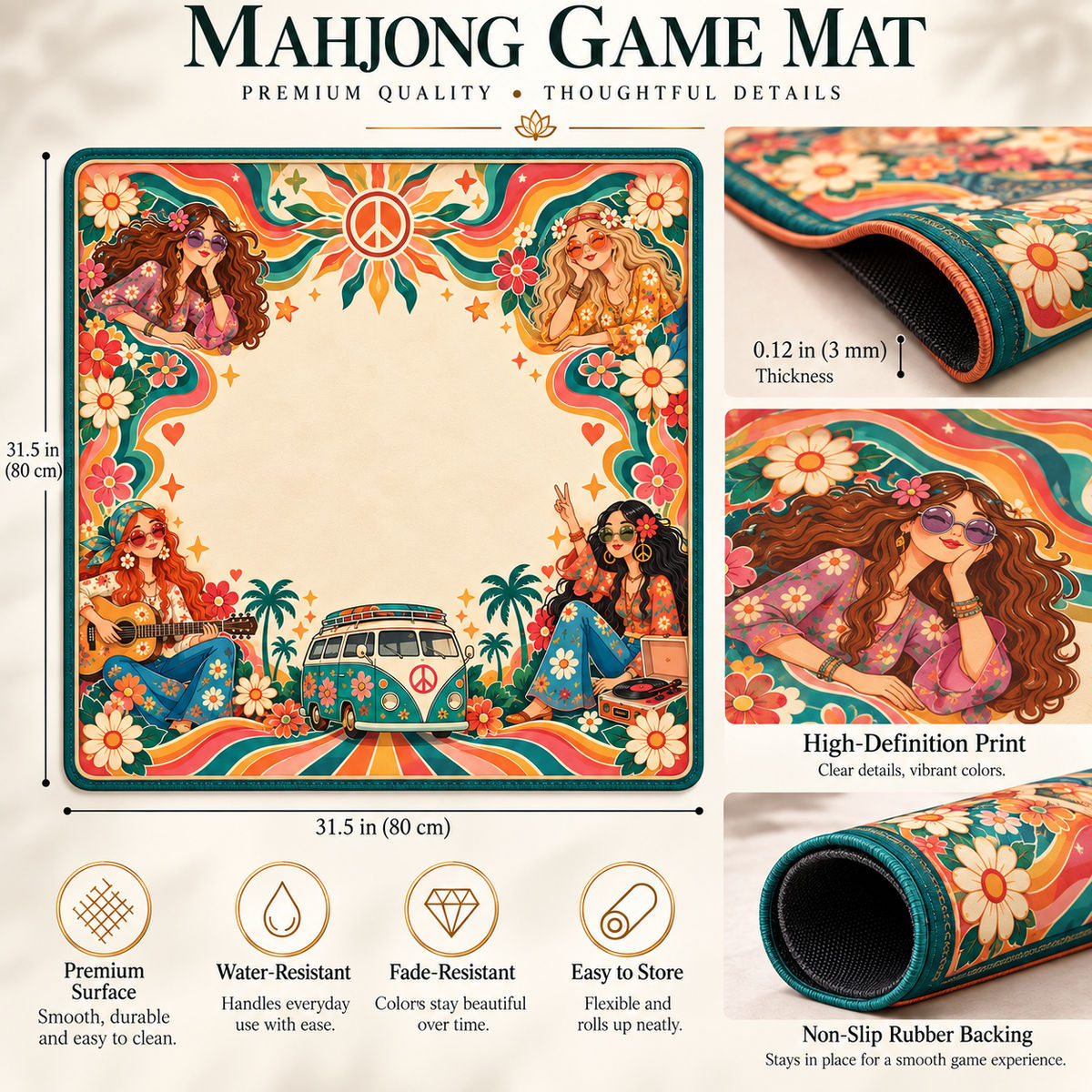
A family mahjong set must work for casual players of different ages and skill levels, last through weekly games, and fit your table space. The standard is 160 tiles (152 to play, plus spares) in acrylic—durable, lightweight, and portable. Families typically choose between designs that appeal to beginners (larger tiles, clearer markings) and sets that reward experienced players who appreciate engraved titles or personalized racks with pushers. Most families at Mahstead order from the best-selling collection and add a coordinating mat and racks within their first season. Tile size matters more than you'd think: standard quarter-inch tiles suit adults; smaller eighths-inch tiles work for teenagers and competitive groups. Budget from entry-level acrylic upward, and always check that the set includes two sets of the current year's card—one at each end of the table—so no one squints during play.
What size and material work best for mixed ages?
Acrylic is the family gold standard: lightweight enough that kids can shuffle without strain, durable through a decade of weekly games, and bright enough that older players see the suits clearly. Standard tiles measure roughly 1 inch across; they're forgiving to drop and simple to stack. Families who mix adults and teenagers often start with standard acrylic and rarely regret it. Smaller sets (eighth-inch tiles) suit experienced groups but frustrate beginners and anyone with vision concerns. The choice is practical, not snobbish—pick the size that keeps everyone at the table comfortable and moving.
🀄 Shop best-selling mahjong sets →

Do engraved titles and personalization matter for family play?
No—but they delight players who return year after year. Engraved sets let families add jokes, initials, or inside references that turn the set into a shared memory. Beginners benefit more from clear, unadorned markings; experienced players who've memorized the deck appreciate humor and personalization. If your group includes competitive players or players who've been coming to your table for 3+ seasons, engraving becomes a gift that stays. For a first family set, skip engraving and use the savings on a good mat and racks with pushers that actually make play faster.
What's the real difference between "beginner" and "experienced" sets?
Feature | Beginner-Friendly | Experienced / Tournament | Why It Matters |
Tile size | Standard (1") | Eighth-inch or standard | Beginners need room to read; veterans like speed |
Tile color | Solid, high contrast | Engraved; subtle patterns | Clarity vs. aesthetic reward |
Markings | Bold suit symbols | Crisp serif or modern fonts | Legibility across 8 feet vs. elegant detail |
Rack clarity | Large, unadorned | Engraved with house jokes | New players don't need incentive; regulars love personality |
Card count | Two copies per set | Two copies (standard) | Same for everyone; having spares prevents chaos |
Best for | Families trying the game; mixed ages | Weekly clubs; 5+ years playing | Beginners panic over tile size; experts notice quality |
The real shift happens after season one: once your group knows the hands and rhythm, they start asking "Could we upgrade to something that's actually ours?" That's when engraved titles and custom racks become worth it.
Should you buy a mat and racks now or later?
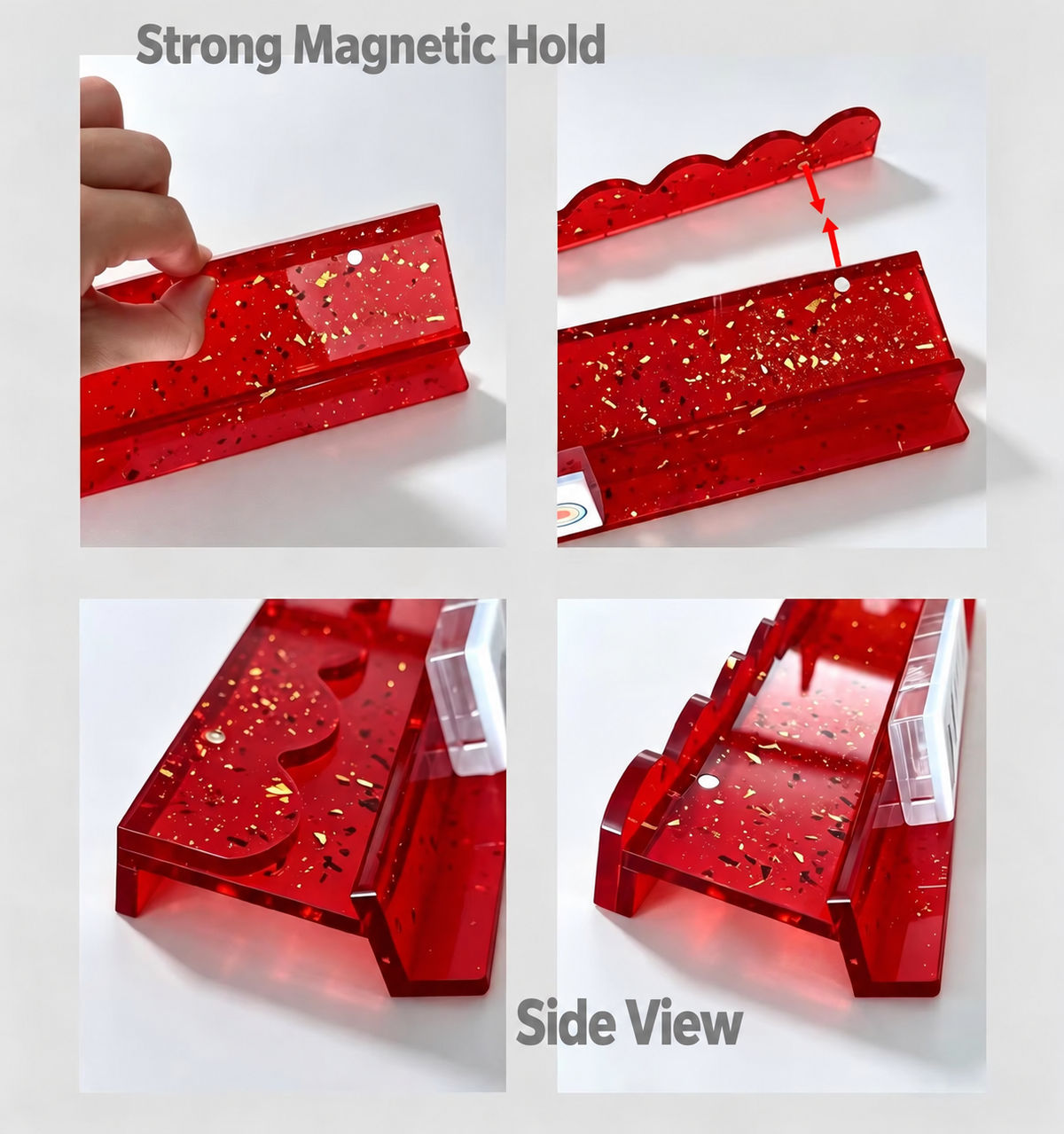
Now—they're not optional. A mat protects the tiles, keeps them from sliding off the edge, and lets players see their hands without confusion. Racks with pushers speed up play by 30% because nobody's hunting for their tiles or accidentally knocking them over. Beginners think they're luxury; they're actually safety and flow. Most families add these in their first order because stopping mid-game to chase loose tiles kills momentum. If budget is tight, get the set and mat first, then racks with pushers within two weeks.
🎁 See our most-loved mahjong sets & accessories →
How do you know what to check before ordering?
Before you buy, answer these questions:
Who's playing? (All adults? Mix of teenagers? Ages 8+?) → Guides tile size.
How often? (First time? Weekly for life?) → Beginner sets vs. keepsakes.
Do you have a table? → If not, you need a mat; it creates a dedicated play space anywhere.
Are there competitive players? → They'll ask for racks by week two.
Will the set stay in one home or travel? → Get a travel bag or case now; replacing lost tiles costs more.
Current year's card included? → Always verify; you cannot play without it, and house rules vary by season.
A set without a mat and card is incomplete. Always ask the seller to confirm they include two copies of the current year's card and a protective mat or surface.
What's the honest difference in price and value?
Entry-level acrylic sets start affordable and work fine for casual families. Mid-range sets add refinement—clearer tile faces, thicker acrylic, better packaging. Premium sets include engraving, custom racks, and cases that feel like heirlooms. For families, the jump from entry to mid-range (about 50–75% more cost) buys durability and player satisfaction; the jump from mid to premium is mostly emotional and aesthetic. Most families play the same four hands on an entry set or a premium one—the difference is how often the set gets used. Invest in a mat and racks every time, regardless of price tier.
✨ Find your Mahstead set — free US shipping →
How does a family set differ from a competitive or travel set?
A family set prioritizes clarity, durability, and comfort over speed and compactness. Competitive players care about tile feel and push-speed; travelers need lightweight, compact cases. A family set is your daily workhorse—it lives on or near your table, gets shuffled once a week, and should last a decade. If you're building a permanent game, choose from the best-selling collection and pair it with a mat and racks that stay in one place. You don't need ultra-compact design or tournament-grade tiles; you need beauty and reliability.
What to Check Before You Buy
Tile size matches your group's comfort (standard for mixed ages; eighth-inch only if everyone has strong vision and prefers speed).
Two copies of the current-year card are included (non-negotiable; confirm when you order).
Mat is included or bundled (asking for one separately costs more; buy together).
Free US shipping (confirm it covers your full order).
Set includes 160 tiles (152 to play, plus spares; standard is enough).
Return or replacement policy is clear (damaged tiles in transit happen; know your recourse before paying).

FAQ
Can families play with a 144-tile set instead of 160?
American mahjong requires exactly 152 tiles to play. Sets sold as 160-tile include those 152 plus 8 spares (extra jokers or blanks) that never enter the game. Smaller sets (144-tile) are not American mahjong—they're different variants. Stick to 160-tile for authentic American home games.
What's the difference between American mahjong tiles and Chinese or Hong Kong tiles?
American sets have 152 tiles, use the current year's card for hand patterns, and include 8 jokers (wild tiles). Chinese and Hong Kong mahjong use 144 tiles, have different hands and rules, and often fewer or no jokers. If your family plays American, you need an American set; the tiles and rules don't interchange.
Do we need racks with pushers right away, or can we skip them?
You can skip them initially, but most families add them within the first month. They prevent tiles from spilling, speed up play, and reduce argument over whose tile is whose. They're not luxury—they're table management. If budget is tight, buy racks within two weeks of your first game.
How do I know my set has all the tiles?
Count the suits: 36 Bams (including 1 Bam with a bird), 36 Craks, 36 Dots. Then count 16 winds (4 each: North, East, West, South), 12 dragons (4 Red, 4 Green, 4 White), 8 flowers, and 8 jokers. That's 152. The set should also include spare jokers or blanks. If your count is short, contact the seller before playing.
Should we buy a mat or a table cover?
A mat is better for families. It protects tiles, prevents sliding, and rolls up for storage. A table cover is decorative and doesn't protect or grip tiles. Learn the full difference before you choose, but mat wins for regular play.
Do engraved tiles wear down the jokers or racks faster?
No. Engraving is surface-level and doesn't affect tile durability. Jokers and racks wear from repeated use and shuffling, not from engraving. A well-made engraved set lasts as long as any other acrylic set if you use a mat and store it in a case between games.
Can we play with just one set of cards (single copy) at the table?
Technically yes, but not well. With one card, players across the table struggle to see hands, and you lose time passing it back and forth. Two cards (one at each end) are standard and keep the game flowing. A set should include two copies; confirm before ordering.


View More
View More
View More
