
Taiwanese Mahjong Quick Start Guide: Rules, Tiles & Setup
Last updated: Nov 23, 2026
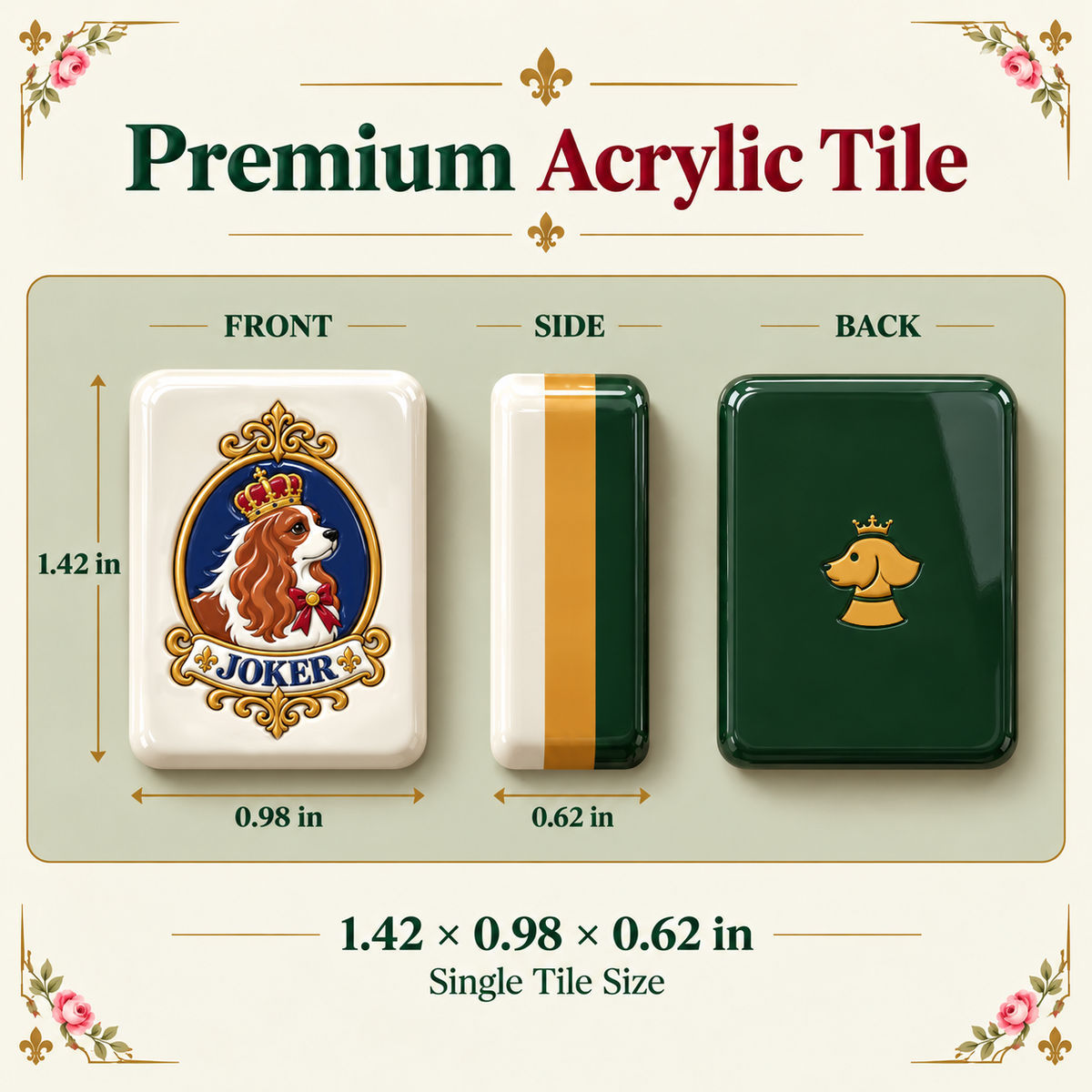
Taiwanese mahjong is played with 144 tiles (four suits: Bamboo, Characters, Dots, plus Honors—Winds and Dragons), with no Flowers or Jokers. Players draw and discard to build melds: Pongs (three identical), Kongs (four identical), and Chows (three consecutive numbers in the same suit). Unlike American mahjong, Chows can be called or exposed. A winning hand requires four melds and a pair (14 tiles total). Games typically last 30–60 minutes per round. Taiwanese play is faster-paced and relies on memory, bluffing, and reading opponents. You'll need a 144-tile set, a mat for comfort, and a rack to organize your tiles—our best-selling mahjong sets include solid equipment options for learning.
What's inside a Taiwanese mahjong set?
A Taiwanese set has 144 tiles divided into four suits: Bamboo (Bam), Characters (Crak), Dots, and Honors. Each numbered suit runs 1–9 with four copies of each tile (36 per suit, 108 total). Honors include 16 Wind tiles (four each: East, South, West, North) and 12 Dragon tiles (four Red, four Green, four White). No Flowers, Jokers, or blanks—just the core 144. This lean tile count means shorter games and tighter strategy: every tile matters, and the odds of any single draw are higher. If you're learning Taiwanese mahjong after playing American, this is the hardest shift to absorb—no Joker wildcards means you can't "fudge" a partial meld into the end game.

How does hand-building differ from American mahjong?
In Taiwanese mahjong, you build hands using Pungs (three identical tiles), Kongs (four identical), and Chows (three consecutive tiles in the same suit—e.g., 3-4-5 Dots). The key difference: Chows can be called and exposed. In American mahjong, you can only expose Pungs, Kongs, Quints, and Sextets; Chows don't exist as exposable melds. In Taiwanese play, if the player ahead of you discards the tile you need to complete a Chow, you can call it, expose the Chow, and continue your turn. This openness means the table reads faster, bluffing matters less, and the pace picks up. A winning hand always contains four melds and one pair—14 tiles, no wildcards. This fixed structure makes learning the hand patterns clearer than American play, where the National Mah Jongg League card rules every legal hand shape.
🀄 Shop best-selling mahjong sets →
What are the core rules of Taiwanese play?
A Taiwanese game follows this sequence: (1) each player draws 13 tiles; (2) the first player draws one more (14 tiles total) and may declare a win or discard one; (3) players then take turns drawing from the wall and discarding, calling Chows/Pungs/Kongs as tiles become available; (4) the first player to form four melds and a pair wins and collects points from losers. Winning is called "going out." Ties are rare—once someone declares, the hand ends. Scoring varies by region (some score by meld type, others by hand rarity), so agree on a scoring system before play. One crucial rule: a discard can't be taken back once it touches the discard pile, and the next player has the right to use it. This speeds play and punishes hesitation—one reason Taiwanese mahjong feels snappier than American rounds.

How is Taiwanese mahjong faster than American play?
Taiwanese games run 30–60 minutes per round compared to American games, which often exceed 90 minutes. Three factors: First, 144 tiles instead of 152 (plus no Jokers or Flowers) means fewer possible draws and a smaller search space. Second, Chows being callable and exposable create more early opportunities to "lock in" points—fewer players wait until the final hand. Third, no National Mah Jongg League card constraint; any legal four-meld-plus-pair combo wins, so players aren't hunting a specific card slot. Beginners often find Taiwanese play more forgiving—you can't "brick" a hand by miscounting Joker logic—but more intense, because reading opponents' discards is critical. If you're hosting frequent games and want shorter, tighter rounds, Taiwanese mahjong is a strong choice. A padded mahjong mat and good racks with pushers smooth the faster pace by keeping tiles organized and preventing fumbles.
How do you transition from American to Taiwanese mahjong?
Start by learning the 144-tile layout: memorize the four suits, Winds, and Dragons without Flowers or Jokers. Then practice hand patterns on paper—write out five winning hand shapes (e.g., Pung-Pung-Pung-Chow-Pair, Chow-Chow-Chow-Chow-Pair) and drill until they're automatic. Next, play a few trial rounds with experienced Taiwanese players to internalize the pace and Chow-calling logic. The biggest mental shift: stop thinking about Joker positioning and tile counting. In American mahjong, you're checking the card for legal hands; in Taiwanese play, you're reading your opponents' hands from their discards and exposed melds. Keep an American set nearby for reference if you host mixed games, but get a dedicated 144-tile best-selling Taiwanese or traditional set so muscle memory doesn't cross over during play.
Aspect | American Mahjong | Taiwanese Mahjong | Impact on Play |
Tile count | 152 (+ 8 Jokers) | 144 (no Jokers) | Shorter rounds, tighter odds |
Callable melds | Pungs, Kongs only | Pungs, Kongs, Chows | Faster reveals, more bluffing |
Winning shape | Current year's card | Any 4 melds + 1 pair | Fewer restrictions, faster decisions |
Game length | 90+ minutes | 30–60 minutes | Better for frequent play |
Scoring | National league standard | Regional variants | Agree beforehand to avoid disputes |
🎁 See our most-loved mahjong sets & accessories →
What to check before you buy a Taiwanese set
Before committing to a 144-tile Taiwanese set, confirm (1) tile size and weight: Taiwanese tiles are often smaller and lighter than American acrylic sets, so hold one first or request a size comparison if ordering online. (2) Suit marking clarity: ensure Bams, Craks, and Dots are unambiguous under table light; poor contrast causes mid-game disputes. (3) Rack compatibility: many Taiwanese players use lower, narrower racks than American sets require, so verify your rack fits your tiles. (4) Localization: if you're learning with native speakers, ask whether your set uses simplified Chinese characters or English numbers—mixing notations mid-game is disruptive. (5) Storage and durability: a hard travel case protects acrylic tiles on transport and extends tile life; Taiwanese sets are portable, so a quality mahjong bag or case is a practical investment if you're moving between venues.
✨ Find your Mahstead set — free US shipping →

FAQ
Is Taiwanese mahjong harder than American mahjong?
Not harder—different. Taiwanese play has fewer rules (no card lookup) and shorter rounds, so it's easier to learn the core. American mahjong has more tile complexity (Jokers, Flowers) and strict hand patterns. Taiwanese demands faster reading and memory; American rewards planning and pattern recognition.
Can I use an American mahjong set to play Taiwanese mahjong?
Technically yes, but awkwardly. An American set has 152 tiles (plus Flowers and Jokers you'd ignore), so you'd remove eight tiles before each game—error-prone and clunky. A dedicated 144-tile Taiwanese set is cleaner and keeps games moving.
Do Taiwanese players use a mahjong card like American players?
No. American mahjong requires the current National Mah Jongg League card to define legal hands. Taiwanese mahjong has no official card; any combination of four melds and a pair wins. This makes Taiwanese play more flexible but requires players to memorize meld types.
What's the fastest way to learn Taiwanese mahjong rules?
Play one full round with an experienced Taiwanese player who explains as you go, then play three more rounds with minimal interruption. Focus on: discard reading, Chow calling, and counting to 14 tiles. Most learners internalize the core in a single session.
Can I play Taiwanese mahjong with three or four players?
Yes. Four players is standard (traditional, most common). Three-player Taiwanese mahjong uses modified tile counts and payout rules—ask your local group for their variant before assuming rules carry over.
How do I find Taiwanese mahjong groups in my area?
Check community centers, libraries, and cultural organizations (especially those serving East Asian communities). Search online meetup boards for "mahjong" or "麻將" and filter by location. Many groups host open-play nights for all skill levels.


View More
View More
View More
