
Best Large Print Mahjong Set: How to Pick One for Your Game
Last updated: Nov 23, 2026
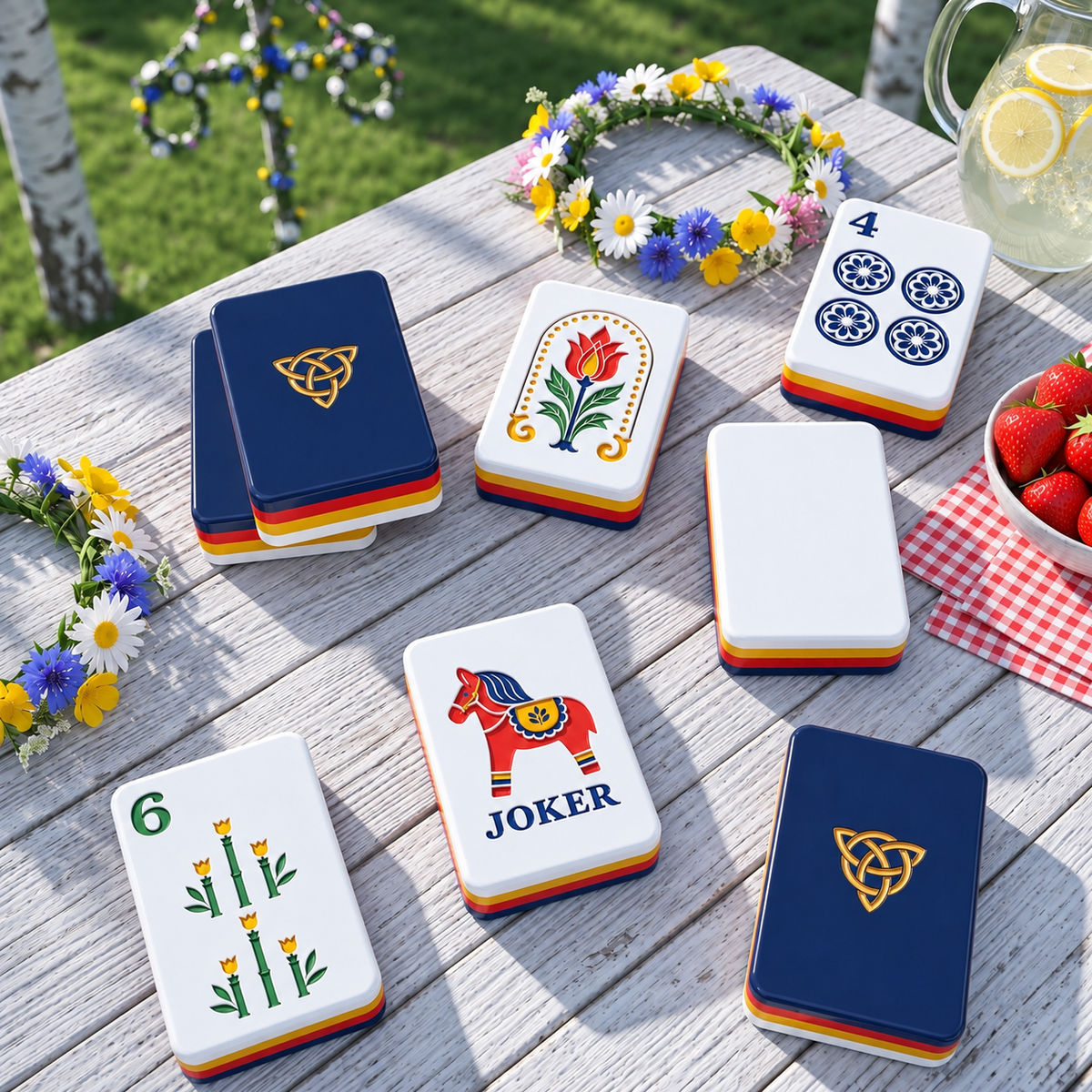
Large-print mahjong sets enlarge the numerals, suit symbols, and wind/dragon characters so you can read tiles from a distance and play faster with fewer mistakes. Most sets sold today feature standard or enhanced print sizes; we look for clarity over flashiness. A set with truly large, well-contrasted characters typically costs a bit more than basic designs but pays for itself in smoother, less-interrupted games—especially for players with vision concerns or for hosting bigger weekly groups. Mahstead's best-selling designs include options with bold, high-contrast print you can customize with engraving. Before ordering, confirm the tile size (most are 1.25″ wide) and test a sample image online or ask your supplier for a photo next to a ruler. Avoid sets where characters bleed into the tile edge or fade into the background; good large print should pop at arm's length. 🀄 Shop best-selling mahjong sets →
What counts as "large print" in a mahjong set?
Large print doesn't mean bigger tiles—it means bolder characters with more contrast. Standard American sets use 1.25″ × 1″ acrylic tiles; the print size on those tiles is what varies. High-contrast, large-print designs use thicker strokes, darker inks, and more white space around the character, so you read the symbol without leaning in or tilting the tile. This matters because many players hold tiles at the edge of their rack during play, and a character that vanishes into the corner is useless. Mahstead sets use engraved or screen-printed characters; we prioritize clarity over decorative fonts.

Who actually needs a large-print set?
Anyone with vision concerns, presbyopia (age-related focusing difficulty), or astigmatism will feel the difference immediately. But large print also helps speed up games because faster players don't have to ask "what's that?" or squint mid-discard. If you host weekly games with mixed ages or vision levels, one large-print set at the table means fewer pauses and less frustration for everyone. Beginners, too, benefit from clarity—reading the hand faster builds confidence. Players with normal vision don't "need" large print but often prefer it; the trade-off is that slightly bolder text occupies a little more tile real estate, which some players find too busy. Your weekly group's preference matters more than any rule.
How do tile material and print method affect readability?
Acrylic tiles hold ink and engraving much better than plastic or wood. Screen-printed characters (ink applied to the surface) can fade after years of play, especially on lighter-colored tiles. Engraved tiles (characters cut into the acrylic) last longer and offer sharper contrast because the cut exposes the white interior layer underneath a colored surface. Mahstead's 160-tile acrylic sets use engraving or screen printing depending on the design; acrylic's smooth finish means print stays crisp through hundreds of shuffles. Avoid sets with printed characters that don't have backing color—if you hold them up to light, the number should be clearly visible. This is a real test you can do before buying: ask the supplier for a photo of a tile held in front of a bright window.
🎁 See our most-loved mahjong sets & accessories →
Which designs offer the best large-print options?
Our engraved American mahjong sets collection includes several large-print approaches. Solid-color tiles with white engraving (e.g., dark green base with white-cut characters) give maximum contrast because the background doesn't compete for attention. Two-tone or multi-color designs can work too, but avoid sets where the character color and tile background are close in brightness. Custom engraving lets you request bold, readable fonts—tell the designer upfront that clarity is your priority. Sets with simple symbols (thick lines, minimal detail) read faster than ornate or script-heavy designs. If you're ordering for a group, buy one set first and test it during a real game before ordering multiples.
Design Type | Best For | Print Clarity | Durability |
Solid base, white engraving | Vision concerns, fast play | Excellent | Excellent |
Light base, dark engraving | Standard visibility | Good | Excellent |
Multi-color with high contrast | Beginners, casual groups | Good | Good |
Pale or pastel base | Decorative use, slow games | Fair | Good |
Our pick: if you can't decide, choose a solid base with white-engraved characters—it's the easiest to read at any distance.

What should you check before ordering a large-print set?
Before committing, answer these five questions:
Tile size: Confirm 1.25″ wide (standard American). Smaller tiles = smaller print, no matter how bold. Mahstead uses standard dimensions.
Character contrast: Ask for a close-up photo of the Bam suit (the suit with the most fine detail). If you can read it clearly in the photo without zooming, you're good.
Joker and blank count: A 160-tile set includes spares beyond the 152 playing tiles. Make sure you know what "spares" means for your set—extras let you replace lost or damaged jokers without breaking the game.
Set material: Acrylic holds print better than resin or plastic. Acrylic also feels better in hand during long games.
Customization: If you're buying for a specific group (book club, family, senior center), custom engraving (name, date, logo) often costs less than you'd expect and makes the set memorable. Mahstead offers engraving on custom sets.
Another pro move: if your group plays weekly, buy one large-print set and one standard set. Use large print on the player who draws the most questions or who hosts most often. Rotate it through your group over time—you'll learn which design your community prefers for future buys.
✨ Find your Mahstead set — free US shipping →
How does large-print compare to other accessibility fixes?
Some players try alternative approaches: using a reading lamp over the discard pile, enlarging the mahjong card (the hand reference card), or sitting closer to the table. These help, but they don't fix the core problem—if the tile itself is hard to read, you're always hunting. Large-print tiles solve it at the source. The cost difference between a standard set and a large-print set is modest (see the product page for current pricing). If your group plays 52 weeks a year, that's thousands of hours with the same set; investing in clarity pays dividends in comfort and play quality. Pair a large-print set with a good mahjong mat in a contrasting color (e.g., dark mat behind light tiles or vice versa), and you've built the ideal reading environment.
Real mistakes to avoid when buying large print
Buying by photo alone without verifying tile size: A huge character on a tiny 1″ tile still reads smaller than a bold character on a standard 1.25″ tile. Always confirm dimensions.
Assuming all "bold" fonts are equal: Some fonts use thicker strokes but stay compact; others use larger letterforms. Both can be bold, but one might be more readable for your vision. If possible, compare two designs in person before bulk-ordering.
Forgetting to account for your table setup: Large-print tiles help most when you sit farther away (wide table, many players) or play at speed. If you play in a small group, arm's length away from one another, the benefit shrinks—though most groups still prefer clarity.
Overlooking the discard pile: Even large-print tiles in your rack don't matter if you can't read what's been discarded. Use a mat with good contrast (matte surface reduces glare) and good lighting. Many players arrange discards in clear rows on the mat for easier scanning.
Buying a huge set without considering storage: A 160-tile set in a large case travels fine, but it takes up shelf space. If you're hosting weekly games, storage is fine; if you're building a collection, you might be glad for a compact travel bag later.

FAQ
Can I add large-print tiles to an existing set?
No—tiles are sold as sets and must be matched. If your current set is hard to read, buying a complete new large-print set is your best option. Some players keep both and choose by lighting or player vision that day.
Does large print make tiles easier to shuffle?
Not directly, but large-print sets usually sit on a smooth mat, which improves shuffling for everyone. Pair your set with a quality mahjong mat to get the full benefit.
Are engraved tiles more readable than printed tiles?
Yes. Engraving cuts the character into the tile, exposing the white interior underneath, so contrast is permanent. Screen-printed characters can fade after years. For large print, engraving is the safer long-term choice.
What if I buy a large-print set and still can't read it easily?
Check three things: your table lighting (poor light defeats any set), the mat color (high contrast helps), and your sitting distance (too far away still causes squinting). If all three are good and the set is still hard to read, the character size itself may not be large enough for your vision—ask the supplier for their largest-print option or consider medical-grade reading aids alongside the set.
Can I use a large-print set with a mahjong card that's not enlarged?
Yes, but you get more benefit if you enlarge the card too. Print the current year's NMJL card at 120% or 150% of standard size and keep it at your spot. Large-print tiles + enlarged card = the best accessibility combo for reading-heavy games.
Does Mahstead offer a trial or sample large-print tile?
We recommend visiting a local game host or club (check community centers, libraries, or country clubs in your area) to handle different sets before ordering. Alternatively, ask us for a product photo shot against a ruler so you can judge character size and contrast online.


View More
View More
View More
