
American Mahjong vs. Siamese Mahjong: Rules and Key Differences
Last updated: Nov 23, 2026
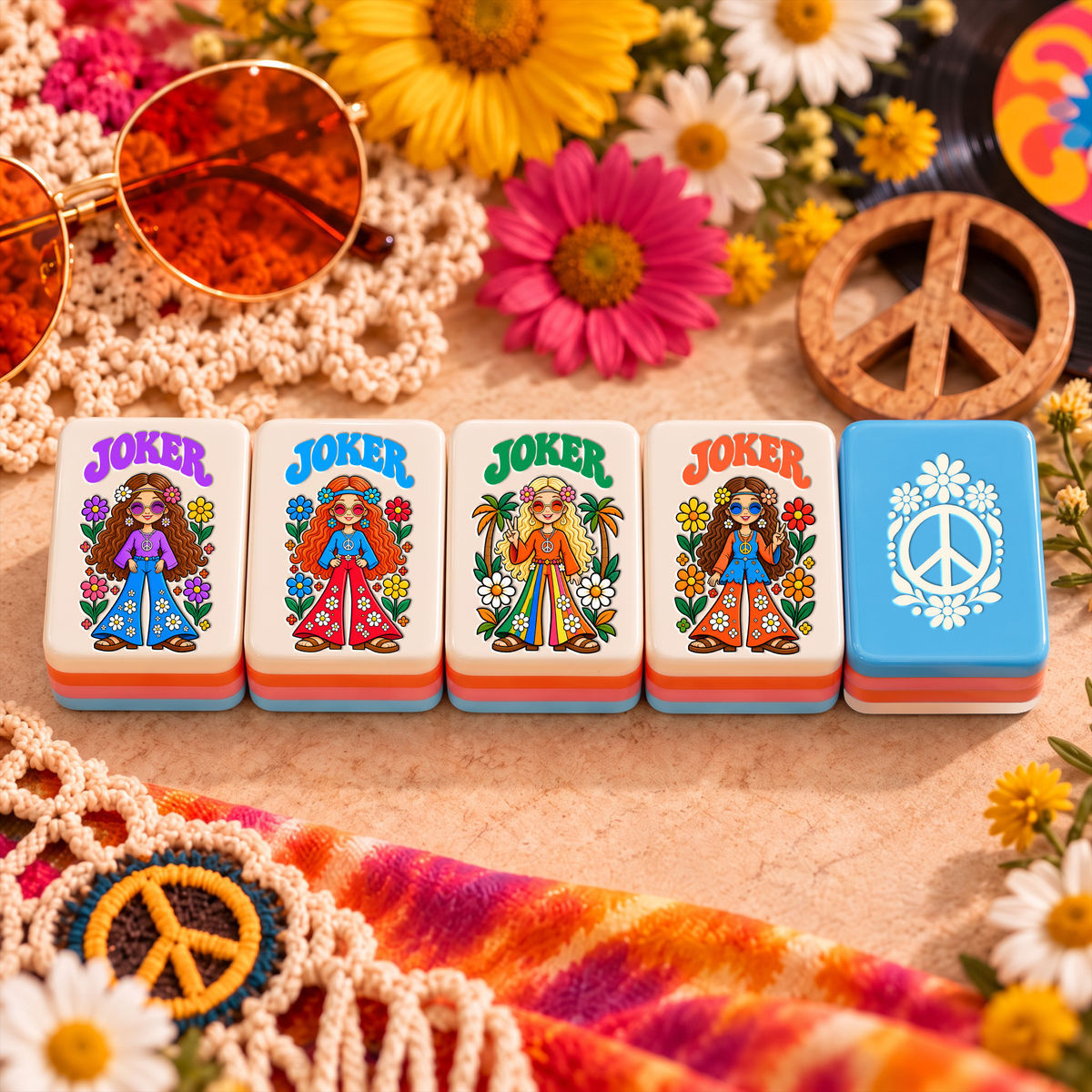
American mahjong uses 152 tiles divided into three numbered suits (Bams, Craks, Dots 1–9), 16 winds, 12 dragons, 8 flowers, and 8 jokers. Hands are drawn from the current-year National Mah Jongg League card and feature only melds (pungs, kongs, quints, sextets)—no sequences. Siamese mahjong, also called Thai mahjong, uses 144 tiles with no flowers or seasons, allows both melds and sequences, and applies different hand patterns. American mahjong is a closed hand until winning; Siamese play is more open and dynamic. Both are four-player social games, but American mahjong emphasizes reference-card strategy while Siamese rewards flexibility and rapid adaptation.
What tile differences define each game?
American mahjong contains 152 tiles: 108 numbered tiles across three suits (36 per suit, 1–9 repeated four times each), 16 winds (four each: North, East, West, South), 12 dragons (four Red, four Green, four White), 8 flowers, and 8 jokers. Siamese mahjong uses 144 tiles: only two jokers, no flowers, and a slightly different dragon composition. This single fact cascades through every hand—American sets require more jokers to substitute missing tiles; Siamese play relies on sequences, which American mahjong forbids entirely. The best-selling collection carries full 160-tile American sets, which include spare tiles—exactly what American players need.

Can you use sequences in American mahjong like Siamese?
No. American mahjong permits only exposed melds: pungs (three identical tiles), kongs (four identical), quints (five), and sextets (six). Sequences (1-2-3 of the same suit) are never allowed, even in hand. Siamese mahjong welcomes sequences as core winning patterns. Jokers in American mahjong act as wild tiles only inside melds—never as a lone tile or in a pair. This constraint forces American players to hunt the reference card for valid patterns; Siamese players build runs fluidly. The structural difference explains why American players pass the Charleston (a pre-game tile-exchange ritual); Siamese play begins immediately. American mahjong rewards planning; Siamese rewards improvisation.
How does the winning card change strategy between variants?
American mahjong players must match one of hundreds of hand patterns printed on the current-year National Mah Jongg League card. Every legal hand appears on that card; hands not listed are invalid. Siamese mahjong has no reference card—players follow traditional Hong Kong or Bangkok rules, where basic combinations (like three pungs plus one pair) always win. This means an American player studies the card before the game; a Siamese player learns the rules once and adapts during play. The card mechanic makes American mahjong predictable yet demanding—you know the target before you draw. Siamese mahjong is more intuitive but requires deeper memorization of rank and honor tile interactions. For casual American play, keep the current card visible; for Siamese, you need only one reference sheet covering rule structure, not annual variants.
What's the typical hand-winning time for each variant?
American mahjong games typically last 1 to 2 hours per four-hand round, depending on player speed and hand difficulty. Siamese mahjong often moves faster—15 to 25 minutes per hand—because sequences are easier to spot and the open-play style accelerates decision-making. American players spend time cross-checking the card, which adds 30–90 seconds per draw; Siamese players discard nearly instantly. If your group prefers quick rounds and social momentum, Siamese works well. If you enjoy deeper strategy and long-form gameplay, American mahjong suits you. Neither is "better"—they're paced for different temperaments.

Which rule set is stricter in competition?
American mahjong tournaments follow National Mah Jongg League rules: standard hand patterns, No House Rules, and strict tile-exposure protocols. Siamese mahjong has regional variants (Bangkok rules, Thai royal rules, informal social rules), so competitions often publish their own rule book before the event. American competition is uniform across the US; Siamese competition may differ regionally. If you're entering a tournament, confirm the variant and the specific rule set weeks ahead—some Siamese tournaments allow loose joker rules; others ban certain melds. American tournaments are more predictable because the League issues one card per year, and all tournaments use it.
Aspect | American Mahjong | Siamese Mahjong |
Tile count | 152 (plus 8 jokers, 8 flowers) | 144 (plus 2 jokers, no flowers) |
Sequences allowed | No—never | Yes—core patterns |
Winning source | Annual League card (hundreds of patterns) | Traditional rule structure (fewer core combinations) |
Meld exposure | Restricted (only pungs, kongs, quints, sextets) | More open (melds and sequences visible) |
Typical hand duration | 1–2 hours per four-hand round | 15–25 minutes per hand |
Competition uniformity | High (one card per year) | Variable (regional rule differences) |
Joker role | Wild tile in melds only; never alone or in pair | Substitution tile, often more flexible |
Reference card required | Yes—mandatory in play | No—rules memorized |
🀄 Shop best-selling mahjong sets →
Common mistakes when switching from one variant to the other
American players trying Siamese: The biggest error is playing sequences as forbidden. In Siamese, a run like 3-4-5 Bams wins instantly; American players instinctively reject it. Also, American players hoard jokers; Siamese mahjong uses far fewer. If you're learning Siamese, practice one hand-type at a time (pungs-only, then add sequences).
Siamese players trying American: Expecting to discard freely—American mahjong is a "closed hand" until you win, meaning visible melds lock in your strategy. Siamese players are accustomed to rapid pivots; American play punishes indecision. Another trap: assuming the reference card is "just a guide." It's not. If a hand isn't on the card, it doesn't win, period. Study the card sections (like number-only hands, honor-only hands) before your first game.
Both: Mixing joker rules. In American mahjong, a joker cannot sit as a lone tile or a pair member—it only lives inside a meld of three or more. Siamese players accustomed to loose joker substitution will make this mistake. Write the joker rule on a sticky note and tape it to the table.
🎁 See our most-loved mahjong sets & accessories →
Which variant suits your group—and what to check before you buy
If your group meets weekly and plays for 2+ hours, American mahjong creates a richer strategy experience and forces deeper engagement with the card. You'll need a current-year National Mah Jongg League card, a full 152-tile set, and patience for the learning curve. If your group values speed, social ease, and shorter rounds, Siamese mahjong is ideal—it demands less equipment and no annual updates.
What to check before you buy:
Tile composition: Confirm your variant's exact tile count and joker/flower/season content. American = 152 tiles + 8 jokers; Siamese = 144 tiles + 2 jokers.
Reference materials: For American, purchase or download the current-year League card. For Siamese, agree on which regional rule set (Bangkok, Thai, etc.) your group will follow.
Acrylic vs. bamboo: If you're playing 2+ hours weekly, acrylic tiles last longer and are easier on hands than bamboo. Engraved American sets with personalization add durability and group identity.
Mat and rack: Both variants benefit from a dedicated mat (reduces tile wear) and racks with pushers (keeps hands organized and prevents accidental exposure). American players especially appreciate racks for managing large hand samples.
Storage: American sets need bags or cases to hold all tiles and the reference card. Siamese sets require less storage.
✨ Find your Mahstead set — free US shipping →

FAQ
Can I play American mahjong with a Siamese tile set?
Technically yes, if you have a way to replace missing flowers and jokers, but you'll struggle—Siamese sets are lighter on jokers, and you'll lack the eight flowers American hands often require. Better to buy a dedicated 160-tile American set and avoid improvisation during play.
Is one variant harder to learn than the other?
American mahjong has a steeper initial learning curve because the reference card is dense and requires weeks of study. Siamese mahjong is intuitive once you memorize the five or six core winning combinations—usually 2–3 games in. For adults with 1–2 hours free weekly, plan 4–6 weeks to feel confident in American; 1–2 weeks in Siamese.
Do tournament rules differ for American vs. Siamese?
Yes. American tournaments follow one League-issued card and uniform rules across all competitions. Siamese tournaments vary by region—Bangkok tournaments may allow rules Bangkok doesn't recognize, and vice versa. Always request the rule book 2–3 weeks before a Siamese tournament.
Can jokers substitute for any tile in Siamese mahjong the way they do in some house rules?
Joker flexibility varies by regional Siamese rule set. Bangkok rules allow jokers as wild substitutes in melds and pairs; some Thai variants restrict them to melds only. Clarify with your host before the first game. American mahjong has one hard rule: jokers are melds-only, never lone or pair tiles.
If I learn American mahjong, is Siamese mahjong easier or harder after?
Harder initially. American players are trained to reject sequences and obsess over the reference card; Siamese requires you to embrace sequences and trust your memory instead. Expect 3–4 learning games where you'll call invalid hands by accident. Play slowly and ask your host to verify each win until it clicks.
What's the smallest mahjong set I should buy?
For American mahjong, never go below 152 tiles—that's the legal minimum. Sets sold as 160-tile include spare jokers and tiles for durability. For Siamese, 144 tiles is the standard. Anything smaller isn't a real game; it's a toy or incomplete set.


View More
View More
View More
