
American Mahjong vs. Malaysian Mahjong: Key Differences
Last updated: Nov 23, 2026
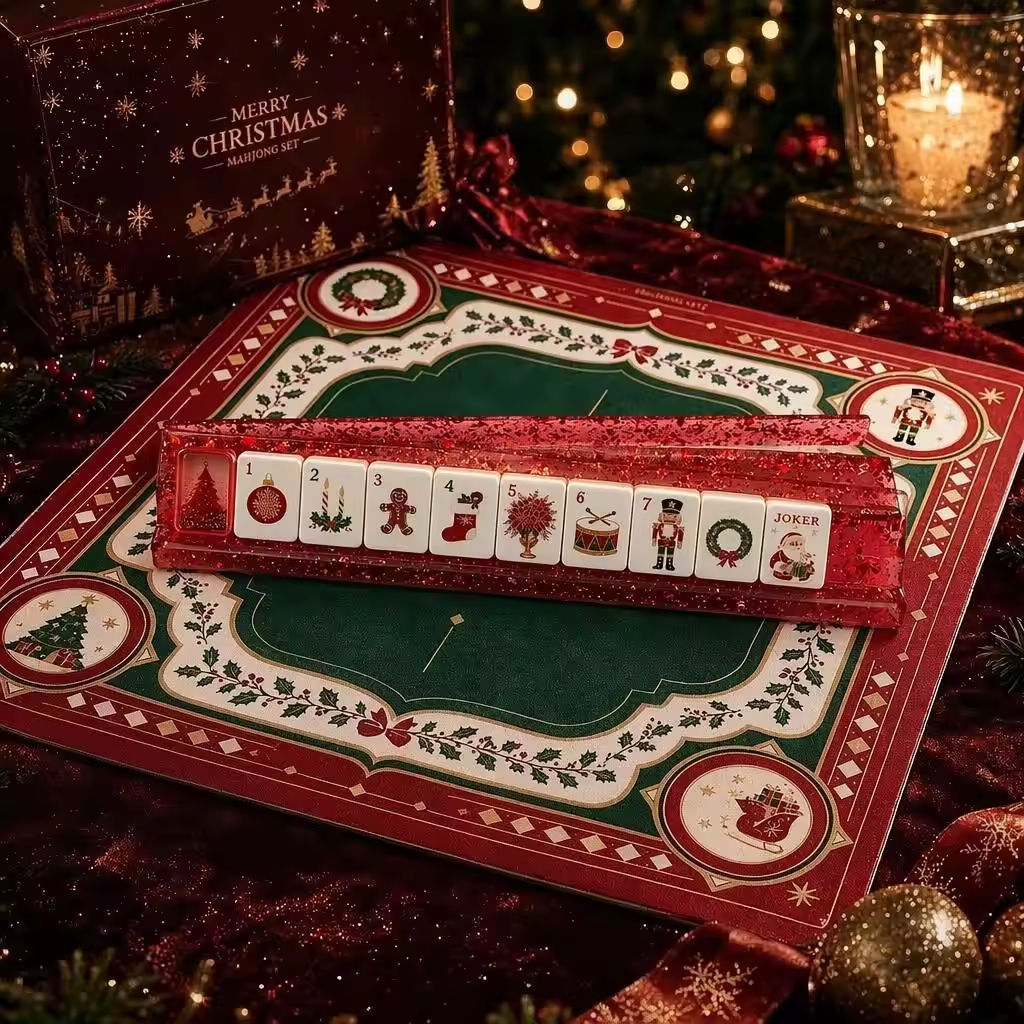
American mahjong uses 152 tiles (three suits numbered 1–9, winds, dragons, flowers, jokers) and requires hands from the current National Mah Jongg League card—no improvisation. Malaysian mahjong, played primarily in Malaysia and Singapore, uses 108 or 144 tiles depending on local rule sets, allows traditional hand patterns (chows, pungs, kongs) without a yearly card, and features different tile distributions and winning combinations. American mahjong forbids sequences (chows) in exposed melds; Malaysian allows them. American games last roughly 1–2 hours with four players; Malaysian games often run longer. American mahjong is highly structured and card-dependent; Malaysian is more traditional and flexible. Both are social, competitive games, but they require different strategies and tile sets. If you're buying an engraved American mahjong set, confirm your group plays the American variant before you commit to learning the card-based hand system.
What tiles does each variant actually use?
American mahjong uses exactly 152 tiles: three suits (Bams, Craks, Dots) numbered 1–9 with four copies of each (108 tiles), 16 winds (4 each: North, East, West, South), 12 dragons (4 each of Red, Green, White), 8 flowers, and 8 jokers. Malaysian mahjong typically uses 108 tiles in a standard set—four suits (Craks, Dots, Winds, Dragons) with numbers 1–9, but distributed differently than American. Some Malaysian rule sets add extra tiles or use 144-tile sets with additional jokers or blanks. American jokers act as wildcards in melds (exposing pungs, kongs, quints, sextets) but never alone or as part of a pair. Malaysian jokers work similarly but can be used more flexibly depending on local house rules. The core difference: American sets are rigid by design because hands are predetermined on the League card; Malaysian sets accommodate improvisation.

Why does the League card exist in American mahjong but not Malaysian?
The National Mah Jongg League issues a new card every spring; American players must form hands listed on that year's card. This standardization ensures fair play across clubs and tournaments. Malaysian mahjong follows classical hand patterns (combinations like three-tile sequences called chows, identical pungs, and kongs) without a yearly card—players can win with any valid combination that follows house rules. This makes Malaysian mahjong feel closer to Rummy or traditional Chinese mahjong. American mahjong's card system eliminates disputes about hand validity and creates a learning curve: new players must study the card to recognize patterns. Malaysian players rely on pattern memory and traditional logic instead. For beginners, American's card is a scaffold; for traditionalists, Malaysian's open-ended system feels freer. If you're hosting your first American game, players will need the current League card; Malaysian groups bring their own rule sheet or follow regional conventions.
Which sequences and melds are legal in each game?
American mahjong has no chows—you cannot form or expose three consecutive numbers like 3-4-5 Bams. You may only expose pungs (three identical tiles), kongs (four identical), quints (five), and sextets (six). Jokers can be embedded in any exposed meld but cannot form a pair or stand alone. This restriction forces American strategy toward matching identical tiles and creates longer hand-building periods. Malaysian mahjong allows chows (three consecutive numbers in any suit), pungs, kongs, and pairs. Chows can be concealed or exposed; the flexibility means faster hand assembly and different tactical play. Malaysian melds feel more dynamic because sequences open more pathways to victory. American melds are static; you hunt for matches until the card's pattern clicks into place. For new players: American feels like a puzzle; Malaysian feels like building blocks. The no-chow rule in American makes it slower but more strategic on a table-wide scale.
🀄 Shop best-selling mahjong sets →
How long does each game take, and what happens during the Charleston?
A four-player American mahjong game typically lasts 1–1.5 hours per round. Before any hand is dealt, the Charleston—a choreographed tile-passing ritual—takes 5–10 minutes. Each player passes tiles to the right, then left, then across. The Charleston exists only in American mahjong and is designed to randomize the draw and ensure fairness. Malaysian mahjong has no Charleston; tiles are drawn and discarded in sequence from the wall. Malaysian games often run 1.5–2 hours or longer because the lack of card-based structure means hands can be harder to complete and more players may discard freely before someone wins. American's structure (card + Charleston) creates predictable pacing; Malaysian's flexibility creates variable pacing. If you're hosting a weeknight game, American is a safer bet for timing. If your group enjoys open-ended play and conversation breaks, Malaysian suits a relaxed evening. The Charleston also adds theater and ritual to American games—many players love this as much as the competition.

How does scoring differ between the two variants?
American mahjong scoring is determined entirely by the League card's point values. Each hand listed on the card has a fixed score (typically ranging from low- to high-double values). The winner earns points based on their hand; losers pay settlements. Scoring disputes are minimal because the card is law. Malaysian mahjong uses point systems based on tile combinations, concealment (hidden melds earn more), and special hands (like all pungs or all terminals). Scoring is calculated, not looked up, and regional variations are common. A Malaysian hand that's considered "limit" in one place might score differently 50 miles away. American simplicity appeals to competition-focused players and casual groups alike; Malaysian scoring rewards pattern expertise and regional knowledge. For new American players, scoring is a single lookup; for new Malaysian players, scoring requires learning arithmetic and local house rules. If your group includes competitive players who want consistency, American's card-based scoring removes guesswork. If your group enjoys discussion and flexibility, Malaysian's negotiated scoring fits better.
🎁 See our most-loved mahjong sets & accessories →
Comparison Table: Quick Reference
Feature | American Mahjong | Malaysian Mahjong |
Tile Count | 152 tiles (standard) | 108–144 tiles (varies) |
Suits | 3 suits + winds, dragons, flowers | Typically 4 suits (includes winds) |
Hand Source | League card (annual) | Traditional patterns (no card) |
Chows Allowed | No (no sequences) | Yes (three-in-a-row) |
Charleston | Yes (5–10 min ritual) | No |
Exposed Melds | Pungs, kongs, quints, sextets only | Chows, pungs, kongs (vary by rules) |
Scoring | Lookup on card | Calculated per rules |
Typical Game Length | 1–1.5 hours | 1.5–2+ hours |
Setup Complexity | Moderate (learn card first) | Low (know your patterns) |
Best For | Structured, competitive play | Flexible, social play |
What to Check Before You Buy
If you're choosing American mahjong: Confirm your game group has or will get the current year's National Mah Jongg League card. Without it, you cannot play. Buy a set with clear tile markings and strong jokers so the card's hand recognition feels smooth. American sets work with any playmat, but a dedicated mahjong mat helps keep tiles organized and scanning the card easier. Jokers wear faster than other tiles in American play; buy from a source that stocks durable replacements.
If you're choosing Malaysian mahjong: Confirm the regional rule set your group follows before buying. Scoring systems and tile distributions vary. Malaysian sets are less common in the US but can be sourced from Asian markets or specialists. Standard sets are smaller; American-size tiles may feel awkward in Malaysian hand-building.
For either: Test-play before committing. Borrow a set and play 1–2 rounds. The feel of the game—the pacing, the thinking, the social rhythm—matters as much as the rules.
✨ Find your Mahstead set — free US shipping →
How to Decide: Which Should Your Group Play?
Ask these three questions:
Do you want a rule book or a decision card? American players consult the League card during play; Malaysian players follow memorized patterns and house rules. American suits groups that enjoy reference materials and standardization. Malaysian suits groups that prize tradition and local variation.
How much time do you have? American games are shorter and more predictable; Malaysian games are longer and more open. Choose American for weeknight sessions; Malaysian for weekend marathons.
What equipment is available near you? American sets, League cards, and mats are easier to find in North America. Malaysian sets require specialty sources. If you're in the US and want to start immediately, American is the practical choice. If you have Malaysian roots or access to Malaysian players, learn their variant.
Neither is "better"—they're different games with different pleasures. American mahjong rewards pattern recognition and card literacy. Malaysian mahjong rewards pattern memory and social flexibility. Try both if you can, and commit to the one your group loves.

FAQ
Can I use an American mahjong set to play Malaysian mahjong?
Not reliably. American sets have 152 tiles and wind/dragon distributions optimized for League card hands. Malaysian play typically needs 108 or 144 tiles with different suit distributions. You'd need to remove or reassign tiles, creating confusion. Buy the right set for your game.
Is Malaysian mahjong played outside Malaysia and Singapore?
Yes, but less commonly in North America. It's popular in parts of Asia and among diaspora communities. If you're in the US and want to play, find a Malaysian mahjong club or meet-up; they exist in some larger cities but are rarer than American mahjong groups.
Do I need the League card before my first American game?
Absolutely. The card is how you know whether a hand is valid. You cannot play American mahjong without it. Buy or borrow the current year's card from the National Mah Jongg League before hosting your first game.
Which variant is easier to learn?
American is easier at first (the card shows you what wins) but requires card-reading fluency. Malaysian is easier once you memorize traditional patterns but has a steeper initial learning curve. For beginners: start with American if you want fast teaching; start with Malaysian if you have a patient teacher and enjoy pattern logic.
Can I teach my grandmother one variant and my kids another at the same table?
No. The two games use different tile counts, hand logic, and scoring. Pick one variant for your household and learn it together. Mixing them mid-game creates chaos. If both variants matter to your family, hold separate game nights.


View More
View More
View More
