
5 Dot Mahjong Tile Symbol Explained
Last updated: Nov 23, 2026
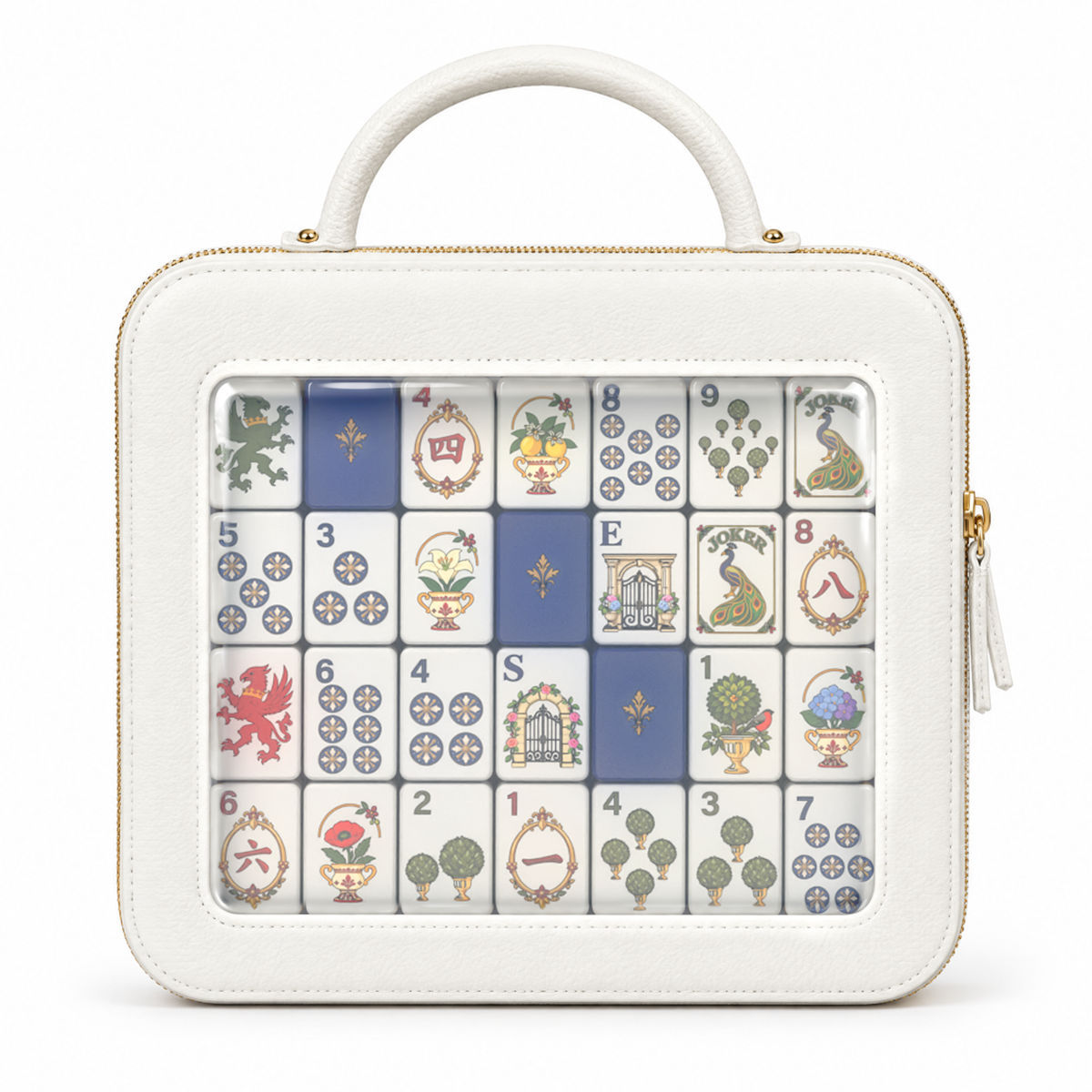
The 5 Dot tile is the middle number in the Dot suit (ranks 1–9), marked with five small circular pips printed on a pale tile face. In American mahjong, you receive exactly four copies of every numbered tile from 1–9 in each of the three suits (Bams, Craks, Dots), so four 5 Dots sit in your rack at the start. The 5 Dot bridges sequences and combinations that call for "middle range" numbers: you'll see it in pairs, pungs (three identical), and kongs (four identical), but never alone in a sequence because American mahjong forbids chows (1-2-3 runs). Its visual symbol—five plain dots arranged in a quincunx pattern (four corners, one center)—makes it instantly recognizable compared to the stylized imagery on wind and dragon tiles. Players depend on the 5 Dot in roughly 30–40% of patterns from the current year's National Mah Jongg League card, making it one of the most frequently called tiles in standard play.
What makes the 5 Dot unique among the Dot suit?
The Dot suit spans 1–9, but the 5 Dot sits at the mathematical midpoint—neither high nor low. This middle-ground ranking makes it appear in hands that call for "middle numbers" or balanced pung/kong combinations. The 1 Dot and 9 Dot are endpoints (often paired with flowers or terminal tiles); the 2–4 Dots form lower clusters; the 6–8 Dots occupy the upper range. The 5 Dot alone can pivot between low and high contexts depending on the pattern, which is why skilled players watch it closely during the discard phase. When someone throws a 5 Dot early, it signals they may not need middle-range Dots—a valuable reading clue for your own hand strategy.

How does the 5 Dot appear in actual winning hands?
On the current year's National Mah Jongg League card, you'll find the 5 Dot in pungs, kongs, quints, and sextets—never in a single-tile or pair slot, and never as part of a sequence (chow), because American mahjong allows only the three sequences: numbers 1–2–3, 4–5–6, and 7–8–9 within a single unit, never exposed or called. A typical pattern might require "3 Dots 5 Dots 5 Dots 5 Dots" (one of each plus a kong of 5s) or "5 Dots 5 Dots 5 Dots Soap 2 Craks" (a pung of 5 Dots mixed with other tile types). Because there are no sequences to call—only pungs, kongs, and quints you can announce—the 5 Dot must always be grouped with identical tiles or used as a single/pair filler. Beginners sometimes miss this rule and try to use 4–5–6 as a playable run; it isn't in American mahjong. Study the patterns on your year's card to spot the 5 Dot's roles; they repeat across many hand types.
🀄 Shop best-selling mahjong sets →
Why do players hoard or discard the 5 Dot strategically?
Mid-game, the 5 Dot becomes a decision point: keep it or throw it? If your target hand needs a pung of 5 Dots, you'll hold every copy you draw—but if your hand calls for a 5 Dot only as a single tile or pair, you may discard it early to signal weakness in that number and free rack space. Experienced players watch the discard pile: if three 5 Dots appear before the final draws, the fourth is likely uncalled and safe to throw. Conversely, if you see no 5 Dots discarded by turn 8, someone is sitting on them—either building a pung or kiting the tile to throw off your reads. The 5 Dot's prevalence on the card means most games will include at least one hand needing it, so it's rarely a dead tile. New players often discard middle-range Dots reflexively; learning to read the 5 Dot discard pattern is one of the quickest ways to improve your endgame prediction.
How does the 5 Dot compare visually to 5 Bams and 5 Craks?
All three suits use the same numeric pips (dots), but each suit's background and accent color differ. The 5 Bam tile shows five dots on a bamboo-textured or styled background; the 5 Crak displays five dots with a wavy or "cracked" accent pattern; the 5 Dot sits on a plain, pale background—the cleanest visual of the three. Beginners sometimes confuse them at a glance, especially under poor lighting or on older, faded sets. Our best-selling mahjong sets use high-contrast acrylic printing and deep colors so the 5 Dot, 5 Bam, and 5 Crak are instantly distinguishable even from across the table. Engraved sets or hand-painted tiles add depth and detail that make the suit symbols even clearer. If you're hosting weekly games, tile clarity saves time and prevents disputes—a worthwhile investment over years of play.

What common mistakes do new players make with the 5 Dot?
Mistake 1: Treating 4–5–6 as a playable sequence (chow). American mahjong has no callable sequences. You may hold a sequence like 4–5–6 Dots in your hand as a concealed unit (an unopened meld), but you cannot expose it or call it.
Mistake 2: Holding too many 5 Dots early on. If your current hand only needs one 5 Dot as a pair or single, keeping all three or four you draw wastes rack space and flags your hand type to opponents.
Mistake 3: Discarding the 5 Dot carelessly when it's dangerous. If someone just drew from the wall and hasn't discarded yet, throwing a tile they might be chasing—like the 5 Dot—hands them a win. Always read the game state before discarding.
Mistake 4: Confusing the 5 Dot with wind or dragon tiles. In sets with poor contrast or worn tiles, players misread a 5 Dot as another number or suit. Use a well-made set—this eliminates the problem entirely.
What to Check Before You Buy
Tile clarity: Can you distinguish 5 Dot from 5 Bam and 5 Crak from two feet away? Poor contrast causes mid-game disputes.
Suit color scheme: Verify the printed colors match your preference (traditional pale for Dots, green for Bams, red for Craks).
Tile count: Confirm you're buying a 160-tile set (152 playing tiles plus spares); never play with fewer than 152 tiles.
Print durability: Acrylic sets hold engraved or printed symbols longer than simple surface paint, especially over years of handling.
Tile Type | Suit Symbol | Visual Mark | Most Common in Hands | Difficulty Level |
5 Dot | Dot (●) | Five plain dots | High (30–40% of patterns) | Beginner-friendly |
5 Bam | Bam (bamboo) | Five dots + texture | Medium-high (25–35%) | Beginner-friendly |
5 Crak | Crak (wave) | Five dots + detail | Medium-high (25–35%) | Beginner-friendly |
1 Dot | Dot (●) | One dot | High (pairs, terminals) | Beginner-friendly |
9 Dot | Dot (●) | Nine dots | High (pairs, terminals) | Beginner-friendly |
The 5 Dot sits at medium visual complexity: it's easy to spot but strategic to play. Focus on recognizing it instantly and reading its discard pattern rather than memorizing every pattern it appears in.
🎁 See our most-loved mahjong sets & accessories →
Building your first hand: where the 5 Dot fits
When you sit down at your first game, you'll hold 13 tiles, including—statistically—at least one 5 Dot. Before the Charleston (the pre-game tile-pass ritual), scan your rack: do you have multiple 5 Dots, or just one? If you have three or four, your target hand likely needs a 5 Dot pung or kong, so you're hunting for that combination. If you have just one, consider discarding it early unless your hand also needs a single 5 Dot in a filler slot. After the Charleston and during play, the 5 Dot acts as both a bridge tile (connecting low and mid-range) and a strategic draw. How to play American mahjong walks through the full game flow; watching where players draw, discard, and call tiles—including the 5 Dot—teaches you to read the table. Experienced players develop a feel for when a 5 Dot is likely sitting in someone's hand waiting to be called; beginners learn this intuition by playing consistently with a quality set and keeping mental notes across games.
Why tile quality matters for learning the 5 Dot
When you're new to the game, clarity is everything. A worn, faded, or poorly printed set makes it harder to learn which tile is which, slowing your reading ability and frustrating the table. Engraved American mahjong sets offer both beauty and durability: the symbols are carved into the acrylic, so they never fade, and custom engravings can personalize your set for home play. Even a standard set from our best-selling collection uses high-contrast printing and deep suit colors, ensuring every 5 Dot is unmistakable. Over weeks and months of weekly games, a quality set pays dividends—you'll absorb the tile faces faster, spot discards more reliably, and focus your brain on strategy instead of squinting at symbols. If you host games, invest in a set that keeps everyone moving and confident.
✨ Find your Mahstead set — free US shipping →

FAQ
Can the 5 Dot ever be part of a sequence in American mahjong?
No. American mahjong forbids callable sequences (chows). You may hold a concealed 4–5–6 sequence in your hand, but you cannot expose it or call it to the table. The 5 Dot appears only in pungs, kongs, quints, sextets, single tiles, or pairs.
How many 5 Dot tiles are in a full American mahjong set?
Exactly four. American mahjong uses 152 playing tiles: four copies each of numbers 1–9 in Bams (36), Craks (36), and Dots (36). So four 5 Dots are in play at all times.
Why does the 5 Dot look different from the 5 Bam and 5 Crak?
Each suit has a distinct background color and symbol to avoid confusion. Dots use a plain, pale background; Bams display bamboo texture; Craks show a wavy pattern. The number of pips (dots) is always five, but the suit styling distinguishes them.
If someone discards all four 5 Dots early, can I still call them?
No. Once a tile has been discarded, it's gone from the game. If all four 5 Dots are in the discard pile, no one can call them because they're out of play. This is rare but changes hand strategy mid-game.
What's the fastest way to learn which tile is the 5 Dot?
Play with a high-contrast, well-made set and practice calling out each tile face aloud as you draw it during your first few games. Most players memorize the 5 Dot within two or three sessions because it's visually simple—five plain dots in a quincunx pattern.
Does the 5 Dot ever act as a joker or wild tile?
No. In American mahjong, only the eight dedicated jokers (printed with a smiley face or joker symbol) can substitute for any tile. The 5 Dot is always itself and cannot replace other numbers or suits.


View More
View More
View More
