
American Mahjong Table Position Strategy: East, South, West, North
Last updated: Nov 23, 2026
In American mahjong, the four compass positions (East, South, West, North) are not interchangeable; each carries different scoring bonuses, dealer status, and hand-selection rules. East is the dealer, worth double points; South, West, and North are non-dealers, worth single points. The current year's National Mah Jongg League card dictates which hands are legal, but your position determines when you can play them. East plays first and sets the discard tempo; non-dealers must adapt. Hands marked for specific winds on the card apply only to that wind's player. Understanding which position you're in—and how to leverage it—separates casual players from consistent winners. Most players rotate positions after each hand so everyone gets dealer advantage equally; winning comes from reading position-specific hand patterns, discarding safely from your seat, and knowing when position gives you the edge to push aggressively. Learn the full rules before your first game.
Your seat at the mahjong table—East, South, West, or North—is not a cosmetic detail. It determines scoring, turn order, hand legality, and your risk profile. Each position plays by the same rules, but the strategy is radically different. East is the dealer and plays first; non-dealers respond. Some hands on the card are legal only in specific winds. Winning consistently means choosing your discards, hand selection, and timing based on where you sit.
Why does my wind position change the hands I can win?
The National Mah Jongg League card lists hands by wind requirement—some read "Any wind," others specify "E," "S," "W," or "N." If you're sitting East and a hand reads "Any," you can play it; if it reads "S only" (South), you cannot. Position-specific hands reward players who understand the card's layout. Non-dealers cannot access dealer-only bonuses. If you ignore position, you'll spot a "perfect" hand on the card—then realize it's locked to a wind you're not sitting in. Always scan the card before your turn, verify your wind, and confirm the hand is legal for you. This single habit stops costly rule violations and clarifies why some players win hands you thought were identical.

How does East dealer advantage actually work in scoring?
East (the dealer) receives double the base points for any win: if the hand is worth 30 points, East collects 60 from all three opponents. Non-dealers (South, West, North) receive single points from all three players. East also plays first, setting discard pace and controlling early tempo. However, East must win or pass to collect; if East doesn't complete a hand, non-dealers can still win. Many players assume this makes East unbeatable—it doesn't. East faces pressure: opponents watch East's discards closely, adjust their own tile picks, and often team mentally to "push" East (discard only safe tiles). East's visibility is both advantage and target. The dealer changes after each hand, so every player eventually gets this double-payout position. Strategy: if you're East, lean toward aggressive early discards to force opponents into defensive play; if you're not East, discard safely and let East's pressure work for you.
What's the safest discard strategy based on my seat?
Position | Early Game Discard | Mid-Game Pressure | Late Game (8+ discards) |
East (Dealer) | Suit pairs you don't need; set tone | Aggressive honors; push tempo | Visible mid-range tiles; force non-dealers to guess |
South | Follow East's discard flow; track suits | Mirror safe tiles; watch East | Honors if East hasn't used them; wait for East to crack |
West | Opposite suits from East; hold dragons | Split discards; avoid East's suit | Play defensively; East is weakest now |
North | Play loose; you're last; observe three ahead | Aggressive if East slowing; read South/West | Play last—hold joker-heavy hands; maximum information |
East sets tempo and others react. In the opening, non-dealers watch East's first five discards—these reveal East's suit or honor interest. If East discards Craks early, East likely isn't building Craks; South, West, and North can safely discard Craks or hoard them. By mid-game (turns 5–8), pressure peaks: if no one has won, hands are incomplete, and wild discards lose points. Late game (turn 8 onward) favors North (last player) because North sees three complete discard rows before deciding. North has maximum information and should play greedily—hold joker-rich hands and wait for the card to reveal itself.
🀄 Shop best-selling mahjong sets →

Does hand selection change based on my position?
Yes. East should prioritize hands requiring only one or two jokers and pungs (fixed triplets), because East has to win fast to justify the double payout; complicated hands with many quints drain time. Non-dealers, especially North, can build longer, joker-rich hands because they play last and see discards. If you're South or West, choose hands with flexible joker slots and multiple paths to completion—if your first choice stalls, pivot fast. East cannot afford to stall. Use our guide on reading the card to spot position-friendly patterns before your turn starts. Experienced players pre-scan the card during opponents' turns and mentally rank their three best options before picking; you'll decide in 10 seconds instead of 30. The card doesn't change; your position does.
How should non-dealers coordinate defense against East?
Non-dealers are not teammates, but shared defense is a natural byproduct of position. If East is building aggressively, South, West, and North each have partial information about East's tiles. One informal rule many casual groups follow: if a non-dealer sees East is close to a win, that player discards only proven-safe tiles (already-discarded suits, honors East has thrown, blanks). This doesn't collude; it simply means not feeding East unknowingly. East expects this and plans for it. Smart East players disguise their intent by discarding from multiple suits, making it hard for non-dealers to lock down a defense. If you're East and you sense defensive play building, shift your discard pattern—jump suits, hold dragons, then suddenly favor an honor. Confusion is your advantage. If you're non-dealer, watch which tiles East hasn't discarded; those are usually East's targets. Avoid discarding them.
Explore our collection of best-selling sets designed for regular weekly play so everyone gets equal turns at each wind.
What's the rotation rule, and when does it change?
Standard American mahjong rotates positions after each hand (or sometimes every two hands in casual games). The player who won stays East for the next hand—or if a hand was a bust (no one won), East passes to the player to their right. After four hands, each player has been dealer once. After eight hands, everyone has been dealer twice. The rotation is mechanical—no choice involved—but knowing your rotation helps you plan: if you're East this hand and will be South next, you can adjust your mental positioning now. Some venues or family games use different rules (East repeats every hand until someone beats East, for instance), so always verify rotation before game start. Never assume. Understanding the full game flow prevents mid-game confusion and keeps scores fair.
🎁 See our most-loved mahjong sets & accessories →
What to check before you buy a set for position-strategy practice
Size and spacing: Engraved acrylic sets from Mahstead are uniform and durable; if tiles vary in size, beginners mis-read wind symbols and positions shift mid-hand.
Wind markings: Ensure your set has clear, contrasting wind symbols (East red-rimmed box, South empty box, West no box, North filled circle). Poor printing makes position calls impossible.
Joker visibility: Buy a set with bright joker color (often red or green); miscounting jokers leads to illegal hands and frustration tied to position.
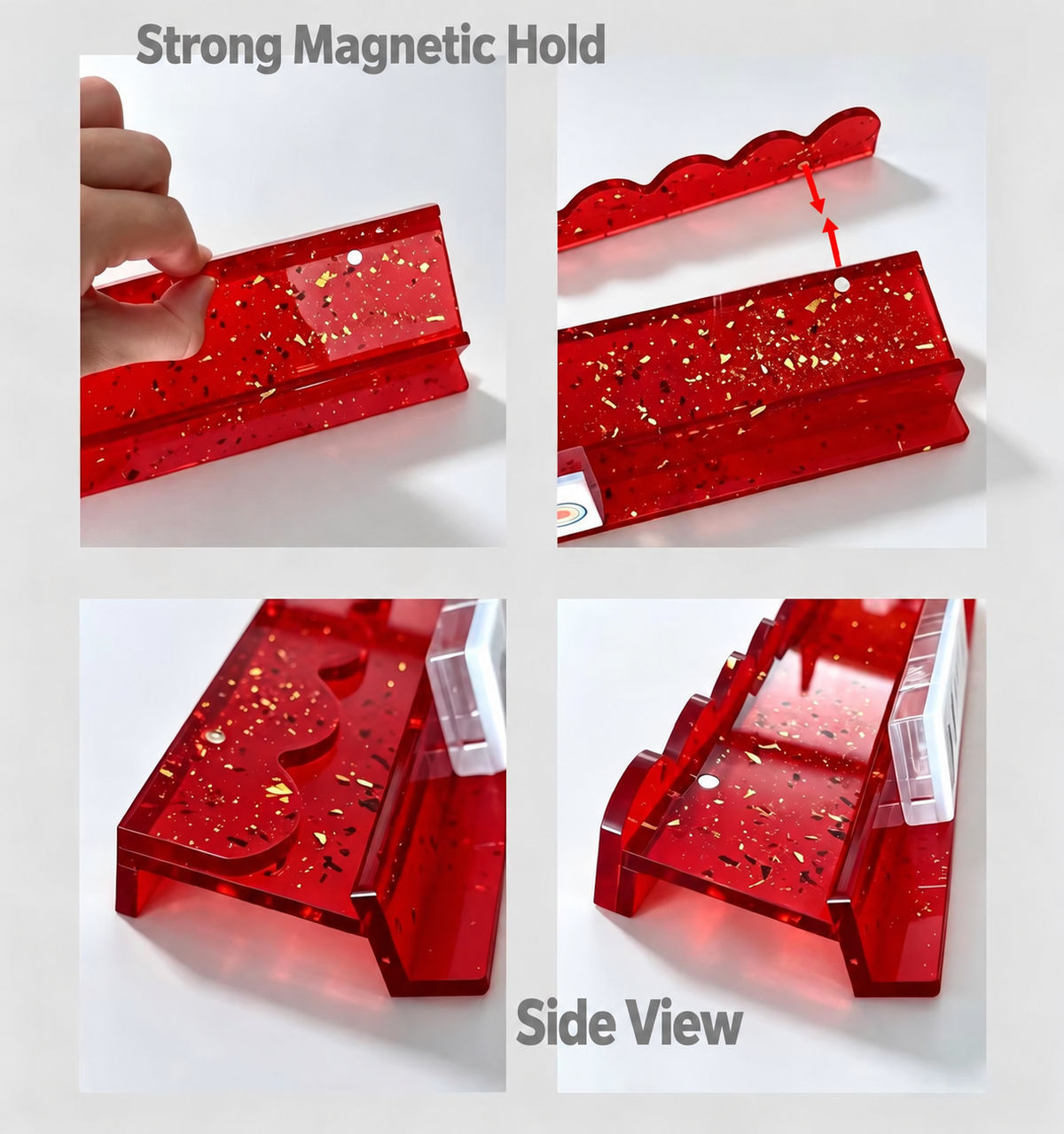
Racks and pushers: If you use racks with pushers, position clarity matters: each player's rack should display tiles identically so no one gains visual advantage.
Mat with position guides: A quality mahjong mat with printed East/South/West/North labels removes seating confusion and accelerates new-player learning.

FAQ
Can I win from any position, or does East always win?
Any player can win any hand. East earns double points, but East also plays first and faces coordinated defense. New players win from North (last position) more often because they see three rows of discards and make informed choices.
If a hand on the card says "E only," can I play it when I'm South?
No. Wind-specific hands apply only to that wind. If you're South and the card shows "E only," that hand is locked until East's turn or a rotation change. Always verify wind legality before committing to a hand.
Do I rotate positions every hand or stay in one all game?
Standard rotation happens after each hand: East passes right (South → West → North → East). Most casual groups rotate this way so everyone gets dealer advantage equally. Verify your group's rule before game start; some venues use different rules.
Why do experienced players play differently from different seats?
Position affects hand legality, scoring, turn order, and risk. East must move faster to justify double payout. North plays last and sees three discard rows, so North can build greedier hands. South and West must read ahead since fewer discards have been played.
How do I learn position strategy without annoying my regular players?
Ask a friend to teach you before official games. Review the card during other players' turns and pre-select hands by wind. Play your first few games as observer-only, noting how experienced players choose hands. Practice reading the card at home with a printed copy and pencil, circling position-specific patterns.
Does the mat help with position clarity?
Yes. A printed mat with wind labels eliminates confusion about where East sits and whose discard is whose. New players especially benefit because the visual reference is always there. ✨ Find your Mahstead set — free US shipping →


View More
View More
View More
