
American Mahjong Reading Discards: What Tiles Tell You
Last updated: Nov 23, 2026
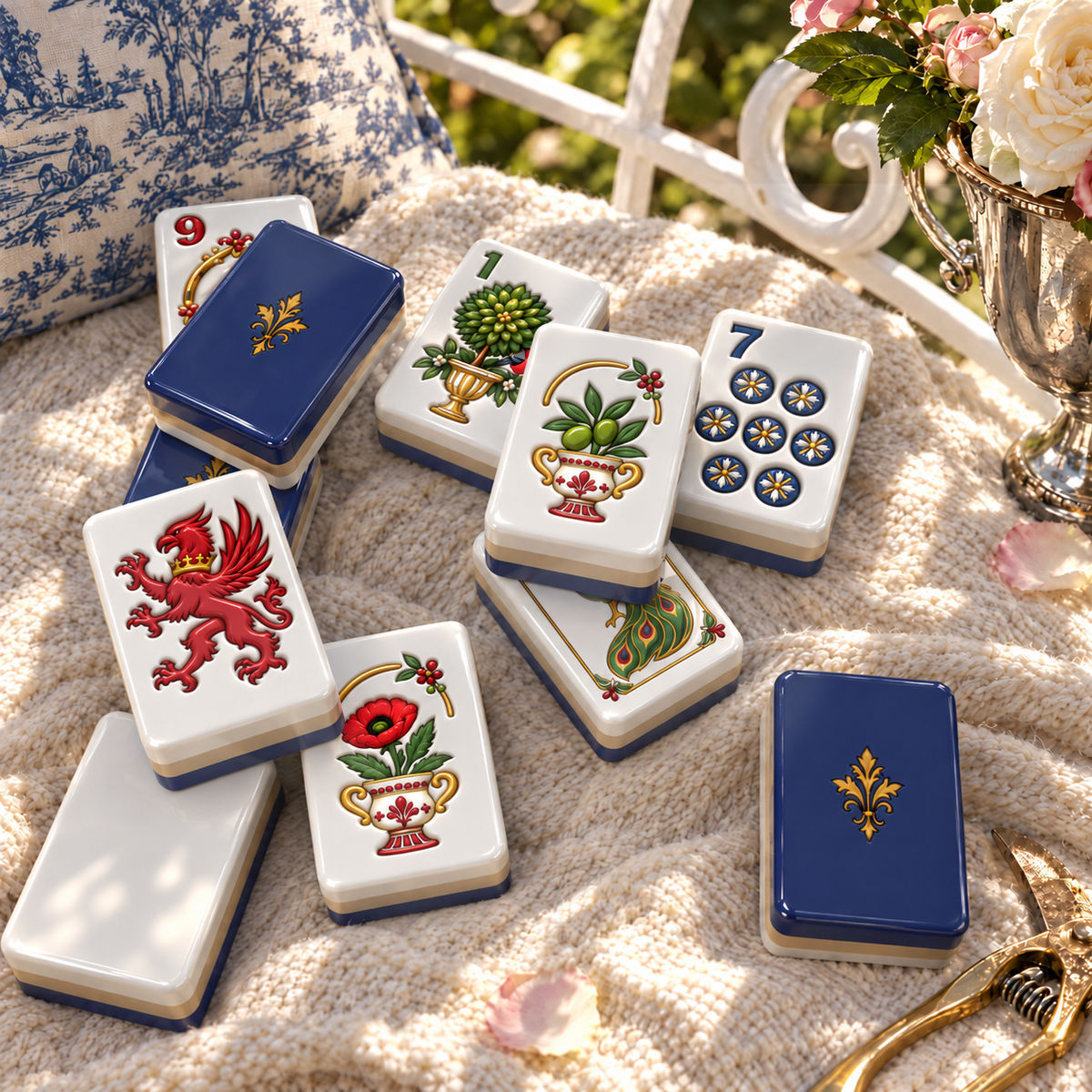
Reading discards in American mahjong means tracking which tiles have been played, who threw them, and what that reveals about their hand and yours. When you discard, you immediately telegraph information: a 7 Crak tells the table you don't need it, so other players adjust their waits. You read the discard pile constantly during play—both the current discard row (tiles just thrown) and the dead wall (tiles no one called). This isn't guesswork: the National Mah Jongg League card limits which hands are legal, so if you see three 5 Dots discarded and one player has exposed a pung of 5 Dots, you know exactly where the fourth one is. Smart discard reading prevents costly errors: if three players have discarded Winds but one hasn't, and that player exposes a pung, you now avoid throwing any Wind they might be waiting for. Most players learn this through weekly games, watching the discard row, and asking what tiles were thrown and why after hands close. A 160-tile set with clear tile markings makes learning faster because you can see exactly which numbers and suits are in play. 🀄 Shop best-selling mahjong sets →
What does the discard row actually tell you?
The discard row is your primary intel source. Every tile there is public: anyone can study it between turns. If you see three 1 Bams thrown, the fourth is either in someone's hand, in the wall, or someone exposed a pung/kong. When a player throws a tile in a specific position (centered, to the left, slightly forward), some groups use that placement to signal confidence or weakness—though this is informal and varies by table. The discard row also shows sequence: if early in the game one player throws three Dragons and stops, they likely chose a different hand. If another player throws three 9 Bams, you know they abandoned that suit. The dead wall (tiles nobody called) accumulates opposite the live row; tiles there remain safe for the rest of the hand unless someone draws them from the wall. After a hand ends, the entire discard row is removed and play resets, so memory matters. Most of us keep a mental snapshot as we study our rack between turns. Pro tip: if two tiles of the same number/suit are showing in the row early, and one player keeps hesitating before discarding, they likely hold the third or fourth.

How do you spot when someone is waiting?
A player is waiting (one tile away from winning) when they stop discarding dangerous tiles and throw safer ones. You'll notice them discarding duplicates of suits already showing, or off-suit honors they don't need. If a player has exposed a pung of 6 Dots and a pung of East Winds, and suddenly starts throwing middle Craks, they're not waiting for middle Craks—they're waiting for a specific tile to complete their hand on the card. The card constrains hands severely: if you memorize the current year's legal patterns, you can deduce what they're waiting for. Watch for reluctant discards: a tile held for several turns then thrown means it's low-priority. When a player draws, pauses, and discards immediately without touching their rack, they drew something safe. When they draw and rearrange their rack heavily before discarding, they drew something close to their hand—either dangerous to them or a key tile they're now holding. You cannot see other racks, so you infer from timing and discard tempo. A player who discards the same suit in descending or ascending order (9, 8, 7, 6) is often cleaning out a suit they don't need. If they switch suits abruptly, they've either drawn into a new hand or are fishing defensively.
What makes a tile "safe" vs. "dangerous" to throw?
A tile is safe if it's already been thrown or exposed publicly—fewer copies remain in play. If three 4 Dots are showing and you hold the fourth, throwing your 4 Dot is mostly safe because no one is chasing it. A dangerous tile is one no one has thrown yet, or one that completes common hand patterns. Early in the game, Winds and Dragons are moderately safe because players are still forming suit hands. As the game progresses and more suit tiles appear in the row, orphan Winds and Dragons become very safe because players have committed to other patterns. The riskiest tiles are numbers (1–9) in the first few turns because almost every hand on the card uses them. Specifically, middle numbers (4, 5, 6) are riskier than edge numbers (1, 2, 8, 9) early on because they fit more hands. Flowers and jokers never appear in the discard row during play—only as draws or exposures—so they tell you little. A tile that three players have thrown is exponentially safer than one only one player has thrown, because it suggests no one currently waiting needs it. Watch for symmetry: if you see 2 Bam and 8 Bam both discarded, a 5 Bam (the middle) is high-risk because hands often use symmetric ranges. Never throw the highest or lowest remaining honor of its type if only one is showing; someone may be waiting on it.
How does discard reading differ in Chinese vs. Hong Kong mahjong?
Chinese (Cantonese) mahjong and Hong Kong variants play with 144 tiles (no flowers, no jokers, only three Winds on the board) and allow chows (sequences like 4-5-6), which American mahjong forbids. This changes discard strategy fundamentally: in Chinese mahjong, a player throwing 3, 4, and 5 of the same suit signals they don't need sequences in that suit—but discards don't reveal as much because hands are more fluid. Hong Kong mahjong uses all 34 tile types with chows, kongs, and pung, and the discard row is more telling because eyes are rarer and sequences lock up more tiles. In Riichi (Japanese) mahjong, discard order is everything—players discard from a fixed hand position in order, creating an almost musical pattern, and reading that sequence reveals tremendous information about draws and hand transitions. American mahjong is unique: because jokers are allowed in melds and the card is fixed, discard reading is less about predicting hand growth (since hands don't evolve—they're locked to the card from the start) and more about elimination: figuring out which legal hand your opponent chose and what their last tile is. This makes American discard reading feel quieter but sharper. How to play American mahjong emphasizes the card discipline; in contrast, Chinese and Riichi players develop hands dynamically, so their discard reading is detective work in real-time hand formation.

What mistakes do beginners make when reading discards?
The top mistake is ignoring the discard row during turns that don't involve you. Between your turns, while another player draws and discards, many beginners look at their own rack. The moment they play again, they've forgotten which tiles left the game. Keep eyes on the row even when you're not acting. The #2 error is assuming a discard means safety. Just because someone threw a 7 Crak doesn't mean they have no use for another one—they may need two, have already exposed one pung, or are saving their copies for later. One discard ≠ full information. The #3 trap is throwing the same tile as a player who just went out. Players often assume, "She didn't need a 3 Dot because she threw it and then won." In fact, she may have drawn a different tile that completed her hand. Never mirror a discard immediately after someone wins; they may have needed that tile originally but drew something better. The #4 mistake is not tracking who threw what. If you remember "a 9 Bam was discarded" but forget it was thrown by the player on your left (who went out last hand), you miss context. Position and player history matter. The #5 blunder is panicking when a tile you need hasn't appeared. Many tiles never surface during a hand. Just because you haven't seen a 2 Crak doesn't mean your opponent has it—it may be buried in the wall or in someone's unexposed hand. Don't throw adjacent "safe" tiles in frustration; trust the discard logic. Finally, beginners often discard too defensively after seeing one player expose a hand. Overprotecting allows the waiting player to draw and build pressure; sometimes offense is better defense.
Discard Signal | What It Suggests | Your Response |
Same number, multiple suits (7 Bam, 7 Crak, 7 Dot) | Player cleaning out a number they don't need | That number is lower-risk for you |
Consecutive numbers in one suit (6, 7, 8, 9) | Abandoning that suit section | Suit is mostly safe; watch for odd numbers in it |
Wind or Dragon after many suits | Player committed to suit hands | Honor is safe; suit hands dominate that player's pattern |
Hesitant pause, then discard | Tile was held many turns; player reconsidered | Tile is probably low-value to them; may be safe |
Rapid discard without pause | Tile was clearly unwanted; draw triggered immediate action | Tile wasn't relevant; no intel on hand shape |
First three tiles are high numbers (7-9) | Hand doesn't use them; player building low-number hands | Avoid high numbers early; they're focused elsewhere |
Exposing a Kong immediately after discard | Player had four of that tile; needed to break a hand | Tile type is now dead; three left in play (or fewer if another exposed) |
🎁 See our most-loved mahjong sets & accessories →
How do you use discard patterns to adjust your own hand?
The discard row tells you whether your hand is still viable. If you're building a hand that needs three 5 Craks and two are already showing in the row, you're waiting for one of the two remaining—but another player may be waiting for it too. At that point, your odds drop. Many players at this moment switch to a backup hand on the card. Before the hand starts, study the card and have two or three legal hands in mind that use different tiles. If during play your primary hand becomes blocked by the discard row, pivot to a backup without losing tempo. Advanced players also use the discard row to confirm they're building the right hand: if the row shows many low Bams and Dots but few high Craks, and you're building a high-Crak hand, you're likely alone in that pattern—good odds. Conversely, if three players have discarded high Craks, your high-Crak hand is crowded; bail to a low-number hand instead. One pro habit: after you expose a pung or kong, study the discard row for duplicates of your exposed tiles. If two 3 Dots are showing and you've exposed three 3 Dots, the fourth is in someone's hand or the wall. Now you know the fourth 3 Dot is dangerous—don't throw any tile that might tempt someone waiting for it to draw from the wall. Discard reading isn't predictive; it's eliminative. You're not guessing your opponent's hand; you're ruling out what they don't have based on what's been played.
✨ Find your Mahstead set — free US shipping →
What to check before you buy
If you're hosting weekly games and teaching newcomers to read discards, clarity matters. Ensure your tiles have large, legible numerals and clear suit symbols (Bam bird, Crak line, Dot circle). Worn tiles or faint printing make it harder for beginners to track the row. Look for sets where the tile layout keeps jokers and blanks visually distinct from playing tiles so no one accidentally calls a blank. A mahjong mat with a discard row clearly marked helps new players understand the row's role and keeps tiles organized during play. If you're serious about discard reading, write down hands after they close—jot which tiles were played and which hand won. Over weeks, patterns emerge and your instinct sharpens. Many groups keep a notebook handy during games specifically for this.

FAQ
Why does a player immediately discard a tile they just drew?
They drew a tile irrelevant to their hand—either a duplicate of something already exposed, or a tile for a hand pattern they abandoned. Fast discards are low-information; watch slower ones.
If I see three of a tile type discarded, is the fourth always safe to throw?
Usually, but not always. Someone may have all four and exposed one; check the exposure wall. Or they're holding the fourth in hand. One discard rule: never assume; always cross-reference the wall.
Can I use the discard row to figure out what hand an opponent is building?
Partially. You can rule out hands they're not building (because they've discarded key tiles). But until they expose or win, their exact hand stays hidden—focus on elimination, not guessing.
What's the most dangerous tile to throw if nothing has been discarded yet?
Middle numbers (4, 5, 6) in any suit, because they're required in nearly every hand on the card. Edges (1, 2, 8, 9) and honors are safer early.
Do I have to remember every discard from the entire hand?
No, but develop the habit of checking the current row (last 4–6 discards) before you throw. Full-hand memory comes with time and helps, but row awareness is essential from game one.
How does the discard row change if someone calls a tile (Kong)?
They expose four of that tile type, breaking their hand. From that moment, three of that type are effectively removed from play (buried in exposures); the fourth may be in the wall or another hand.


View More
View More
View More
