
American Mahjong Charleston Strategy: Pass Smart, Win More
Last updated: Nov 23, 2026
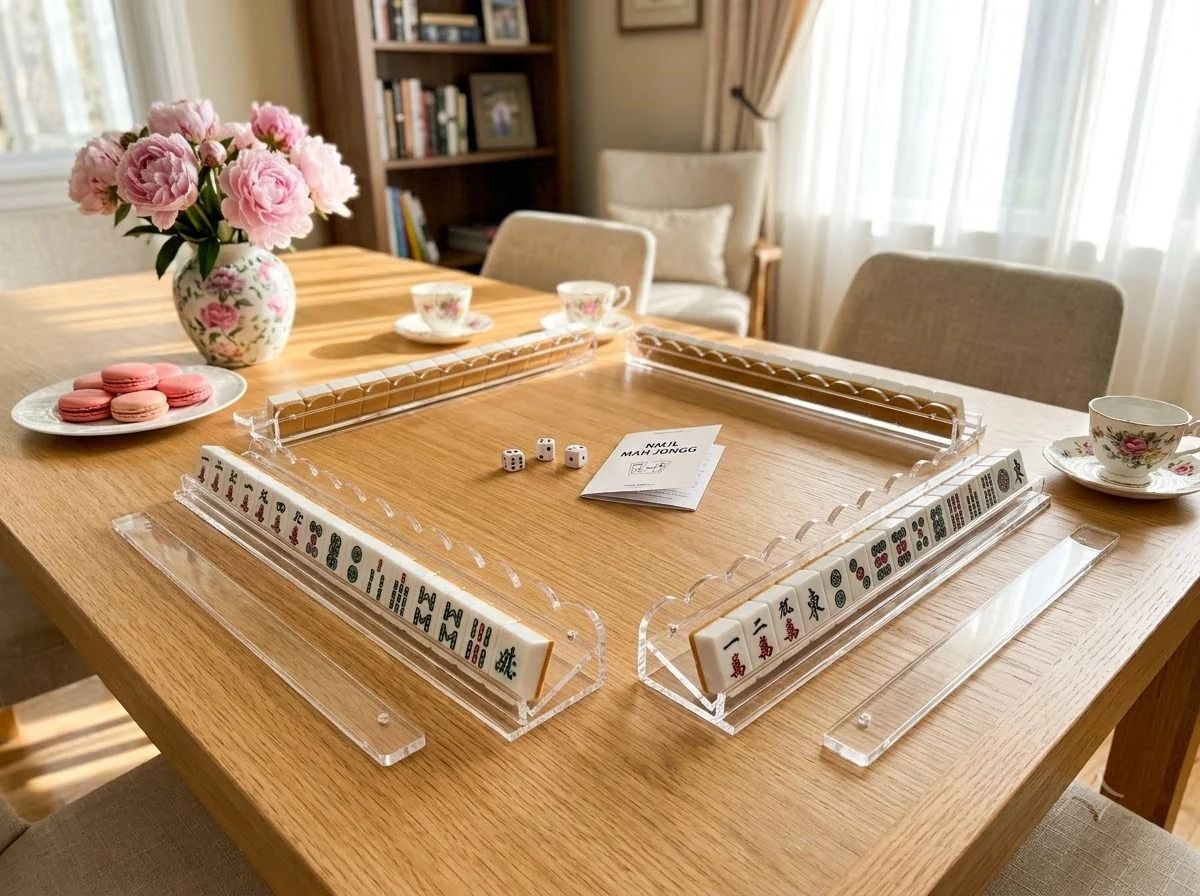
The Charleston is the mandatory three-round tile-passing ritual in American mahjong, played before the game begins. Each of the four players passes 14 tiles right, then left, then across the table in strict sequence—no passing is optional. The goal is to transform your random 13 starting tiles into the foundation of a winning hand by observing what others are discarding, reading the patterns, and passing tiles that either support your strongest potential hands or block opponents from obvious power suits. Most players underestimate the Charleston, treating it as a speed drill rather than a decision zone; in reality, your pass strategy—what you give away and what you keep—determines your hand's ceiling before the wall ever breaks.
🀄 Shop best-selling mahjong sets →
Why does the Charleston matter if I haven't drawn from the wall yet?
The Charleston distributes 56 tiles (14 × 4) to every player before the game proper starts. Since you begin with 13 random tiles, the three passes mean you'll see 28 tiles from other hands—nearly 20% of the playable deck. That exposure is power: you learn which suits and numbers your neighbors love, which tiles are already flowing toward players who don't need them, and whether the table is chasing dragons or honor tiles this round. Before the wall even breaks, you've gathered intelligence that shapes your entire opening strategy.
What's the difference between passing right, left, and across?
First pass (right): You pass 14 tiles to the player on your right. Discard your weakest tiles—isolated pairs, singletons in suits you can't support, and any honors that don't anchor a pung or quint. Watch what comes back: if you receive mostly Bams, someone left of you is flushing Bams; if you get a flood of honor tiles, that's a clue about suit concentration on the table.
Second pass (left): You pass your worst 14 remaining tiles to the left. By now, your hand is half-replaced. If you've picked up strong sequences or pairs in one or two suits, protect them—pass tiles from other suits. If you received chaos from the first pass, this is your moment to correct. Pass away the suit that feels worst and see if the second return gives you focus.
Third pass (across): You pass 14 tiles across the table. This is sabotage territory. If the player across from you just received a glut of Craks, pass them more Craks—clog their best suit. If they're clearly building Dragons, dry-dock them with extra honors or a different suit. The across pass is your last defensive move.
Each return gives you new tiles immediately; you must decide your pass within seconds. Many games impose a soft 30-second timer per pass to keep momentum. Learn the full rules and sequence in our Charleston explainer.
How do I read the table during the passes?
Watch three things:
Suit clustering: If you see Bams and Craks returning to you but almost no Dots, someone is holding Dots hard—either to block or because they're building there. Respect that signal.
Honor density: Dragons and winds in your return hand suggest the left side of the table is light on honors. Conversely, a flood of honors means your neighbors are flushing them, possibly because they're chasing a hand with few or no honors.
Parity: Do you see balanced numbers across each suit (mixed 1s, 5s, 8s) or are specific numbers clustering? If all your 7s return as a block, that number is "hot"—others want it, and it may not be there when you need it.
Real example: First pass, you get back three 5 Craks and two Red Dragons. Second pass, you receive a White "Soap" and another 5 Crak. Pattern: the table is thick on Craks, and Dragons are loose. You should probably not commit to a Dragon pung; instead, chase Craks or pivot to Bams. If you see one more 5 Crak in the final pass, you know a quint of 5 Craks is within reach.

What's the biggest Charleston mistake beginners make?
Passing based on what you want instead of what the table is telling you. Beginner logic: "I have one 1 Bam and no other Bams, so I'll pass the 1 Bam to make room." Professional logic: "I have one 1 Bam and no other Bams, and I'm not getting Bams back, so someone else wants them—I should pass away the suit I do see, and save the Bam as a potential pung anchor."
Second mistake: passing identical tiles. If you have three 3 Dots, never pass all three in the same pass. Pass one or two, hold one. If none return, you lost the pung; if at least one comes back, you've started rebuilding. Splitting reduces regret.
Third mistake: ignoring the across pass as a tool. Players who treat across as "whatever's left" miss the chance to disrupt opponents' obvious builds. If you can tell someone is chasing Winds, send them a few Winds—they'll dilute the suit with non-matching tiles and waste their hand-building effort.
Pass | Your Goal | What to Watch For | Common Error |
Right | Discard weakest; gather intel | Which suits return; honor density | Passing duplicate pairs |
Left | Refine based on right return; protect emerging suits | Suit clustering; number patterns | Panicking and over-passing |
Across | Sabotage opponent's obvious build | Their likely suit; your scarcity | Treating it as disposal only |
How do I balance offense and defense during the Charleston?
Offense is building your hand; defense is clogging the table. Early in the passes (first and half of second), you're mostly offense—discard your worst tiles and hope for strength. By the final pass, split your effort: if your hand is solid, go defensive and pass to disrupt. If your hand is still scattered, go offense and pass away the suit that's weakest for you, in hopes of a lucky third return.
Real scenario: After two passes, you have two 7 Bams, two 8 Bams, three Red Dragons, and scattered honors. You have potential in Bams and Dragons. The player across from you has been passing lots of Winds and no Bams—obvious Dragon chase. In the across pass, send them two or three Winds to bloat their honors and two Bams to make Bams look unfinished. You're buying time for yourself and forcing them to pivot or waste their opening draw.
🎁 See our most-loved mahjong sets & accessories →
When should you ask for a Charleston redo?
American mahjong rules allow a "no-take" or Charleston restart in specific cases: if a tile is exposed or dropped before the across pass completes, if a player passes the wrong number of tiles, or if someone doesn't pass at all. Once the dealer draws the 14th tile and knocks on the table to signal the start of play, the Charleston is locked. A few friendly tables allow one redo per game if everyone agrees no one has acted on their observation yet; check your house rules first.
The lesson for strategy: the Charleston ends suddenly. By the third pass, make your best decision and commit. Don't leave a strong tile in your hand hoping for something better in the final seconds; you won't get a do-over.
Decision Framework: Pass or Keep?
Ask yourself this four-question checklist during each pass:
Is this tile part of a potential pung or quint? (Keep it; it's rare to have matching triples or quints early.)
Does the table keep returning this suit to me? (Keep it; the table is flushing it, so you'll see more.)
Does this tile anchor a hand on the current NMJL card? (Keep potential anchors; discard support tiles.)
Have I seen this number or honor at least twice in returns? (Keep it; duplicates mean quints or pungs are possible.)
If you answer no to all four, pass it.
What to Check Before You Play Your First Charleston
Know the exact pass sequence: Right (to your right-hand neighbor), left (to your left), across (straight across). Writing these on a note card helps until it's automatic.
Set a timer: 30 seconds per pass keeps the game flowing and forces clean decisions—no overthinking.
Count your passes: Beginners sometimes pass 13 or 15 tiles by accident. Count aloud: "One, two, three…fourteen." Hand over the pile.
Observe the table silently: Don't announce what suits you're seeing or what you plan to build. Let your pass do the talking.
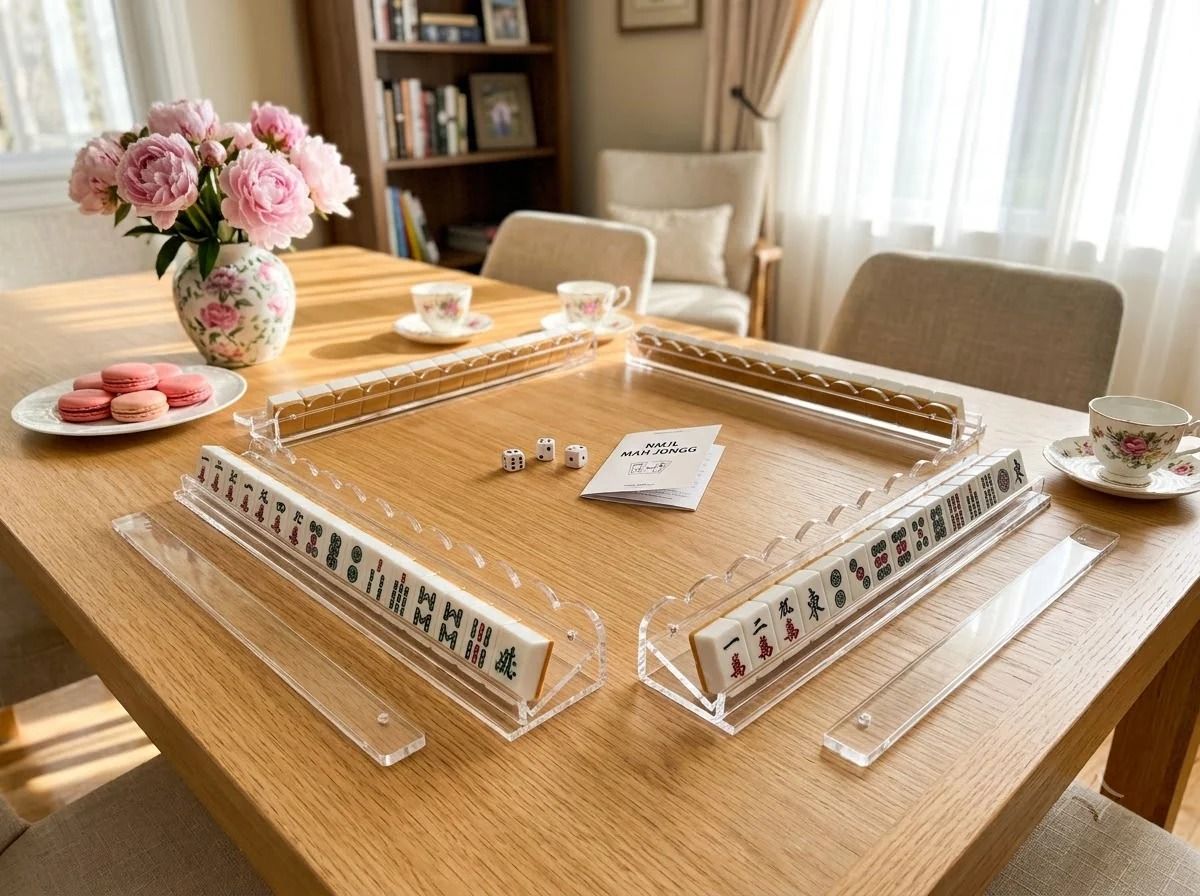
Keep a physical mat or rack: If tiles are loose on the table, they slip and get miscounted. A mat with clear sections or a rack with pushers keeps your hand tidy and your passes honest.
✨ Find your Mahstead set — free US shipping →
The Charleston is where seasoned players separate from the pack. A brilliant draw from the wall can't fix a careless Charleston, but a thoughtful pass can rescue a mediocre starting hand. Watch the table, pass with intention, and you'll step into the game with information and focus. The rest—reading the card, calling tiles, scoring—flows from that foundation.

FAQ
Can I refuse to pass in the Charleston?
No. The Charleston is mandatory in American mahjong. Every player must pass exactly 14 tiles in each of the three rounds. If you try to skip or under-pass, the game stops and the passes restart.
What if I accidentally pass the wrong tile?
If you've already passed the pile to the next player, it stays—no undo. If you catch it before the pile leaves your hand, you can swap it with another tile. Once the across pass completes, no changes are allowed.
Should I pass high tiles (like 8s and 9s) or low tiles (like 1s and 2s)?
Pass based on what the table is returning, not on the tile rank. High and low tiles are equally valuable; only their suit and their presence in your other tiles matter. A singleton 8 Bam with no other Bams should go; an 8 Bam that pairs with another 8 Bam should stay.
Can I pass jokers during the Charleston?
Jokers are never used during the Charleston. They stay in the wall until play begins and you draw them naturally or call them as wild tiles. You'll never see a joker in your hand until the game is live.
How do I know if someone is chasing a specific hand during the Charleston?
You don't know for certain, but you can infer from patterns. If a player passes mostly Bams and returns Craks, Dots, and honors, they likely want Bams. If they keep passing Dragons but return nothing, they're probably avoiding Dragons or have a hand with few honors. Use these clues to either support your own build or disrupt theirs in the across pass.
Is there a trick to passing quickly without mistakes?
Spread your hand and count aloud to 14 as you move tiles into a pile. Take one second to scan the table and decide if your pass should be offensive or defensive, then hand over the pile. Speed comes from routine, not panic.


View More
View More
View More
