
American Mahjong Books for Beginners: How to Choose
Last updated: Nov 23, 2026
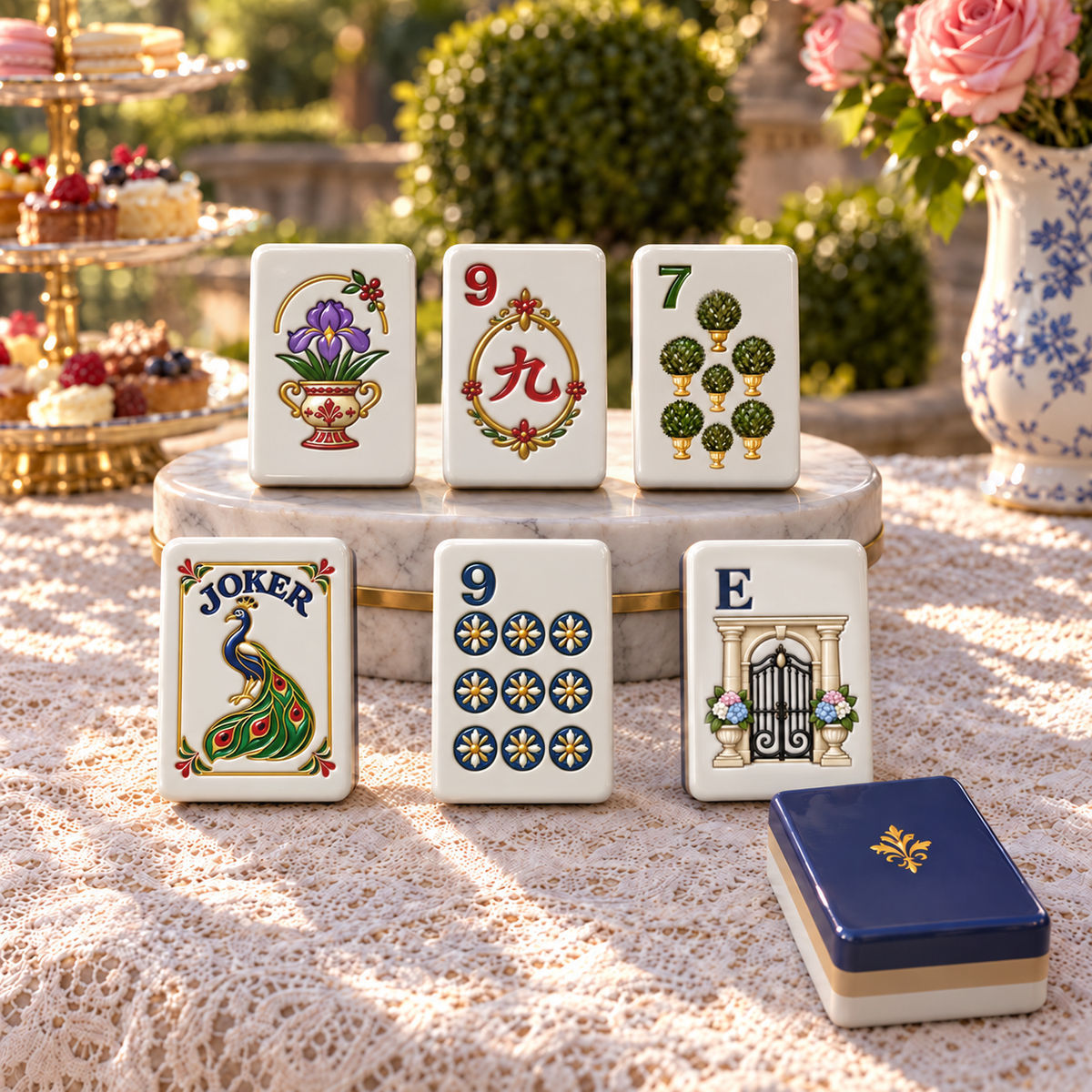
American mahjong books for beginners fall into two types: teaching the core rules (Charleston, jokers, how to form hands from the League card) and reference guides you keep at the table. The National Mah Jongg League publishes the official annual card, which shows all legal hand patterns and is essential—no book replaces it. Start with guides that explain the card's layout (suit rows, like/honors sections, pairs) and step through one complete hand before moving to strategy. Most players pair a beginner book with the current-year card (issued each spring), a 152-tile set from our best-selling collection, and a mat to keep tiles organized. Budget 2–4 weeks of practice games to internalize rules; books teach the framework, but your group's table rules and the card teach the rest.
What do American mahjong books actually teach—and what won't they cover?
American mahjong books explain the unique components: 152 tiles (no blanks), 8 jokers, the four winds, dragons (where White/Soap serves as zero and pairs with Dots), and the ban on sequences called "chows." They walk through the Charleston (the tile-passing ritual before every game), how jokers work as wild tiles only in exposed groups (never in a single or a pair), and how to match a hand pattern from the League card. Most books stop short of teaching table-specific scoring variants, local house rules, or strategies beyond basic hand recognition. The National Mah Jongg League card—updated every March for the next playing season—is the legal hand reference; no book can replace it because hands change yearly. A solid beginner book teaches rule foundation; the card and your table rules teach the game.

How does American mahjong structure differ from Chinese, Hong Kong, or online versions?
American mahjong uses a fixed hand list (the annual League card) rather than open-ended pattern building. Chinese mahjong relies on sequences (chows: 1-2-3 tiles in rank); American mahjong forbids chows entirely and allows only identical pungs (3 tiles), kongs (4), quints (5), and sextets (6). Hong Kong mahjong has different tile counts and tiles are drawn and discarded openly. Riichi/Japanese mahjong uses concealed melds and closed hand scoring. American books focus only on American rules; if you've played another version, expect a full reset. Beginner books that mix rule sets confuse learners—choose one labeled explicitly "American Mahjong" and ignore any that describe chows, melds as sequences, or hands as "combinations you make up."
Which beginner books are worth your time and which have gaps?
Books published by mahjong retailers, clubs, and the National Mah Jongg League itself tend to align with official rules. Self-published or very old books (pre-2000) often contain outdated terminology or missing coverage of joker rules and card reading. Look for books that dedicate sections to (1) the League card layout (how to locate hand patterns), (2) the Charleston step-by-step, (3) exposed vs. concealed tiles, and (4) one complete worked example of a winning hand. Avoid books that promise "mastery in 30 days" or focus mainly on strategy without covering rules—they assume prior knowledge. Check the publication date; if it's earlier than 2010 and doesn't mention the annual card refresh, it's outdated. The best beginner books spend 50% on rules and 50% on card navigation; the rest of the game you learn at the table.
🀄 Shop best-selling mahjong sets →

What's the fastest way to move from reading a book to playing your first complete game?
Read one beginner book, then play three teaching games with the book, the current League card, and a mat at your side. Game 1: focus on the Charleston and tile sorting. Game 2: form one exposed group (pung or kong) and recognize how jokers fill gaps. Game 3: complete a full hand and score it. After those three, you'll absorb more from live play than further reading. Pair book study with the pillar guide on how to play American mahjong for rule confirmation, then use a mahjong mat to organize your tiles cleanly—it speeds up recognition and lets others read your hand clearly. A set with racks and pushers removes friction: you're less likely to knock tiles over and more likely to stay focused on the rules.
Resource Type | Best For | When to Use | Why It Works |
Beginner book | Rule foundation, card layout | Before first game | Teaches system offline |
National League card | Hand lookup, official patterns | At every table, every game | Single source of truth |
This blog (pillar post) | Rule confirmation, joker/Charleston deep dives | Mid-game questions | Fills gaps books leave |
Live teaching table | Workflow and social flow | After book + card study | Rules come alive at table |
How do you choose between a general mahjong book and American-specific guides?
A general mahjong book often covers 3–5 variants (Chinese, American, Hong Kong, Japanese). American-specific books dive deep into one game and include the League card framework, Charleston detail, and American-only rules (joker placement, no chows, annual hand refresh). For a true beginner, American-specific is faster because you're not sorting through rules that don't apply. General books are useful only if you want comparative knowledge later. Start American-specific; switch to general only if you plan to travel and play multiple variants. If a book's cover or description doesn't explicitly state "American Mahjong," assume it covers mixed variants and will confuse you. The National Mah Jongg League website and affiliated clubs often recommend books and distribute the official card—use that as your vetting source.
🎁 See our most-loved mahjong sets & accessories →
What other resources should you gather alongside your book?
The current-year National Mah Jongg League card (issued March–April each spring) is non-negotiable. A high-quality 152-tile set ensures you're learning with the correct tile count and joker ratio. A mat organizes tiles so you can read hand patterns and the card simultaneously without confusion—critical for beginners. Racks with pushers let you sort tiles by suit and number without dropping them. A travel bag or case protects your set if you're moving between game venues or teaching friends. Optional but helpful: dice (two, for random start player), a notepad for scoring practice, and a second book kept in a bag at the table as a reference. These tools reduce mental load so you can focus on learning rules, not logistics.
What to check before you buy a book:
Publication date: 2010 or later preferred (reflects modern card and joker rules).
American-specific label: Title or cover must say "American Mahjong," not just "Mahjong."
Table of contents: Check for Charleston, joker placement, League card layout, scoring sections.
Review source: Ask your local mahjong club or check library copies first (no purchase risk).
Binding: Paperback or spiral-bound is easier to hold at a table than a hardcover.
✨ Find your Mahstead set — free US shipping →

FAQ
Can I learn American mahjong from YouTube or free online guides instead of a book?
Online guides vary wildly in accuracy and often mix rule sets. A book gives you one authoritative source to study offline, at your own pace, and refer back to without ads or conflicting comments. Pair a book with online clips (search "American Mahjong Charleston" or "how to read the League card") to see rules in motion, but the book is your anchor.
Do I need to memorize the League card before my first game?
No. You need to recognize the card's layout (where suit rows are, which patterns are in each row, how to scan for your tiles) and learn to locate one pattern per game. Memorization comes after 10–20 games. Beginners bring the card to every hand and look it up; that's normal.
Are there beginner books specifically for people who have played other mahjong versions?
Yes. Some books open with "if you know Chinese mahjong" comparisons. If you've played another variant, look for books with side-by-side rule tables or "what's different" sections. These cut learning time because you skip foundational tile-theory and focus on American-specific mechanics (no chows, joker placement, card-based hands).
Should I buy a book or rent it from a library?
Borrow first to check if the author's teaching style matches your learning pace. If it works, buy a copy—you'll mark it up, tab the card layout sections, and keep it at your game table as a reference. Most public libraries have at least one American mahjong book.
Which comes first: buying a set or reading a book?
Read the book first. After 1–2 chapters, you'll understand what tiles you need and why jokers matter, so you'll make a smarter set purchase. Then pair the set with a mat and racks. A book without a set is study; a set without a book is confusion.


View More
View More
View More
