
Acrylic Mahjong Tiles: How to Choose Engraved Sets
Last updated: Nov 23, 2026
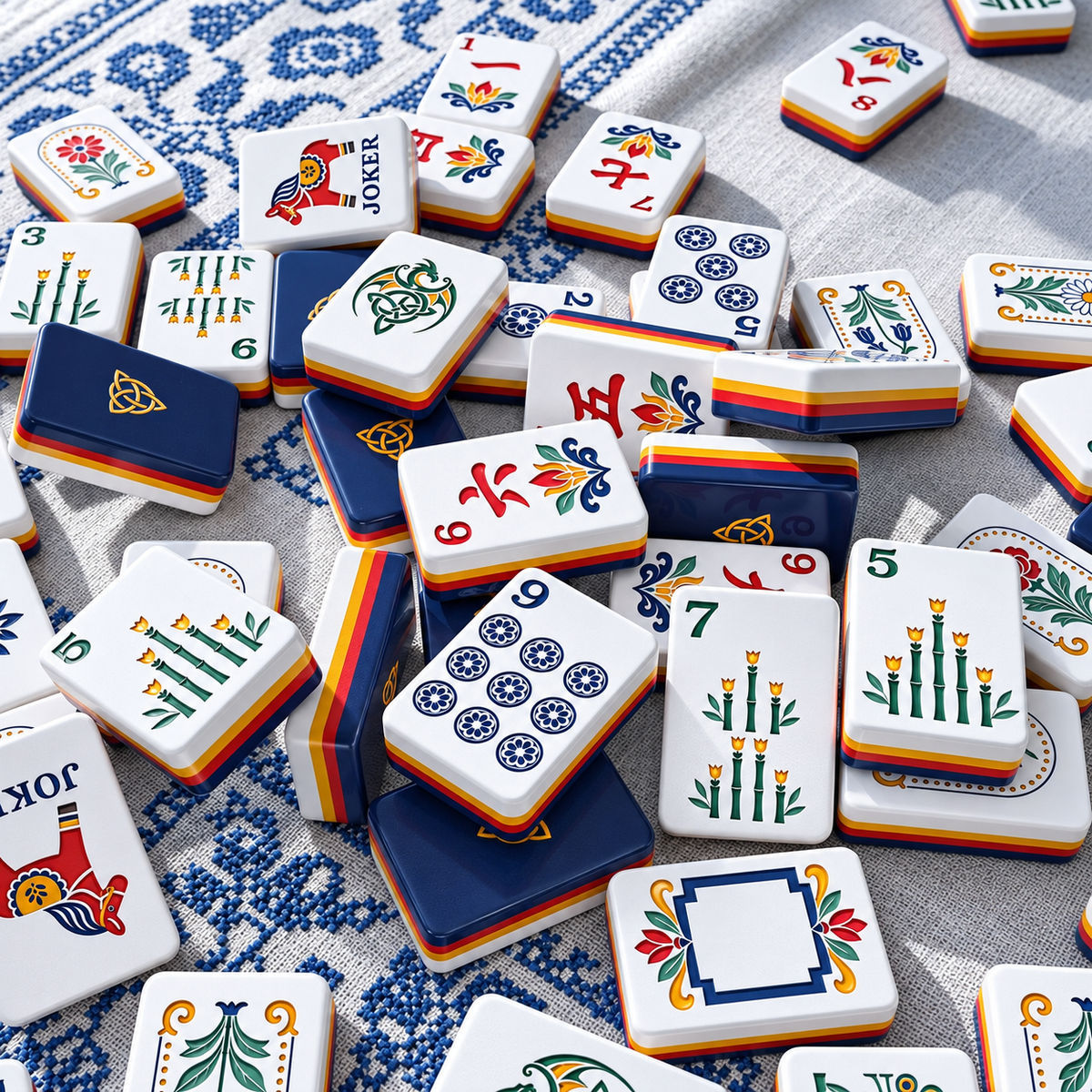
Acrylic mahjong tiles are polymer reproductions of traditional tiles, used in all 152-tile American sets. They're lighter than bone or bamboo, won't crack in shipping or storage, and accept engraving that lasts through years of play. Acrylic sets from Mahstead's collection come engraved with words, initials, logos, or artwork; the tiles are tumbled smooth, double-checked for face clarity, and packed with racks, pushers, and jokers ready to deal. Quality acrylic tiles feel substantial in hand—not flimsy—because they're molded thick enough to shuffle without flexing. At the table, acrylic clicks crisply and stacks cleanly, and because acrylic is nonporous, these sets outlast bamboo in humid climates. Avoid thin, hollow acrylic; Mahstead tiles are solid enough to handle a decade of weekly games.
Why choose acrylic over bone or bamboo tiles?
Acrylic wins on durability, cost, and customization. Bone tiles are beautiful but brittle—edges chip easily in transit or when dropped. Bamboo aged poorly under humidity and can warp or split. Acrylic neither chips nor warps, survives any climate, and acrylic faces absorb custom engraving (words, dates, family crests, poker symbols) that bone and bamboo cannot hold sharply. If you host weekly games, play in a humid climate, or want a set engraved with your family name or club logo, acrylic is the only practical choice today.
🀄 Shop best-selling mahjong sets →

What does engraving on acrylic tiles actually look like?
Engraving cuts or prints into the tile face—typically the number or wind symbol on each tile. Common designs include:
Personalized text: Your initials, name, or a year engraved on the back of the rack or on joker tiles.
Themed sets: Holiday patterns, family monograms, or club insignia on the tile faces or racks.
Logo + number: A business logo paired with the standard suit and number (e.g., your mahjong club name with Bam 3).
Decorative borders: Engraved frames around the standard tile faces for a polished look.
Because acrylic is a solid polymer, engraving laser-cuts or chemical-etches deep enough to stay visible after thousands of shuffles. Unlike painted decoration (which rubs off), engraving is permanent. The best engraved sets balance legibility—the original tile face must remain clear so you can call hands quickly—with custom detail that makes your set unmistakably yours. Our best-selling engraved sets show popular styles; each is factory-engraved before shipping, so no delays or errors.
How do acrylic tiles feel and sound at the table?
Acrylic tiles should be heavy enough to stack without wobbling but light enough to shuffle comfortably for 2–3 hours. A full 152-tile set plus rack in quality acrylic weighs roughly what you'd expect from a solid polymer—noticeably less than bone but denser than plastic toys. When shuffled, acrylic produces a crisp, distinctive click that experienced players recognize immediately; this sound is both practical (you hear tiles shifting, so no one mistakenly calls a hand while others shuffle) and satisfying, a small ritual that marks the start of play.
The tiles should stack evenly without tilting or splitting. Poor acrylic feels hollow or lightweight; it flexes when stacked, and edges chip easily. Mahstead tiles are cast thick enough to feel premium without being tiring to handle. If you're new to the game, the tile weight and click matter more than you'd think—they establish rhythm and pace, especially during the rapid tile-passing of the Charleston.
What comes with an acrylic set, and what to check before ordering?
Every Mahstead acrylic set includes 152 playing tiles (3 suits × 1–9, 16 winds, 12 dragons, 8 flowers, 8 jokers) plus racks with pushers, spare jokers, and a protective bag—ready to unbox and deal. Before you order, verify:
Feature | What to check | Why it matters |
Tile clarity | Can you read numbers and suits quickly under game lighting? | Fast calling saves 30 seconds per hand. Blurry engraving causes disputes. |
Joker count | Are 8 jokers included + spare jokers? | You need exactly 8 jokers in play; extras are insurance against loss or damage. |
Rack fit | Do racks hold 14 tiles without tiles tilting or drooping? | A drooping rack is distracting and slows play. |
Bag quality | Is the carrying case lockable or reinforced? | Loose tiles are a nightmare in transit. |
Engraving placement | Is custom text on the back of the rack or on joker tiles? | Front-engraved tiles may be harder to read if the text is large. |
Color consistency | Do all Bam tiles look identical? Do all Craks? | Mismatched colors cause illegal calls. |
Our mahjong tiles pillar shows photos of each design in play; you can see exactly how engraving reads under normal lighting.
🎁 See our most-loved mahjong sets & accessories →

How thick should acrylic tiles be, and what's the difference in durability?
Acrylic tile thickness typically ranges from 8 mm to 12 mm (top-quality sets); thinner tiles (under 8 mm) flex when shuffled, crease on the back, and chip at the edges. Thicker tiles are more expensive to cast but survive casual impacts, repeated shuffling, and decades of storage without clouding or cracking. If you play weekly or gift a set to someone who will cherish it, invest in tiles at least 9–10 mm thick. You can estimate thickness by weight—a 152-tile acrylic set should feel noticeably heavier than a plastic one but lighter than bone. Mahstead tiles meet professional tournament standards for thickness and durability; the exact millimeter spec is listed on each product page. Thin acrylic is a false economy: you'll replace it in 2–3 years.
Engraved acrylic vs. plain: which should you buy?
Choose engraved acrylic if:
You're gifting a set to mark a milestone (retirement, wedding, club founding).
Your family or club plays weekly and wants a set you'll recognize immediately.
You host tournaments and want a branded set.
You value a one-of-a-kind set over generic stock.
Choose plain acrylic if:
You're a casual player or just learning American mahjong.
You prefer to rotate between multiple sets.
Your budget is tighter (plain acrylic costs less than engraved).
You want to resell the set later without a dated or personal message.
Both plain and engraved acrylic play identically. The difference is sentimental and practical: an engraved set makes your game memorable and deters accidental loss at clubs. Many of our weekly players own one engraved set (for their home game) and one plain set (to bring to clubs or lend out).
✨ Find your Mahstead set — free US shipping →
What to check before you buy acrylic tiles
Verify tile count: Always 152 playing tiles + 8 jokers. Avoid sets marketed as 144 or 166; American mahjong requires exactly 152 tiles in play.
Read the engraving description: Confirm text placement (rack back vs. tile face) and confirm the font/size works for you.
Check shipping & packaging: Acrylic tiles ship safely as long as they're packed with bubble wrap and sturdy outer box. Mahstead includes free US shipping.
Inspect on arrival: Lay out a few tiles to confirm clarity, no cracks, and even stacking.
Test racks: Load all 14 tiles into each rack to ensure no tilt or looseness.
Count jokers: 8 in play + extras. Count twice; a missing joker halts the game.

FAQ
Can I use acrylic tiles for Hong Kong or Riichi mahjong, or only American?
Acrylic tiles are made for any mahjong variant—Hong Kong, Riichi, Taiwanese, or American. The tile count and symbols differ by variant, but the acrylic material works for all. American sets always use 152 tiles; confirm the set you're buying matches your variant.
Will acrylic tiles yellow or crack over time?
Quality acrylic is UV-stable and won't yellow with age if stored in a closet or bag away from direct sunlight. It won't crack unless dropped hard or exposed to extreme cold (below 0°F for extended periods). In normal home conditions, acrylic tiles last 10+ years unchanged.
How do I clean acrylic tiles without damaging the engraving?
Wipe tiles with a soft, lint-free cloth lightly dampened with room-temperature water. Never use hot water, bleach, or abrasive scrubbers; these can cloud acrylic or fade engraving. Pat dry immediately. For stubborn grime, add one drop of mild dish soap to the cloth.
Are engraved acrylic tiles more fragile than plain ones?
No. Engraving is a permanent cut or etch into the polymer; it does not weaken the tile. In fact, engraved tiles are identical in durability to plain acrylic of the same thickness and casting quality.
Can I order a custom engraving design, or only choose from templates?
Mahstead offers several pre-designed engraving options on the product pages. Availability of bespoke custom designs depends on minimum order quantities and lead time; see the product page or contact the team for your specific request.
What's the difference between acrylic tiles sold as a "160-tile set" and a "152-tile set"?
A 152-tile American mahjong set contains only the tiles needed for play. A 160-tile set includes the same 152 playing tiles plus 8 spare tiles (extra jokers and/or blanks) as insurance. You use only 152 tiles in any single game; spares are backups. Never add spares to the playing pile.


View More
View More
View More
