
7 Dot Mahjong Tile: Symbol Meaning & Game Role
Last updated: Nov 23, 2026
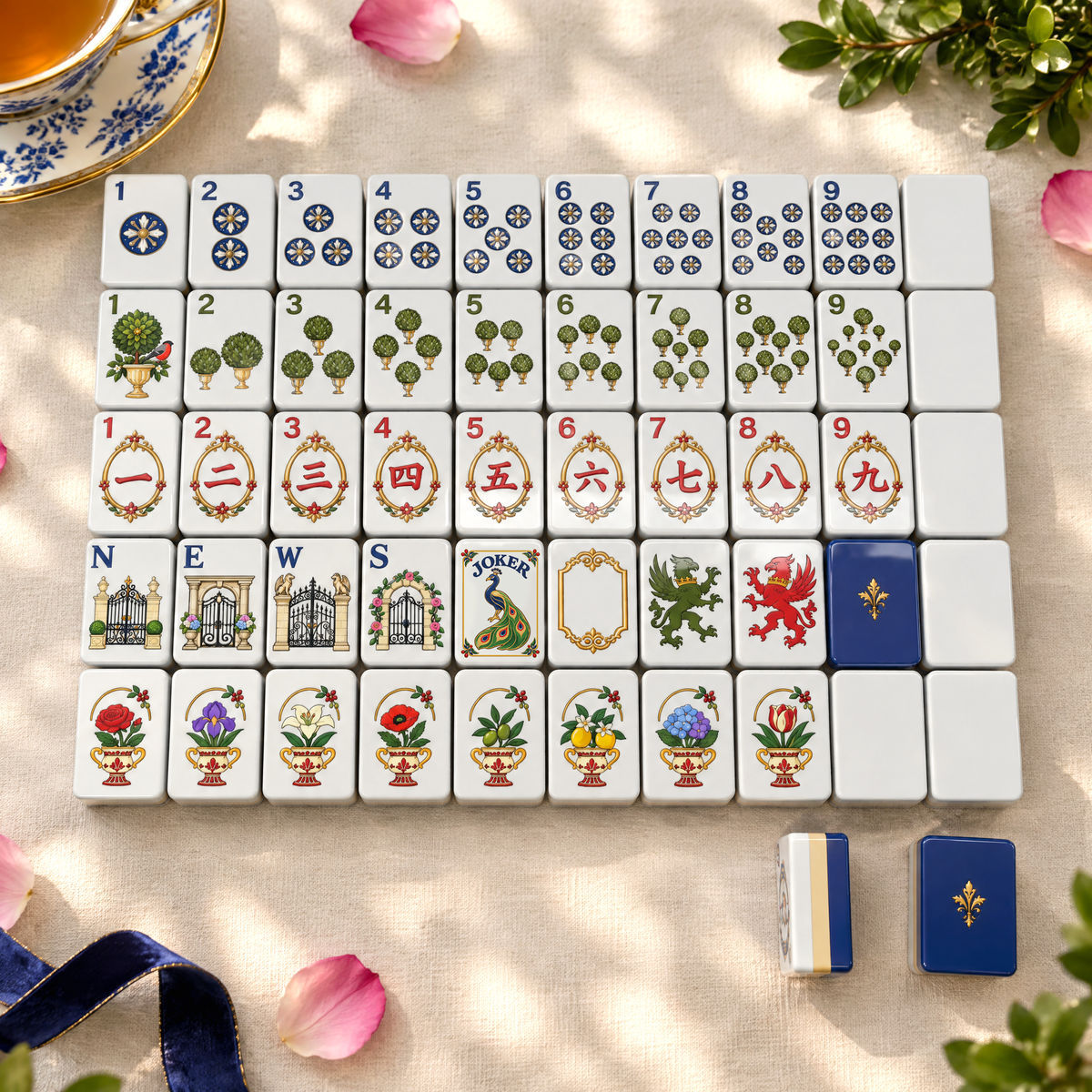
The 7 Dot (often shown as seven small circles arranged on the tile face) is a number tile in the Dot suit, one of three ranked suits in American mahjong. In a 152-tile set, you'll find exactly four identical 7 Dots, matching the four copies of every number 1–9 in each suit. The 7 Dot ranks mid-range and frequently appears in the National Mah Jongg League card hands—particularly in pung (three-tile) and kong (four-tile) melds across a wide variety of patterns. Unlike winds, dragons, and flowers, Dot tiles are generic numbers with no special powers or scoring bonuses; their value comes from completing the hand pattern you've claimed from the card. You'll recognize a 7 Dot by its simple symbol: seven spots arranged in a grid or circle, distinct from Bam and Crak symbols. Mahstead's best-selling mahjong sets use crisp acrylic tiles where every Dot tile—including the 7—is engraved for durability, so the symbol never fades across hundreds of games. 🀄 Shop best-selling mahjong sets →
What does the 7 Dot symbol actually look like?
The 7 Dot displays seven small circular pips or dots arranged across the tile face. Traditional designs place them in a pattern (often a 2–3–2 layout or scattered grid), making them instantly distinguishable from the 1–6 and 8–9 Dots. Acrylic tiles like Mahstead's use clean engraving so the dots remain sharp and legible under table light. Red or black coloring highlights the Dots suit against Bams (which show stick-like symbols) and Craks (which display character strokes or line patterns). The 7 Dot sits visually between the mid-range tiles, never as ornate as honor tiles (winds, dragons, flowers) but consistent in its simple numeric identity across all sets.

Where does the 7 Dot appear on the official mahjong card?
The National Mah Jongg League card—updated each spring—organizes hands into sections: Like Numbers, Consecutive, Quints, Pairs, and other patterns. The 7 Dot, as a mid-range number, appears across multiple sections because it bridges both low (1–4) and high (6–9) sequences and pairs well with adjacent numbers (6–8) in consecutive patterns. You won't see it listed individually by name on the card; instead, the card shows positional placeholders (e.g., "5-6-7-8 Dots") or block codes that mean "any consecutive run." Learning to read the card teaches you when the 7 Dot is required to complete a legal hand.
How many 7 Dots are in a standard mahjong set?
Every American mahjong set contains exactly four 7 Dots—one per player position. Since the Dot suit has nine numbers (1–9) and four copies of each, you have four 1 Dots, four 2 Dots, and so on through four 9 Dots, totaling 36 Dot tiles. With four players drawing and discarding tiles, the rule ensures no player runs out of any specific tile rank during a 14-tile hand. If you see more than four identical 7 Dots in a set, you're looking at spare tiles (bonus copies included in a 160-tile set) that stay in the bag and never enter play.
Why does the 7 Dot matter more than other number tiles?
The 7 Dot doesn't rank higher than other numbers—it matters equally because it completes hands just as often. However, mid-range tiles (5–7) appear in more hand patterns than edge tiles (1–2, 8–9), so strategic players track them carefully during discard. In 2 and 3 player games, the 7 Dot's frequency in legal patterns means it's discarded less often, making it a safer throw early in the game. Veterans avoid holding multiple 7 Dots unless they're building a specific hand; sitting with three 7 Dots and no immediate pattern is a liability.

How do you use the 7 Dot in your hand strategy?
Build a 7 Dot into a pung (three 7 Dots), kong (four 7 Dots), or as part of a consecutive run (e.g., 5-6-7 Dots). Once you've claimed a legal hand from the card, you expose the melds (pungs, kongs, quints) face-up on the mat; the 7 Dot tiles remain visible to all players. During the draw phase, if your hand requires one more 7 Dot to complete and you draw it from the wall or claim a discard, you announce "Mahjong" and win the round. Tracking which 7 Dots have been discarded or are on the table helps you judge whether your hand is reachable—a technique called "tile reading" that separates casual players from regular winners.
Scenario | Role of 7 Dot | Action |
Hand calls for 5-6-7 Dots | Part of consecutive run | Draw or claim discard to complete |
You have three 7 Dots face-up | Pung (exposed meld) | Already claimed; counts toward your hand |
Four 7 Dots on table | One kong (four-tile meld) | All copies accounted for; none left in wall |
Opponent discards 7 Dot | Potential winner draw | Call and declare "Mahjong" if it completes your hand |
Comparing number tiles: why 7 stands in the middle
Low-range Dots (1–3) and high-range Dots (7–9) serve different strategic roles. The 1 Dot (marked with a bird on most tiles) opens sequences easily; the 9 Dot closes them. The 7 Dot, sitting centrally, works in both capacities—it follows a 6 and precedes an 8, making it flexible across patterns. Mid-range tiles stay "live" longer in play because both low and high hands need them, so the 7 Dot is discarded cautiously by experienced players. When you're learning American mahjong, noticing which tiles your opponents hold onto reveals their strategy: holding a 7 Dot usually signals they're building a middle-range hand.
🎁 See our most-loved mahjong sets & accessories →
What to check before you buy a new set
Tile clarity. Inspect the engraving on sample Dots tiles; cheap sets print symbols that fade or blur. Mahstead's acrylic tiles use precision engraving, so the 7 Dot (and all symbols) remain crisp after hundreds of plays.
Consistency across suits. Verify that Dots, Bams, and Craks are equally legible. A set where Bams are bold but Dots are faint will slow your game and create disputes about tile identity.
Spare tiles included. A 160-tile set includes spares; confirm your set has enough extras so worn or lost tiles don't disrupt future games. Mahstead includes documented spare tiles in every set.
Storage fit. Ensure your bag or case accommodates not just the 152 playing tiles but also the mat, racks with pushers, and dice. Cramped storage degrades tile finish over time.
✨ Find your Mahstead set — free US shipping →

FAQ
Is the 7 Dot worth more points than other Dot tiles?
No. All number tiles (1–9 in each suit) carry zero intrinsic points; only winds, dragons, flowers, and hand patterns generate score. The 7 Dot's value depends entirely on the hand pattern you're playing—it's the combination, not the tile, that scores.
Can you use jokers to replace a 7 Dot?
Jokers substitute for any tile in American mahjong pungs (three-tile melds), kongs (four-tile), quints, or sextets—but never for single tiles or pairs. If your hand needs a 7 Dot as part of a pung, a joker can fill that spot on the table, though you still draw the missing tile if you win.
Why do new players confuse the 7 Dot with other mid-range tiles?
The 6, 7, and 8 Dots look similar at a glance, especially under poor lighting or on worn tiles. Always lay tiles in numerical order on your rack to avoid misreading. Mahstead sets' engraved contrast makes this confusion rare.
How do you hold a 7 Dot on your rack so opponents can't see it?
Your rack with pushers shields your hand from other players' view. Position tiles so the faces point toward you alone. Once you expose a 7 Dot in a pung or kong, all players see it for the rest of the round.
If I draw the last 7 Dot from the wall, can I still win the hand?
Yes, if that 7 Dot completes your hand and matches the legal pattern you've claimed from the card, you announce "Mahjong" immediately and win. The timing of the draw—whether it's the last tile or the first—doesn't affect validity, only whether it finishes your specific pattern.
Does the 7 Dot ever represent a wind or dragon tile in house rules?
In standard American mahjong, no. Winds and dragons are separate tile families with distinct symbols and roles. House rules sometimes allow creative substitutions, but the official National Mah Jongg League game treats the 7 Dot as a Dot tile only; mixing families breaks hand legality.


View More
View More
View More
