
7 Bam Tile in Chinese Mahjong: Why It Matters
Last updated: Nov 23, 2026
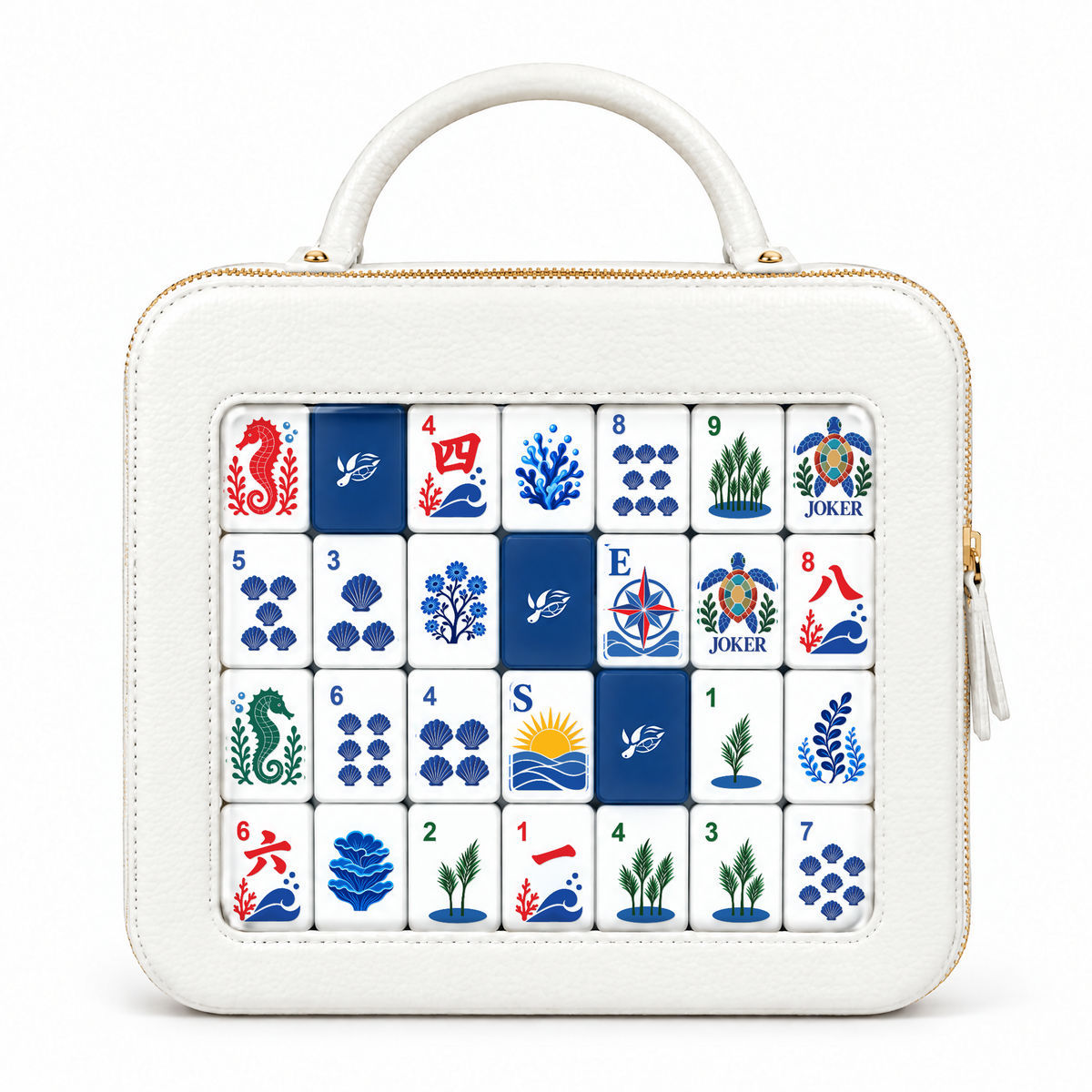
The 7 Bam is one of 36 Bam tiles (numbered 1–9, four copies each) in American mahjong, where the 1 Bam traditionally shows a bird illustration. In Chinese classical mahjong, the 7 Bam likewise belongs to the Bamboo suit and carries no special rank. Its value depends entirely on your game variant: in American mahjong, the 7 Bam forms groups (pungs, kongs, quints, sextets) like any numbered tile and earns points only as part of a completed hand listed on the current National Mah Jongg League card. In Chinese and Hong Kong mahjong, the 7 Bam can form sequences (1-2-3, 5-6-7, 7-8-9) and scores vary by ruleset. Riichi mahjong uses identical numbered tiles but applies terminal and honor scoring. The critical difference: American mahjong forbids sequences entirely—you may only call or expose identical-tile groups—while other variants build winning hands through 1–9 sequences. Mahstead's 160-tile American sets include four 7 Bams, ensuring four separate groups of 7 Bams can exist simultaneously during play.
What does "7 Bam" mean in American mahjong?
The 7 Bam is a single numbered tile in the Bam (Bamboo) suit, numbered 1–9, with four identical copies in every standard set. In American play, it cannot be used alone or as part of a sequence. You use it to form a pung (three identical tiles), kong (four identical), quint (five identical) or sextet (six identical)—only these combinations expose or call. Unlike Chinese or Hong Kong mahjong, American rules do not recognize sequences like 5-6-7 Bam as a winning unit.

How does the 7 Bam differ across mahjong variants?
American mahjong: The 7 Bam has no rank, bonus, or penalty. It counts only when grouped with other 7 Bams and matched to a hand on the current year's National Mah Jongg League card.
Chinese classical and Hong Kong mahjong: The 7 Bam is a standard bamboo numeral that freely forms sequences (called "chows"): 1-2-3, 5-6-7, 7-8-9, etc. A 5-6-7 combination is one valid winning unit. Scoring varies by house rules.
Riichi mahjong: The 7 Bam (called a "pinzu" or dot) follows strict sequence rules and terminal/honor scoring. The 1 and 9 of each suit are terminals; 7 is a normal numeral with no bonus.
Taiwanese mahjong: The 7 often participates in sequences and bonus scoring systems, depending on local or house rule variations.
The core difference: American mahjong forbids sequences. All other variants depend on them.
Can you use a 7 Bam with other numbers in American mahjong?
No. American mahjong requires identical-tile groups only. A 7 Bam cannot be called or exposed with a 5 Bam and 6 Bam to form a "sequence." Only identical tiles—three or more 7 Bams, or 7 Bams with jokers—create a valid group.
Jokers can substitute for any tile in a group. So a pung of two 7 Bams plus one joker counts as a valid pung of 7 Bams. But a 5-6-7 Bam combination, even if you fill it with jokers, is never a valid American mahjong group.
This rule applies to all numbered tiles and honors (winds, dragons). The National Mah Jongg League card lists only pung/kong/quint/sextet patterns—no sequences.
What is the bird symbol on some mahjong Bam tiles?
Traditionally, the 1 Bam displays a bird—usually a peacock, crane, or stylized feather design—to distinguish it visually from the blank or unmarked side. This dates to classical Chinese and Hong Kong tile art. In American sets, the 1 Bam bird serves the same purpose: instant recognition during fast play.
Other Bam tiles (2–9) show their number alongside bamboo stalks or dots. Some modern acrylic sets render the bird more abstractly; others use realistic or calligraphic styles. The bird is not a scoring feature—it's purely a visual aid.
Our best-selling engraved sets feature clear, durable numbering and symbols so you recognize every tile instantly, even in low light or across the mat.
How many 7 Bams are in a full mahjong set?
In an American standard 160-tile set (152 playing tiles plus spares), you get exactly four 7 Bams. No more, no fewer. This allows up to one pung of four 7 Bams (a kong) per game, since all four copies are in play simultaneously.
By contrast, a hand may include only one pung or kong of 7 Bams—a winning hand cannot repeat the same group (even with joker substitutes) in multiple melds. So while four 7 Bams exist in the set, a single winning hand uses at most four 7 Bams in one group.

Why does tile quality matter for recognizing the 7 Bam?
In fast-paced games, unclear tiles cause hesitation, misreads, and slowed play. A faded or poorly engraved 7 Bam may look like a 1 or 9 Bam under bad lighting. Acrylic tiles with sharp, recessed engraving and high-contrast paint (white or cream against dark resin) remain legible after hundreds of shuffles and years of humidity.
Check before you buy:
Engraving depth: The tile number and suit symbol should be visibly recessed, not flat-printed.
Paint fill: Numbers should contrast sharply with the tile color (light paint on dark tile, or vice versa).
Consistency: All tiles in the set should have identical font style and size.
Durability: Test a sample tile—does the paint flake when scratched? Acrylic with baked-on color resists wear far better than painted or stamped resin.
Mahstead's engraved American mahjong sets feature consistent, deep engraving and fade-resistant paint so every tile reads instantly across the table.
Variant | 7 Bam Role | Groups It Forms | Sequences Allowed? | Scoring Impact |
American | Pung/kong/quint/sextet only | 7-7-7, 7-7-7-7, joker combos | No | Hand-dependent (card list) |
Chinese | Sequences + pungs/kongs | 5-6-7, 7-8-9, 7-7-7 | Yes | Varies by house rules |
Hong Kong | Sequences + pungs/kongs | 5-6-7, 7-8-9, 7-7-7 | Yes | Varies by house rules |
Riichi | Sequences + melds | 5-6-7, 7-8-9, 7-7-7 | Yes | Terminal rank (no bonus) |
Taiwanese | Sequences + bonuses (house-dependent) | 5-6-7, 7-8-9, 7-7-7 | Yes | May carry bonus points |
🀄 Shop best-selling mahjong sets →
What to check before you buy a mahjong set
Tile count: Confirm you need 152 playing tiles (plus spares in 160-tile sets) for American mahjong. Some older or imported sets may have different tile counts or omit jokers.
Suit spelling: Verify the set uses "Bam," "Crak," and "Dot"—not "Bamboo," "Character," or other variants, which signal non-American rulesets.
Joker count: American play requires exactly 8 jokers in the 152-tile game set. Check the product description or ask before ordering.
Paint durability: Request photos of tiles under strong light. Recessed engraving outlasts surface printing by years.
Rack compatibility: If you own bamboo or wooden racks, confirm acrylic tile thickness matches. Mahstead racks are designed for standard acrylic tiles.
🎁 See our most-loved mahjong sets & accessories →
When do you draw or play the 7 Bam?
You draw or play the 7 Bam like any numbered tile during American mahjong:
Before Charleston: The 7 Bam sits in your hand and is passed to the left, across, right, or returned—depending on Charleston positions.
After Charleston: You draw tiles from the wall to fill your 13-tile hand.
During play: If you need a 7 Bam to complete a pung or match a hand, you call it from the discard or draw it from the wall (if it's your turn).
On discard: If the 7 Bam doesn't fit your hand pattern, you throw it to the center and other players may call it for their pung.
The 7 Bam never moves a hand from "one tile short" to "winning" on its own—it must satisfy a complete hand pattern listed on the current National Mah Jongg League card.
Where can I learn more about mahjong tile roles?
Start with our pillar guide on what's in an American mahjong set, which covers every tile type and how they combine. For gameplay rules, how to play American mahjong walks through hand formation, calling, and scoring. If you're new to the game, mahjong for beginners explains the basics step-by-step.
✨ Find your Mahstead set — free US shipping →

FAQ
Is the 7 Bam a lucky or unlucky tile in mahjong?
No. American mahjong assigns no superstition or point bonus to the 7 Bam. In classical Chinese play, certain tiles carry cultural significance, but American rules treat all numbered tiles identically for scoring—value comes only from the completed hand pattern on the card.
Can a 7 Bam be a joker substitute in American mahjong?
No. The 7 Bam is a base tile. Jokers are separate tiles that substitute for any numbered or honor tile (including the 7 Bam) within a group—but the 7 Bam itself cannot stand in for another tile or joker.
How do I tell a 7 Bam from a 1 Bam if the engraving is worn?
Examine the symbol closely: 1 Bam shows a single bird or feather; 7 Bam displays seven bamboo stalks or dots arranged in rows. If tiles are too faded to read, replace them with a fresh set—worn tiles slow play and cause misreads.
Does the 7 Bam have a different value in scoring than the 7 Crak or 7 Dot?
No. In American mahjong, all three 7s score identically. The suit (Bam, Crak, Dot) matters only when matching a hand pattern on the card—three 7 Bams is one pattern; three 7 Craks is a different pattern.
Why does my set have four copies of the 7 Bam but no blanks or extra Bams?
American standard sets include four of each numbered tile (1–9 in all three suits) and four each of winds and dragons. Blanks and extra jokers are only in spare tiles beyond the 152-tile game set. Four is the legal count for play.


View More
View More
View More
