
5 Bam Mahjong Tile Symbol Explained
Last updated: Nov 23, 2026
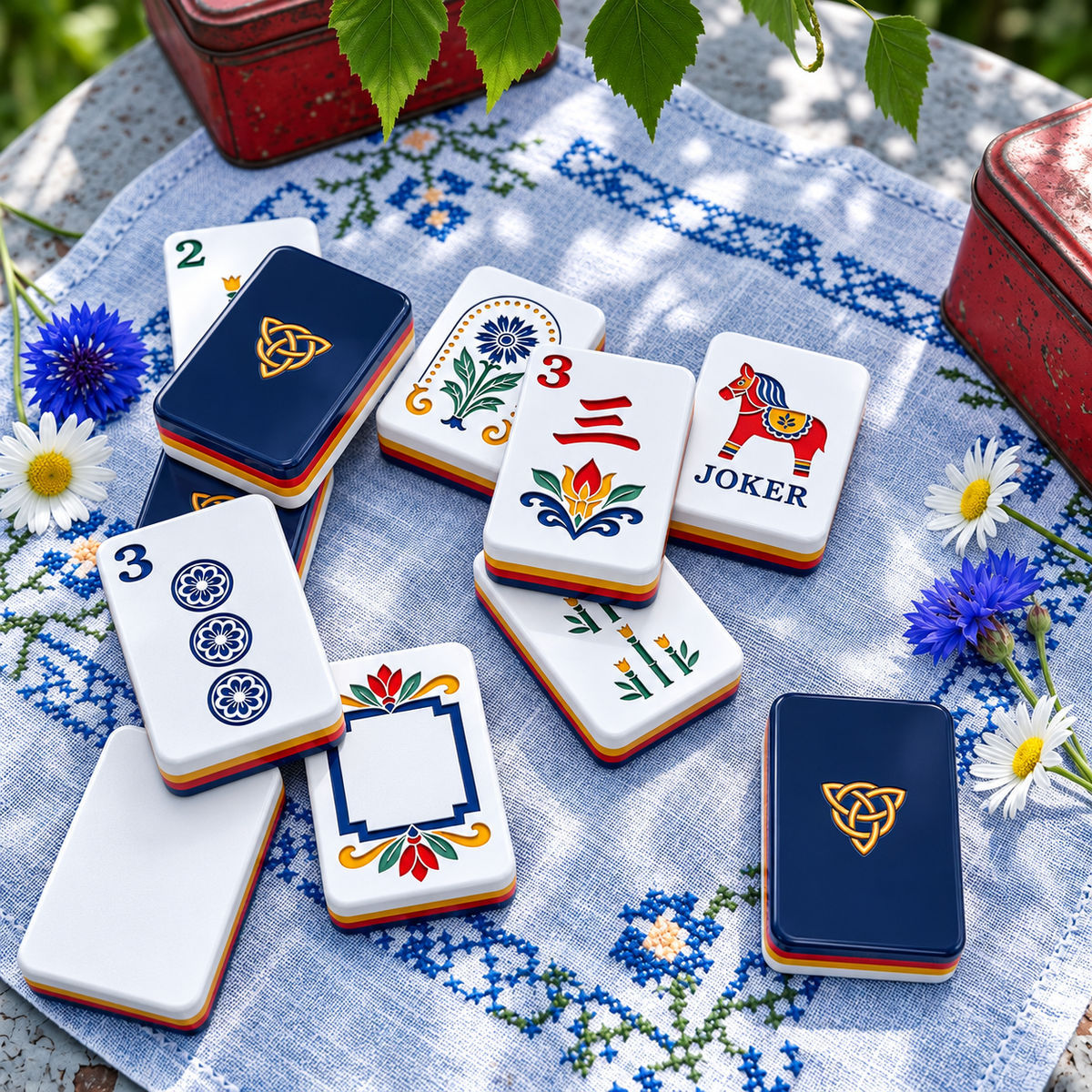
The 5 Bam (five Bamboo) is the only numbered tile in an American mahjong set that displays a bird illustration rather than five pip symbols. It appears once in each of the four copies you'll find in a standard 152-tile set. The bird—traditionally a peacock or phoenix—distinguishes the 5 Bam from all other numbered Bams (1–4 and 6–9), which are printed as bamboo stalks or dots. This artistic choice comes from Chinese mahjong tradition, where the 5 Bam's imagery dates back centuries. At the table, the 5 Bam's unique look makes it instantly recognizable even from across the mat, which speeds up play and reduces mistakes. You'll encounter it in hands listed on the current National Mah Jongg League card, and it's just as valid as any other tile for pungs, kongs, or sequences. When shopping for a set, check that the bird is clearly printed or engraved so you won't confuse it with other Bams during the fast pacing of Charleston or draw phases.
The 5 Bam shows a bird—learn why it's unique, how to spot it fast, and what makes it critical to winning hands.
Why does the 5 Bam have a bird instead of regular pips?
The bird on the 5 Bam stems from classical Chinese mahjong symbolism, where each suit carried deeper meaning. Bamboo traditionally represented growth and flexibility in Chinese culture; the bird perched among bamboo symbolized harmony and renewal. When American mahjong adopted the game in the 1920s–1930s, designers kept this artistic convention as a nod to the game's heritage. The 5 Bam's distinctiveness also served a practical purpose: in crowded home games played under lamplight, a unique symbol made tile recognition faster than squinting at five thin bamboo lines. Today, the bird persists in every professional and casual set, making it instantly recognizable across all variants of American play.

How do you identify the 5 Bam at a glance during fast play?
Look for a single illustrated bird (usually a phoenix, peacock, or stylized crane) centered on the tile face, set against a background of bamboo or blank space. Unlike the 1 Bam, which shows a bird amid one stalk, the 5 Bam's bird is larger and more prominent, filling much of the tile's center. The bird has wings, a visible head, and often decorative tail feathers. Compare it quickly to neighboring tiles: the 1 Bam has one bamboo stalk with a smaller bird, the 4 Bam shows four clear bamboo stalks, and the 6 Bam displays six stalks. In acrylic sets with high-contrast printing or engraving, the bird stands out even more. During the Charleston, when tiles fly across the table, you can spot the 5 Bam in your hand pile by shape memory—the bird's profile is distinctly different from linear pips. Practice helps: in your first week of a new set, set aside one 5 Bam and glance at it before each game so your eye learns its silhouette.
🀄 Shop best-selling mahjong sets →
Is the 5 Bam treated differently in American mahjong rules?
No—the 5 Bam is treated identically to any other numbered tile once you've identified it. You can use three 5 Bams to form a pung, four to form a kong, and five or six to form a quint or sextet if your hand permits. The bird is purely visual; it has no special power or scoring bonus. The only rule to remember: jokers can never substitute for a 5 Bam in a single-tile position or a pair—they work only in exposed pungs, kongs, quints, and sextets. When checking a hand on the National Mah Jongg League card, treat the 5 Bam as you would a 5 Dot or 5 Crak: count it, match it to the pattern, and if it appears with other 5s (such as 5 Dot and 5 Crak), verify that you hold all three tiles needed. Learning how to read the card is where beginners often stumble; the 5 Bam's uniqueness makes it easier to spot once you know what you're looking for.

What happens if you can't see the bird clearly on your tiles?
A faded, smudged, or poorly engraved bird creates confusion during fast-paced games. You might hesitate when sorting your hand, accidentally misidentify the 5 Bam as a 1 Bam, or call out the wrong tile during exposure. This slows play and can trigger disputes. When you purchase a new set, inspect the tiles before your first game under good light—test 5 Bam legibility specifically. Hold it at arm's length and check that the bird is unmistakably clear compared to other Bams. If you're buying engraved acrylic American mahjong sets, ask for samples or photos showing how the 5 Bam engraving looks in direct light and shadow; high-contrast engraving or printing is crucial for rapid recognition. Plastic tiles with painted symbols can wear down with use; acrylic with precision-engraved imagery holds clarity for decades. Over time, if your set sees weekly play, you'll develop muscle memory for the 5 Bam's feel and weight as well as its look.
How does the 5 Bam differ across American, Chinese, and other variants?
In American mahjong (the standard 152-tile set), the 5 Bam is one of 36 Bam tiles (numbers 1–9, four copies each). The bird is consistently illustrated and is non-negotiable—all sets follow this pattern.
In Chinese classical mahjong (144 tiles), the 5 Bam also displays a bird, but the surrounding design, scale, and artistic style vary by region and set maker. Chinese sets may have more ornate or minimalist birds depending on origin.
In Hong Kong mahjong (also 144 tiles), the 5 Bam follows the same convention—a bird, not pips—reflecting shared ancestry with Chinese classical play.
In Riichi (Japanese) mahjong, there is no Bamboo suit; instead, the game uses Pins, Honors, and other symbols. The 5 Pin has a plum blossom, not a bird, and the game structure differs significantly.
In Taiwanese mahjong, the 5 Bam retains the bird symbol but may appear alongside regional tile variations or house rules.
For American players, the takeaway is simple: the 5 Bam bird is a permanent, non-optional feature. Understanding what tiles are in an American set ensures you don't accidentally buy a Chinese or Japanese variant by mistake.
Decision Framework: Choosing a Set Where the 5 Bam Is Easy to Spot
Feature | Impact on 5 Bam Clarity | Best for |
Acrylic, precision-engraved | Bird stands out in all light; lasts decades | Regular weekly players; serious hobbyists |
Acrylic, painted/printed | Bold colors but may fade with heavy use | Casual monthly games; gift sets |
Plastic, painted | Budget-friendly; clarity depends on paint thickness | Beginners; families trying the game once |
Ceramic, hand-painted | Beautiful but hand variation means 5 Bam clarity varies tile to tile | Collectors; display-focused players |
Resin, cast/molded | Clarity depends on mold quality; generally good | Mid-range players; durable for casual use |
What to Check Before You Buy
Lighting test: Inspect the 5 Bam under normal indoor light and lamplight. If the bird blurs or becomes unclear, pass.
Contrast check: The bird should visually pop against the tile background—not blend in.
Consistency: Examine multiple 5 Bams in the set (there are four copies). All four should be equally clear. If one is smudged or faint, request a replacement or choose a different set.
Material durability: If you play weekly, acrylic with precision engraving outlasts painted plastic by years.
Size reference: Tiles should be 1 inch or larger (roughly 25mm+). Smaller tiles make all symbols, especially the 5 Bam bird, harder to read at a glance.
🎁 See our most-loved mahjong sets & accessories →
Why should you care about the 5 Bam symbol during your first games?
If you're learning American mahjong for the first time, the 5 Bam's bird is a learning shortcut. While other tiles require you to count pips or parse numbers, the 5 Bam's illustration bypasses counting entirely. You'll sort your hand faster and spend more mental energy on strategy than on tile identification. Experienced players often teach newcomers to "find the bird first" during Charleston—it's the easiest tile to spot and pass correctly. Over weeks of play, your visual system will internalize the 5 Bam so deeply that you'll recognize it in your hand without conscious thought, just like you recognize faces. This frees up your attention for reading the card, managing jokers, and timing your calls. New players who struggle with tile recognition often find that mastering the 5 Bam's shape gives them confidence with the rest of the set.
✨ Find your Mahstead set — free US shipping →

FAQ
Can a joker ever replace the 5 Bam in a pung?
Yes. In an exposed pung of three 5 Bams, you can use one joker to stand in for a missing 5 Bam. However, jokers cannot replace a 5 Bam if you're holding it as a single tile or a pair—they work only in pungs (3), kongs (4), quints (5), and sextets (6).
Why does the 1 Bam also have a bird if the 5 Bam is supposed to be unique?
The 1 Bam shows a single bamboo stalk with a small bird perched on it. The 5 Bam's bird is the focal point of the tile, much larger and more prominent. The difference is immediately obvious once you've seen both side by side.
If I can't recognize the 5 Bam quickly, does that mean I shouldn't play?
No. Learning tile recognition takes a few games. Sit beside an experienced player during your first two sessions, ask them to point out the 5 Bam, and handle it repeatedly. By game three or four, you'll spot it instantly. If your set's bird is genuinely unclear due to poor printing, upgrade to a higher-quality set with better contrast.
Does the 5 Bam scoring value differ from other tiles?
No. The 5 Bam scores identically to a 1 Bam, 4 Bam, or any other numbered Bam when used in a hand. The bird is purely aesthetic and has no impact on points or game strategy.
Are newer Mahstead sets better at showing the 5 Bam bird than older sets?
Mahstead offers best-selling mahjong sets with precision-engraved acrylic tiles, which deliver consistent, high-contrast bird imagery. Each set is designed for durability and readability. If you own an older set with a faint bird, a new engraved acrylic set will show you the difference immediately.


View More
View More
View More
