
5 Bam Mahjong Tile Meaning: Why the Bird Matters
Last updated: Nov 23, 2026
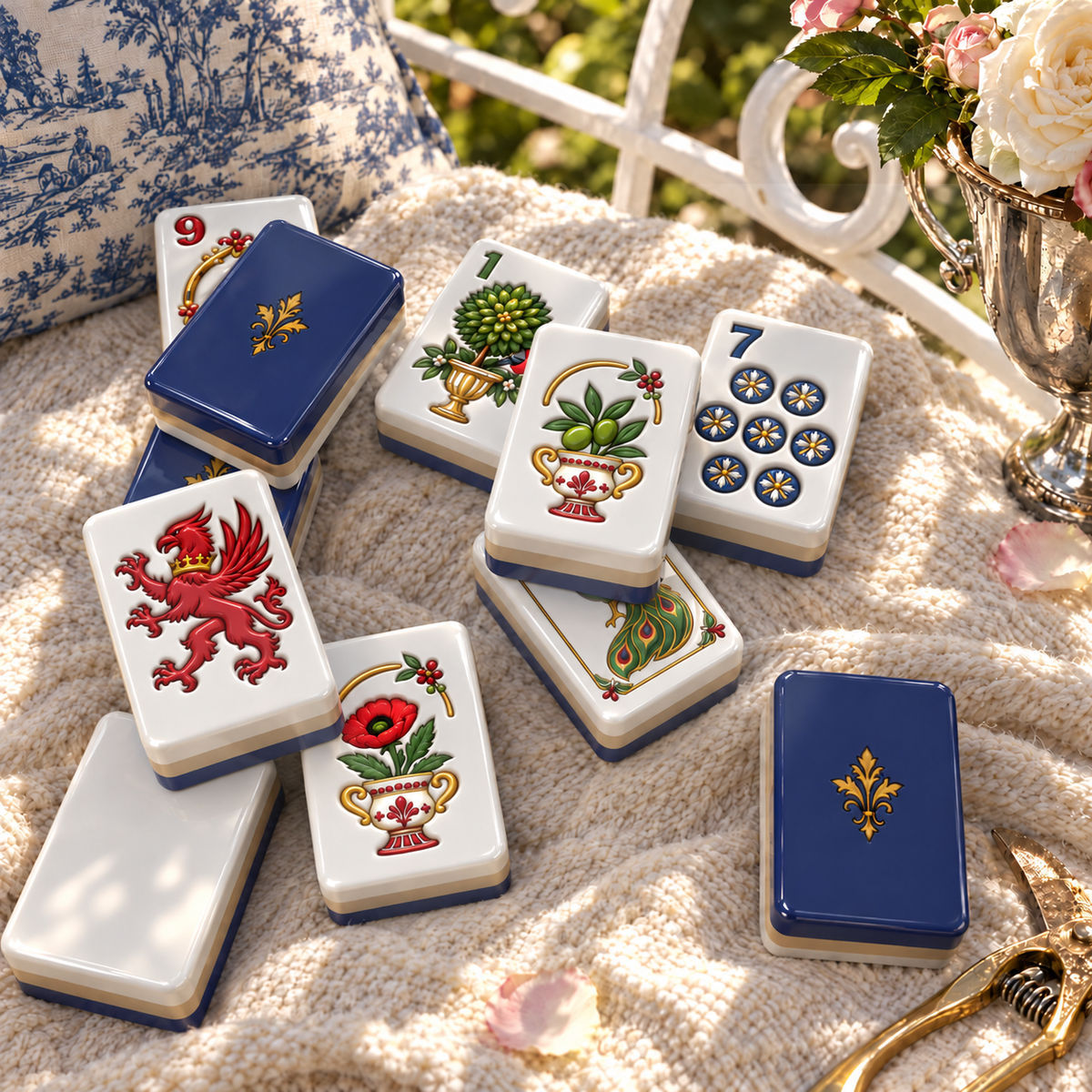
The 1 Bam is one of the Bamboo suit tiles and is almost always printed with a bird illustration rather than the numeral "1," though both markings appear on the tile. In American mahjong, it functions as a regular Bamboo suit number tile—no special scoring boost or gameplay rule—and plays exactly like any other number in the Bam family (1 through 9, four copies each in a 152-tile set). The bird image comes from classical Chinese symbolism, where bamboo and birds represent resilience and freedom, but in rules it has no mystical weight: it scores, counts, and combines in patterns just like the 2, 3, or 9 Bam. The visual distinction helps new players spot it instantly during the Charleston and when reading the National Mah Jongg League card, and many of our best-selling mahjong sets feature detailed, ornamental birds to make learning more intuitive. 🀄 Shop best-selling mahjong sets →
Why does the 1 Bam show a bird instead of the number 1?
The bird image is a design convention inherited from Chinese tile-making traditions, not a rule requirement. Ancient Chinese and Asian mahjong sets used pictorial marks for artistic and cultural reasons—bamboo paired with a crane or sparrow symbolized harmony and longevity. Western tile manufacturers adopted this aesthetic when American mahjong became popular in the mid-20th century, and it stuck because the image is instantly memorable. A beginner scanning the wall during a fast Charleston will spot a painted bird faster than a printed "1" among dozens of tiles, which is why many engraved American mahjong sets keep the bird as a core design feature.

Does the 1 Bam bird tile play differently than other tiles?
No. The 1 Bam bird is functionally identical to any other numbered tile in the game. It counts as one tile in a pung (three identical 1 Bams), kong (four identical 1 Bams), or any pattern on the card. It cannot be joker-replaced, cannot form a sequence with 2 and 3 Bam (American mahjong has no chows), and scores the same number of points when part of a winning hand as any other single-number tile. The bird is purely visual; it does not grant bonus points, special concealment, or strategic advantage. Its only practical value is clarity: the image makes the tile unmistakable at a glance.
How do I identify the 1 Bam on the mahjong card?
The National Mah Jongg League card organizes tiles by suit and number. The 1 Bam appears in the Bamboo (Bam) section and is labeled as "1" or shown with the bird image. When reading the mahjong card, look for hands that call for "1 B" or a similar shorthand notation—this refers to one tile of the 1 Bam. Most hands use the 1 Bam in multiples (three or four identical copies) as part of a pung or kong, rarely as a singleton. If you are new to the card system, practice recognizing all nine Bams (1 through 9) and mentally note that "1" always wears the bird.
What's the difference between the 1 Bam and other numbered tiles?
The only meaningful difference is appearance: the 1 Bam is printed with a bird while the 2 Bam through 9 Bam display numerals and dot patterns (or bamboo stalk imagery, depending on design). All other properties are identical: suit affiliation (Bam), numeric rank (1), quantity in the set (four copies), joker-replaceability (yes, in any tile including the 1 Bam), and scoring rules (standard point calculation per the card). Some sets render the bird in fine detail, others as a simple silhouette, but gameplay does not change. The bird is ornament, not mechanic.

Can jokers replace the 1 Bam tile?
Yes. In American mahjong, jokers can substitute for any tile in your hand or on the table, including the 1 Bam. However, a joker may never be used to fill a single tile (a tile pair requires two identical real tiles) or to represent a pair. If you need two 1 Bams for your pair, you must use the actual 1 Bam tiles; jokers cannot complete a pair. But for a pung (three 1 Bams), you can use one or two real 1 Bams and one or two jokers, as long as the total equals three tiles in the same spot. This flexibility is why a 160-tile set—which includes spare jokers—is valuable when tiles are split or bent over a long game season.
🎁 See our most-loved mahjong sets & accessories →
Should I choose a set with a fancy or simple 1 Bam design?
That depends on your table's preference and your eye comfort during play. A highly ornamental bird (with feathered details, bright colors) is stunning and helps you spot the tile in a hurried Charleston, but fine detail can be harder to read from across a large table or under dim lighting. A simpler, bolder bird shape or a minimalist line-art design is legible from a distance and reduces eye strain during a three-hour game. Neither choice affects scoring or rules. We recommend starting with a set where the bird is at least the size of your thumbnail and contrasts sharply with the tile background—this prevents mistaking 1 Bam for 1 Crak or 1 Dot during fast play. If you host weekly games, test your current set under your actual table lighting before upgrading.
Design Style | Visibility | Durability | Best for | Why it works |
Ornate bird (painted feathers) | Medium–high | High | decorative, slow play | beauty, memorability |
Bold solid bird | High | High | speed, poor lighting | clarity, legibility |
Minimalist line-art | Medium | High | intermediate players | balance of art & function |
Photo-realistic bird | High–very high | Very high | serious players, tournaments | precision, no ambiguity |
Is the 1 Bam considered lucky or unlucky?
Culturally, no. Unlike the White Dragon (sometimes avoided in superstition) or the Green Dragon (linked to jealousy), the 1 Bam carries no bad luck taboo in American mahjong. If anything, a hand heavy in 1s and 9s (called "edge" or "terminal" tiles in some circles) is harder to complete and thus neither lucky nor unlucky—it simply demands more strategic skill. Personal superstitions vary: some players avoid certain tiles or seat positions by habit, but these are individual quirks, not game rules or cultural facts.
✨ Find your Mahstead set — free US shipping →
What to check before you buy
Bird visibility: inspect the 1 Bam image in bright and dim light to ensure contrast against the tile color.
Tile size: confirm the bird is clearly distinguishable from other Bams; if the set is very small (under 1.25 inches per tile), the image may blur together with the background.
Suit differentiation: verify that the 1 Bam bird, 1 Crak bird (if present), and 1 Dot differ visibly; some budget sets skimp on detail and make them hard to tell apart mid-game.
Set completeness: ensure the set includes four copies of the 1 Bam (and all other numbered tiles) per the 152-tile standard; many retailers mislabel tile counts.
Joker count: confirm spare jokers are included so you have replacements if a 1 Bam (or any tile) cracks or warps over months of weekly play.

FAQ
Why do some American mahjong sets not show a bird on the 1 Bam?
Older or budget-conscious sets sometimes print the 1 Bam with a simple numeral instead of artwork. This is less common now; most players prefer the bird for speed and tradition. The tile still plays identically.
Can I use a 1 Bam bird tile to joker-replace a White Dragon?
No. A 1 Bam is always a Bam suit tile; it can only replace another Bam (1–9). Jokers, not regular tiles, can substitute for suits other than the tile's own suit.
Does the bird orientation (left-facing, right-facing) matter in gameplay?
No. Tile orientation is purely aesthetic. The rules care only that the tile is a 1 Bam; which direction the bird faces has no effect on scoring, hand validity, or play.
Is the 1 Bam harder to learn than the 2–9 Bam?
Not inherently. The bird image often helps new players memorize it faster than a numeral. The main challenge is distinguishing 1 Bam from 1 Crak or 1 Dot during fast play—this improves with practice and clear tile design.
What if my set's 1 Bam bird is smudged or faded after months of play?
Light fading is normal. If the bird becomes illegible, the tile is still valid for play but harder to read; you may want to replace the set or use a tile marker pen to restore contrast. Acrylic tiles used by Mahstead resist fading better than resin or paper-faced tiles over long seasons.
Can I swap the 1 Bam from one set into another set mid-game?
No. Never swap tiles between sets during active play or even between games on the same day; you risk introducing a mismatched tile or incomplete set into circulation. Always play a game with tiles from a single, verified 152-tile set.


View More
View More
View More
