
1 Bam Tile in Chinese Mahjong: What It Is & Why It Matters
Last updated: Nov 23, 2026
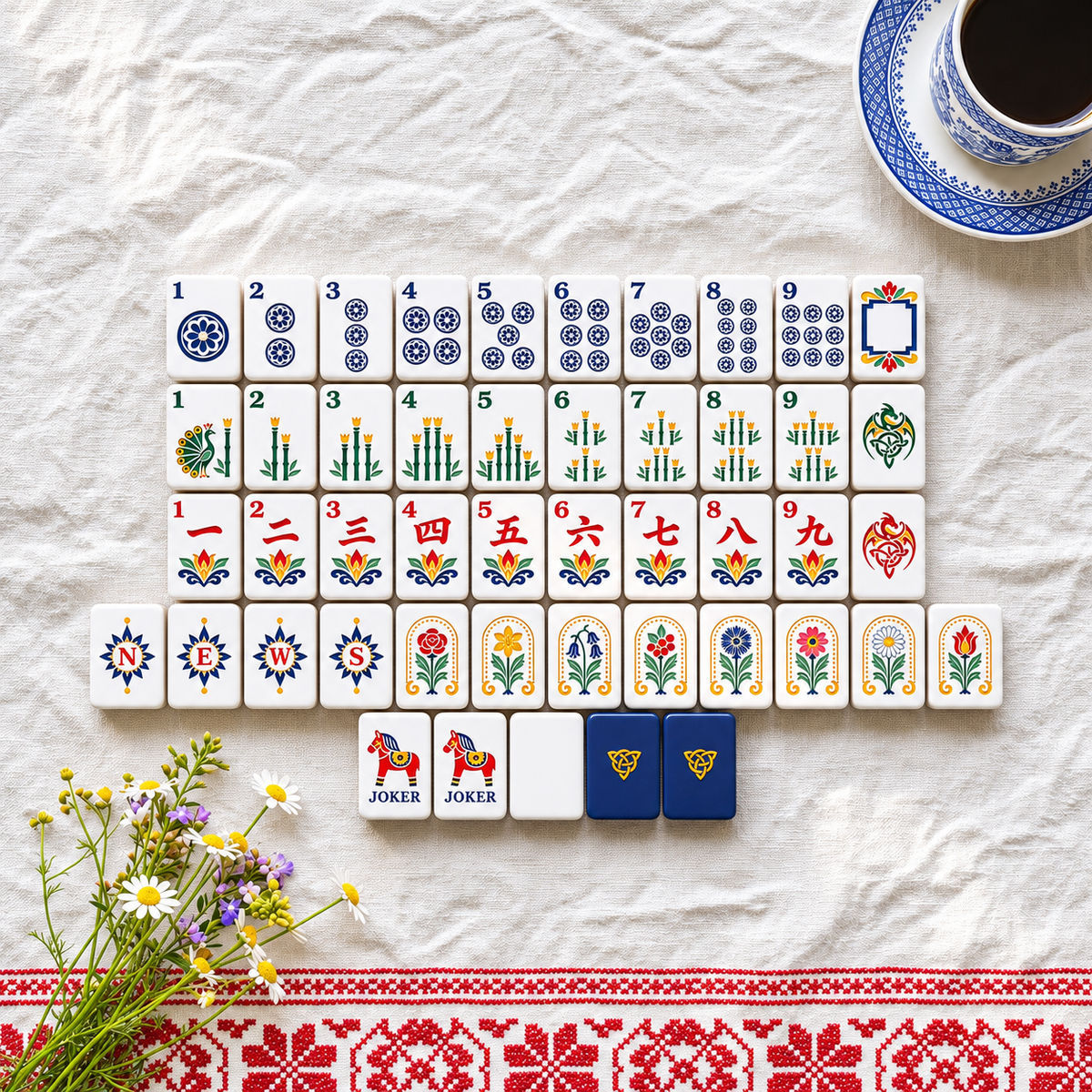
The 1 Bam (also called 1 Bamboo) is one of 36 tiles in the Bam suit, appearing four times in a standard 152-tile American mahjong set. It displays a bird perched on a bamboo branch—the only Bam pictured as a creature rather than a numeral or dot pattern. In American mahjong, 1 Bam ranks as a regular number tile with no special power; it forms pungs, kongs, or pairs like any other. In Chinese mahjong, the 1 Bam (called "one stick") functions identically in most variants but carries cultural weight as the lowest Bam rank. Whether you're building a hand from the National Mah Jongg League card or learning Chinese rules, understanding the 1 Bam's role—and its bird artwork—helps you recognize tiles quickly at speed and grasp why mahjong tile design matters beyond decoration. Mahstead's sets feature hand-engraved acrylic tiles where the 1 Bam bird design stays crisp through thousands of shuffles.
🀄 Shop best-selling mahjong sets →
Why Does the 1 Bam Show a Bird, Not a Number?
The 1 Bam's bird imagery stems from mahjong's 19th-century Chinese roots, where bamboo (the Bam suit) symbolized growth and flexibility. The bird—often a sparrow or phoenix—represented vitality and good fortune. Early tile makers used symbolic pictures instead of numerals for 1, 2, and 3 in each suit to speed recognition during fast play and to honor the game's cultural meaning. The 1 Bam bird became so iconic that modern acrylic and ivory sets worldwide preserve it. American mahjong inherited this design directly; you'll see the same bird on virtually every 1 Bam tile made today, whether plastic, acrylic, or bone. Recognizing the bird silhouette lets experienced players call winning hands without looking at number markings—crucial when the game moves quickly and tiles sit at angles on the rack.

How Does 1 Bam Function in American Mahjong Rules?
In American mahjong, the 1 Bam holds no special status—it's a standard suit number. It can form a pung (three identical 1 Bams), a kong (four 1 Bams), or a pair, just like any 5 Crak or 7 Dot. You cannot build a chow (sequence) with 1 Bam and 2 Bam and 3 Bam because American mahjong has no sequences; only exposed pungs, kongs, quints, and sextets are legal. You find winning 1 Bam combinations by consulting the current year's National Mah Jongg League card, which lists all legal hands. A 1 Bam can never be used as a joker substitute or as a single tile in a winning pair (jokers cannot be pair tiles either). Learn how the League card works here. Its value at scoring depends on the hand type listed on the card—not on the tile itself.
What's the Difference Between 1 Bam in American vs. Chinese Mahjong?
American and Chinese mahjong treat the 1 Bam identically in terms of play—it's a regular 1 in the Bamboo/Bam suit. The key difference lies in overall game structure. Chinese mahjong allows sequences (Bam 1–2–3 as a chow), while American mahjong forbids them entirely. In Chinese variants, the 1 Bam can combine with 2 Bam and 3 Bam to form a sequence that counts toward a winning hand. American mahjong players will never see a 1–2–3 sequence because the hand list includes no sequences; you need three or four identical tiles or joker-filled patterns. Hong Kong mahjong, a regional Chinese variant, sometimes removes the 1 and 9 tiles from all three suits to speed play, meaning the 1 Bam disappears entirely. Riichi (Japanese mahjong) retains the 1 Bam with the same bird image and allows sequences, similar to most Chinese rules. Our pillar guide on American mahjong sets explains these structural rules in detail.
How to Identify a Real 1 Bam Quickly During Play
Speed tile recognition defines skilled play. The 1 Bam bird is unmistakable: a small animal silhouette on a bamboo branch, occupying roughly half the tile face. Compare this to the 2 Bam (two small bamboo stalks) or the 3 Bam (three stalks in a fan pattern). In a rack or wall, the bird profile stands out in peripheral vision—you don't need to read numerals. Worn or poorly printed tiles can blur the bird image, slowing your identification. This is why tile quality matters: acrylic tiles with engraved artwork (not painted or printed) hold their detail through years of weekly games. If you're buying your first set, inspect sample photos carefully to confirm the 1 Bam bird is sharp and centered. Tiles with faded or off-center bird images force you to slow down and squint—a disadvantage when everyone else plays at speed.
Tile Feature | Why It Matters for Play | What to Check |
1 Bam bird image clarity | Instant recognition at speed | Bird silhouette stays sharp under light |
Uniform tile thickness | Consistent shuffle & wall building | No warping after years of use |
Color contrast (bamboo on background) | Rapid visual scanning | Green/gold or primary color stays vivid |
Tile size consistency | Smooth rack movement | All tiles fit evenly in pushers |

Common Mistakes When Learning 1 Bam Roles
New players often misidentify the 1 Bam as a honor tile (like a wind or dragon) because of its picture. It is not—it's a suit number, ranked lowest in the Bam suit. Another error: assuming the bird image means the 1 Bam can act as a wild card or joker. It cannot; jokers are separate tiles, and the 1 Bam is always itself. Some beginners confuse the 1 Bam's low rank with low value at scoring—but American mahjong scoring is determined entirely by the hand pattern on the League card, not by tile rank. A winning hand with four 1 Bams might score higher or lower than a hand with four 9 Dots, depending on the year's card. The most costly mistake: forgetting that each American mahjong game uses exactly 152 tiles plus 8 jokers, and the 1 Bam appears four times in every standard set. If you're short a 1 Bam during play, someone has lost a tile, and the game must pause to investigate—this rarely happens with modern acrylic sets but was common with bone or bamboo tiles that could crack or split.
✨ Find your Mahstead set — free US shipping →
Why Does Tile Design Quality Affect Your 1 Bam Experience?
Acrylic tiles from a trusted maker preserve the 1 Bam bird image and suit markings for hundreds of games, while budget sets often use thin printed surfaces that fade or chip. When the 1 Bam bird becomes illegible, you're forced to rely on small numerals—slow and frustrating when you're trying to read your hand under poor lighting or at speed. Hand-engraved acrylic tiles maintain their detail because the design is carved into the material itself, not printed on top. Lighter-colored tiles (cream, white, or translucent) let the 1 Bam imagery pop visually compared to dark tiles, where contrast can blur. Tile thickness also matters: thin tiles warp or crack, and a damaged 1 Bam missing its bird section can't be used—you'll need a spare. Our best-selling sets include spares of every rank, so a lost or damaged 1 Bam never halts your game.
What to Check Before You Buy a Mahjong Set with a Clear 1 Bam
Before purchasing, verify these points to ensure your 1 Bam tiles stay readable and durable:
Bird image clarity in photos: Request close-up or angle photos; a fuzzy bird means printing fade risk.
Tile material: Acrylic engraved tiles outlast printed or painted surfaces by years.
Set completeness: Confirm the set includes four 1 Bams plus spares; most quality sets include one spare of each rank.
Light source compatibility: Translucent or cream acrylic suits most home lighting; dark tiles reduce contrast.
Reviews from regular players: Ask other players in your game circle which sets they've used for 2+ years without fading.
Spare tile access: Can you order replacement 1 Bams individually if needed, or must you buy a whole set?
🎁 See our most-loved mahjong sets & accessories →

FAQ
Does the 1 Bam count as an honor tile or a suit number?
The 1 Bam is always a suit number—the lowest rank in the Bam suit. Honor tiles are winds (North, East, South, West) and dragons (Red, Green, White). Never confuse the 1 Bam bird with an honor symbol; they function completely differently in hand composition.
Can the 1 Bam tile be used as a joker or wild?
No. The 1 Bam is always itself. Only the eight joker tiles (included separately in every set) can substitute for other tiles. Using a 1 Bam as a wild is not legal in American, Chinese, or any standard variant.
How many 1 Bam tiles are in a complete mahjong set?
Exactly four. A standard 152-tile American set includes four copies of every number from 1–9 in each of the three suits (Bams, Craks, Dots), plus 16 winds, 12 dragons, 8 flowers, and 8 jokers. You'll always have four 1 Bams; if a set advertises fewer, it's incomplete.
Why is the 1 Bam the only Bam with a picture instead of numerals?
Historical design: bamboo (the Bam suit) connects to growth and nature, so the 1 Bam shows a bird for vitality and luck. The 2 and 3 Bams also use symbolic images (stalks and fans) before numerals appear on higher ranks. This visual hierarchy helps players recognize tiles at speed.
Does the 1 Bam bird image change between acrylic, bone, and plastic sets?
The bird silhouette and style stay consistent across quality makers worldwide—a recognizable sparrow or phoenix on a branch. Only the tile material, color, and engraving method differ. Budget plastic sets may simplify or blur the bird, making it harder to identify.
If my 1 Bam bird image fades, can I replace just that tile?
Quality sets sold with spare tiles (typically included in modern acrylic sets) include a spare 1 Bam. You can swap a faded tile immediately. Some makers also sell individual replacement tiles; ask when you purchase or contact the maker directly.


View More
View More
View More
