
Zung Jung Mahjong: Rules, Play, and How It Differs
Last updated: Nov 23, 2026
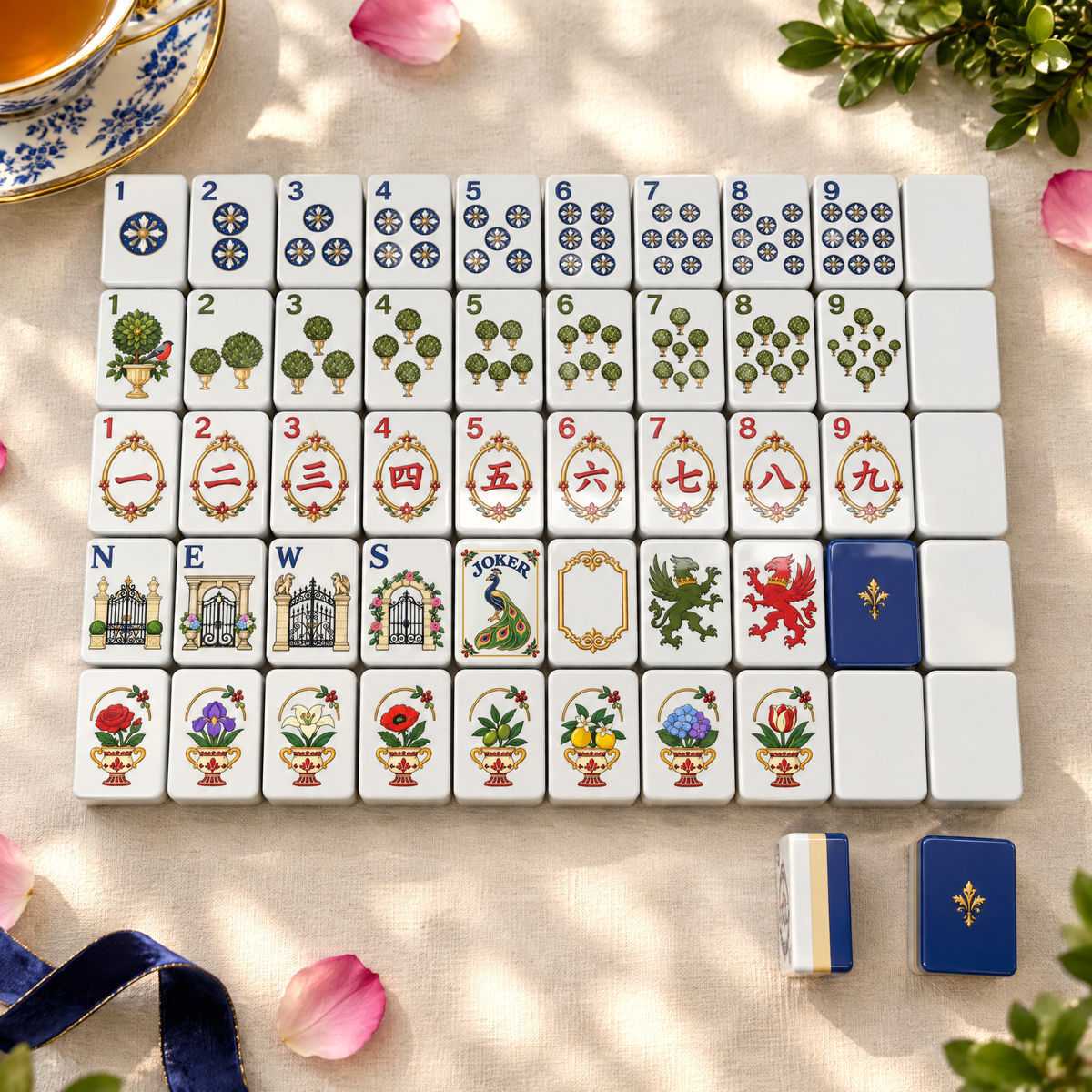
Zung jung (also called Cantonese mahjong) is a classical Chinese variant using 144 tiles—three suits (Bams, Craks, Dots) numbered 1–9, four Winds, three Dragons, and eight Flowers. Players draw and discard to form open melds (pungs, kongs, chows—runs that can be called), finishing with a complete hand of 14 tiles: four melds plus a pair. Scoring depends on meld composition and payment method (usually even splits unless a hand is high-value). Zung jung differs fundamentally from American mahjong: it allows chows, uses only 144 tiles, has no jokers, offers no written hand list, and relies on players' memory and classical rules. Games typically take 20–45 minutes per round. Many Dallas players host weekly groups in community centers and libraries; if you're building a collection, American sets and zung jung play require different tile counts and storage approaches.
What tiles and set size does zung jung need?
Zung jung uses exactly 144 tiles: 36 Bams (four each, 1–9), 36 Craks (four each, 1–9), 36 Dots (four each, 1–9), four Winds (North, East, South, West), three Dragons (Red, Green, White), and eight Flowers. There are no jokers and no blanks in a zung jung set. If you own an American mahjong set with 160 tiles—which includes 152 playing tiles plus spares—you cannot use it directly for zung jung; American sets contain eight jokers not needed for classical play. Check your tile count before attempting zung jung; buying a dedicated 144-tile set ensures you have exactly what the game requires.

How do you form and call melds in zung jung?
In zung jung, three core meld types exist: a pung (three identical tiles, like three 5 Craks), a kong (four identical tiles), and a chow (a sequence of three consecutive numbers in the same suit—for example, 4 Bam, 5 Bam, 6 Bam). The critical difference from American mahjong is that chows can be called from another player's discard. When a player discards a tile, any other player may call it to complete a pung, kong, or chow and expose that meld on the table. This open play creates faster round times and different strategy; you must track not only what tiles are out but also what sequences other players may be building. After calling and exposing a meld, the player continues their turn by drawing a tile and discarding another. Only the player whose turn it is may draw from the wall; others draw only when calling a discard.
What hand combinations win in zung jung?
A winning hand in zung jung consists of 14 tiles arranged as four melds (pungs, kongs, or chows) plus one pair. The pair must be two identical tiles. Unlike American mahjong, which uses a written annual card to define legal hands, zung jung relies on classical combinations that players learn through experience and regional tradition. Common winning patterns include a hand of all pungs (no chows), a hand of all one suit, a hand combining Winds or Dragons, or mixed sequences. Some regions score higher for "all same suit" or "all simple tiles" (2–8, excluding 1 and 9). Payment often flows from the player who discarded the winning tile to the winner, with other players paying a fixed amount. Because no printed card governs hands, new players must learn combinations from regular players or study classical guides before joining a group.
How does scoring differ from American mahjong?
Zung jung scoring is simpler than American mahjong's point system. Rather than consulting a complex score card with multipliers, players typically settle scores directly at the table: the discarder pays the winner a set amount (often the same amount all other players contribute), or payment is split evenly among the remaining three players. Some regional variants use "doubling" for exceptional hands—for instance, a hand of all same suit may double or triple the payout—but no standardized international scoring exists as it does in American mahjong. Settlement happens immediately after each hand; there is no cumulative scoring across multiple rounds. If you've played American mahjong and studied our guide to American mahjong scoring, you'll find zung jung's approach refreshingly straightforward, though you lose the depth of strategic point-chasing that American scoring creates.
What are the main rule differences from American mahjong?
Aspect | Zung Jung | American Mahjong |
Tile count | 144 tiles | 152 tiles + 8 jokers |
Jokers | None | Eight used in play |
Chows (sequences) | Can be called from discards | Never called; not exposed |
Hand list | None; classical memory-based | Current year's printed card |
Charleston | None; no pre-game tile passing | Mandatory ritual before play |
Melds | Pung, Kong, Chow | Pung, Kong, Quint, Sextet |
Pair rules | Two identical tiles only | Identical tiles (same rules) |
Winning hand | 4 melds + 1 pair (14 tiles) | Varies by card; typically 14 tiles |
Round time | 20–45 minutes | 30–60 minutes per hand |
The most striking difference is the elimination of jokers and the permission to call chows. Jokers in American mahjong act as wildcards in exposed melds, speeding up hand completion; their absence in zung jung means you must hold complete natural melds before exposing. Chows allow zung jung play to be faster and more tactical—a discard that builds a chow for another player can shift the table's momentum instantly. American mahjong's annual printed card creates stable, published hands that players memorize; zung jung relies on classical patterns learned socially. If you're learning both variants, expect 4–6 weeks to become comfortable switching between them.

Where can you learn zung jung in person?
Community centers, public libraries, and local cultural associations in major cities often host zung jung groups, particularly in areas with established Chinese American populations. Search your city library's calendar for "mahjong" sessions; many offer drop-in groups where players of mixed skill levels gather weekly. Synagogues and country clubs sometimes host mahjong nights that include classical variants alongside American play. Meetup boards and community bulletin boards online often list game times and locations. When you find a group, arrive early, introduce yourself as a learner, and ask if someone can explain the hand combinations before the first game. Experienced players almost universally welcome newcomers and will teach you the regional rules they follow; no single universal zung jung ruleset exists, so learning from local players ensures you adapt to their house rules quickly. Bring a notebook to jot down winning hand patterns during your first few sessions.
🀄 Shop best-selling mahjong sets →
Should you buy a separate 144-tile set for zung jung?
If you already own a 160-tile American mahjong set and want to play zung jung casually, you could remove the eight jokers and play with the remaining 152 tiles—but this is not ideal. The extra four tiles beyond 144 create a mismatch: you'll have too many of some tiles and too few draw opportunities. For serious zung jung play, buying a dedicated 144-tile set prevents confusion and ensures correct tile balance. Many players who switch between variants keep both sets: American (152 tiles + 8 jokers in a 160-tile container) for weekly American games, and a classical 144-tile set for zung jung sessions. Our best-selling mahjong sets collection focuses on American equipment, but if you're expanding your library, research zung jung-specific vendors who supply authentic 144-tile sets. Storing both sets in separate drawstring bags or cases (labeled clearly) prevents mid-game mix-ups. Once you decide zung jung is your regular game, investing in a dedicated set saves frustration.
What should you check before buying a zung jung set?
Before purchasing a 144-tile set for zung jung, verify the following:
Tile count: Confirm exactly 144 tiles (no extra jokers, no blanks). Count the Flowers (should be eight: typically four Plum/Orchid and four Chrysanthemum/Bamboo, two per Flower type).
Dragon composition: Check for three Dragons (Red, Green, White), each appearing four times—no variations or jokers in their place.
Suit completeness: Ensure all three suits (Bams, Craks, Dots) run 1–9 with four identical copies each.
Tile condition: Inspect for chips, cracks, or printing defects on the face or back; bamboo and bone tiles are durable but not indestructible.
Consistency: All 144 tiles should match in size, weight, and finish; mismatched tiles create gameplay friction.
Bag or case: A 144-tile set should come in a secure drawstring bag or box to prevent loss and separation of Flowers (often stored apart).
Instructions or guide: Check if the seller includes a classical rules sheet or scoring guide, especially if you're new to the variant.
Ask the seller's customer service whether the set includes a rulebook in English and whether you can return it if the tile count is incorrect upon arrival.
How long does a typical zung jung session last?
A single zung jung hand typically lasts 5–15 minutes depending on player skill and decision-making speed. Beginners may take longer as they learn to spot winning patterns and evaluate discards strategically. A full session of four players usually runs 2–3 hours for 8–12 hands. Because zung jung lacks the complex scoring and card-reading phase of American mahjong, rounds move more fluidly; there is no moment of consulting a hand reference or calculating multipliers. Most regular groups play for a fixed time block (often an evening or weekend afternoon) rather than a set number of hands. If you're hosting zung jung at home, plan for 2–3 hours and provide snacks and drinks; the social rhythm is steady and familiar to anyone who's played American mahjong, though the tile dynamics shift with the absence of jokers and the permission to call chows. New players often find zung jung's pace refreshing—fewer pauses, more continuous flow.
🎁 See our most-loved mahjong sets & accessories →
Can you play American and zung jung in the same group?
Yes, many established mahjong groups rotate between American and classical variants depending on the week or time of year. American mahjong demands the current year's National Mah Jongg League card (renewed each spring), while zung jung relies on players' familiarity with classical patterns. If your group plans to switch between the two, agree on a schedule in advance—for instance, alternating weeks or designating "American Mondays" and "Zung Jung Fridays." Ensure every player brings or has access to the correct equipment: American play requires a 152-tile set plus eight jokers (160 tiles total), while zung jung needs a dedicated 144-tile set. We recommend storing mahjong sets in separate labeled bags to avoid mixing tiles mid-session. When transitioning between variants, take a 5–10 minute pause to explain that night's hand rules (or reference card) to any newcomers, as the two games feel similar but play very differently. Groups that accommodate both variants tend to retain more players because players' preferences and skill levels vary.
✨ Find your Mahstead set — free US shipping →

FAQ
Is zung jung the same as Hong Kong mahjong?
Zung jung refers specifically to Cantonese classical mahjong, which is very close to Hong Kong rules. Both use 144 tiles, allow chows to be called, and use classical hand patterns; minor regional scoring variations exist. If you learn zung jung, you can play Hong Kong mahjong with minimal adjustment.
Can I use American mahjong tiles and a printed card to learn zung jung?
No. American sets include jokers and are designed for hands on the printed card. Zung jung requires a 144-tile classical set and relies on players' memory and classical patterns, not a card. Buy or borrow a dedicated 144-tile set for authentic play.
How many flowers are in a zung jung set, and where are they?
Eight flowers total: typically four Plum/Orchid tiles and four Chrysanthemum/Bamboo tiles, each in sets of two. Some regions use different flower pairings. In a 144-tile set, all eight are always present in the bag; they are drawn and used like other tiles to complete hands.
Do I need to know the order of play before I sit down?
Yes. In zung jung, East (the dealer) begins; play moves counter-clockwise (or clockwise, depending on region). Each player's role rotates after each hand. Ask the group leader to assign your seat and starting position before the first hand begins.
What's the biggest rule mistake beginners make in zung jung?
Forgetting that chows can be called from discards. Many new players trained on American mahjong instinctively hold chows hidden; in zung jung, exposing chows immediately when you have them is often correct strategy. Also, beginners sometimes forget the hand is 14 tiles (four melds plus a pair), not 13 or 15.
If I learn zung jung, can I also play American mahjong?
Yes, absolutely. The two share core concepts (pungs, kongs, drawing and discarding) but differ enough that you'll need to switch your mental model. Most players spend 2–4 weeks adapting between variants. Keep your American card at the table during American sessions so you don't confuse classical hand patterns with card-defined hands.


View More
View More
View More
