
Yakuhai in Riichi Mahjong Explained
Last updated: Nov 23, 2026
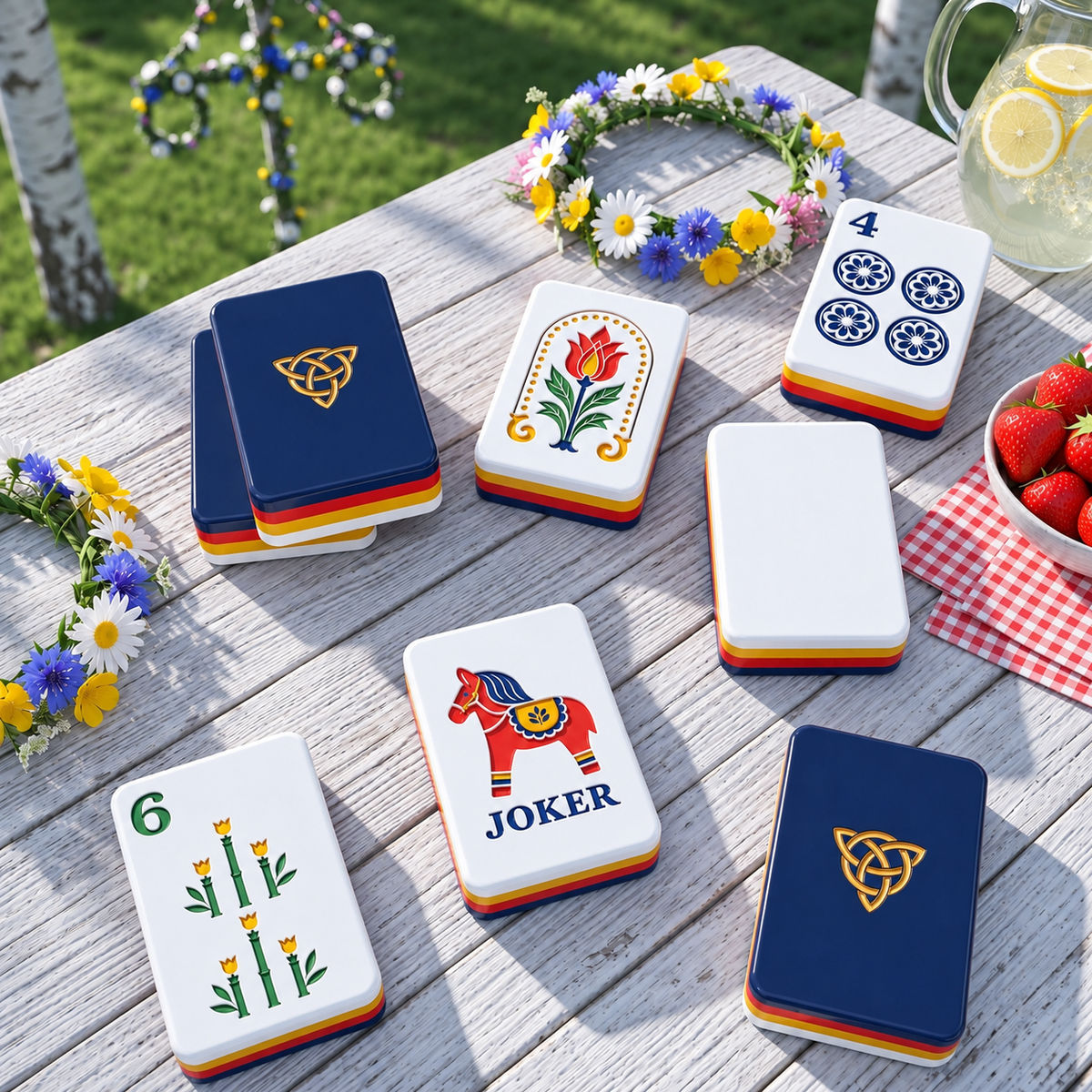
Yakuhai are honor tiles—the four winds (East, South, West, North) and three dragons (Red, Green, White)—that in riichi mahjong are worth double points when you form a pung (three identical tiles) or kong (four) of them. They appear in standard riichi sets and in American mahjong tiles (though American play uses a completely different hand system, not yakuhai scoring). In riichi, yakuhai are always "exposed" (openly called from the discard); they trigger immediately and stack—owning two yakuhai pungs in one hand means double points twice over. The payout depends on your position, the round wind, and your seat: East (the dealer) wins more; owning your own wind or the round wind gives the pung extra value. Beginners often miss that White Dragon is separate from Soap (the zero placeholder); they count as different tiles in riichi. Free US shipping is available from riichi-compatible tile sellers like Mahstead, though American sets designed for that game follow different mechanics entirely.
Riichi mahjong and American mahjong are two distinct games with different tile sets, hand patterns, and scoring rules. This guide covers riichi yakuhai—the honor tiles that pay double—so you can recognize them, score them correctly, and use them in strategy.
What are yakuhai and why do they matter?
Yakuhai literally means "honor tiles." In riichi mahjong, seven of the 34 unique tiles are honors: four winds (East, South, West, North, each worth 10 points alone) and three dragons (Red, Green, White). When you form a pung or kong of yakuhai—and only those sets; you cannot score yakuhai from a chow (1-2-3 sequence)—you earn double points for that set alone. If a single hand holds two yakuhai sets, both double. This stackable bonus makes yakuhai hands among the easiest paths to a winning hand, especially for newer players building confidence.
The reason yakuhai exist is thematic: honors were always the high-value tiles in classical mahjong. Riichi codified them as instant double-scoring tokens to reward players who collect them. Unlike American mahjong (which has no yakuhai and scores entire hands from a official card each season), riichi yakuhai are permanent scoring rules—they never change year to year.

Which wind and dragon tiles are yakuhai?
All four winds—East, South, West, North—are always yakuhai. All three dragons—Red, Green, White—are always yakuhai. That is seven out of 34 unique tiles. In a standard riichi set, each yakuhai appears four times (one in each of the four tile copies in play). Because they are honors, they do not form sequences (chows); you can only use them in sets of three or four (pungs or kongs).
One common beginner mistake: confusing White Dragon with the zero tile or honor blank. In riichi sets, White Dragon is a distinct honor tile; it scores like Red or Green when punged or konged. Do not assume a blank or zero tile counts as yakuhai—it does not. Check your tile set carefully. Sets from best-selling collections are clearly labeled so you can distinguish honors at a glance.
How does dealer position affect yakuhai scoring?
In riichi, your seat and the round wind determine yakuhai payout. If you own a pung of East (the dealer wind) and you are the dealer, that pung is worth triple, not double. If you are dealer and own a pung of the round wind (which may be East, South, West, or North depending on the current round), triple again. If you are dealer and own a pung that is both your seat wind and the round wind (possible only in the East round when you sit East), the pung is worth six times base—a huge score.
Non-dealers earn double for owning their own seat wind or the round wind. If you are North player and own a North pung during the North round, you score double. Owning a pung of a wind that is neither your seat nor the round wind still counts as one yakuhai (double)—but is rarer and less profitable. Red, Green, and White Dragons are always double, regardless of round or seat; they are not linked to positions. A hand with East Wind (dealer, triple) and White Dragon (always double) scores both bonuses in the same hand.
When can you call yakuhai from the discard?
In riichi, yakuhai pungs (and kongs, and any set) are "exposed" (open). When another player discards an honor tile you need, you call it aloud, reveal the set to the table, and add it to your hand visibly. You may do this at any time during the hand—it does not end your turn; you simply pick it up, complete the pung, and discard another tile. Exposed sets count fully toward your final hand, and yakuhai in exposed sets still pay double (or triple, if applicable).
Many players assume exposed yakuhai sets are weaker or risky. In fact, calling early is often strategic: you telegraph intent (which may scare opponents into safer discards) but you lock in the double points immediately and reduce the tiles left in the wall. The downside: other players can see your hand shape and adjust play. Riichi experts often hide yakuhai until the hand is near completion, but beginners can safely call yakuhai pungs as soon as they are available—the double pay-off outweighs the information leak.

Yakuhai hands vs. other scoring patterns in riichi.
Pattern | Tiles | Yakuhai? | Double Pay? | Typical Score (Non-Dealer) |
Pung of East Wind during East round | 3 identical East | Yes | Yes (double or triple) | 2,000–6,000 |
Pung of Red Dragon | 3 identical Red | Yes | Yes (always double) | 2,000 |
Pung of simple tiles (5 Bam, 6 Crak, etc.) | 3 identical number | No | No | 1,000–1,500 |
All Terminals (1 or 9) and honors | Mixed | Yes (if honors included) | Partial | 3,000–8,000 |
Two yakuhai pungs | 6 tiles (2 sets) | Yes | Yes (both double) | 4,000–12,000 |
The table shows that yakuhai are the quickest path to doubling and thus rapid scoring. A hand with two yakuhai pungs and a simple triplet or sequence can win fast. Non-yakuhai patterns (like all Terminals, all simples, or straights) often require more tiles to complete but may pay higher base points if they land; yakuhai sacrifice ceiling for speed and certainty.
🀄 Shop best-selling mahjong sets →
How do American mahjong and riichi yakuhai differ?
American mahjong does not use yakuhai scoring at all. American sets include winds and dragons (like Soap, Red, Green) but they function as hand components, not scoring bonuses. American players consult the official National Mah Jongg League card (updated annually each spring) to see which hands are valid that year; winds and dragons are woven into those specific hand patterns, but they do not automatically double a pung or kong. An American hand like "Pung of East, Pung of South, Pung of Red, Pung of simple" is only valid if that exact combination appears on the current year's card.
If you play only American mahjong, you do not need to learn yakuhai—skip this guide and read our how to play American mahjong primer instead. If you play both games, remember: American = card-based hand checking; riichi = tile pattern and honor-position scoring. Many players switch between them seasonally or by table preference. Tile sets are compatible in appearance, but scoring rules are completely separate.
What to check before you buy a riichi mahjong set.
Tile clarity: Each of the seven yakuhai must be instantly recognizable (East, South, West, North clearly labeled or pictured; Red, Green, White distinct). Look for engraved or printed marks, not gloss that wears off.
Set completeness: Riichi requires 34 unique tiles, four of each = 136 tiles total (plus spares). A set labeled "160 tiles" or "152 tiles" is designed for American mahjong, not riichi—verify the tile breakdown before purchase.
Honor tile count: Count that you have four of each wind (four East, four South, etc.) and four of each dragon. A set short on honors will cost you in the middle of a game.
Durability: If you call yakuhai pungs frequently and expose them, tiles will be handled often. Acrylic or heavy ceramic resists wear better than plastic.
Case or bag: Riichi sets are often split into travel games; confirm your set ships with a case or bag if you plan to carry it. Mahstead's travel bags and cases fit standard riichi sets and protect tiles during transport.
✨ Find your Mahstead set — free US shipping →
Strategy tips: building yakuhai hands.
Early yakuhai calls are often free money. If you need only one more tile to complete an East or Red pung in the opening rounds, calling from any discard is low risk. The double score is locked in; you can pivot the rest of your hand elsewhere.
Stack yakuhai when you can. Hands with two yakuhai pungs (say, East and Red) are common winners in riichi. Once you have one, hunt the second aggressively; the dual double is worth the tile cost.
Watch the dealer's wind. If you are East during the East round, every East pung you own pays triple, not just double. This is the highest-value yakuhai in any hand. Non-East players rarely see triple pay, so East position players should prioritize East pungs during the East round.
Discard honors you do not need early. If you discarded South on Turn 2, other players know you are not building South. This information saves them from holding dangerous South tiles. By Turn 5, if you have discarded three winds, opponents infer your hand is simples-heavy, and they adjust. Use this to your advantage: discard the honors you genuinely do not need, and keep opponents off-balance.
Riichi (the declaration) and yakuhai pair well. Once you have one yakuhai set locked (exposed) and one simple pung or chow, you can often declare riichi (drawing only on the chance tiles that complete your hand). The riichi bonus (50–100 points) plus a yakuhai double make for solid wins—and opponents will be cautious because a riichi hand is close to done.
🎁 See our most-loved mahjong sets & accessories →

FAQ
Can you score yakuhai from a chow (1-2-3 sequence)?
No. Yakuhai are honors; they cannot form sequences. Only pungs (three identical) and kongs (four identical) of yakuhai score the double. Chows must be made from numbered tiles (1–9 in each suit).
What is the difference between East Wind and the round wind?
East Wind is a tile owned by the player sitting East. The round wind is the wind of the current round (East, South, West, or North round). If you sit East during the East round, your own wind and the round wind are the same tile—owning a pung of it scores triple.
If I own three yakuhai pungs in one hand, do I score triple double?
No. Each yakuhai pung scores double independently, but they do not multiply together. Three yakuhai pungs = three separate double bonuses added to the hand total. A calculator showing 1,000 per pung becomes 2,000 + 2,000 + 2,000 = 6,000 for the three sets (plus other hand components).
Do dragons score differently from winds in riichi?
Dragons always score double, regardless of seat or round. Winds score double for your own wind or the round wind, and may score triple if both apply. So a Red Dragon pung is always worth the same; an East Wind pung varies by position and round.
Can American mahjong sets be used for riichi?
Tile-wise, yes—American sets include winds and dragons. But American hands are validated against the official seasonal card, not yakuhai scoring. If you want to play riichi, use a riichi-specific set (136 tiles, 34 unique types) or consult a riichi rulebook on how to map American tiles to riichi. Most riichi players use dedicated riichi sets for clarity.
How often do yakuhai pungs appear in a game?
Highly variable. In a 4-round session, most players complete at least one yakuhai pung or kong per session; some games see two or three. Because there are only seven yakuhai types and four of each, they are common enough to farm but rare enough to plan around.
If I discard a yakuhai tile early, can I win with it later?
Yes. Discarded tiles are out of play forever in that hand, but once a new hand begins, all 136 tiles are reshuffled. A South you discarded in Hand 1 can be drawn and punged in Hand 5. Do not assume a discarded honor is gone forever across the session.


View More
View More
View More
