
Riichi Mahjong vs. Siamese Mahjong: Rules, Tiles & How to Play
Last updated: Nov 23, 2026
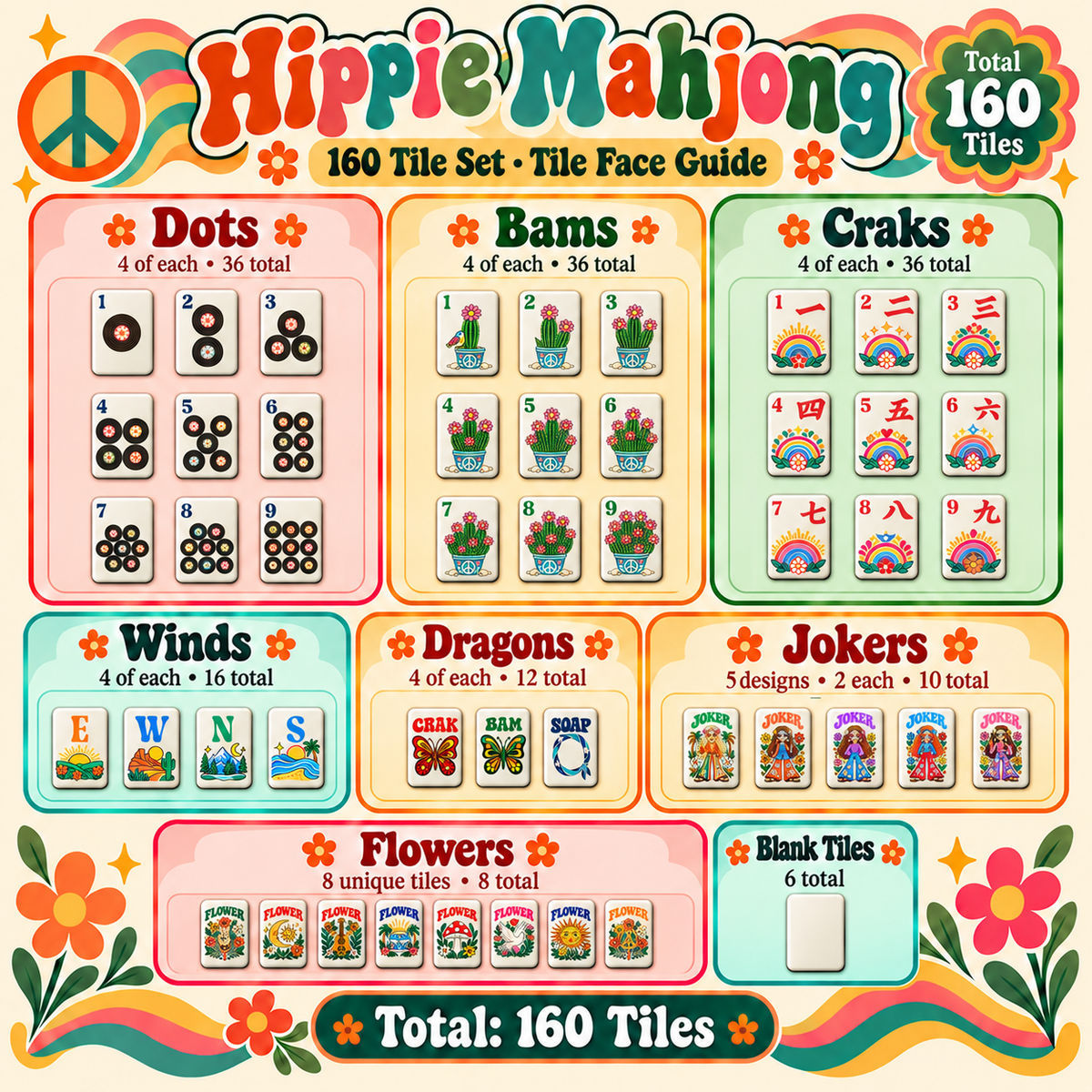
Riichi mahjong, the Japanese national game, uses 136 tiles, requires hands from a fixed list, and centers on the "riichi" declaration—a one-point bet that locks your hand and signals you're one tile from winning. Siamese (Thai) mahjong uses 144 tiles, allows more flexible hand combinations, and emphasizes rapid calculation and tile counting. Neither variant uses the American-style National Mah Jongg League card; both play with sequences (chows), pungs, kongs, and sets that jokers cannot replace. If you're shopping for equipment, confirm your group's chosen variant before buying, since tile counts, set composition, and hand patterns vary significantly. Most American players starting a Riichi or Siamese game need to invest time in learning unfamiliar hand notation and play pace.
Riichi and Siamese mahjong represent two powerful branches of the mahjong family tree, each shaped by its home country's play style and culture. If you've played American mahjong and are curious about stepping into one of these variants, the rules, tile composition, and winning strategies look almost alien at first glance. This guide walks you through the core differences so you can decide which variant fits your group—and avoid the common mistake of buying a standard set only to discover it won't work for your chosen game.
What is Riichi mahjong, and how does it differ from Siamese?
Riichi mahjong is Japan's official tournament standard, played with 136 tiles across four rounds and a complex point system tied to hand patterns and luck factors. Siamese mahjong, the Thai national variant, uses 144 tiles, plays faster, and prioritizes intuitive tile counting and flexible winning combinations. Riichi demands memorization of hand types and a deep understanding of probabilities and discard strategy; Siamese rewards speed and adaptive thinking. Both permit sequences (chows: three consecutive numbers in one suit), pungs (three identical tiles), and kongs (four identical tiles), unlike American mahjong, which bans sequences entirely. The fundamental split: Riichi is a game of concealed hands and calculated reveals; Siamese is more open, with frequent exposed sets and rapid table dynamics.

How many tiles does each variant use, and why does it matter?
Riichi employs 136 tiles: three suits (1–9 in each, four copies per number = 108), four winds (N, E, W, S), three dragons (Red, Green, White), and one joker tile called a "tile back" (bonus tile, not a replacement joker like in American mahjong). Siamese uses 144 tiles: the same 108 suited tiles plus four winds, three dragons, and eight joker tiles (sometimes called "flowers" or bonus tiles in older Thai decks). This difference cascades through gameplay: Riichi's smaller pool forces tighter hand planning and makes late-game draws less predictable; Siamese's extra tiles and jokers create more flexibility in forming winning hands. If you're ordering a set for Riichi play, you must source a Riichi-specific deck or accept that a standard set won't include the correct tile distribution. Most best-selling mahjong sets in Western shops are designed for American play and will not work.
What does "riichi" mean, and how does declaring it change the game?
In Riichi mahjong, a player declares "riichi" (literally: "ready") by placing a one-point bet into the center of the table once their hand is one tile away from completion. This public announcement freezes the player's hand; they cannot change it and must draw and discard automatically until they win or someone else completes. Declaring riichi increases your win bonus (and penalty if you lose) and signals serious intent—other players adjust their discard strategy knowing you're close. Siamese mahjong has no riichi declaration; instead, players openly track hand progress and announce winning intentions verbally or through tile positioning. The riichi mechanic makes Riichi mahjong feel more tense and theatrical; Siamese feels more conversational and reactive. Neither mechanic exists in American mahjong, where winning is determined by matching the current year's League card hand structure.
🀄 Shop best-selling mahjong sets →
Can you win with any hand combination, or are there fixed patterns?
Riichi mahjong has no hand card; every valid winning combination consists of four melds (pungs, kongs, or chows) plus a pair. This formula is rigid but universal—any player at any table recognizes a legal hand instantly. Siamese allows the same structure but historically permits regional variations in bonus tiles and scoring, making it less standardized across regions. American mahjong, by contrast, permits only hands listed on the current year's National Mah Jongg League card—some hands use pairs of different tiles, some use multiple sequences, others forbid sequences entirely. This difference is critical: Riichi players memorize hand shapes by feel; Siamese players memorize regional accepted combinations; American players must consult the League card. If your group plays Riichi, you cannot simply port over American mahjong rules or hands—the entire logic of winning collapses.
How does scoring work in each variant, and why is it so different?
Riichi mahjong awards points based on hand complexity, number of melds, bonus tiles drawn, and whether you declared riichi. A simple hand (one meld, no bonus tiles) earns minimal points; a complex hand with four bonus tiles and a riichi declaration can score 12,000 or more points. Scoring is deterministic: the same hand pattern always scores the same value regardless of player luck or table position. Siamese mahjong awards points primarily through rapid wins and tile-counting bonuses; a player who wins before others have discarded four tiles earns double the base score. American mahjong uses the League card hand pattern to determine base points, then applies multipliers for wall draws, robbing the kong, self-drawn wins, and other circumstances. All three systems reward different skills: Riichi favors patience and pattern mastery, Siamese favors speed and observation, American favors familiarity with the card and blocking strategy.
Aspect | Riichi | Siamese | American |
Tile count | 136 | 144 | 152 |
Sequences allowed | Yes (must be visible) | Yes | No |
Hand card or memorized | Memorized patterns | Memorized patterns | Annual League card |
Riichi declaration | Yes, adds points | No | No |
Joker use | One bonus tile, non-interchangeable | Eight bonus tiles, flexible | Eight jokers, can replace any tile except singles & pairs |
Typical game length | 2–3 hours (4 rounds) | 1–2 hours (variable rounds) | 2–3 hours (4 rounds) |
Learning curve | High (hand patterns + scoring) | Medium (hand logic + speed) | High (League card reliance) |
🎁 See our most-loved mahjong sets & accessories →

What mistakes do new players make when switching between these variants?
New Riichi players often forget that kongs must be declared and melded immediately; they try to hide them like in some other games and lose scoring opportunity. Siamese newcomers misjudge the speed—they over-analyze discard choices when rapid play is the advantage. American players switching to either variant frequently confuse "any winning hand" with "hand must have four melds and a pair"—in American mahjong, winning hands vary wildly by card date and position, but in Riichi and Siamese, the structure is always identical. Another common error: assuming jokers work the same way. In American mahjong, jokers are wild replacements; in Riichi and Siamese, bonus tiles are fixed and cannot substitute. Before you play, confirm with your group which rule set you're using—a 10-minute clarification session saves an entire ruined game.
What equipment do you need to play Riichi or Siamese mahjong?
You need a Riichi- or Siamese-specific tile set (136 or 144 tiles respectively), not a standard American 152-tile set. You'll also want a mat to organize your hand and melds, racks with pushers to keep tiles upright and organized as you build melds, and a carrying case if you're bringing the set to tournaments or regular games. A score sheet or calculator speeds up point tracking, especially in Riichi where scores are large and rapid. Many players pair a mat with a mahjong mat marked with zones for your hand, melds, and discards—this is essential if you're playing in a noisy or crowded room where verbal calls get lost. If you're hosting weekly Riichi or Siamese games, a travel bag or case keeps your set safe and makes transport easy between venues.
Where can you find Riichi or Siamese sets, and how do you order the right one?
Riichi and Siamese sets are less common than American mahjong sets in general stores; you'll need to source them from specialty online retailers, Japanese game shops, or Thai cultural centers. Search for "Riichi mahjong set 136 tiles" or "Siamese mahjong 144 tiles" to find vendors who stock the correct tile distribution. When ordering, confirm the tile count and tile notation (some Riichi sets use Japanese characters; Siamese sets may use Thai characters or Arabic numerals). Ask the seller whether the set includes jokers and whether replacement tiles are available—Riichi sets typically include only one bonus tile, so replacements are critical. Mahstead specializes in American mahjong sets and does not currently stock Riichi or Siamese variants; if your group is committed to either of these games, you'll need to partner with a specialist retailer for equipment.
✨ Find your Mahstead set — free US shipping →
What to check before you buy
Tile count: Confirm 136 (Riichi) or 144 (Siamese); a 152-tile American set will not work.
Tile characters: Verify whether you need English numerals, Japanese kanji, Thai script, or a hybrid notation.
Joker/bonus tile count: Riichi typically includes one; Siamese includes eight. Confirm this matches your group's rules.
Set completeness: Check whether the set includes racks, a mat, and a carrying case, or if you need to buy these separately.
Replacement availability: Ask whether the seller offers spare tiles in case of damage or loss.
Language support: If using a score sheet or rulebook, ensure it's in English or your preferred language.
Playability with your group: Before buying, confirm all players agree on which variant and ruleset you're playing. A single misalignment ruins every game.

FAQ
Can I use an American mahjong set to play Riichi?
No. American sets have 152 tiles plus specific dragons and flowers; Riichi requires 136 tiles and a single bonus tile. The tile distribution, notation, and hand-building logic are incompatible.
Is Riichi or Siamese mahjong harder to learn than American mahjong?
Both are harder in different ways. Riichi demands memorization of hand patterns and complex point calculations. American requires memorizing the annual League card and blocking strategy. Siamese is fastest but hardest for Americans unfamiliar with rapid tile counting.
Do Riichi and Siamese players ever play together?
Rarely. Each variant has distinct rules, tile sets, and scoring systems. A mixed game would require compromises that frustrate both groups. Play within your chosen variant for the best experience.
How long does a typical Riichi or Siamese game take?
Riichi typically runs 2–3 hours for a complete four-round session. Siamese is faster, often 1–2 hours, depending on group speed and round count. American mahjong averages 2–3 hours for four rounds.
Where can I find players or clubs for Riichi or Siamese mahjong in my area?
Check local community centers, cultural associations (Japanese, Thai, or Pan-Asian groups), university game clubs, and meetup boards online. Many cities have established Riichi or Siamese tournaments; search "[your city] + Riichi mahjong" or "[your city] + Siamese mahjong" to find groups.
Can I practice Riichi or Siamese online before buying a physical set?
Yes. Several free online mahjong simulators support Riichi (search "mahjong soul" or "tenhou") and Siamese variants. Practicing online first confirms you'll enjoy the game and helps you memorize hand patterns before investing in a set.
What is the most common beginner mistake in switching from American to Riichi mahjong?
Forgetting that chows (sequences) are legal and must be melded visibly, and that every winning hand follows the four-melds-plus-pair structure—not the card-based variety of American winning hands.


View More
View More
View More
